OLED can be practical for an oled monitor for daily desktop work, but it is not the easiest default for every office setup. The fit depends on resolution, scaling, panel size, desk distance, and how static your apps stay during the day. For text-heavy buyers, the question is not "Is OLED good?" so much as "Is this OLED setup sharp and steady enough for my work pattern?"
Can OLED Work for an All-Day Desk Setup?
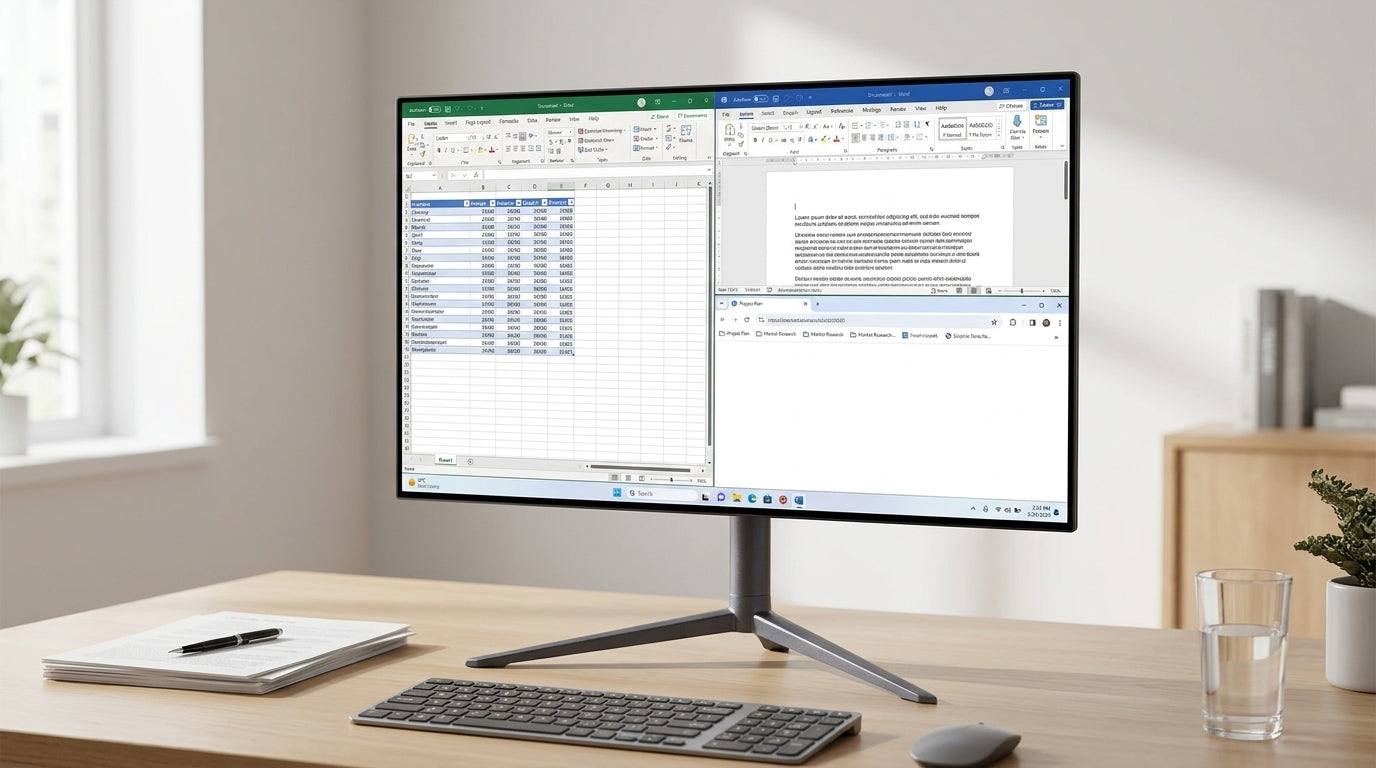
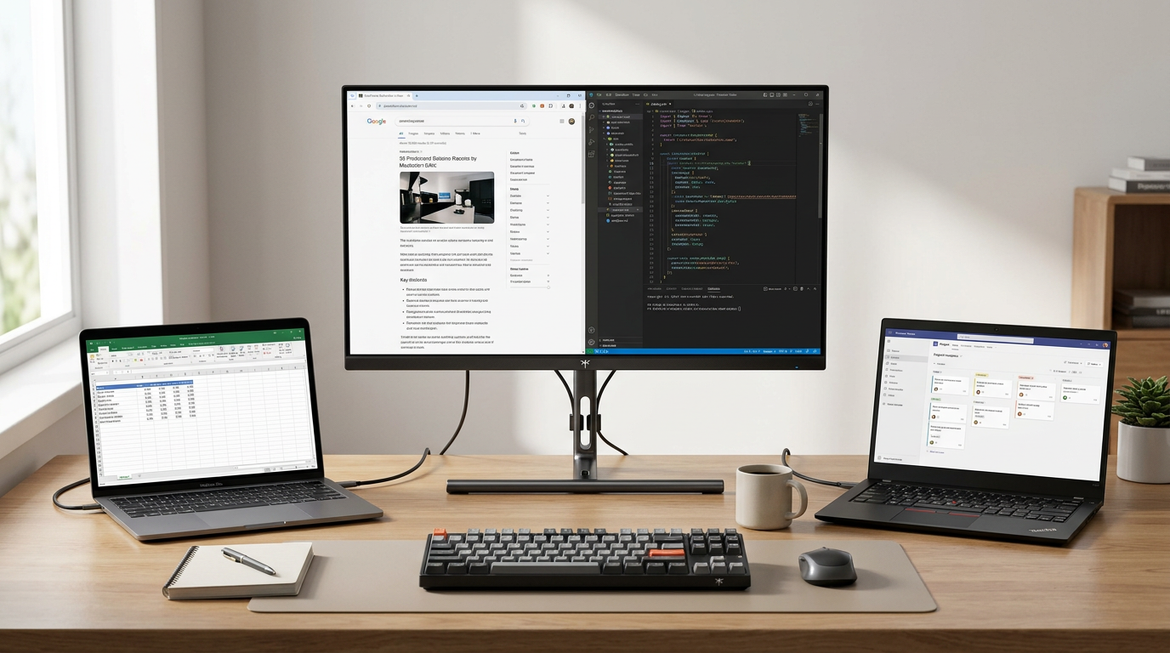
Yes, but only as a conditional yes. For writing, coding, spreadsheets, and browser-heavy multitasking, an oled monitor for daily desktop work can feel excellent when the setup is dense enough and the workflow is not locked to one static layout all day. The same panel can feel less forgiving if you spend hours staring at small text, fixed toolbars, or bright document windows.
The useful takeaway is simple: OLED is a strong candidate when you want contrast and image depth first, and a cleaner office default when you can tolerate some setup tuning. If you want the least hassle for text-first work, a simpler IPS or Mini-LED option may still be the better fit.
If you already want to stay in the OLED lane, the All-OLED Monitor collection is a natural starting point.

Text Clarity Depends on More Than the Panel
For most buyers, text sharpness is the deciding issue. OLED does not automatically mean fuzzy text, but it also does not guarantee crisp text the way a higher-density office panel often does. Some OLED subpixel layouts can create color fringing or soft-looking letter edges, especially in Windows, which is why PC Monitors' OLED fringing breakdown matters here.

What helps most is the full stack, not OLED alone. RTINGS notes that higher pixel density, especially 4K on 27- to 32-inch panels, makes fringing less visible because the subpixel structure is harder to notice at normal desk distance. That is why resolution, scaling, and viewing distance matter so much.
A good decision rule is this: if you read code, spreadsheets, or long documents all day, start with pixel density first and panel type second. If the display is large but not dense enough, OLED's advantages are easier to miss.
For readers who want a deeper dive on the font side, font rendering basics are worth checking before you buy.
Resolution, Size, and Viewing Distance
Higher density usually makes an OLED monitor for daily desktop work easier to live with. A 27-inch 4K panel is often the safer text-first target than a lower-density panel at the same size, while larger screens usually need either more resolution or more distance to keep fonts comfortable.
The practical check is your desk, not the spec sheet. If you sit close and use small UI scaling, text artifacts are easier to notice. If you sit farther back or use larger scaling, the same panel can feel better immediately.
Subpixel Rendering and Font Edges
Subpixel layout can affect whether letters look clean or slightly tinted at the edges. That is why two OLED monitors on paper can feel different in day-to-day writing or coding. The panel structure matters, and so does how your operating system renders fonts.
If you already own an OLED display and text feels a little off, a ClearType adjustment or another renderer may help on Windows, but that is a setup check rather than a universal fix. Treat it as one more compatibility step before you decide the monitor is a bad fit.
What Office Readers Notice First
The best sign is boring in a good way: text looks steady, UI labels are easy to scan, and you do not keep leaning in to confirm letters. The warning signs are also simple: shimmering text, colored fringes, or a screen that feels fine for video but tiring for documents.
If your day is mostly writing, coding, or spreadsheet review, those small annoyances matter more than spec bragging. An oled monitor for daily desktop work should reduce friction, not add a setup ritual every time you open a document.
Static UI Is a Workflow Consideration
Static UI is best thought of as exposure pattern, not a binary safety verdict. Taskbars, docked IDE panels, spreadsheet headers, browser tabs, and communication apps stay on-screen for long stretches in normal office use, so the question is how often your layout changes during the day.
That is where OLED can feel less effortless. Automatic Brightness Limiter behavior can make bright document areas dim down in a way that some office users notice more than they expect. In a mostly white spreadsheet or a long Word document, that brightness shift can become part of the experience.
If your workflow is very static, you should judge OLED as a comfort and consistency choice, not just a picture-quality choice. If you jump between apps, media, and mixed tasks, the same quirks usually matter less.
For a work-first alternative with fewer OLED-specific concerns, Mini-LED vs OLED for Value Shoppers is a useful comparison.
Where Static Elements Show Up
Office desks are full of fixed elements. Think of taskbars, pinned tabs, side panels in IDEs, spreadsheet headers, and chat windows that stay parked in the same spot for hours.
That is very different from entertainment use, where the image changes constantly. On a workday, static UI is not rare, so it makes sense to factor it into the buying decision instead of treating it like an edge case.
Which Workflows Are Most Static
Coding, finance, operations, and document review are the most static-heavy patterns. Those buyers are often the first to notice when a monitor feels less stable for long sessions, even if the panel looks beautiful in motion.
Mixed-use desks are easier to justify. If you alternate between work, video, and casual gaming, OLED's strengths show up more often and the drawbacks are spread out.
What to Verify Before Buying
Before you commit, check the monitor's size, resolution, and return terms against your actual desk distance and app mix. For OLED, that is the real test. If the panel sounds attractive but you already know your day is all text, all the time, a simpler office display may be the lower-regret move.
When OLED Feels Good for Work
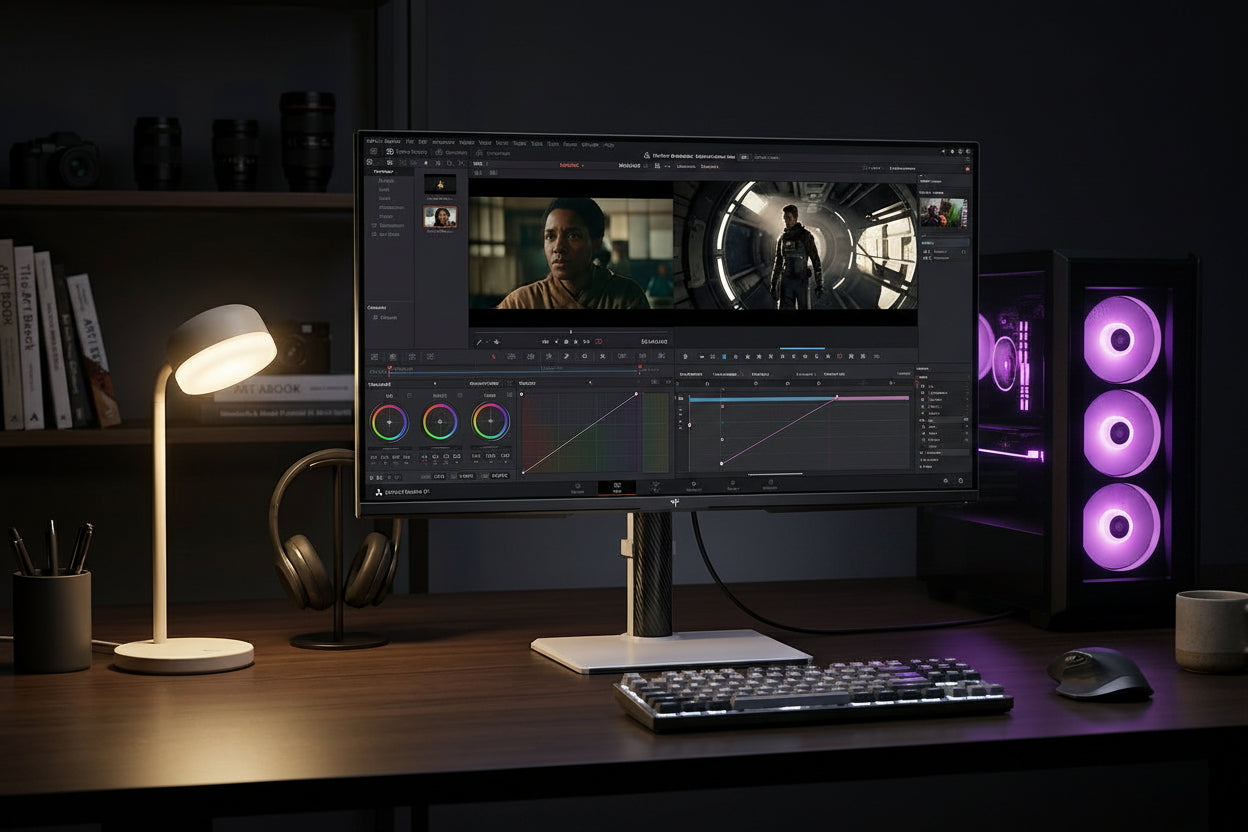
OLED tends to make the most sense for buyers who want one screen to do several jobs well. Writers, developers, analysts, and browser-heavy multitaskers may like the contrast and perceived depth, especially in mixed lighting or after-hours use. The display can feel cleaner and more polished, even if it is not the most boringly practical choice on paper.
For some people, that trade is worth it. If you value visual quality as much as productivity and you do not mind a little tuning, OLED can be a satisfying daily panel. If you want to plug in and forget about the display, a work-first IPS or Mini-LED screen is still easier.
The featured KTC OLED 27-inch QHD monitor fits that kind of mixed-use buyer better than a pure office minimalist. Its 27-inch 2560×1440 layout, 240Hz refresh rate, and USB-C support make it a reasonable choice when you want a premium-feeling desk screen and are willing to verify that the text presentation works for your setup.
For the font side of that decision, font rendering basics are worth a look before you buy.
Coding and Documents
Developers and writers often care more about letter edges and UI consistency than motion performance. OLED can look excellent in dark themes and polished interfaces, but text comfort still depends on density and rendering quality.
If your main job is reading and writing, think in terms of readability over wow factor. OLED helps when the panel is sharp enough; it disappoints when the setup is tuned more for entertainment than for long paragraphs.
Spreadsheets and Browser Tabs
Spreadsheets and browser dashboards are useful stress tests because they combine static headers, gridlines, and repeated interface chrome. If those elements feel easy to scan for hours, the monitor is probably a workable desktop fit.
If they feel uneven or distracting, you will notice that quickly. In that case, an oled monitor for daily desktop work may still be fine for mixed use, but it is probably not the simplest productivity default.
Mixed Work, Media, and After-Hours Use
OLED gets more attractive when the same desk also handles video, occasional gaming, or content browsing after work. That is where its contrast and image depth justify the premium feel more clearly.
If your monitor is truly a one-screen everything setup, OLED can make a lot of sense. If it is a strict office tool, the value case usually weakens.
How to Decide If OLED Fits Your Desk
Use this quick filter before you buy:
- If your day is mostly text, fixed toolbars, and spreadsheets, start by comparing OLED against a high-density IPS or Mini-LED screen.
- If you want the best chance of good text behavior, favor higher pixel density and verify how scaling feels at your actual seating distance.
- If your desktop stays on the same app layout for hours, treat static UI as a real workflow issue.
- If you also care about movies, games, or visual polish, OLED becomes more appealing.
- If you want the easiest productivity-first choice, All Monitors includes clearer non-OLED paths such as the KTC 27-inch 5K home and office monitor and the KTC 27-inch 4K Mini-LED monitor.
The shortest version is this: OLED makes sense when you want premium contrast and can accept some setup sensitivity. It is situational when your workflow is mostly static but you still want the image quality. A different panel type may fit better if your top priority is the least distracting text-first workday.
FAQs
Is OLED Good for All-Day Desk Work?
It can be, but only in the right setup. OLED is most practical for all-day desk work when the panel is dense enough, the scaling feels comfortable, and the workflow is not locked to one static layout for hours. If your job is mostly reading and writing, compare it carefully against IPS or Mini-LED.
What Matters Most for OLED Text Clarity on a Monitor?
Resolution and pixel density come first, then scaling and desk distance. Subpixel layout also matters because some OLED panels can show color fringing on text. If crisp letters are the priority, a higher-density panel is usually the safer starting point.
Can a Static Taskbar or IDE Layout Be a Problem on OLED?
It is a workflow consideration, not a simple yes-or-no flaw. Fixed taskbars, IDE side panels, spreadsheet headers, and browser chrome are normal office patterns, so buyers should judge how long those elements stay visible and whether that fits their tolerance for OLED-specific quirks.
Why Might a Buyer Choose Mini-LED Instead of OLED for Productivity?
Mini-LED can be easier for buyers who want strong image quality but prefer a simpler workday panel. It avoids some OLED-specific text and static-ui concerns, so it often appeals to people who expect long, repetitive office sessions and want less tuning.
What Should I Check Before Buying an OLED Monitor for Office Work?
Check the actual resolution, panel size, desk distance, scaling behavior, and how static your apps stay during the day. Then make sure the return policy gives you room to test it at home. That is the most reliable way to judge whether OLED is a fit, a compromise, or a miss.
Final Takeaway
An oled monitor for daily desktop work can be a good choice, but it is not the easiest default for every buyer. It works best when text density is high, your desk setup is right, and you value contrast and visual polish enough to accept some tuning. If you want the simplest text-first experience, IPS or Mini-LED may still be the better path.