A single-cable monitor for MacBook and Windows can clean up a hybrid desk, but only when the monitor, the source device, the cable, and the input path all line up. If any one piece is missing, you should expect a dock, adapter, or second cable instead of a true one-cable setup.

What a True Single-Cable Setup Needs
A true single-cable setup is not just "USB-C on the box." It means one cable carries both display signal and charging over a USB-C path that supports USB Power Delivery and DisplayPort Alt Mode. That is the clean version buyers want for a hybrid desk, but it is still a bounded convenience, not a universal dock replacement.
In real use, a dock may still be helpful for Ethernet, extra USB devices, audio gear, or multiple displays. The safest way to think about a single-cable monitor for MacBook and Windows is simple: if the monitor can do video and power, and the source device can send video over USB-C, you may get the clean setup you want. If not, the desk will need more than one connection.
For buyers who want to sanity-check the ownership side before they buy, KTC monitor ownership notes are a useful place to see the setup and daily-use trade-offs people actually run into.
Check MacBook and Windows Compatibility First
The first thing to verify is not the monitor size or refresh rate. It is whether your MacBook or Windows machine can send video over USB-C at all. Apple's 5K display guidance for Macs is a good reminder that Mac users should also think about sharpness and scaling, not just cable count. On a MacBook-first desk, text clarity can matter more than gaming specs.
For Windows, the path is more mixed. Some laptops can do power and video through USB-C, but many desktops still depend on HDMI or DisplayPort. That means the same KTC USB-C monitor can work for both ecosystems, but not through the same physical path every time. Charging support on the monitor does not prove the Windows device will behave the same way as the MacBook.
A useful decision sentence is this: if your laptop can do USB-C video and you only need one display plus charging, a one-cable monitor is a good fit; if you also need USB peripherals, Ethernet, or multiple displays, start planning on a dock or hub instead.
One more practical wrinkle: a monitor may need driver or settings work even when the cable is connected correctly. KTC's own support note on USB-C monitor driver installation says resolution, refresh rate, or hub behavior may need adjustment before the full feature set appears.
Power Delivery and Video Trade-Offs
Power delivery helps, but it does not tell the full story. The real question is whether the monitor gives your laptop enough wattage while also carrying video cleanly. For many office-style laptops, 65W is often enough to stay comfortable at the desk. For heavier laptops, creative workloads, or sustained load, more headroom is safer.
Here is the simplest way to compare the setups:
| Setup type | What one cable carries | What still needs a separate connection | Best fit |
|---|---|---|---|
| Video-only USB-C | Display signal | Charging, if unsupported; peripherals, if needed | Laptop or desktop users who only want a screen |
| USB-C with power delivery | Display signal and laptop charging | Extra USB devices, Ethernet, or second displays | MacBook or Windows laptop users who want less clutter |
| USB-C with power delivery plus hub/KVM | Display, charging, and some device switching | Heavy peripheral loads or multi-display work | Shared desks that switch between two machines |
The trade-off is that power delivery does not replace every dock function. If you want a monitor to act like a minimalist dock, check whether the exact model also covers hub or KVM behavior. If you only want a cleaner laptop desk, the charging path may be enough.
USB-C power delivery fit for a single-cable desk
General guide for choosing monitor power delivery based on laptop workload and charging headroom.
View chart data
| Category | Fit zone lower | Fit zone upper |
|---|---|---|
| 45W | 45 | 45 |
| 65W | 65 | 65 |
| 90W | 90 | 90 |
| 100W+ | 100 | 100 |
For context, Apple notes that lighter MacBook Air-style use can work at lower wattages, while larger MacBook Pro models often benefit from 90W or more during heavier work. That is why the right monitor choice depends on the laptop class, not just the idea of USB-C charging.
Which KTC Models Fit a Hybrid Desk
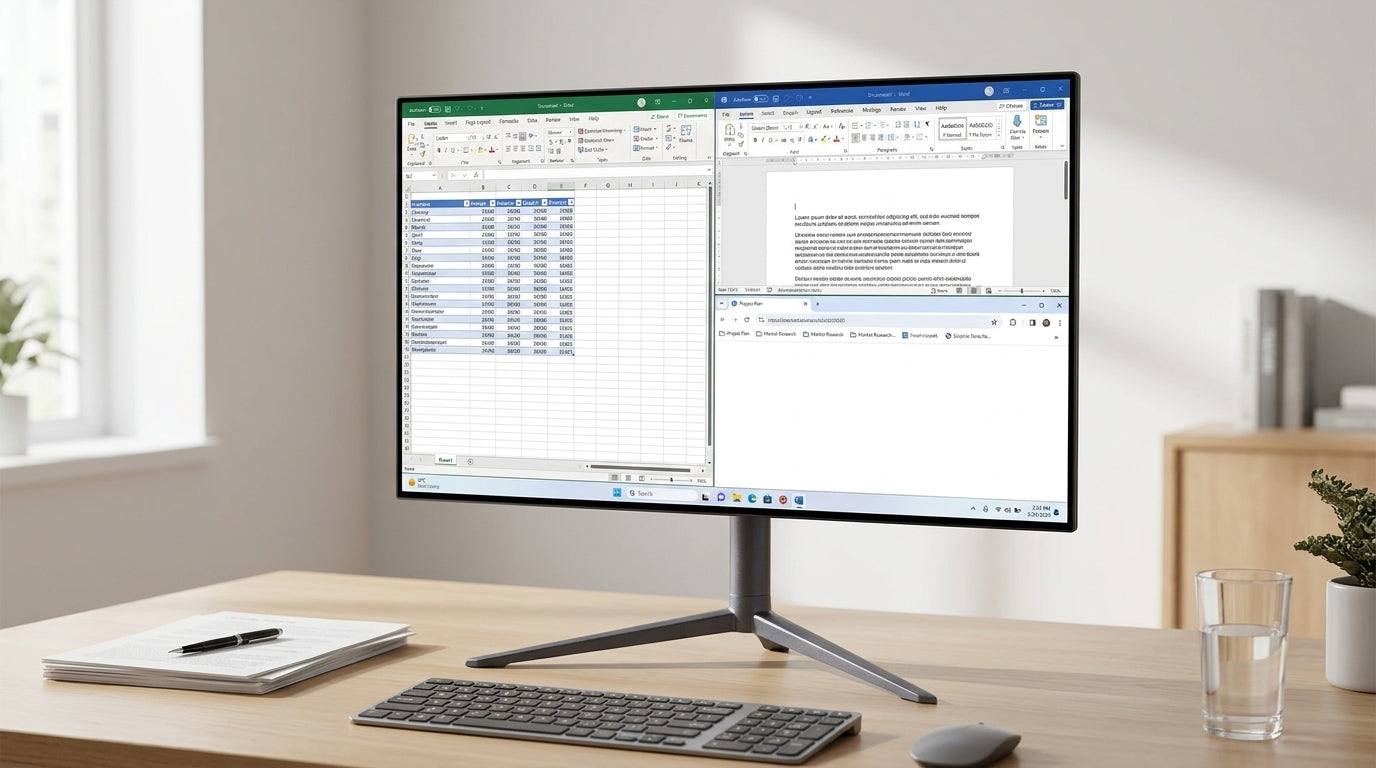
If your goal is a cleaner desk with fewer cables, the best KTC choice depends on what you do most often. MacBook-first buyers who care about text clarity should look at the KTC 27" 5K@60Hz 2K@120Hz Home&Office Monitor | H27P3. Its 5K mode is the strongest match here for Mac-style scaling and sharp text, and its 65W Type-C input supports a practical one-cable desk for office work.
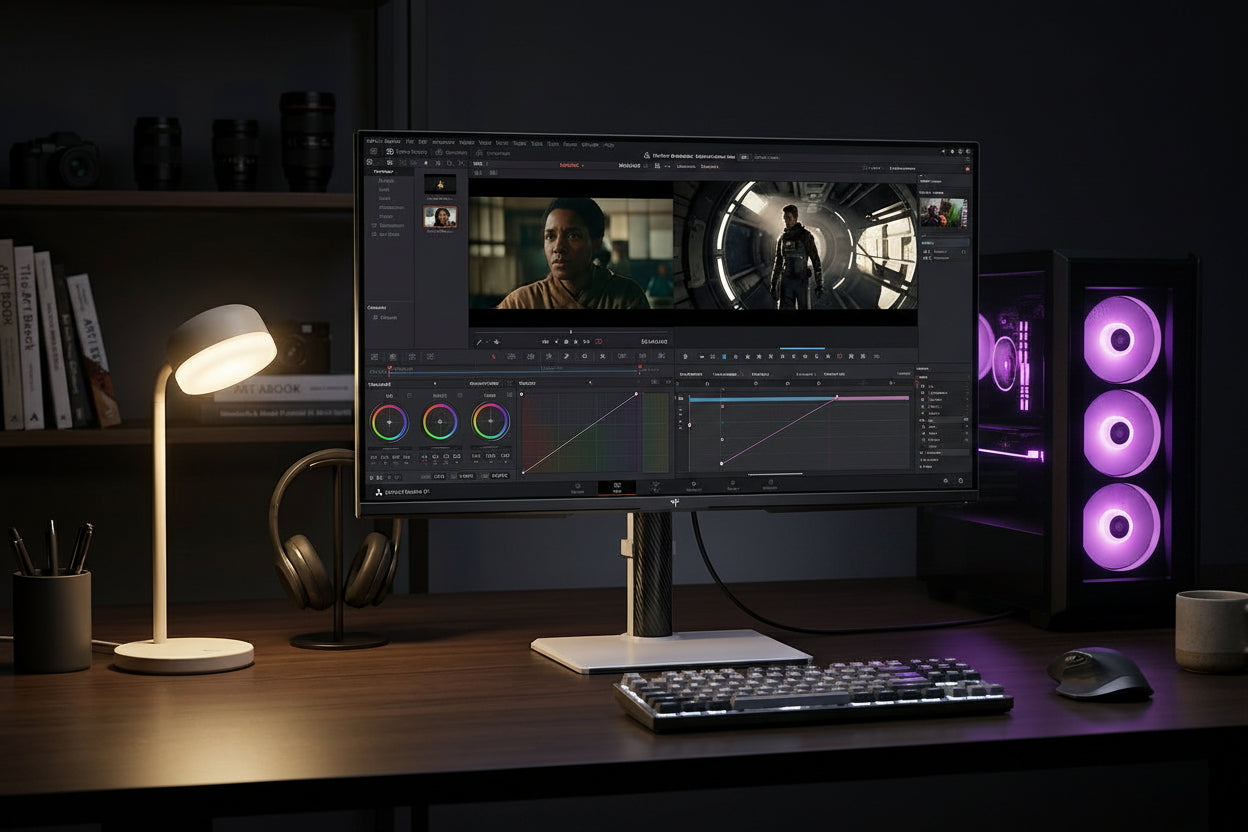
If you split time between work and play, the KTC OLED 27-inch USB-C monitor is the more flexible hybrid choice. It gives you USB-C charging, a high-refresh panel, and KVM support, which is useful when the same desk also handles a Windows machine or a gaming session after work. This is a good fit when you want the monitor to do more than charge a laptop, but you still do not want to buy a full dock stack.
For buyers who want a bigger shared canvas, the KTC 49-inch ultrawide monitor makes sense as an ultrawide workspace, not just a display. Its 90W USB-C path and KVM support can help a mixed-device desk feel simpler, but the size and desk depth matter a lot more than they do on a 27-inch panel.

A good rule of thumb is this: choose H27P3 when the MacBook is the primary machine, choose G27P6 when work and play both matter, and choose H49S66 when the bigger canvas matters more than desk simplicity.
Final Checks Before You Buy
Before you assume a KTC monitor will work as a single-cable monitor for MacBook and Windows, check the source device first, then the cable, then the monitor input. The device must support USB-C video, not just charging. The cable should be a full-function USB-C cable if you want display and power over one connection.
Then decide whether you are connecting a laptop, a desktop, or both. A laptop may get the clean one-cable setup you want, while a desktop often still uses HDMI or DisplayPort. If you also need more than basic charging and display, browse the Office Monitor and 4K Monitor collections to compare office-first and higher-resolution options.
The safest short list is one monitor that matches your main device, your desk space, and your charging needs. If that still feels uncertain, verify the port behavior in your device manual before you buy.
FAQs
Can a USB-C Monitor Charge a MacBook and Display Windows Devices Too?
Yes, but only on supported setups. The MacBook or Windows device has to send video over USB-C, and the monitor has to support the right input path and power delivery. A Windows desktop may still use HDMI or DisplayPort instead of relying on the same one-cable workflow.
What Should I Check If My Laptop Charges but the Monitor Stays Blank?
Treat charging and video as separate checks. If the laptop powers up but the screen stays blank, confirm that the USB-C port on the laptop supports display output and make sure the monitor input is set correctly. A direct cable test is the fastest way to rule out the dock or adapter.
Why Might I Still Need a Dock on a Hybrid Desk?
A dock still helps when your desk needs Ethernet, extra USB ports, or multiple displays. Even when a monitor handles charging and video, it usually does not replace every workstation accessory. That is why the one-cable setup is best seen as a convenience layer, not a full replacement layer.
What KTC Monitor Is Most Practical for a MacBook-First Desk?
The most practical MacBook-first option here is the H27P3, because its 5K resolution suits text-heavy work and its 65W Type-C input supports a cleaner laptop desk. If you care more about gaming speed or shared-device switching, another model may fit better, but the display sharpness trade-off changes.
Can a Windows Desktop Use the Same Single-Cable Setup?
Sometimes, but not in the same way as a laptop. A Windows desktop usually needs HDMI or DisplayPort for video, and it does not need laptop charging at all. So the monitor can still serve both machines, but the desktop side usually follows a different cable path.
Final Takeaway
A KTC single-cable hybrid desk is realistic, but only when the laptop supports USB-C video, the monitor supports the right power path, and your workflow stays simple. For a MacBook-first desk, H27P3 is the cleanest fit. For mixed work and play, G27P6 is the more flexible choice. For a larger shared canvas, H49S66 is worth a look, but only if the desk space matches it.