A USB-C KVM monitor can make a MacBook and gaming PC desk feel cleaner, but only if the monitor's USB-C power delivery and switching behavior fit your exact setup. The KVM label helps, yet it does not prove the laptop will charge the way you want or that the inputs will wake up cleanly every time. Think of this as a fit check first and a convenience upgrade second.

What a USB-C KVM Monitor Solves at a Hybrid Desk
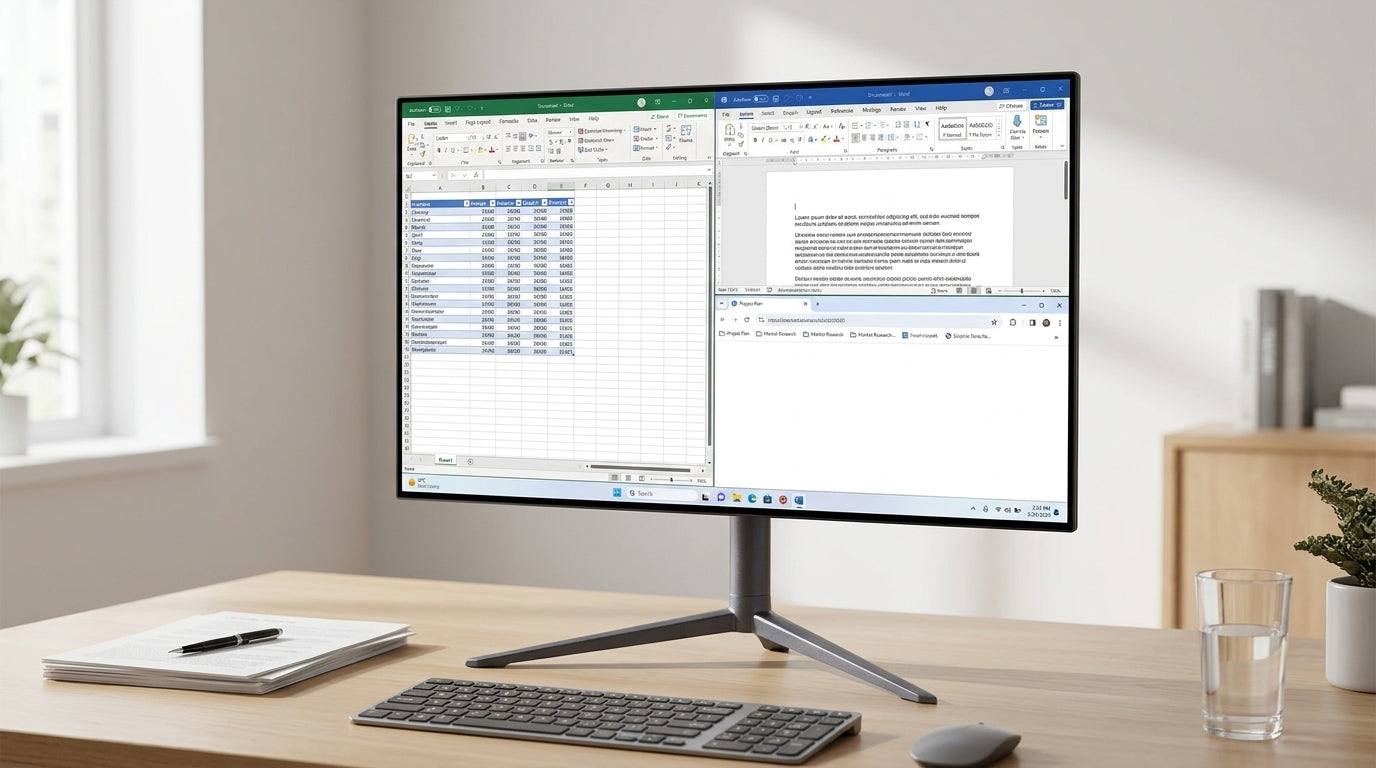
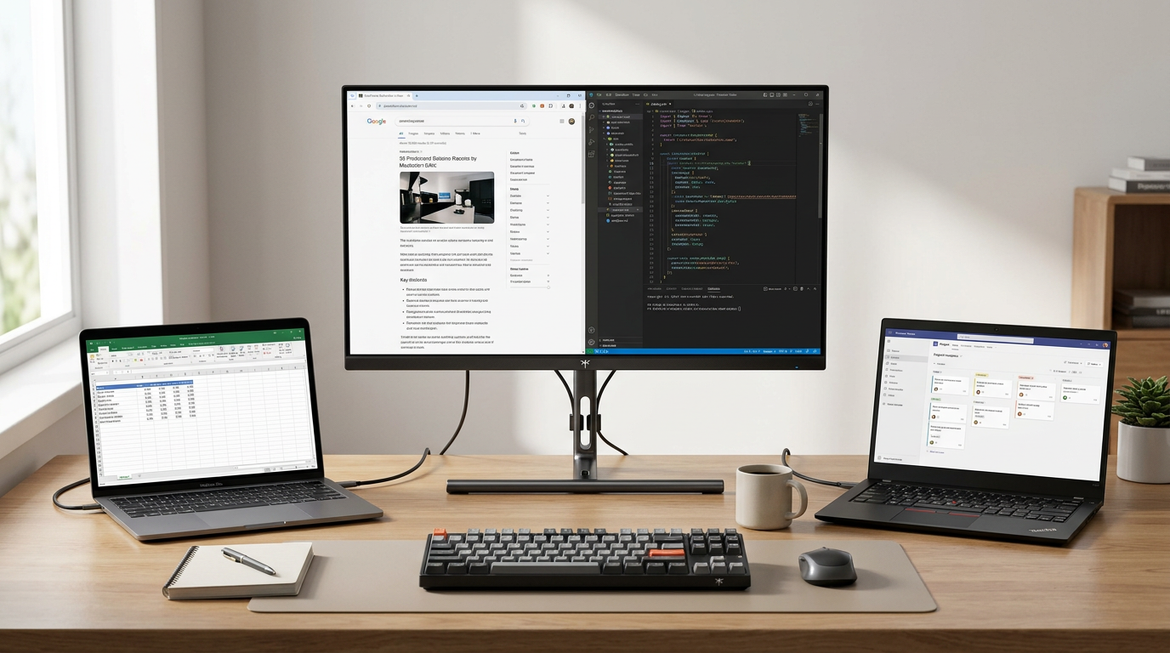
For a hybrid desk, the main win is simpler switching between work and play. A USB-C KVM monitor can carry display, data, and sometimes power through one laptop cable, while also letting a gaming PC share the same screen and USB peripherals. That makes it a practical fit check for a MacBook-plus-PC desk, not a guaranteed all-in-one solution.
The catch is that “one monitor for both” is not the same as “one cable fixes everything.” The monitor still has to match the MacBook's power needs, the PC's preferred video path, and the way your devices handle source changes. Apple's guidance on charging Mac laptops over USB-C is a good reminder that power is negotiated, not assumed.
If the laptop side is the priority, the setup can feel close to dock-like convenience. If the gaming PC side is the priority, the monitor still needs a clean direct video path and stable switching. The best fit is a desk where convenience matters, but not at the cost of constant troubleshooting.
How MacBook and Gaming PC Work Together
The MacBook side is usually the one most likely to use USB-C for both video and charging. That is what makes a USB-C KVM monitor attractive on a workday desk. If the monitor and cable support it, the laptop can connect with one lead instead of a display cable plus charger plus hub.
The PC side is often more predictable over DisplayPort or HDMI. That matters because gaming buyers usually care more about a stable signal path, refresh-rate confidence, and easy source selection than about single-cable convenience. A direct PC connection can also keep the gaming path separate from the laptop path, which reduces the chance that one device's needs create friction for the other.

What this means in practice is that the two device paths should be judged separately. The MacBook path is about display plus charging. The PC path is about image stability and refresh-rate support. The shared USB path is about whether your keyboard, mouse, and headset follow the active source the way you expect.
A technical detail that helps here is bandwidth. When one USB-C cable is doing a lot at once, the monitor may need to balance video and USB data, and some setups trade USB speed or refresh-rate flexibility to make that work. Dan Charlton's breakdown of 4K monitors plus USB devices over one USB-C port shows why some hybrid desks feel smooth in one mode and limited in another.
That is why the monitor choice should follow the workflow, not just the port count. If you mostly care about work convenience with occasional gaming, the laptop path may matter most. If you care about gaming first and use the MacBook as a secondary source, the PC path should drive the decision.
USB-C Power Delivery Limits That Matter
USB-C power delivery can reduce clutter, but it is not the same thing as a dedicated charger. Apple notes that Mac laptops negotiate power over USB-C, which means the laptop only draws what the source can offer and what the setup supports. In other words, the monitor's power claim is only useful if it lines up with the MacBook model and what you are doing on that machine.
That matters because a monitor can be fine for light work and still feel underpowered once the laptop is under load. KTC's own guidance on getting the most from monitor USB-C wattage and why charging can stall both point to the same practical rule: verify the real power path, not just the headline port label.
Use this as a quick check before you buy:
- Confirm the MacBook model you own, then check whether the monitor's USB-C power output is meant to serve it as a real charger, not just a data port.
- Use a full-function USB-C cable that supports video and power negotiation.
- Assume a monitor charger may be enough for some workdays but not all heavy-use sessions.
- Treat charging behavior, sleep behavior, and cable behavior as separate checks.
- If you need the MacBook to stay charged under load, keep a separate charger in the setup plan.
A USB-C KVM monitor is a good fit when the USB-C port is clearly documented and the MacBook side does not need every ounce of charging headroom all the time. It is a weaker fit when the laptop is already power-hungry, the USB-C cable is questionable, or you expect the monitor to replace a high-output charger with no compromise.
Which Monitor Features Reduce Switching Friction
The features that matter most are not always the flashiest ones. For a shared desk, the important question is whether the monitor helps you switch cleanly without making work text worse or gaming feel limited. A good hybrid monitor should make the change in source feel simple, not like a mini setup project each time.
Here is a practical feature map for a USB-C KVM monitor:
| Feature Area | Why It Matters For Hybrid Use | What To Verify | When It Is Less Important |
|---|---|---|---|
| USB-C power delivery | Reduces laptop cable clutter | Actual wattage fit for your MacBook and workload | If you keep a separate charger nearby |
| KVM or USB switching | Lets keyboard and mouse follow the active source | Whether peripherals move with the selected input | If you rarely switch devices |
| Video inputs | Keeps the gaming PC path predictable | DisplayPort and HDMI support for the PC side | If the MacBook is the only main device |
| Refresh rate | Helps gaming feel smooth | The rate supported on the PC input you will actually use | If you mostly do office work |
| Panel size and resolution | Affects text clarity and desktop space | Whether the screen looks sharp enough at your sitting distance | If you sit close and want compact desk use |
| Ergonomics | Helps long work sessions feel less awkward | Height, tilt, and swivel adjustment | If the monitor stays in one fixed position |
For shopping, the useful split is simple. 4K monitor options make more sense when text clarity and MacBook work are a priority, while gaming monitor options make more sense when the PC side and refresh rate drive the decision.
The friction you want to avoid is hidden in the details. A monitor can look ideal on paper and still annoy you if the stand is too fixed, the USB path is inconsistent, or the active input does not stay where you expect after sleep. Community reports about KVM wake issues, including standby and wake friction, are useful here as a warning sign, not as proof that every setup will fail.
A simple rule of thumb: choose higher refresh rate for the gaming PC if you actually play fast titles, but do not trade away text clarity and ergonomics if the MacBook is your work machine most of the day. That balance usually matters more than a feature checklist that looks impressive but does not match your desk pattern.
A Product Fit Example for a Shared Desk
A reasonable example of this kind of setup is the KTC H27P6, a 27-inch 4K monitor that combines a 90W USB-C port with dual-mode display support. That mix can work well for a hybrid desk where the MacBook needs a cleaner one-cable path and the PC still gets a fast, high-resolution display.
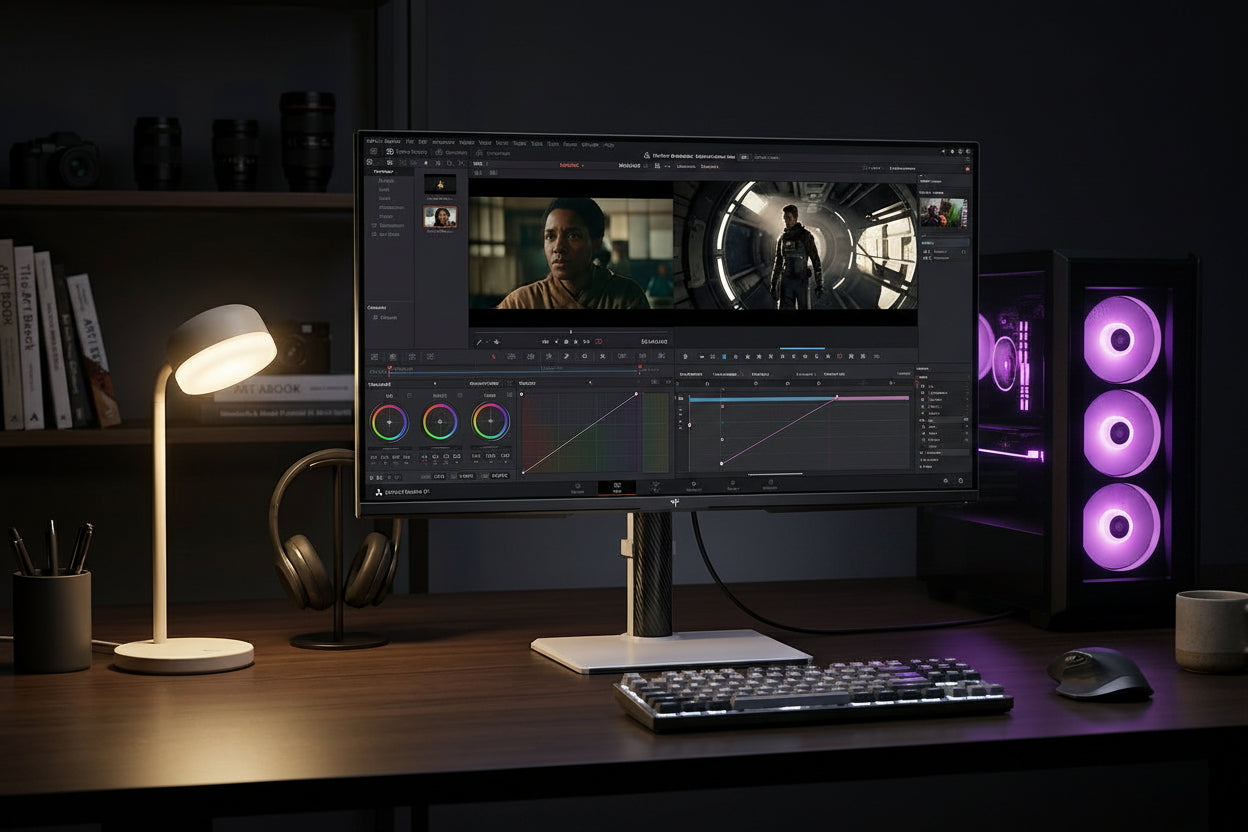
It fits best when you want one monitor to cover work text, regular laptop use, and evening gaming without moving between separate screens. The 4K mode helps the MacBook side feel sharp, while the higher-refresh option gives the PC side more headroom for games. The built-in KVM function also makes sense when you want your keyboard and mouse to follow the active source instead of living on a separate USB hub.
It is not the right answer for every buyer. If your MacBook needs more charging headroom than a single monitor can realistically provide, keep a dedicated charger in the plan. If your desk setup depends on a very specific input layout, larger screen size, or a different stand style, another model may fit better. The point is not that this monitor solves every hybrid desk problem, but that it matches a common one: a MacBook-plus-PC setup that values cleaner cabling without giving up a serious display.
Final Compatibility Checks Before You Add to Cart
Before you buy a USB-C KVM monitor, answer these five questions: does your MacBook support USB-C video, does the monitor's power delivery fit your laptop's real need, does your gaming PC have the right HDMI or DisplayPort path, do your cables support the mode you want, and do you actually want peripherals to follow the active source? If any of those are unclear, keep shopping or verify the exact specs first. A good hybrid monitor should simplify the desk, not become the reason you keep a charger and a troubleshooting checklist on hand.
FAQs
Can a USB-C KVM Monitor Replace a Dock for a MacBook and Gaming PC?
Sometimes, but not always. It can reduce cable clutter and handle some dock-like duties, especially when the monitor includes USB hub features and enough USB-C power delivery for your laptop. The part to verify is whether it supports your exact MacBook, cable, and switching pattern, not just whether it sounds like a dock.
What Should MacBook Buyers Check Before Depending on Monitor USB-C Charging?
Check the MacBook model, the monitor's published USB-C power delivery, and the cable type. Apple's USB-C charging guidance makes clear that power is negotiated, so a monitor can be compatible and still not be the right charger for a heavy-use day. If you want battery safety margin, keep a separate charger nearby.
Why Does a Gaming PC Often Work Better on DisplayPort Than USB-C?
A direct DisplayPort path is often the most predictable for gaming because it keeps the PC side simple. That does not mean USB-C is bad, only that a gaming desktop usually does not need to share the same port for both power and video. If gaming reliability matters most, a direct video input is usually the cleaner choice.
Can KVM Switching Still Be Unreliable Even If the Monitor Supports USB-C?
Yes. Wake-from-sleep, source re-detection, cable quality, and device implementation can all change how clean the switch feels. The KVM label tells you the feature exists, but not how your MacBook and PC will behave together. That is why a good setup test should start with the video path first and add USB switching afterward.
What Is the Safest Way to Test a New Hybrid Monitor Setup?
Start with one direct video connection per device, then confirm the MacBook picture and the PC picture separately. After that, add USB peripherals and test source switching again. If the image is stable before the KVM path is added, it is much easier to tell whether a problem comes from the monitor, the cable, or the switching behavior.