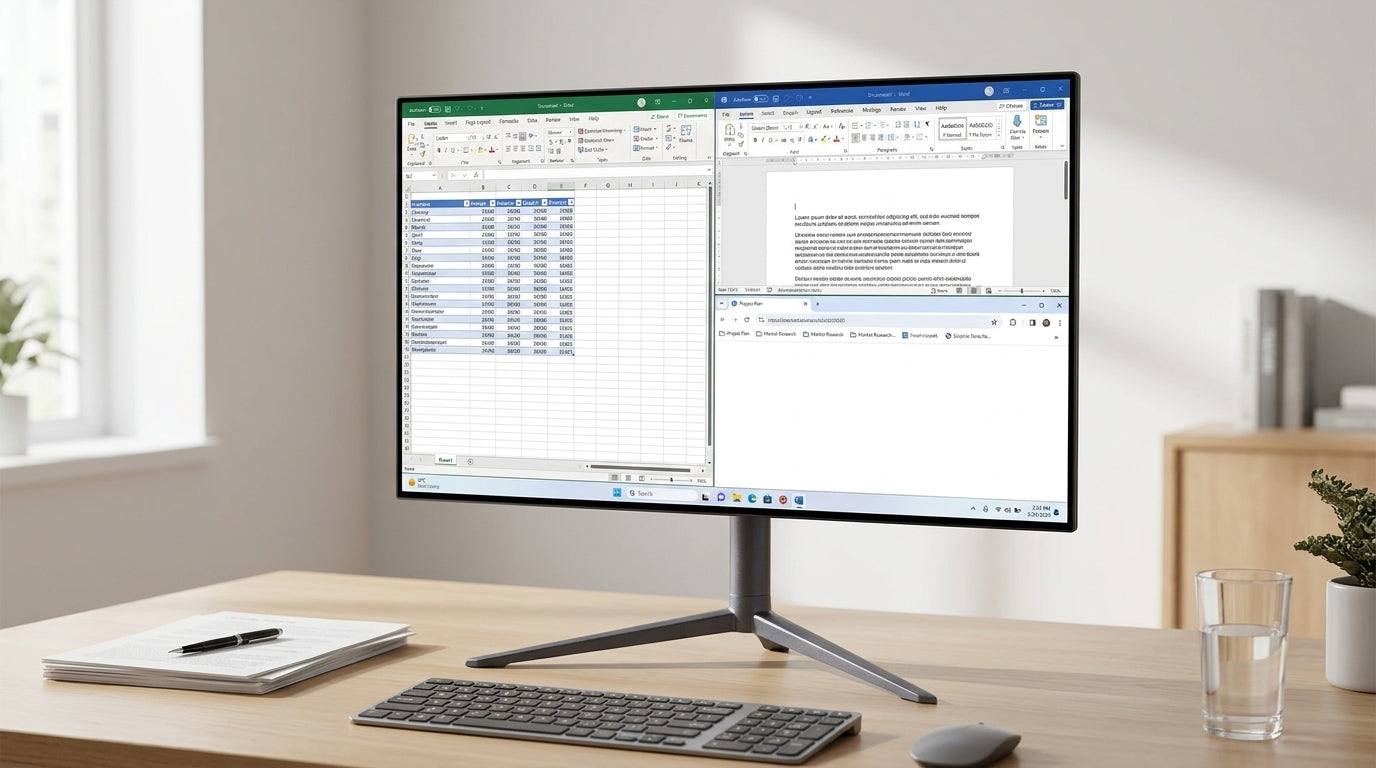
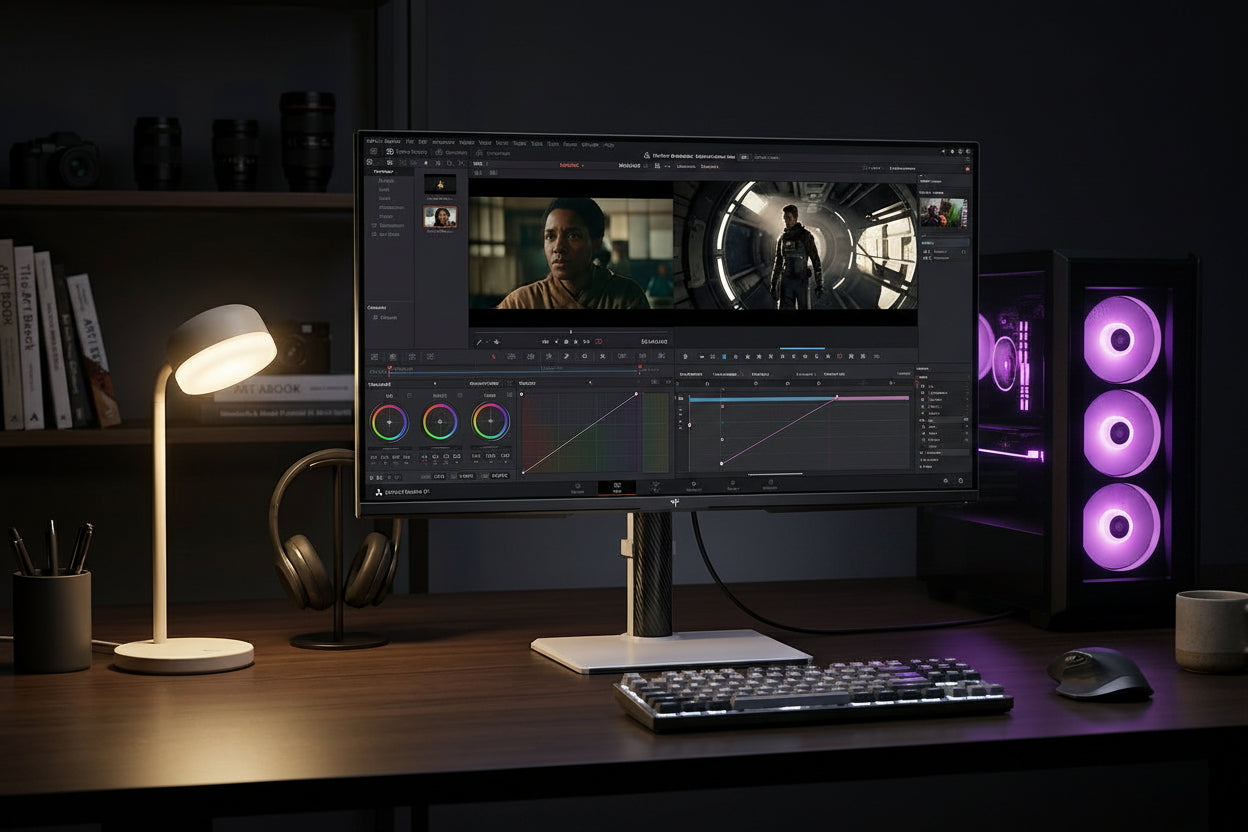
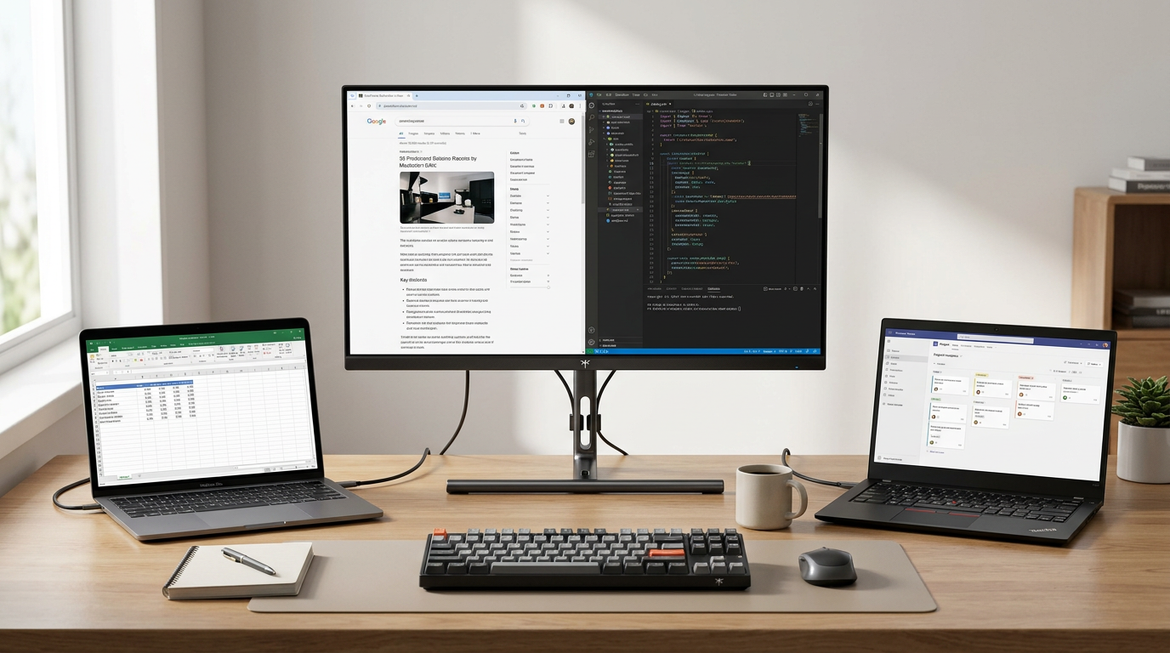
The ps5 monitor 4k 120hz vrr checklist helps verify exact console modes before you buy. A monitor can excel as a PC display yet miss the console feature you need if the HDMI input or firmware limits the signal path. Focus on verified 4K 120Hz support, usable VRR, and a clean HDMI 2.1 path rather than headline specs alone.

What Consoles Need From a Monitor
For most console buyers, the signal path matters more than the box label. Microsoft's 4K gaming at 120Hz guidance makes the basic point clearly: if the connection path does not support the mode, the display cannot show it. HDMI 2.1 signaling underpins full console 4K 120Hz and standardized VRR/ALLM, though not every HDMI 2.1 monitor enables every feature automatically.
A good console monitor check starts with four questions: can it accept 4K at 120Hz, does VRR work on console input, does HDR behave like you expect, and are there enough HDMI ports for the way you actually use the desk? If the answer to any of those is unclear, treat the monitor as a maybe, not a yes.
That is especially true on a desk. At two to three feet away, menu access, port placement, and cable quality affect daily use more than they do on a living-room TV. If you do not want to keep digging through on-screen menus, prefer a monitor with simple input switching and a direct HDMI connection.
Quick self-check
- Confirm the exact console mode listed by the seller, not just the refresh rate.
- Check whether the HDMI port is the one you will actually use for the console.
- Look for console VRR support, not only PC adaptive-sync branding.
- Verify that HDR is described with a brightness tier or HDR class, not only a logo.
- Make sure the stand, VESA mount, or desk footprint fits your setup.
If you want a deeper buying breakdown, this ps5 monitor 4k 120hz vrr checklist expands the same decision path without changing the core checklist.
The Console Compatibility Checklist
Use this order before you buy:

- Confirm the advertised console mode. If you want 4K 120Hz, the listing should say that clearly. If it only says "high refresh" or "gaming monitor," do not assume console support.
- Check the HDMI version and port count. A single HDMI 2.1 port may be enough for one console, but a shared PS5, Xbox, and PC setup often needs more flexibility.
- Verify VRR behavior on console input. PC adaptive sync and console VRR are related, but they are not always presented the same way in product pages or menus.
- Read the HDR claim carefully. HDR labels by themselves do not tell you whether the picture will actually look strong in a bright room or a darker game.
- Confirm menu and firmware access. If input switching or picture mode changes are buried, setup friction becomes part of the product.
- Check the cable path. A direct, certified cable is a better baseline than a dock, splitter, or switch if you are troubleshooting console modes.
A practical decision sentence: if the monitor does not clearly list the console mode you want, it is not a safe buy for that use case. Another useful boundary: if you plan to route the signal through extra adapters or splitters, expect more setup work and a higher chance of missing modes.
PS5 Versus Xbox Feature Differences
PS5 and Xbox Series X both reward a monitor that can handle the same core modes, but the setup experience is not identical. Xbox tends to expose more of the display chain in its settings, so VRR and refresh-rate negotiation are often easier to inspect. PlayStation's VRR rollout notes show that PS5 VRR depends on supported games and a compatible display path, which is why the monitor side still matters.
What this means in practice is straightforward: if you are mostly on Xbox, pay extra attention to what the console reports after the display is connected. If you are mostly on PS5, verify the exact game mode you expect to use, because not every title outputs the same frame rate or HDR behavior.
A shared monitor works best when it has direct HDMI support and a menu that remembers settings cleanly. If you plan to use one display for PS5, Xbox, and PC, do not pick a monitor just because it has the highest PC refresh rate on the spec sheet. Choose the one that keeps console switching simple.
For readers who want a broader explanation of why this matters, see why adaptive sync technologies matter more than raw refresh rate.
PS5 and Xbox buyer fit
| Buyer situation | Better fit | What to verify first |
|---|---|---|
| Console-first, mostly PS5 | Monitor with clear 4K 120Hz HDMI support and simple menus | Game mode support, HDMI 2.1, console VRR |
| Console-first, mostly Xbox Series X | Monitor with easy refresh-rate and VRR visibility | HDMI 2.1, VRR behavior, port count |
| Shared PS5, Xbox, and PC setup | Monitor with enough ports and low setup friction | HDMI layout, input switching, firmware access |
| Budget buyer under $500 | Monitor that prioritizes the one feature you care about most | 4K, 120Hz, or price, in that order |
Best Fits Under Four Hundred Dollars
If you want a KTC option that stays close to a console-friendly setup, start with the KTC 27" 4K 160Hz/1ms HDR400 Gaming Monitor | H27P22S. Its fact pack confirms 4K resolution, dual HDMI 2.1 ports, HDR400, and a fully adjustable stand, which makes it a reasonable fit for a desk setup where the monitor must serve both console play and everyday positioning.
That does not make it automatically the best pick for every buyer. If your priority is a simple PS5 or Xbox console connection, the main question is whether you value the extra flexibility of a 27-inch 4K 160Hz panel more than the lowest possible price. If the answer is yes, this model is easier to justify than a cheaper display that compromises on HDMI support or stand adjustment.
The KTC 27" 4K 160Hz/320Hz 90W Gaming Monitor | H27P6 is the stronger hybrid choice when you want console use and PC use to share the same desk. Its confirmed 4K 160Hz mode, 1080p 320Hz mode, 90W USB-C, and dual HDMI 2.1 inputs make it more flexible for people who switch between a console and a desktop often.
That flexibility has a trade-off. If you only care about console use, the extra modes are nice but not essential. If you care about one monitor for console, PC, and maybe a laptop, the added input variety is the part that changes the buying decision.
A clear decision sentence: if your desk setup will stay console-only, buy for verified console compatibility first and treat extra PC features as a bonus. If you will regularly swap between console and PC, pick the model with the cleanest port layout and the fewest setup compromises.
Setup Mistakes That Break Console Modes
Most "my monitor is not working" complaints are really signal-path problems. The limited RGB range fix guide is a good reminder that image issues can come from settings, not just hardware.
- A low-quality HDMI cable can keep 4K 120Hz or HDR from appearing, even when the monitor supports those modes.
- HDMI switches, splitters, and docks often create the signal loss that blocks the mode you expected.
- Wrong console color-range settings can make the image look washed out even when resolution and refresh rate are correct.
- If the screen goes black after a change, fall back to 1080p at 60Hz first, then raise the mode step by step.
- Firmware and monitor menu settings can matter just as much as the cable when a console refuses to switch properly.
What usually causes regret is assuming the monitor is defective before checking the input chain. If the monitor works directly from the console but fails through a dock or splitter, the accessory is the problem, not the display.
Final Checks Before You Click Buy
Before checkout, match the monitor size to the distance between your chair and the screen. At a typical desk distance, a 27-inch 4K monitor is often easier to live with than a larger panel that feels too big for the desk.
Then verify the support details that matter after delivery: warranty, return window, and how easy it is to get a replacement if the mode you need does not appear. If you are unsure whether you want a broader 4K browse path or a gaming-focused one, the 4K Monitor collection and the Gaming Monitor collection are useful starting points.
The final rule is simple: buy for the exact console mode you need, not for a refresh-rate number that only applies in a different setup. If the monitor cannot clearly prove the mode on the page, keep looking.
Related Resources
Explore these focused guides for deeper troubleshooting:
- GPU, Cable, and High-Refresh Monitor Setup Education Library covers why high-refresh monitors stay stuck at 60 Hz and exact cable fixes.
- HDR and Overdrive Settings explains motion clarity conflicts.
- Why HDR Looks Worse on Console shows calibration steps that restore picture quality.
FAQs
Q1. Does every HDMI 2.1 monitor support full PS5 4K 120Hz VRR?
No. Verify the exact console mode on the product page rather than assuming HDMI 2.1 alone guarantees it.
Q2. How do I confirm VRR works with my Xbox Series X?
Connect directly, then check the console's display settings for the VRR toggle and reported refresh rate.
Q3. Why does HDR sometimes look worse on console?
Poor calibration, tone-mapping conflicts, or brightness limits often flatten the image; adjust HDR settings as one system.
Q4. Can I use a single monitor for PS5, Xbox, and PC?
Yes, if it offers multiple HDMI 2.1 ports and remembers input-specific picture modes.
Q5. What cable should I use for 4K 120Hz?
A certified Ultra High Speed HDMI cable provides the most reliable signal path.