Are portable smart displays worth it? For US home users who move one screen between rooms several times a week, they can be worth the premium when convenience replaces a fixed desk setup, a tablet, or a second TV-like screen. The value is highest if you will actually roll it around the house and use it for streaming, calls, workouts, or casual work.

What a Rolling Smart Display Actually Buys You
A rolling smart display buys you mobility first and gadget features second. The main benefit is not that it is "smarter" than a monitor, it is that one screen can move from room to room without turning every session into a cable swap.
That matters most when the same display has to serve different jobs: evening streaming in the living room, a quick video call in a quieter corner, a workout video in the bedroom, or recipe viewing in the kitchen. If it only stays in one place, the premium is much harder to justify.
For buyers comparing category options, the Mobile Touch Screen collection is the right browsing path if you want to compare larger portable smart displays rather than fixed monitors. That framing matters, because a rolling screen is usually a convenience purchase, not a raw-spec purchase.
Where the Value Shows Up Most
The best fit is repeated, ordinary movement, not one-off novelty. If you will shift the display between shared spaces several times a week, the saved setup friction can feel real very quickly.
Room-To-Room Streaming and Sports
Streaming is where these displays make the most sense for many households. A 27- to 32-inch screen is easier to share than a tablet, and it is less cramped for sports, shows, or family viewing.
The trade-off is simple: if you mostly watch in one room, a fixed TV or monitor is usually simpler. If you regularly move the viewing spot, a rolling screen becomes more attractive because you stop rebuilding the setup every time.
Video Calls and Work-From-Home Flexibility
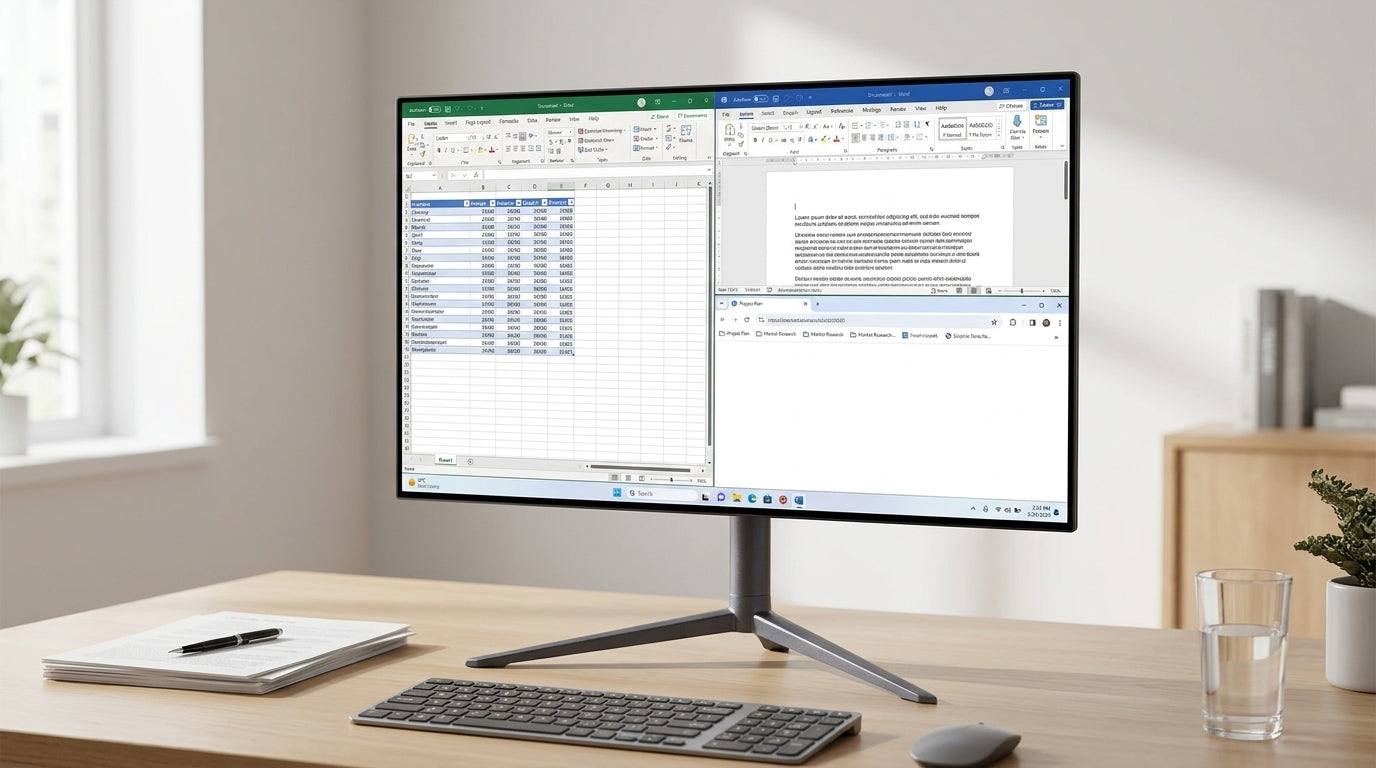
A movable display helps when your lighting, noise level, or background changes during the day. That can be useful for calls and light remote work, especially if you do not want a permanent desk display taking up space.
This is where the purchase often flips. If your work is mostly desk-based and you need a permanent ergonomic setup, a traditional monitor is usually the better fit. If you bounce between rooms and only need a screen for meetings, a rolling display can be more convenient than a full desk station.
Workouts, Recipes, and Family Viewing
Workouts and recipes are strong use cases because the screen can follow the activity instead of forcing the activity to follow the screen. Family presentations also benefit from a larger shared view that is easier to reposition than a TV mounted in one spot.
If your main use is personal, compact, and always close to a bag, a tablet still wins on portability. If your main use is household sharing, the larger screen becomes the point.

The Trade-Offs That Decide Value
A rolling smart display is only a good buy when mobility matters more than simplicity. That is the core trade-off against both fixed monitors and tablets.
| Option | Best At | Main Limitation | Best Fit |
|---|---|---|---|
| Rolling smart display | Moving one larger screen around the home | Higher price and more setup complexity | Shared streaming, calls, workouts, casual work |
| Fixed monitor | Desk permanence and simple wiring | Stays in one place | Permanent home office or entertainment setup |
| Tablet | Compact grab-and-go portability | Smaller shared viewing experience | Personal use, travel, tight storage |
The question is not which device is "best" in general. It is which one matches your real pattern of use. A rolling smart display wins when the same screen must do several room-based jobs. A fixed monitor wins when the screen stays put. A tablet wins when size is less important than carrying it around.
Smart features can reduce the need for a separate streaming device in some homes, but not every household needs that integration. If you already have a streaming stick, console, or laptop source that works well, built-in apps are a convenience, not a reason by themselves to buy.
For readers who want a broader category comparison after this section, Smart Monitor is a useful browsing path, especially if you are deciding between a home display and a more traditional monitor setup.
Battery Life, Stability, and Daily Movement
Battery life is one of the biggest reasons people regret this category. Runtime changes with brightness, app load, and wireless use, so the number on the page is only useful if it matches your actual habits.
For battery-backed models in this lineup, the supplied specs point to roughly 5 to 11 hours on larger units depending on use, with lower runtime at higher brightness or heavier streaming. In plain English, that means a display can feel truly mobile for a long stretch in one setup and much less flexible in another.
That is why buyers should test their longest realistic session, not just assume the headline number will hold. If you plan on all-day use at high brightness or with constant casting, the battery may be a convenience buffer rather than a true unplugged solution.
Battery Runtime by Real Use
Treat runtime as a usage range, not a promise. Lower brightness, fewer wireless tasks, and lighter app use usually stretch the battery further. Higher brightness, 4K streaming, and wireless casting usually shorten it.
That makes these displays more useful for moving between rooms than for replacing a wall power connection all day. If your longest session regularly exceeds the practical runtime of the model, the mobility benefit drops fast.
Wheel Stability and Repositioning
Frequent rolling changes the purchase decision. The stand, wheels, and cable management matter almost as much as the screen itself because the unit has to feel stable while moving and while parked.
The supplied setup notes also point to a real-world friction point: moving a larger display often works best on stable flooring, with enough room to turn it safely. If you expect quick one-hand repositioning or narrow doorways, the category can be less convenient than it looks.
Screen Quality and Comfort
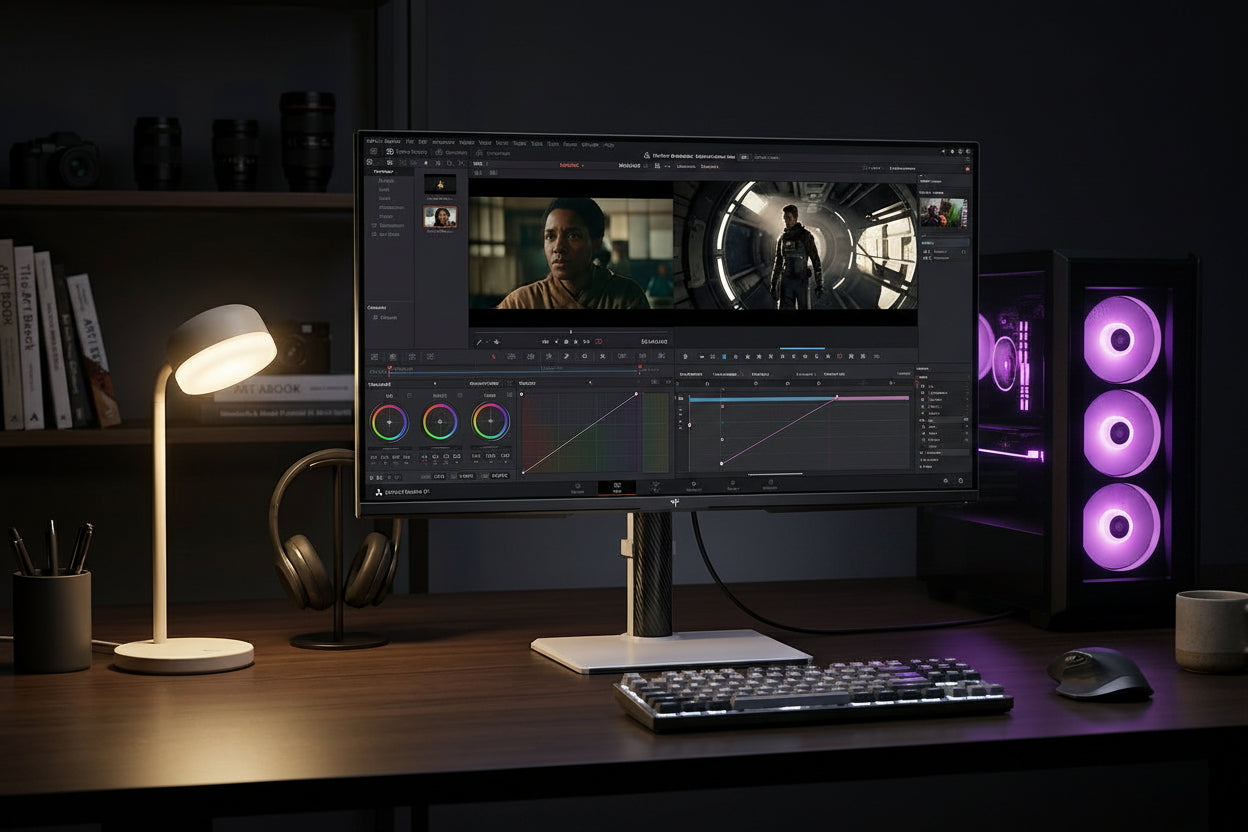
On this type of product, 4K sharpness, contrast, anti-glare treatment, and low blue light support all affect whether the price feels justified. Those specs matter less as bragging rights and more as comfort checks for long, direct viewing.
Touch response and app comfort matter too. If you plan to use the screen directly, not just as a passive monitor, the interface should feel smooth enough that the device does not become annoying after the first week.
The 32-inch MEGAPAD smart touch monitor is a useful example of the category because it pairs a 31.5-inch 4K panel with a built-in battery, adjustable height, tilt, rotate support, Android 14, HDMI 2.0, USB-C, and USB 3.0. That combination makes sense for mixed home use, but the 16.5 kg with stand also means it is more of a movable home screen than a light carry-anywhere device.
Who Should Buy One — and Who Should Not
- Buy one if you will move the screen between shared living spaces several times a week. That is the cleanest value case.
- Buy one if one display needs to cover streaming, calls, workouts, and casual work without permanent desk commitment. That is where convenience stacks up.
- Buy one if you want a larger touch-enabled screen than a tablet and more flexibility than a fixed monitor. That is the middle ground the category is designed for.
- Do not buy one if you mostly sit at one desk. A fixed monitor is usually simpler and cheaper for that use.
- Do not buy one if you want the cheapest possible second screen. A rolling smart display is a convenience product, not a budget one.
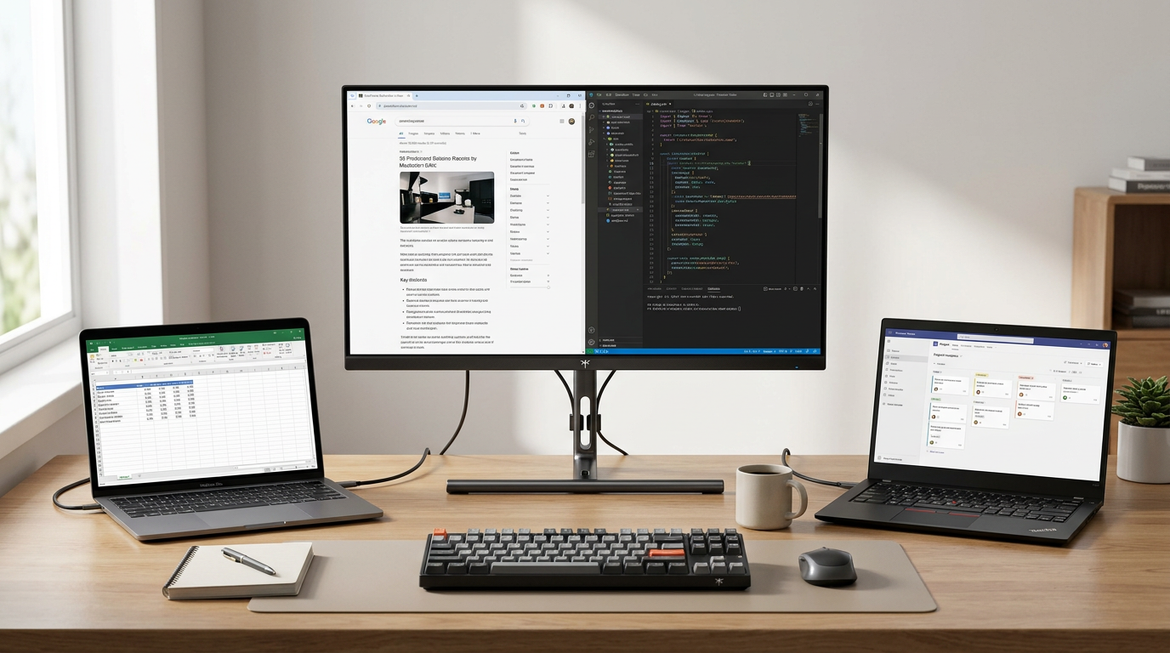
- Do not buy one if you expect laptop-class productivity or constant app switching to feel as efficient as a real desktop setup. In that case, a traditional monitor plus a separate device is often the better balance.
For buyers who are still deciding between a portable screen and a more traditional monitor shape, the comparison usually comes down to whether room-to-room movement is a daily habit or just a nice-to-have. If it is a habit, the category can earn its price. If it is occasional, it usually cannot.
Final Checks Before You Buy
- Confirm that you will really move the display between rooms often enough to justify the premium. Occasional movement is usually not enough.
- Match battery expectations to your longest typical session, not your shortest one. High brightness and heavy streaming shorten convenience quickly.
- Check your main input path before buying, especially if you plan to use HDMI, USB-C, casting, or built-in apps.
- Check the warranty and return policy before ordering a larger device. Shipping it back is more awkward than returning a small accessory.
- Decide whether this screen replaces a tablet, a second monitor, or a TV-like setup. That answer changes the value equation more than the spec sheet does.
For the 32-inch model, the KTC MEGAPAD 32" 4K Android 13 Google EDLA Smart Touch Monitor with 9500mAh Battery is the clearest full-size reference point. It comes with a 12-month warranty, 30-day returns, and free shipping over $100, which helps reduce risk if you are buying a larger screen for home use.
Are Portable Smart Displays Worth It for Your Home?
They are worth it when one screen needs to move around the house often enough that the saved hassle is part of the value. They are not worth it when you mostly want a fixed desk monitor or the cheapest portable screen possible. If your real use is room-to-room streaming, casual work, and shared viewing, the category can make sense. If not, the premium is easy to overpay.
FAQs
Q1. How Long Does a Rolling Smart Display Stay Useful in Daily Use?
It stays useful when it replaces repeated setup work, not just when it looks impressive the first week. If you keep moving it for streaming, calls, workouts, or family use, the convenience usually compounds. If it lives in one room, the value drops and the price becomes harder to defend.
Q2. What Is the Biggest Difference Between a Rolling Smart Display and a Tablet?
The biggest difference is shared viewing and screen presence. A tablet is easier to grab and carry, but a rolling smart display gives you a much larger surface for family viewing, casual work, and room-to-room use. If portability is the main goal, the tablet usually wins.
Q3. Can a Rolling Smart Display Replace a Second Monitor?
Sometimes, yes, especially if your second screen is used for mixed home tasks rather than strict desk productivity. But if you need a permanent ergonomic setup, constant laptop pairing, or fast app switching at a desk, a traditional monitor still makes more sense for many buyers.
Q4. Why Does Battery Life Matter So Much for This Category?
Battery life determines whether the screen stays convenient after you roll it away from an outlet. Brightness, wireless casting, and app load all change runtime, so the practical question is not just how long the battery lasts, but whether it lasts through your longest real session without becoming annoying.
Q5. What Should I Check Before Buying One for Home Use?
Check how often it will move, how long your longest sessions run, what inputs or apps you will use, and whether the stand feels stable on your floor. Then verify the warranty and return terms. Those checks matter more than a single spec because they tell you whether the convenience will hold up in daily use.