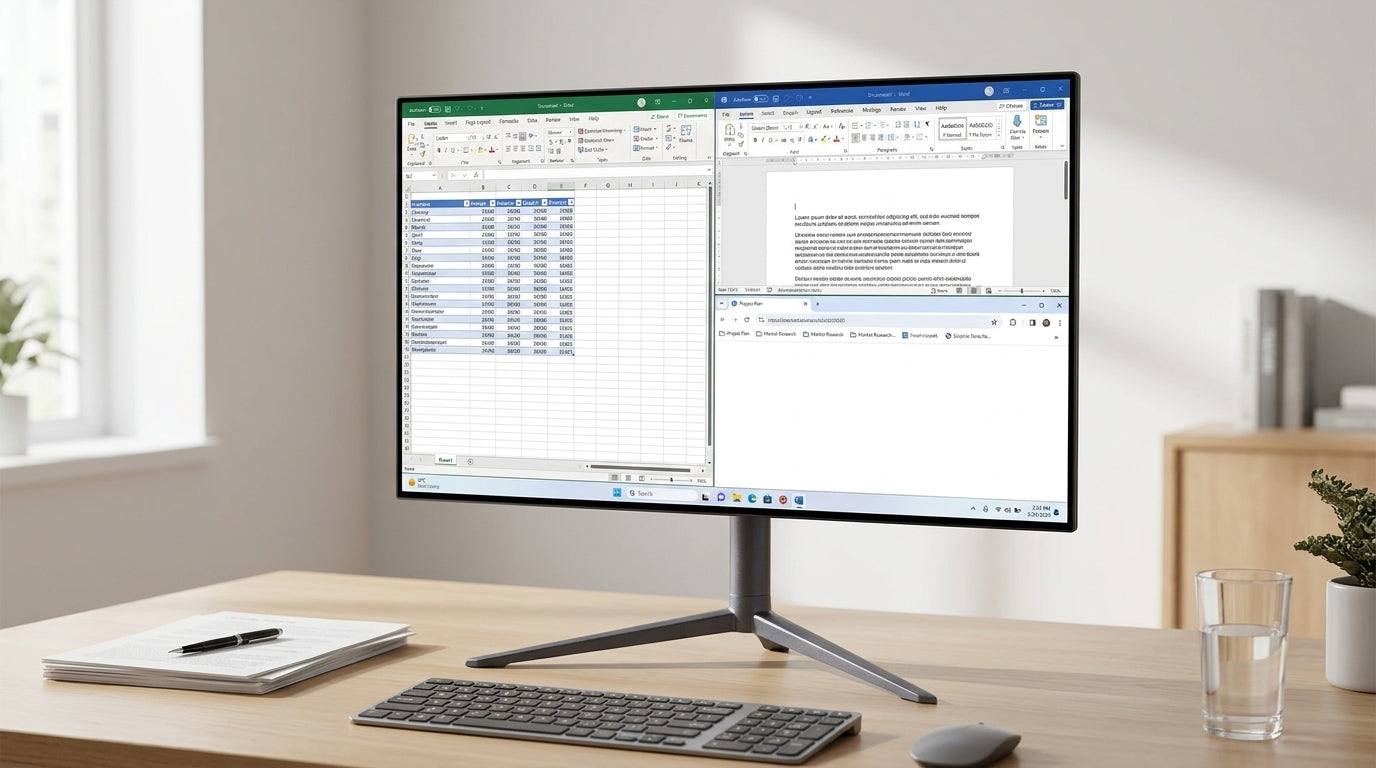
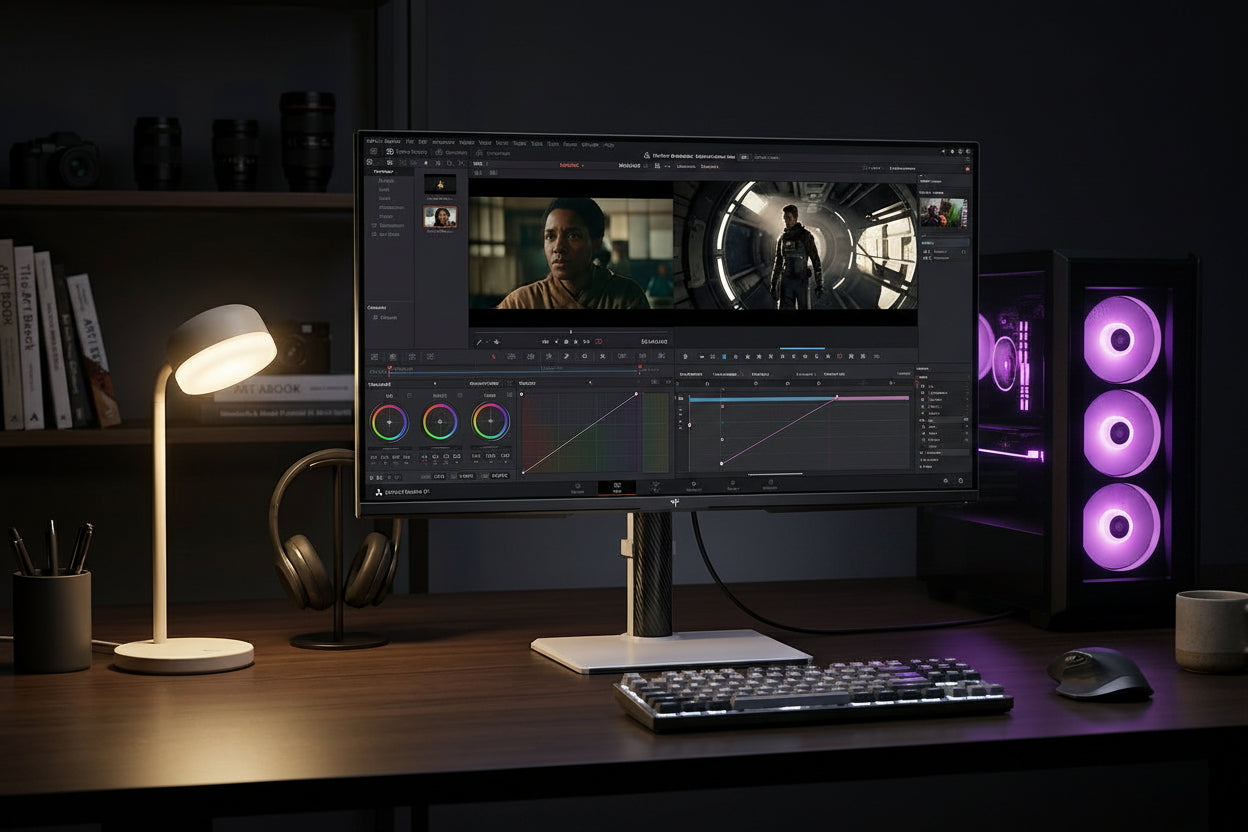
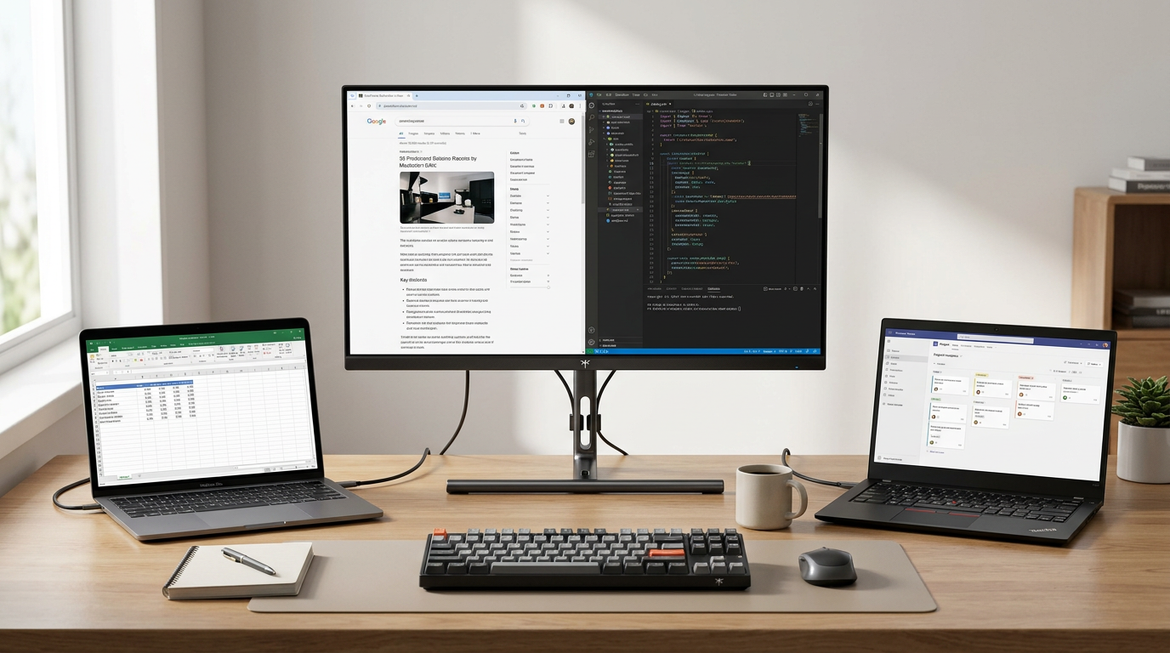
For video editing in 2026, focus first on color accuracy with Delta E under 2, wide DCI-P3 coverage, and true HDR capability backed by VESA certification rather than marketing claims. Screen size and resolution then determine how comfortably timelines, bins, and preview windows fit your desk and workflow. Mini-LED panels deliver the sustained brightness and burn-in-free reliability many editors need without the premium-brand price.

The Professional Editing Framework: What Specs Actually Matter?
Video editors need three core capabilities in one display: precise color that matches client deliverables, enough brightness and contrast to judge HDR grades, and enough real estate to keep timelines, effects panels, and reference windows visible at once. The prosumer segment now benefits from gaming-derived Mini-LED panels that reach professional color and HDR specs at lower prices than traditional studio monitors.
Color accuracy starts with factory calibration that keeps Delta E below 2 so differences remain invisible to viewers. HDR performance requires both high peak brightness and local dimming zones that maintain contrast without crushing shadow detail. Screen size and resolution trade sharpness against workspace width, with 27-inch 5K favored for Mac scaling and 32-inch 4K favored for multicam projects.
Gaming-oriented Mini-LED monitors now meet these requirements because their backlights deliver the sustained luminance and zone counts previously limited to far more expensive reference displays.
Color Accuracy and Gamut: Beyond the Marketing Buzzwords
Delta E measures the difference between the color a monitor produces and the intended reference color. A value below 2 is the accepted professional baseline because most viewers cannot distinguish the difference at that level. This guide explains why Delta E matters for creative work.

DCI-P3 coverage of 95 percent or higher keeps colors consistent when projects move to HDR streaming platforms and modern displays. Ten-bit panels further reduce banding in sky gradients and skin-tone transitions that appear in 8-bit output.
Factory reports showing Delta E under 2 across the screen, combined with 95 percent or better DCI-P3 volume, give editors confidence that client reviews will match the grade seen in the suite.
HDR Performance: Why Mini-LED is the Production Workhorse
True HDR mastering needs sustained brightness above 1000 nits and local dimming that preserves both highlights and shadow detail. VESA DisplayHDR 1400 certification confirms a display meets measured standards for peak luminance, local dimming, and 10-bit color depth. VESA explains the certification requirements here.
Mini-LED backlights achieve these targets without the permanent burn-in risk that static Premiere or Resolve interfaces create on OLED panels. The technology also maintains brightness in brighter rooms where OLED automatic brightness limiting can shift image appearance during long sessions.
Mini-LED vs OLED for Video Editing Workflows
Comparison of sustained brightness, burn-in risk, and price tiers helps clarify which panel type fits long editing sessions.
Show comparison data
| Metric | Mini-LED | OLED |
|---|---|---|
| Peak Brightness | High (1400 nits certified) | High |
| Sustained Brightness | High | Medium (ABL limited) |
| Burn-in Risk (Static UI) | Low | High |
| Typical Price Tier | Medium | High |
Local dimming with 1000-plus zones delivers contrast that supports HDR grading while still allowing editors to toggle zones off during SDR rough cuts to reduce blooming around UI elements. VESA notes that uncertified HDR labels often fail to deliver stable performance.
Choosing Your Canvas: 27" 5K vs. 32" 4K for Timelines
Mac users benefit most from 27-inch 5K panels because macOS scales the interface crisply without the blur that 4K monitors can introduce at non-native resolutions. The extra pixel density also improves text legibility during long color-grading sessions on compact desks.
A 32-inch 4K display provides more horizontal space for long timelines and multiple bins, making it the practical choice for multicam or effects-heavy projects. Pixel density remains high enough for critical viewing when the editor sits at a normal desk distance.
The decision comes down to desk depth and primary operating system: 5K sharpness wins on shallower desks and Mac systems, while 32-inch 4K real estate wins when screen space for tracks and effects matters more than perfect text rendering.
Living with Mini-LED: Managing Blooming and the 'Toggle Tax'
Mini-LED local dimming can produce halos around bright UI elements such as playheads and scopes during SDR editing. Turning local dimming off for rough cuts and back on for HDR review removes most distractions, though it adds a small daily workflow step.
Mapping a custom key to the dimming toggle reduces friction. USB-C connections delivering 90 W power simplify cabling for laptop users, yet wake-from-sleep reliability varies by Mac model and firmware, so testing remains advisable before relying on single-cable workflows.
This overview of local dimming zones explains how zone count affects blooming control.
Which Monitor Specs Matter Most for Your Editing Workflow?
Freelance editors who need reliable color without HDR mastering can start with a 27-inch 4K IPS model offering Delta E under 2 and solid DCI-P3 coverage. The KTC 27" 4K Home & Office Monitor fits this role at an accessible price.
Creators who regularly deliver HDR content benefit from the KTC Mini LED 27" 4K HDR1400, which pairs 1152 dimming zones with VESA DisplayHDR 1400 certification and full ergonomic adjustment.
Mac-based studios gain Retina-level sharpness from the KTC 27" 5K Professional Monitor, whose 99 percent DCI-P3 coverage and factory calibration support both photo and video deliverables.
Before purchase, verify VESA HDR certification, confirm the stand offers height and tilt adjustment for long sessions, and test USB-C wake behavior with your specific computer if single-cable use is planned. These checks keep the monitor matched to actual editing demands rather than spec-sheet promises.
Frequently Asked Questions
How Important Is Delta E For Video Editing Monitors?
Delta E below 2 ensures colors stay consistent across client reviews and final delivery. Higher values can produce visible shifts that require extra correction time in post.
Should I Choose Mini-LED Or OLED For HDR Video Work?
Mini-LED provides the sustained brightness and burn-in resistance needed for static timelines, while OLED offers deeper blacks at the cost of potential image retention during long editing days.
Is 4K Necessary For Most Editing Projects?
4K resolution matches current delivery standards and gives sharp previews, yet many editors work comfortably at 1440p when timeline space matters more than pixel-level detail.
What Screen Size Works Best For Timeline Editing?
27-inch 5K suits compact desks and Mac scaling needs, while 32-inch 4K maximizes horizontal workspace for complex multicam or effects projects.
Do I Need VESA HDR Certification?
Certification confirms measured brightness and dimming performance. Uncertified HDR claims often deliver only short bursts of brightness rather than stable output across the full screen.