For gamers choosing between OLED and Mini-LED in 2026, room lighting and daily usage patterns matter more than raw specs. OLED delivers perfect per-pixel blacks that excel in controlled, darker environments, while Mini-LED provides the sustained brightness needed to overcome ambient light without washing out.

Deep Blacks vs. Blinding Brightness: The Core Technology Divide
OLED panels are self-emissive, so each pixel creates its own light and can turn off completely. This produces infinite contrast and eliminates blooming around bright objects on dark backgrounds. Mini-LED uses thousands of tiny LEDs grouped into local dimming zones behind an LCD layer, allowing far higher peak luminance while still improving contrast over traditional backlights.
The practical result is simple. OLED removes haloing entirely, which benefits dark-room immersion. Mini-LED trades some zone-level blooming for the ability to push significantly higher brightness levels that cut through daylight.
Dark Room Immersion vs. Bright Room Visibility
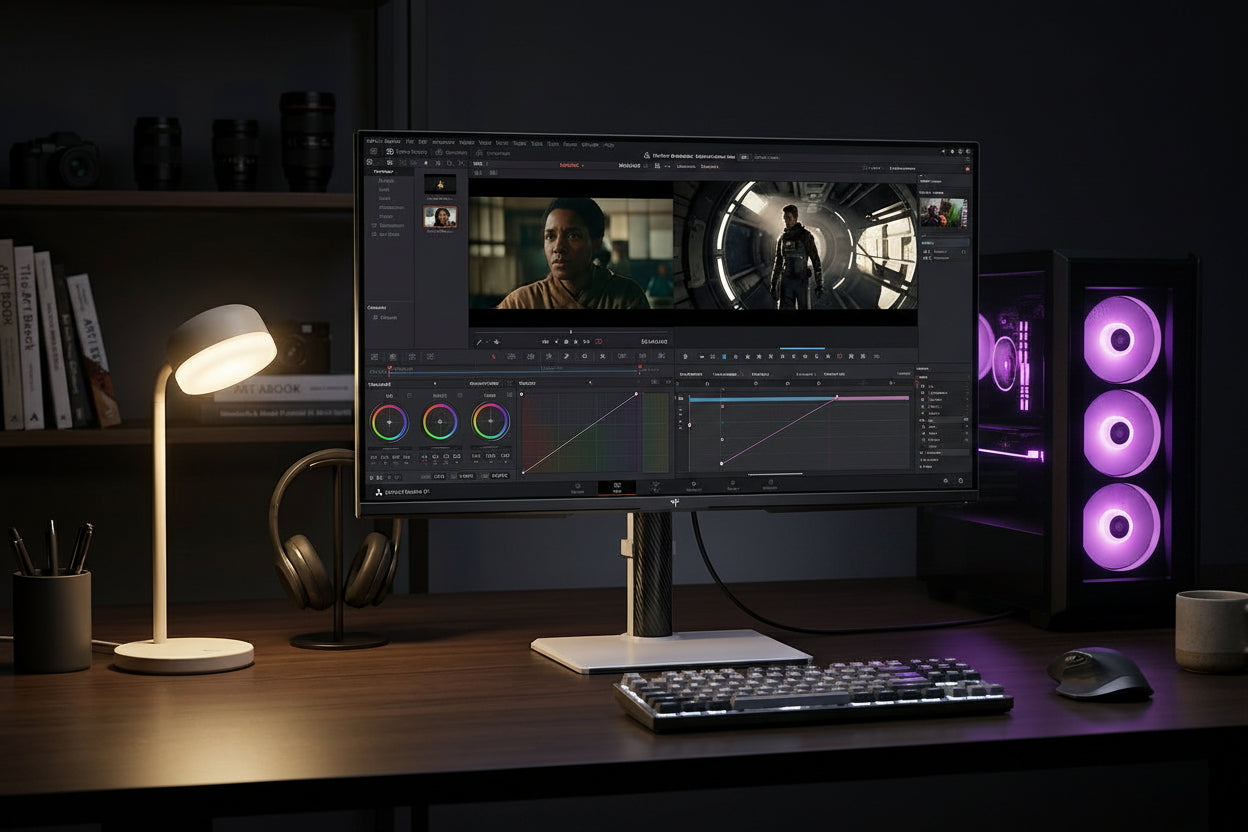
Room lighting remains the strongest predictor of satisfaction. In a dim bedroom or controlled setup, OLED's perfect blacks create a clear advantage for cinematic games and single-player titles. Sunlit living rooms or offices with windows reverse the advantage: Mini-LED's higher sustained output maintains HDR impact where OLED images can appear muted.

VESA certifications reflect this split. The DisplayHDR 1400 tier, common on high-end Mini-LED models, requires both high peak luminance and strong local dimming. The DisplayHDR True Black 600 tier, often paired with OLED, prioritizes deep black levels over raw brightness. As this official VESA criteria page explains, the two standards optimize for different environments rather than declaring an overall winner.
In mixed lighting, many users find Mini-LED more forgiving because it avoids the need for heavy window coverings or evening-only sessions.
Motion Clarity and the 0.03ms Advantage
Competitive players notice the response-time gap immediately. OLED panels reach response times around 0.03 ms GtG, which virtually removes motion blur during fast pans and tracking shots. Mini-LED panels, even fast IPS variants, are limited by liquid crystal movement and typically fall in the 1–5 ms range.
For titles such as Valorant or CS2, the difference in clarity can justify choosing OLED regardless of room brightness. In slower-paced or story-driven games the gap becomes less noticeable, especially once refresh rate and input lag are matched.
Burn-in Risk and the Productivity 'Toggle Tax'
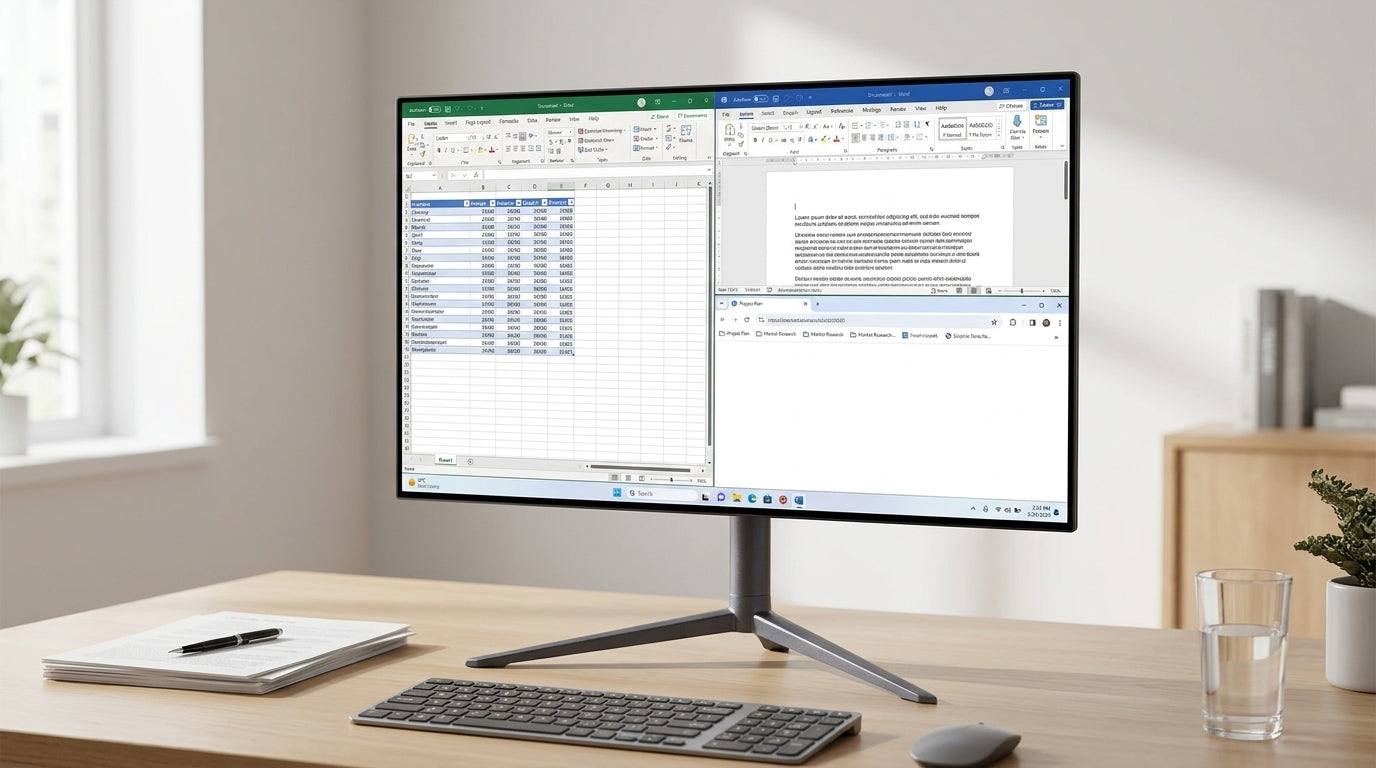
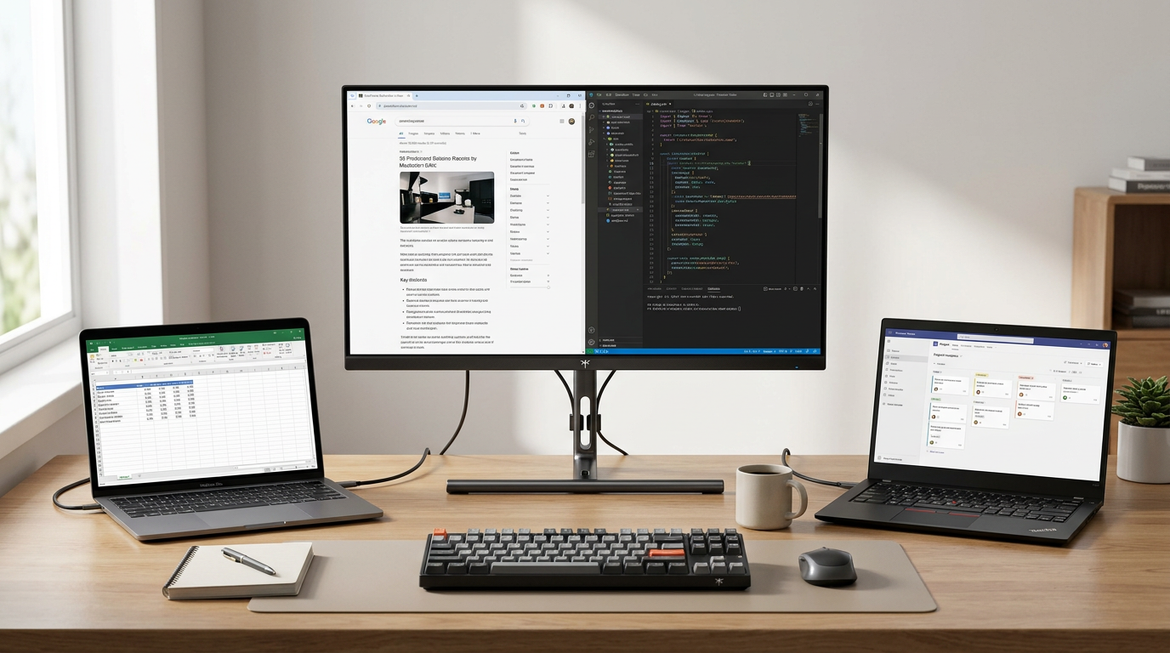
Longevity concerns center on static elements. Mini-LED panels use inorganic materials and carry no measurable risk of permanent burn-in, making them the safer option for eight-hour workdays that include spreadsheets, browsers, and desktop interfaces. OLED panels include pixel-shift and refresh features, yet static HUDs and taskbars still create gradual degradation risk over years of heavy use.
Mini-LED users often face a separate friction point called the toggle tax. Blooming around bright text on dark backgrounds sometimes requires manual HDR or SDR switching through the OSD. OLED panels avoid this step entirely because they have no backlight zones. Text clarity also favors Mini-LED's standard RGB subpixel layout, which renders sharp fonts without the fringing some OLED subpixel arrangements can produce during long reading or coding sessions.
OLED vs. Mini-LED: The 2026 Buying Decision Matrix
The decision flips at roughly the $600–700 price point and depends on two variables: daily productivity hours and room lighting. Below that threshold, Mini-LED models typically deliver stronger value for mixed-use buyers. Above it, OLED becomes attractive for gamers who prioritize dark-room immersion and motion clarity.
Recommendation Zones by Budget, Lighting, and Work Hours
Tiered guidance showing when Mini-LED or OLED becomes the clearer choice based on price range, daily productivity time, and room lighting conditions.
Show data table
| Price Range | Daily Productivity | Dim Room Rec | Sunlit Room Rec |
|---|---|---|---|
| $400-500 | 0-2 hrs | OLED or Mini-LED | Mini-LED |
| $400-500 | 3-6 hrs | Mini-LED | Mini-LED |
| $400-500 | 7-10 hrs | Mini-LED | Mini-LED |
| $500-600 | 0-2 hrs | OLED Preferred | Mini-LED |
| $500-600 | 3-6 hrs | Context Dependent | Mini-LED |
| $600-700 | 0-2 hrs | OLED Preferred | Context Dependent |
| $600-700 | 3-6 hrs | Context Dependent | Mini-LED |
| $700-800 | 0-2 hrs | OLED Preferred | OLED or Mini-LED |
| $700-800 | 3-6 hrs | OLED Preferred | Mini-LED |
| $700-800 | 7-10 hrs | Mini-LED | Mini-LED |
Mini-LED models such as the KTC M27P6 suit buyers who need bright-room HDR and mixed productivity. The KTC G27P6 targets dark-room gamers who value motion clarity and infinite contrast. Check current room lighting and weekly work hours before deciding; the technology that removes daily friction usually provides the longer-term satisfaction.
Frequently Asked Questions
Does Room Lighting Change Which Technology Performs Better?
Yes. OLED maintains superior contrast only when ambient light stays low. Mini-LED's higher sustained brightness prevents image washout in sunlit rooms, making it the more practical choice for spaces with uncontrolled daylight.
How Real Is OLED Burn-In Risk for Gamers?
Modern mitigation features reduce but do not eliminate the risk. Static HUD elements and desktop interfaces can cause gradual degradation after thousands of hours. Mini-LED panels carry no burn-in risk and remain the safer long-term option for heavy mixed use.
Do Both Technologies Support High Refresh Rates for Competitive Play?
Current OLED gaming monitors commonly reach 240 Hz, while many Mini-LED models top out at 160–180 Hz. Competitive players who prioritize the lowest motion blur often favor OLED even when brightness is not the main concern.
Is HDR Noticeably Different Between the Two Panel Types?
HDR impact depends more on peak brightness and local dimming quality than on panel technology alone. Mini-LED models certified at DisplayHDR 1400 can overpower bright rooms, while OLED panels certified at True Black 600 deliver perfect black levels that enhance dark-room HDR scenes.
Should Productivity Users Avoid OLED Entirely?
Not entirely, but they should weigh daily static content hours. Users who spend most of the day on documents, browsers, or spreadsheets typically prefer Mini-LED for text clarity and burn-in immunity. Gamers who work only a few hours daily can still enjoy OLED without major compromise.