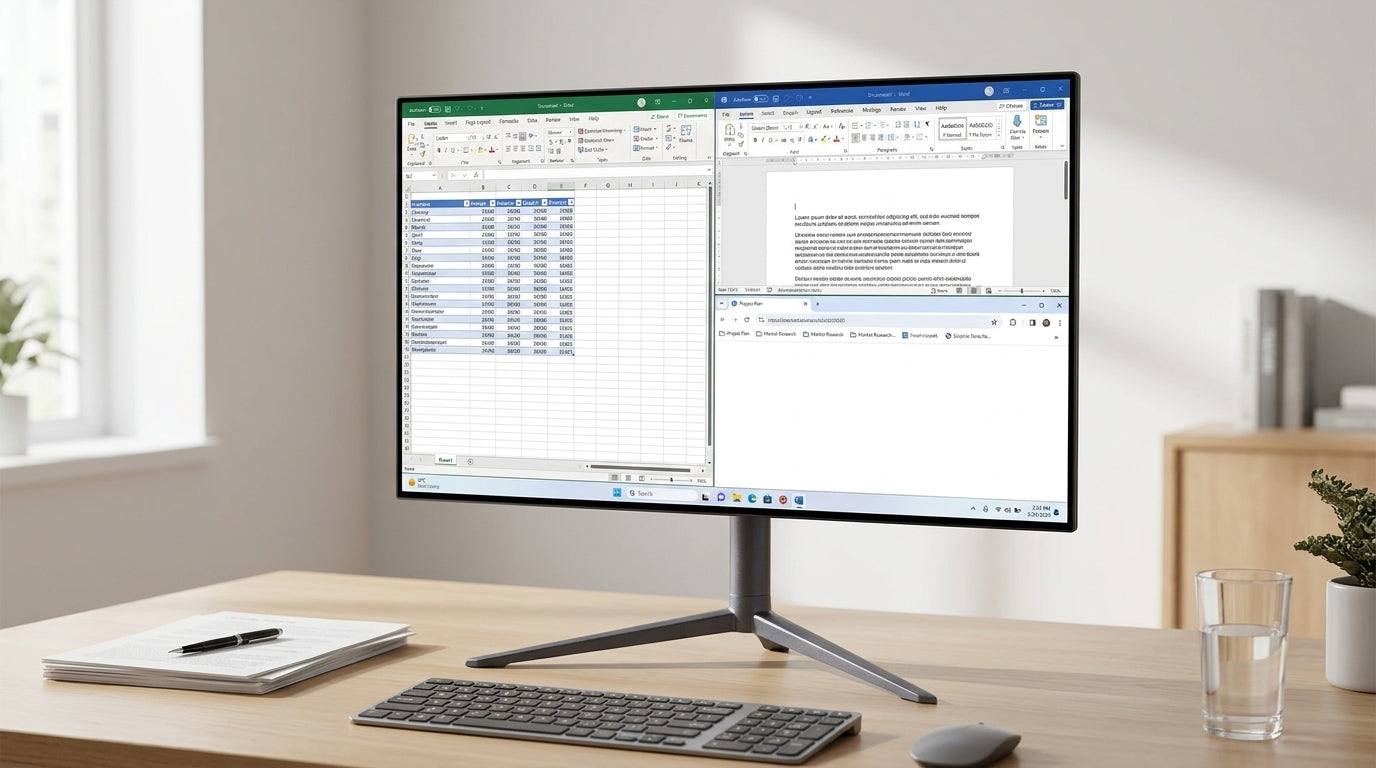
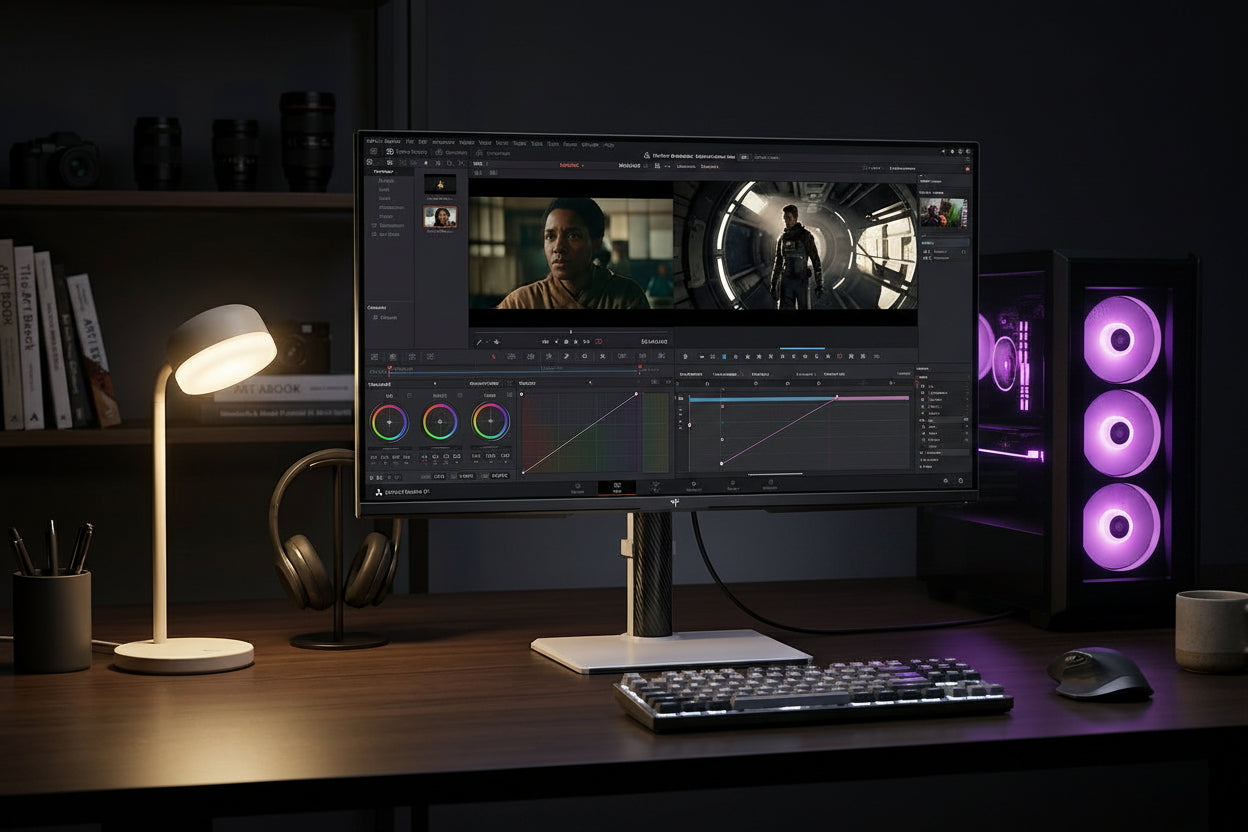
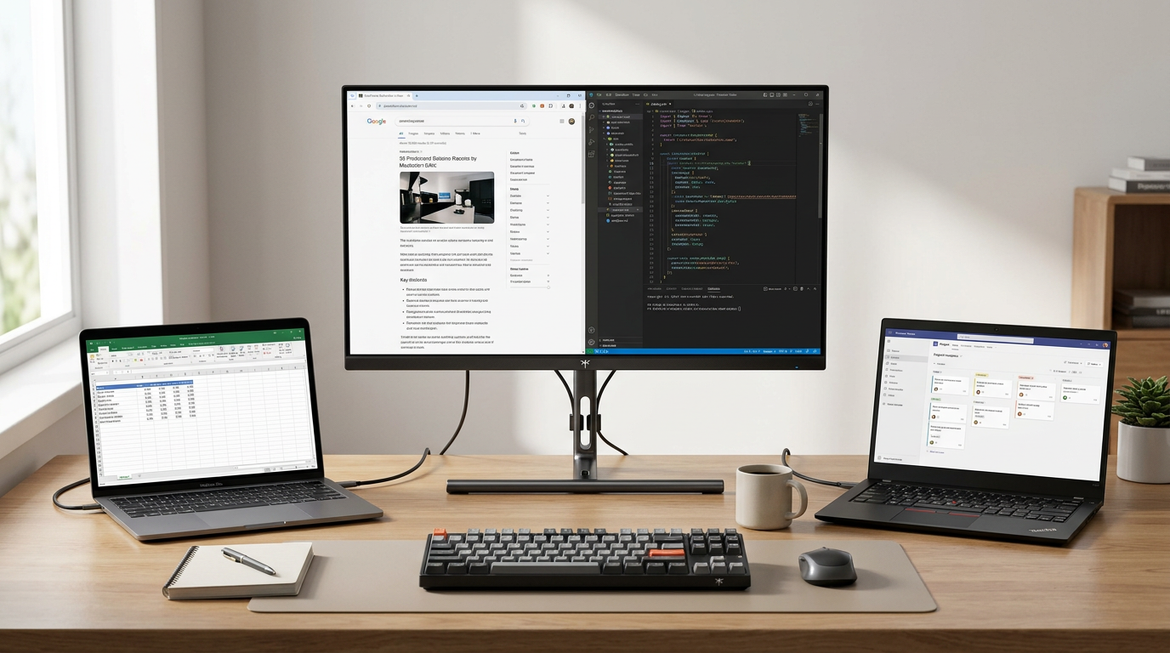
Choosing between 1440p and 4K gaming monitors in 2026 boils down to whether you prioritize motion clarity and high refresh rates or greater pixel density for sharper images. Most gamers with mid-range hardware benefit more from 1440p panels that deliver smooth gameplay without forcing heavy upscaling, while high-end setups paired with deep desks can take full advantage of 4K clarity.

The PPI Reality: Why 4K Isn't Always Sharper
Pixels per inch (PPI) measures how densely pixels pack together, directly affecting text legibility and the visibility of image grain. At 27 inches, 1440p delivers approximately 109 PPI, while 4K on the same size reaches 163 PPI. A 32-inch 4K panel sits around 138 PPI, offering a noticeable but less extreme jump.
This 27 vs 32 Inch 4K Monitors: PPI, Clarity & Desk Fit Guide explains that the extra density in 4K becomes most apparent on larger panels viewed at typical desk distances. On smaller 27-inch screens, the difference shrinks once you sit farther than about 32 inches away.
Pixel Density at Common Monitor Sizes
PPI values illustrate how 4K increases sharpness most on 27-inch and 32-inch panels.
Show data
| Size and Resolution | PPI |
|---|---|
| 27-inch 1440p | 109 |
| 27-inch 4K | 163 |
| 32-inch 4K | 138 |
Hardware Demands in 2026: Matching Your GPU to Your Screen
RTX 5070-class cards comfortably drive high-refresh 1440p gaming, typically targeting 165Hz to 180Hz in modern titles. Native 4K at high refresh rates shifts into enthusiast territory, usually requiring an RTX 5080 or 5090 for consistent performance.
AI upscaling like DLSS 5 and FSR 5 can make 4K playable on mid-range hardware, yet it adds processing latency that affects fast-paced play. This 1440p vs 4K Gaming (2026) guide notes that native 1440p often preserves better motion clarity and lower system latency for competitive sessions.
Desk Depth & Screen Size: Finding Your 'Retina' Distance
The Retina threshold marks the viewing distance where individual pixels become invisible to the eye. For a 27-inch 4K panel this sits near 21 inches, while a 32-inch 4K panel reaches it around 25 inches. At 27 inches, 1440p reaches the threshold near 32 inches.
This Best 4K Monitor Size 2026 guide shows that users with desks deeper than 30 inches gain immersion from 32-inch 4K panels without neck strain. Shallower desks favor 27-inch 1440p to keep the screen within a comfortable field of view.

Competitive Edge or Cinematic Immersion?
Native 1440p supports 240Hz to 360Hz refresh rates on current panels, delivering the motion clarity competitive players need. Upscaled 4K can provide cinematic sharpness but often trades away some of that speed and responsiveness.
Dual-mode monitors that switch between 4K 160Hz and 1080p 320Hz introduce a PPI drop to roughly 81 when running the lower mode, which can make crosshairs and text appear softer. Many players find a dedicated 1440p 240Hz+ panel offers more consistent visuals across game types.
The KTC Advantage: Premium Specs, Direct Pricing
KTC offers high-refresh 1440p options such as the H27T6 and Mini-LED models like the M27T6 that deliver strong HDR contrast without OLED burn-in concerns. For 4K, the M27P6 and H27P6 provide 160Hz performance with full ergonomic stands.
The direct-to-consumer model keeps pricing accessible while maintaining features such as high peak brightness and wide color coverage that matter for both gaming and mixed-use setups.
Final Verdict: Which Resolution Should You Buy?
Most gamers land on a 27-inch 1440p monitor for the best balance of frame rate, latency, and desk fit. Choose a 32-inch 4K panel when you have a high-end GPU, deep desk, and preference for single-player or cinematic titles. A 27-inch 4K model works well for mixed console and productivity use where switching between sharp desktop work and console gaming matters most.
Check your GPU tier first, measure your desk depth, and decide whether motion clarity or pixel density matters more for the games you play most.
Frequently Asked Questions
What GPU Do I Need for Smooth 4K Gaming in 2026?
An RTX 5080 or 5090 is the realistic baseline for native 4K at high refresh rates in demanding titles. RTX 5070-class cards can reach playable 4K frame rates with DLSS 5, but expect more consistent results and lower latency at 1440p.
Does 27-Inch 1440p Look Sharp Enough for Everyday Use?
At typical desk distances of 28 to 32 inches, 27-inch 1440p already sits at the Retina threshold for most people. Text remains crisp and fine details hold up well without the extra cost or hardware demand of 4K.
Is 32-Inch 4K Worth It on a Shallow Desk?
Shallow desks under 25 inches often make 32-inch screens feel too large, leading to neck strain and reduced peripheral awareness. A 27-inch panel usually fits better while still delivering strong immersion for most users.
How Much Latency Does AI Upscaling Add at 4K?
DLSS 5 and similar technologies typically add 10 to 15 milliseconds of processing time compared with native rendering. Competitive players often notice the difference, while single-player gamers may accept the trade-off for improved image quality.
Should Console Gamers Prefer 4K or 1440p Monitors?
Current consoles output 4K natively and benefit from 4K panels with HDMI 2.1 ports. PC gamers focused on high frame rates usually gain more from 1440p monitors that support higher refresh rates without upscaling overhead.