If you are asking whether a KTC monitor is worth buying, the right answer is: only after you verify the protections around it. For most shoppers, the decision is less about brand hype and more about warranty length, return terms, dead-pixel policy, and whether the model actually fits the way you work or game.

What Buyers Should Verify First
Start with the risks that matter before checkout, not the spec sheet. A KTC monitor can look attractive on paper and still be a poor fit if the return window is tight, the support path is unclear, or the model does not match your desk setup. Treat this as a trust check, not a brand verdict.
The first things to confirm are simple: the return window, the warranty term, the dead-pixel policy, and how to contact support. KTC's official warranty page lists a 3-year standard warranty on eligible monitors, and the refund policy gives buyers a 30-day return window. Those are useful protections, but they do not remove the need to inspect the panel right away.
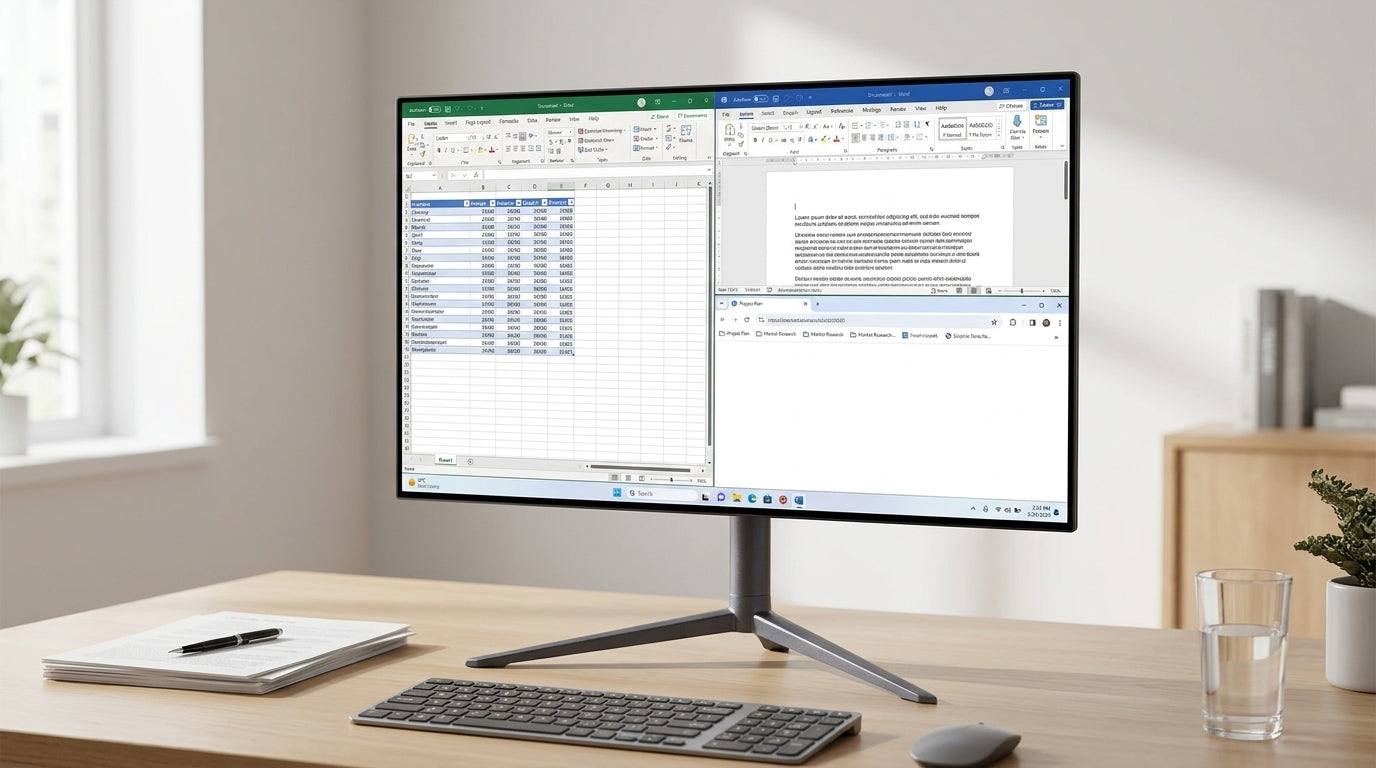
A strong spec sheet helps, but it does not prove low ownership friction. If you are shopping a KTC monitor for the first time, compare the model type against your actual use case first. A fast gaming panel, a sharper productivity panel, and a mixed-use display solve different problems, even when the price looks similar.
For a quick navigation path, browse the office monitor options if you care more about text clarity and daily work, or the gaming monitor range if your priority is refresh rate and motion smoothness.
Brand Trust Signals That Matter Most
For lesser-known monitor brands, trust is mostly about transparency. If the company makes it easy to find support details, policy language, and model-specific specs, that is a better sign than polished marketing copy alone. It still does not prove long-term durability, but it lowers the chance that you are buying blind.

KTC's public product pages surface model specs, support contact details, and basic protection terms in a way that is easy to verify before ordering. That kind of visibility is a real signal. It means the buyer can check what is covered, where to ask for help, and which model is being sold. It does not, by itself, guarantee trouble-free ownership.
A cautious secondary review described KTC as an established manufacturer with OEM background, which is useful context if you want to understand why the brand is not a fly-by-night storefront. Still, treat that as background, not proof of panel consistency or service quality. The practical question is simpler: can you find the exact policy, the exact model, and a usable support path before you add it to cart?
If you want a deeper process check, the factory support walkthrough is a useful follow-up for seeing how direct support cases are typically handled. For broader warranty screening, the regional warranty audit helps buyers think about coverage before they commit.
Policy Clarity
Policy clarity matters because it tells you what the brand expects after the sale. If the return rules and warranty rules are easy to find, you are less likely to be surprised later. If they are hard to locate or vague, that is a warning sign even when the monitor itself looks good.
Support Access
Support access should be visible before checkout, not something you discover only after a problem. A reachable support email or help page is a practical trust signal because it shows there is a path for claims, questions, and missing-parts issues. It is not a promise of fast resolution, just a sign that the company has a process.
Documentation and Product Specifics
Detailed product pages help because they reduce ambiguity. If the exact resolution, refresh rate, port layout, and warranty language are listed clearly, it is easier to compare models and spot a mismatch. A long spec sheet still is not proof of reliability, but it does lower the odds of buying the wrong screen for your setup.
Ownership Friction
Watch for friction in the places buyers actually feel it: shipping, returns, and claim steps. If you cannot quickly tell what happens when a unit arrives damaged or defective, ownership may become more annoying than the discount was worth. Clear paperwork is not a guarantee of easy service, but it usually predicts less confusion if something goes wrong.
Quality Control, Dead Pixels, and First-Impression Checks
For QC, the biggest pre-purchase worry is usually not long-term failure. It is the first-day problem: dead pixels, stuck pixels, transit damage, or a panel that looks off compared with the listing photos. That is why the first inspection matters so much. If you wait, you may lose leverage inside the return window.
KTC's official FAQ says a monitor with five or more bad pixels is considered defective, while fewer than five are treated as within the normal industrial range under ISO 13406-2 and ISO 9241-307. That is the clearest threshold in the purchase decision. It is also the point where buyer expectations and policy language can diverge.
Use that rule as a checkpoint, not as permission to ignore what you see. If you notice a visible spot, inspect the screen immediately, test it on a plain background, and document the issue with photos or video before the return clock gets away from you. A defect threshold is not the same thing as a satisfaction threshold.
A practical first-day check looks like this:
- Power on the monitor as soon as it arrives.
- Test a white, black, red, green, and blue background.
- Look for stuck pixels, bright spots, dead pixels, and uneven panel behavior.
- Confirm the screen matches the resolution and refresh rate you expected.
- Save photos, the order number, and the packaging until you know the unit is fine.
If you want KTC's own support framing for this issue, the dead pixel policy guide is the natural next stop. The point is not to assume the worst. It is to know when a small issue is just cosmetic variation and when it should become a claim.
Returns and Warranty Terms
The return and warranty pages answer different questions, so do not treat them as one protection. The return window helps with arrival problems and early regret. The warranty helps if a fault shows up later. Neither one replaces a careful first-day inspection.
| Protection | What It Helps With | What To Confirm Before Buying | What Still Remains Risky |
|---|---|---|---|
| 30-day return window | Early buyer regret, arrival problems, and simple exchanges | Whether your exact case is a standard return or a quality issue | Shipping timing, restocking rules, and condition requirements may still matter |
| Quality-issue return shipping | Defects reported soon after delivery | Whether KTC covers shipping for your scenario and timing | Coverage can differ by issue type and timing |
| 3-year warranty | Longer-term ownership issues | Whether your model is eligible and whether registration extends coverage | Warranty does not guarantee instant replacement or smooth turnaround |
| Dead-pixel threshold | Whether a panel issue crosses the official defect line | How the FAQ defines a defective panel | A policy threshold is not the same as a comfort threshold |
KTC's refund policy says buyers get a 30-day return window and that quality-related cases can receive return-shipping coverage, while change-of-mind returns are handled differently. The official warranty page lists 3-year coverage on eligible products, with registration-based extension on the policy page. That distinction matters if you are trying to judge real ownership risk.
The main caution is simple: warranty length is not the same as a painless service experience. A three-year policy can reduce financial exposure, but it does not promise instant replacement, identical handling in every case, or free shipping in every scenario. If support responsiveness is your biggest concern, check the policy wording before you buy, not after.
Which KTC Monitor Fits Your Use Case
This is where the trust question becomes a fit question. A KTC monitor is easier to judge when you match the model class to the job it needs to do. The right choice depends on whether you care more about sharper text, faster motion, or a compromise between the two.
For budget gaming, an entry-level high-refresh screen makes sense if you want smooth play on a limited budget and your desk setup is simple. In that lane, the gaming monitor category is the better browsing path than the office lineup. A model like the H27F22 gaming monitor fits that logic because it is a 27-inch FHD Fast IPS screen with 180Hz refresh and 1ms response. That is a speed-first choice, not a text-sharpness choice.
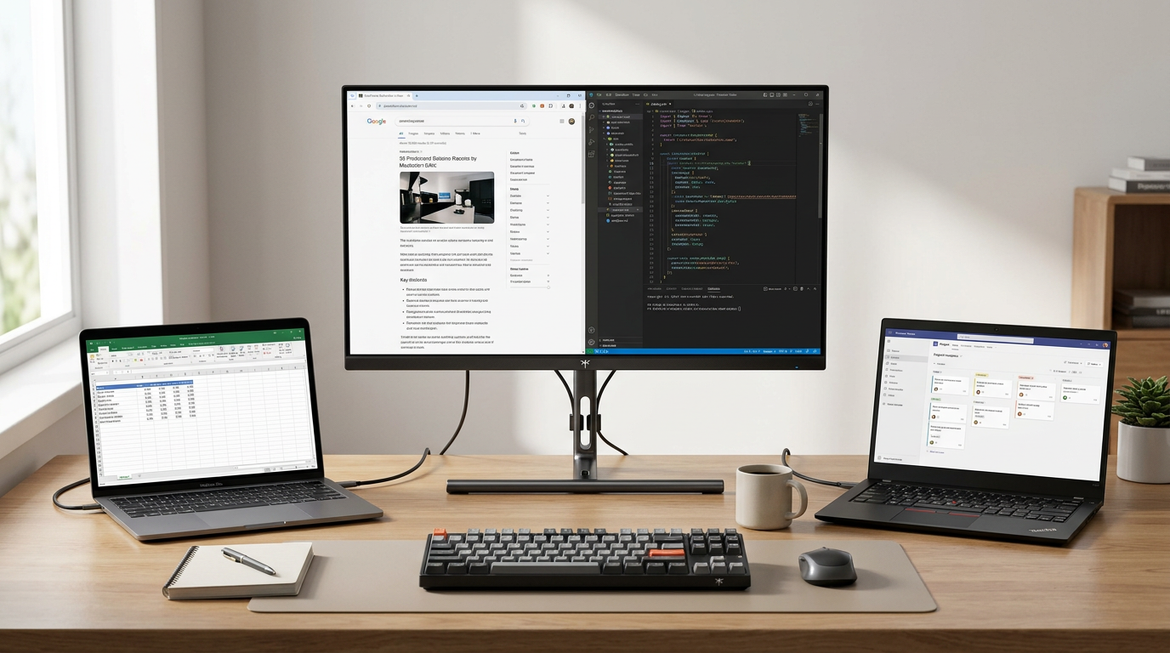
For mixed-use productivity, the picture changes. The H27D9 monitor is a better example because it is a 27-inch QHD IPS display with 100Hz refresh and up to 120Hz overclock support. That kind of setup makes more sense if you split time between office work, browsing, and casual gaming. The extra workspace from QHD matters more than chasing the highest refresh number.
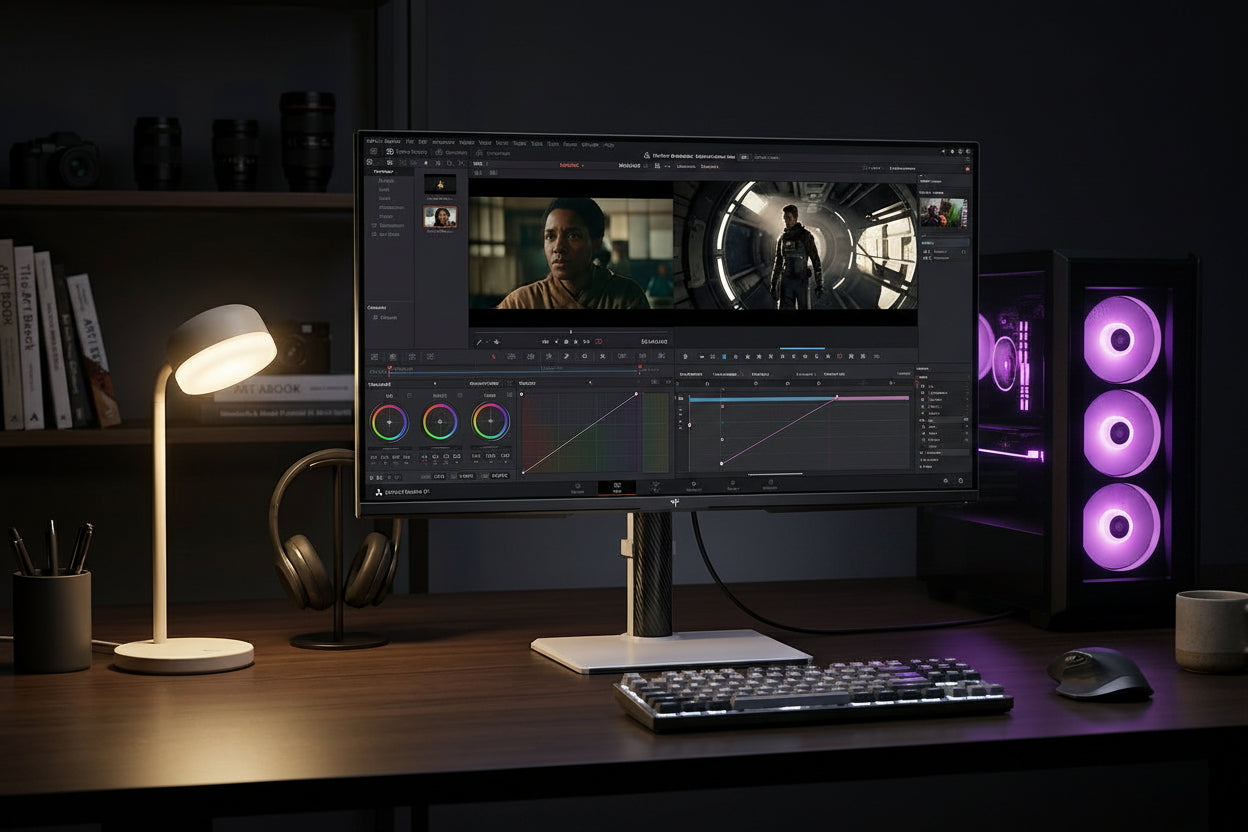
For higher-end work or creator use, the decision shifts again. You should care more about resolution, color coverage, and desk ergonomics than raw speed alone. If your laptop or desktop cannot actually drive the display mode you want, a premium panel may be wasted. In that case, a better fit may be a sharper office display, a 4K mixed-use model, or a dedicated creator screen rather than a faster gaming model.
A simple rule helps here: if your priority is competitive FPS on a budget, do not overpay for sharpness you will barely use. If your priority is text clarity and long work sessions, do not buy an esports panel just because the refresh rate looks impressive on the product page. If you are still deciding, compare the office monitor options against the gaming range and choose the class that matches your real workload.
Final Buy Check Before You Add to Cart
Before you place the order, slow down for one last pass. Confirm the exact model name, the listed warranty term, the return window, and the support email or help path. Save screenshots of the listing and policy pages, plus your order confirmation, in case you need to reference them later.
If the model fits your setup and the policy terms are clear, a KTC monitor can be a reasonable value buy. If the support language feels vague, the dead-pixel risk makes you uneasy, or the display class does not match your use case, keep looking.
FAQs
How Do I Check Dead Pixel Policy Before Buying?
Check the official FAQ, not just the product description. You want the defect threshold, the claim wording, and any notes about how the brand classifies pixel anomalies. If the policy language is hard to find before checkout, treat that as a caution sign and verify it through support before ordering.
What Return Details Matter Most for a KTC Monitor?
The most useful details are the return window, whether the issue is treated as quality-related or change-of-mind, and whether shipping treatment differs by scenario. Those terms tell you how much real flexibility you have if the monitor arrives damaged or simply does not suit your desk.
Can a Warranty Replace a Careful First-Day Inspection?
No. A warranty can help after a problem appears, but it does not remove the need to inspect the panel immediately. The safest approach is to test the display on day one, document anything unusual, and keep the packaging until you are sure the unit is acceptable.
Why Do Some Buyers Prefer a QHD or 4K KTC Monitor Over FHD?
QHD or 4K can make more sense when text sharpness, workspace, and mixed use matter more than the highest refresh rate. FHD can still be the better value for pure gaming speed. The better choice depends on whether your time is mostly work, mixed use, or competitive play.
How Can I Tell If a KTC Monitor Is a Good Fit for My Setup?
Check three things first: desk space, the resolution your device can comfortably drive, and whether you care more about speed or clarity. If you mostly play fast games, a high-refresh gaming model may fit best. If you work all day, a QHD or 4K office-oriented screen is usually the safer bet.