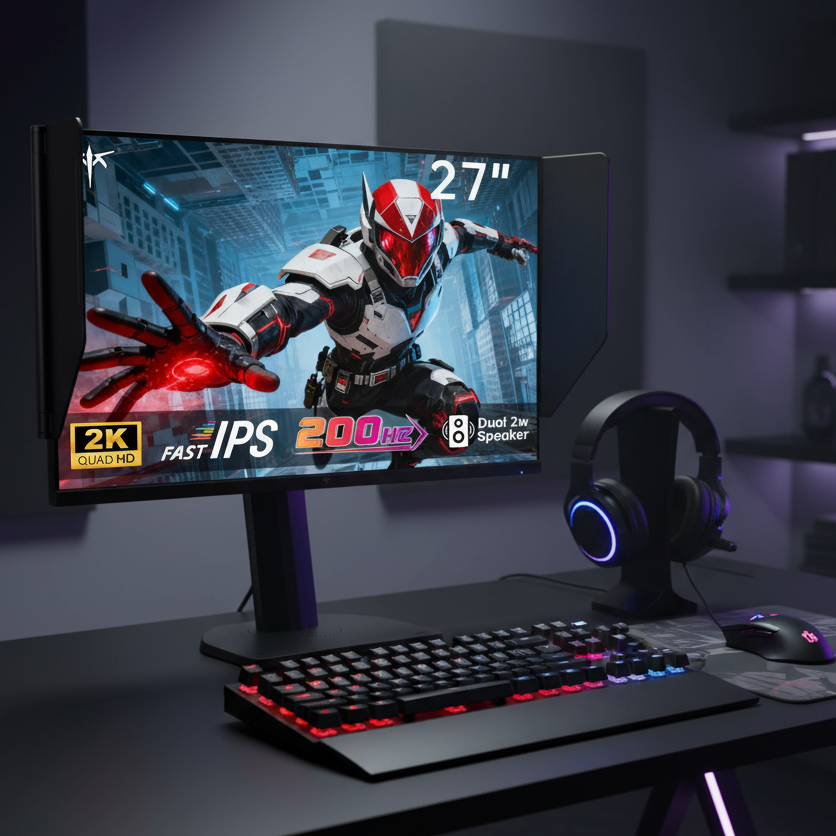
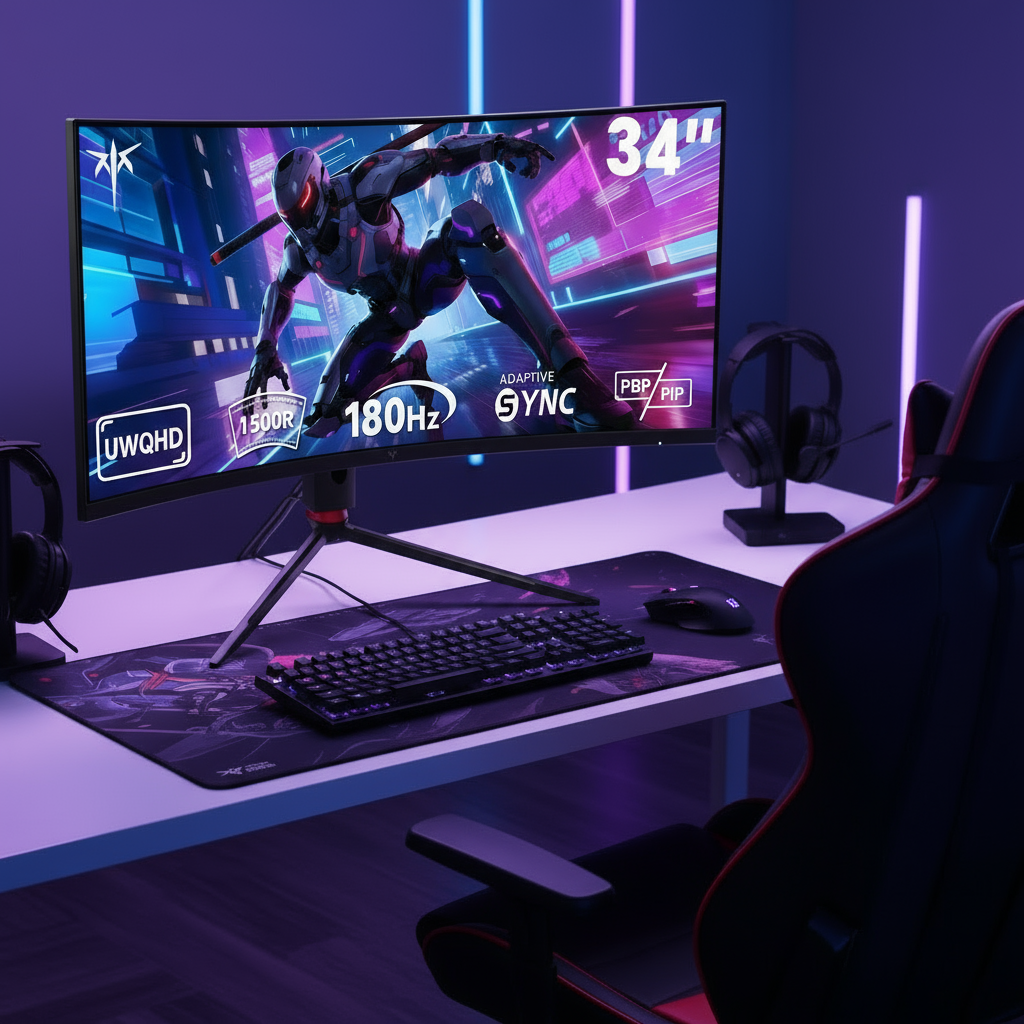


KTC delivers 2000-zone Mini-LED monitors at prices often 30-40% below comparable big-brand models by controlling more of the manufacturing stack and selling directly to buyers. This vertical integration arbitrage removes multiple layers of markup that add no hardware value, letting a larger share of the price go to actual panel components rather than marketing, licensing, and retail margins. The approach works best for spec-focused gamers and creators comfortable verifying quality on arrival and handling potential warranty logistics themselves.

The Manufacturing Insurgent: What Is Vertical Integration Arbitrage?
Vertical integration arbitrage describes how a manufacturer captures more value by producing key components in-house and selling straight to consumers, eliminating the cumulative margins added at each step of the traditional supply chain. Instead of paying separate suppliers for LED chips, encapsulation, backlight modules, and final assembly—and then adding distributor, retailer, and brand licensing fees—the integrated company keeps those costs internal and passes much of the savings to the buyer.
KTC ranks as a leading global display manufacturer, placing second worldwide in Mini-LED monitor shipments in 2022 and first among suppliers of intelligent interactive tablets (KTC Company Profile). The company operates dual super factories in Shenzhen and Huizhou with over 8,000 employees and annual capacity exceeding 6 million units. This scale, combined with in-house production, creates structural efficiencies that let high-spec panels reach consumers at lower prices without reducing core hardware capability.
The savings come from process control, not component downgrades. By integrating LED encapsulation, backlight unit (BLU) assembly, and liquid crystal module (LCM) production, KTC reduces reliance on external vendors and avoids the margin stacking that inflates traditional brand pricing.
The Factory-Floor Economics: Stripping the “Brand Tax”
When you buy a factory-direct monitor, you avoid several “non-performing” costs that traditional brands must recover. These include heavy marketing budgets, retailer slotting fees, distributor margins, and brand licensing or royalty payments. KTC’s vertical integration captures the margins normally paid to sub-suppliers for LED packaging and backlight modules, then sells directly so those savings stay in the final price rather than being layered on top.
This official overview of KTC’s manufacturing story details how in-house production of LED encapsulation, BLU, and LCM modules reduces external supplier dependency. The result is a leaner cost structure that reallocates spending toward the bill of materials (BOM) itself. Industry observers note that vertically integrated approaches and optimized production methods can lower overall display costs by 20% to 35% compared with traditional outsourcing models (Future Market Insights analysis).
Where the Money Goes in Monitor Pricing: Traditional Brand vs Factory-Direct
A bounded cost-stack comparison showing how vertical integration and direct sales can reduce the layers that sit between the panel and the final price. Values are shown as relative cost shares, not exact audited accounting.
View chart data
| Category | Traditional brand | Factory-direct model |
|---|---|---|
| Panel / core components | 45.0 | 52.0 |
| Assembly & integration | 12.0 | 15.0 |
| Logistics & compliance | 8.0 | 9.0 |
| Marketing / retail margin | 22.0 | 6.0 |
| Brand licensing / channel premium | 13.0 | 3.0 |
This chart helps visualize the typical cost allocation differences. In factory-direct models, a higher percentage of the final price tends to stay with panel components and integration, while marketing, retail, and brand layers shrink substantially. The exact percentages vary by model and market conditions, but the pattern explains why high-zone-count Mini-LED panels can reach buyers at lower retail prices.

Why 2000-Zone Mini-LED Panels Still Cost Money (But Less Here)
Even with vertical integration, producing a true 2000-zone Mini-LED backlight remains expensive. Each zone requires precise LED placement, advanced driver circuitry, and tight quality tolerances to avoid blooming or uniformity issues. The raw materials, precision assembly, and yield management still dominate the bill of materials.
What changes is how the final price is built. Traditional brands must recover marketing campaigns, retailer incentives, channel margins, and brand equity costs on top of the hardware. By removing those layers, KTC can allocate a greater share of the selling price directly to the panel itself. The 20-35% structural cost reduction cited in industry analysis comes primarily from eliminating double margins and capturing in-house efficiencies rather than from cheaper components (Future Market Insights analysis).
This does not mean every 2000-zone panel performs identically across brands. Panel uniformity, local-dimming algorithms, and firmware refinement still differ. The arbitrage simply lets buyers pay more for the actual backlight hardware and less for the surrounding commercial overhead.
The Factory-Direct Trade-Off: Navigating the QA Roulette
The main friction with factory-direct purchasing is higher statistical variance in panel quality and more demanding after-sales logistics. Because these monitors often use wider industry-standard binning tolerances to keep costs low, some units may show minor uniformity differences or backlight clouding that premium-tier brands might reject during tighter selection. This is commonly called the “panel lottery,” and it remains a real consideration even though the core OEM heritage is strong.
Firmware support can also feel leaner. Factory-direct brands frequently iterate firmware based on real-world user feedback rather than extensive pre-launch validation, which may require manual updates. Warranty execution is another point of friction: while KTC offers a standard 3-year coverage, the logistics of return shipping, inspection, and replacement can involve more buyer effort than big-brand global service networks.
A practical way to view the savings is as a built-in “self-insurance” premium. The lower price reflects both manufacturing efficiency and the buyer accepting slightly higher risk of needing to exercise the warranty. Many users mitigate this by purchasing through retailers that offer easy returns during the initial 30-day window, effectively combining factory-direct pricing with retail safety nets.
How to Evaluate a Factory-Direct Monitor Purchase in 2026
Start by deciding whether your usage tolerates possible panel variation and higher RMA friction. Competitive gamers or color-critical creators who need guaranteed uniformity may prefer brands with tighter binning and premium support even at higher cost. Budget-conscious users who run calibration routines and can test thoroughly often find the value compelling.
Practical checks include:
- Buy the first unit through a retailer with strong return policies (Amazon, for example) to test real-world performance.
- Run a 48-hour stress test immediately: display uniform gray, white, and dark patterns at multiple brightness levels to check for unacceptable clouding or dead zones.
- Verify the return shipping policy and any restocking fees before relying solely on manufacturer warranty.
- Check for firmware update availability and community reports on your specific model.
If the monitor passes your testing and the price delta covers potential future service costs, the structural savings from vertical integration deliver genuine value. For those prioritizing maximum hardware per dollar over polished ecosystem support, factory-direct Mini-LED options from established OEMs like KTC represent one of the clearest pricing advantages in the 2026 monitor market.
When the savings feel too large to ignore but the brand feels unfamiliar, remember the math: the difference usually comes from removed commercial layers rather than hidden quality shortcuts. The decision then shifts from “Is it too good to be true?” to “Am I comfortable self-managing the quality verification and warranty process?”
FAQs
Are KTC monitors made with the same panels as big brands?
KTC manufactures its own Mini-LED backlights and modules rather than simply rebadging panels from other suppliers. While the core LED and LCD technology draws from the same industry ecosystem, factory-direct models often use wider binning tolerances to maintain lower prices. This can produce slightly higher statistical variation in uniformity compared with brands that apply stricter selection criteria. Always verify actual performance on arrival rather than assuming identical quality control.
Why are KTC monitors cheaper than similar-spec models from ASUS or Samsung in 2026?
The primary drivers are vertical integration and direct sales. KTC produces LED encapsulation, backlight units, and final modules in-house, avoiding supplier margins. Direct-to-consumer distribution removes retailer markups, heavy marketing budgets, and brand licensing fees. Industry estimates suggest these structural changes can reduce effective costs by 20-35% compared with traditional outsourced and multi-channel models, allowing more of the price to fund the 2000-zone hardware itself.
Is vertical integration in monitor manufacturing always better for buyers?
It depends on priorities. Vertical integration improves price-to-performance when buyers value hardware capability over polished software ecosystems, global warranty logistics, or guaranteed panel uniformity. It is less ideal for users who prefer minimal risk of RMA friction or need extensive pre-sale validation. The model works best for spec-savvy shoppers willing to perform their own quality checks.
What should I check before buying a factory-direct 2000-zone Mini-LED monitor?
Test the unit thoroughly within the retailer return window using uniform color and brightness patterns. Confirm current firmware version and update process. Review the exact warranty terms, return shipping responsibility, and any restocking fees. Compare the price delta against the cost of potential future service or an extended protection plan. If the monitor meets your uniformity and brightness expectations after testing, the structural savings from vertical integration typically deliver strong long-term value.
Does buying direct from the manufacturer mean worse warranty support?
The warranty duration is often comparable, but execution can involve more buyer effort. Factory-direct brands tend to have leaner logistics networks, so shipping, inspection, and replacement may take longer than with established retail partners. Many buyers reduce this risk by purchasing through major retailers for the initial period, gaining both the lower factory price and easy returns. Treat the savings as partial self-insurance against possible higher friction if service is needed later.
How can I tell if the lower price reflects real manufacturing efficiency or just temporary promotion?
Look at whether the brand publishes details on in-house component production, factory scale, and OEM history. Consistent year-round pricing below traditional brand equivalents, combined with transparent manufacturing claims, points to structural advantages rather than short-term discounts. Cross-check community reports on long-term reliability and firmware support to confirm the value holds beyond the initial purchase.