For serious 10-bit video editing, work with 10-bit or higher footage and a display pipeline that can output 10-bit; for casual cuts, light correction, and SDR delivery, a high-quality 8-bit monitor can still be practical.
Are your skies turning into stripes after a grade, or do skin tones look clean in the viewer but rough after export? A true 10-bit workflow gives you four times more tonal steps per color channel than 8-bit, which means smoother gradients and more room for log footage, HDR review, and heavier color correction. You’ll leave with a clear buying and workflow decision: when 10-bit is essential, when 8-bit is enough, and how to avoid paying for a spec your setup cannot actually use.
Bit Depth, in Plain Editing Terms
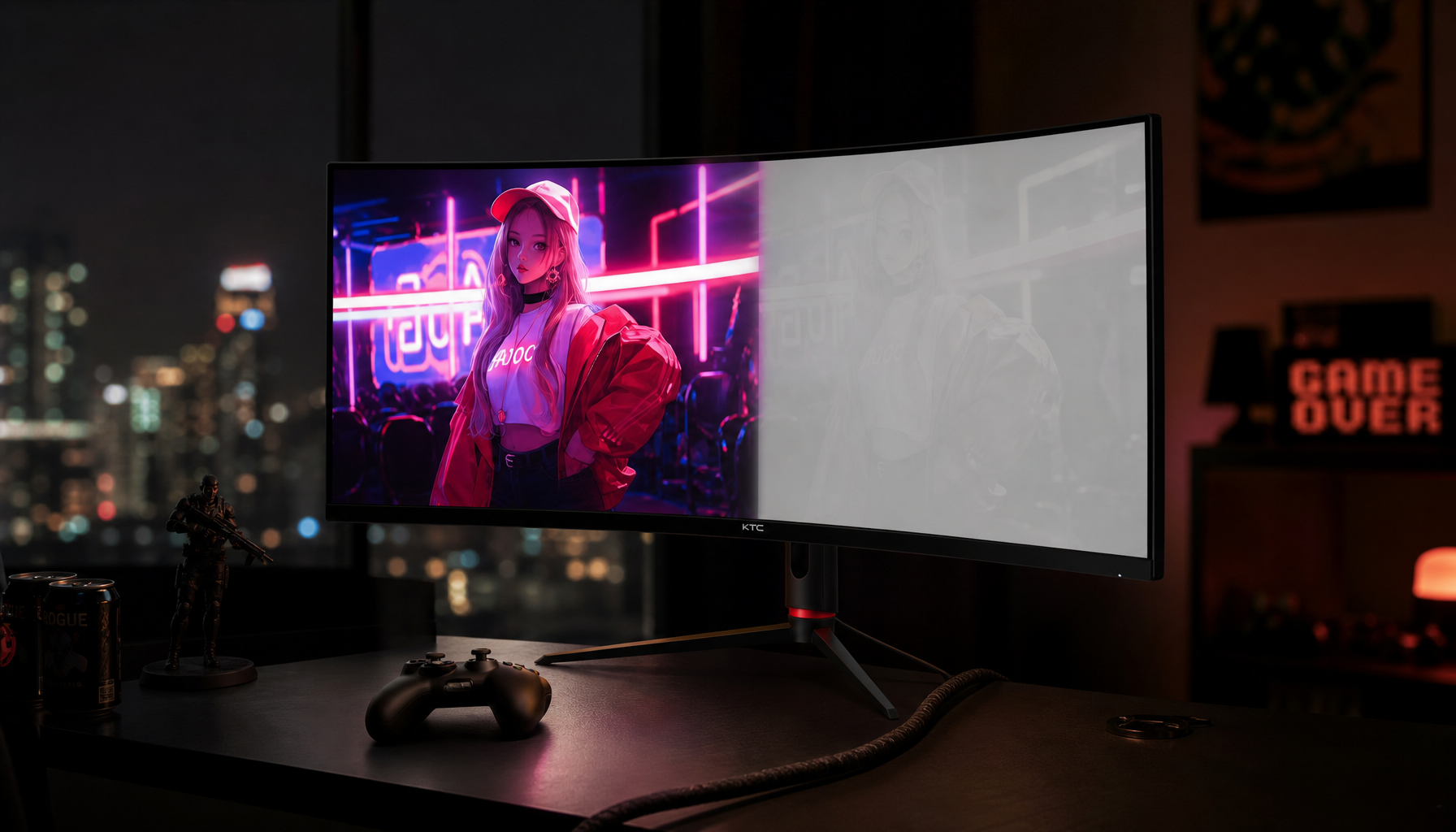
Bit depth is tonal precision. It describes how many steps each red, green, and blue channel can use between dark and bright values, not how sharp the image is or how wide the monitor’s color gamut is. An 8-bit signal gives each channel 256 levels, while a 10-bit signal gives each channel 1,024 levels, so the image has finer transitions before the grade even begins. The difference matters because 8-bit video can run out of smooth steps in gradients, especially after contrast, saturation, curves, or LUT work.
The common headline is “16.7 million colors versus 1.07 billion colors,” but the practical issue is not whether your eye can count a billion colors. The real issue is whether your footage and display have enough intermediate values to avoid banding in a sunset, studio backdrop, fog layer, product reflection, or low-light wall. That is why 10-bit footage is often recommended for log recording and substantial grading.

Bit Depth |
Levels per RGB Channel |
Approximate Total Colors |
Practical Editing Meaning |
8-bit |
256 |
16.7 million |
Fine for SDR delivery and light edits, weaker for heavy grading |
10-bit |
1,024 |
1.07 billion |
Strong baseline for log, HDR, gradients, and professional color work |
12-bit |
4,096 |
68.7 billion |
Best suited to high-end capture, VFX, raw workflows, and demanding finishing |
16-bit container |
65,536 |
Extremely high |
Mainly an editing container for stills, compositing, and precision processing |
The Short Answer: Most Editors Need 10-Bit Monitoring Only If They Grade 10-Bit Work
If your work includes log footage, HDR content, commercial product shots, documentary interviews with careful skin tones, green screen, or cinematic color grades, you should prioritize a 10-bit display path. Post-production guidance is direct: mastering in 10-bit remains useful even when final delivery is 8-bit because intermediate corrections benefit from the extra color information.

If your workflow is mostly talking-head edits, screen recordings, podcasts, office explainers, training videos, or quick social clips with minor exposure and white-balance tweaks, 8-bit can be acceptable. The important qualifier is quality. A calibrated 8-bit IPS monitor with strong Rec.709 coverage can be more useful than a cheap “1.07B colors” display with poor uniformity, weak calibration controls, and a broken signal chain.
A practical test is simple: open your hardest real project, not a demo clip. If smooth skies, gradients, studio walls, or skin transitions break apart after a LUT, curves adjustment, or HDR transform, bit depth is affecting your work. If the main frustration is zooming into the timeline, hiding panels, or reading small UI text, resolution and screen size will probably help more than 10-bit color.
8-Bit vs 10-Bit vs 8-Bit + FRC
A native 10-bit panel can show 1,024 tonal levels per channel directly. An 8-bit + FRC panel uses temporal dithering, rapidly alternating nearby shades to simulate intermediate tones. That can look very good in everyday use, and for gaming, portable monitors, and mixed office work it often delivers excellent value. For strict grading, native 10-bit remains the cleaner choice because the display is not approximating the missing steps.
This is where monitor marketing gets slippery. A spec sheet that says “1.07 billion colors” may indicate true 10-bit or 8-bit + FRC, while “16.7 million colors” usually points to standard 8-bit. General display guidance notes that 10-bit professional displays also require the right connection bandwidth and may still be limited by gamut, panel quality, and calibration.
The value-oriented recommendation is this: buy native 10-bit when your paid work depends on color decisions, client approval, HDR review, or repeatable grading. Accept 8-bit + FRC when you want smoother gradients at a lower price and your work is mixed between editing, productivity, gaming, and media. Stay with 8-bit when your deliverables are simple SDR edits and your budget is better spent on resolution, ergonomics, calibration, or storage.
Your Whole Signal Chain Must Support 10-Bit
A 10-bit monitor does not create a 10-bit workflow by itself. The footage, codec, editing software, GPU output, operating system settings, cable, port, and monitor mode all have to carry 10-bit without silently downshifting. If one part of the chain outputs 8-bit, the monitor cannot recover the missing tonal precision.

This is especially important with high-refresh displays. Some monitors can run 10-bit at a lower refresh rate but switch to 8-bit at a higher refresh rate because of bandwidth limits. For a gaming monitor that doubles as an editing screen, that tradeoff is normal: use the fast mode for competitive play, then switch to the color-accurate 10-bit mode for grading.
Connections matter as much as the panel. DisplayPort is commonly preferred for high-resolution, high-refresh, high-bit-depth workflows, while HDMI capability depends heavily on the exact HDMI version and device implementation. Before buying, confirm the monitor manual, GPU control panel options, and your editing software’s color output behavior.
When 10-Bit Is Non-Negotiable
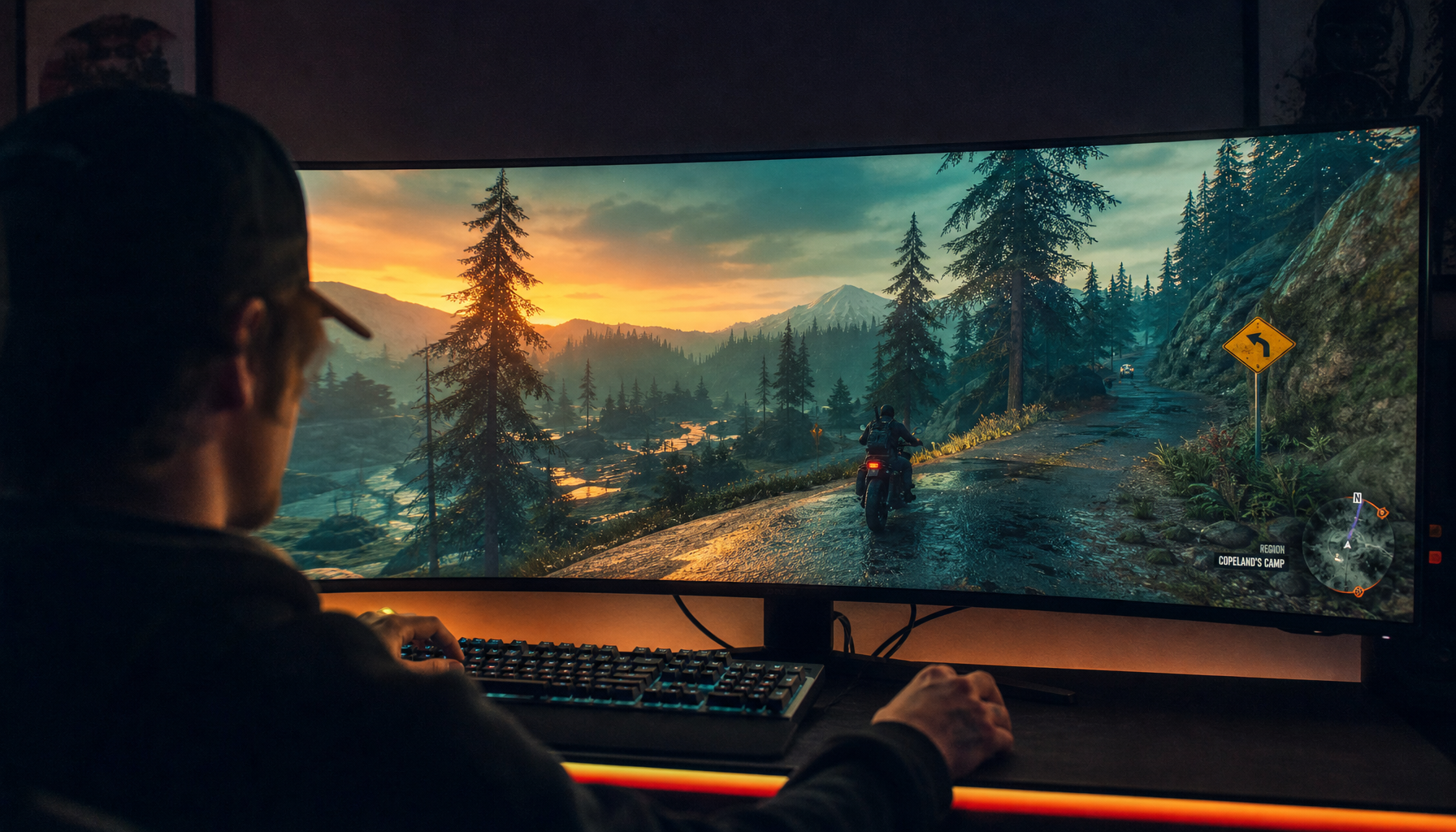
Choose a 10-bit-capable editing monitor when you shoot log because log footage is intentionally flat and needs stronger post-production shaping. That extra shaping stretches tonal values, and 8-bit files can reveal banding faster when you push contrast, saturation, and curves. Color guidance for filmmakers consistently points to 10-bit or higher for substantial grading, especially in skies, clouds, shadows, and skin tones.
Choose 10-bit for HDR because HDR spreads brightness across a much wider range than SDR. Bit depth and dynamic range work together: dynamic range defines how far the image reaches from dark to bright, while bit depth defines how finely that range is divided. HDR formats are built around higher precision, and HDR10 requires 10-bit because 8-bit steps become easier to see across expanded brightness.
Choose 10-bit for VFX, keying, and compositing because edges and transitions need precision. A green screen edge, smoke layer, glow, or gradient mask can expose the limits of 8-bit footage quickly. Even if the final export is compressed for streaming, starting and grading with more tonal information gives the encoder a cleaner image to compress.
When 8-Bit Is Still Enough
An 8-bit monitor is still defensible for straightforward SDR work. If you edit corporate training videos, class content, interviews, basic online video uploads, real estate walkthroughs, or social ads with light correction, the business case for native 10-bit may be weak. In that situation, prioritize a reliable IPS panel, good Rec.709 or sRGB coverage, comfortable size, 1440p or 4K resolution, and calibration support.
There is also a workflow truth that experienced editors learn fast: bad exposure, poor lighting, heavy compression, and noisy shadows can ruin an image before bit depth gets a chance to help. Precision discussions make an important distinction: higher bit depth gives editing headroom, but extra tonal steps cannot rescue detail that is buried under sensor noise. For practical work, shadow recovery depends on both precision and signal quality.
For final delivery, 8-bit remains common. Many web, office, and standard SDR viewing environments are still built around 8-bit expectations. The smart move is to keep more precision during capture and editing, then export to the required delivery format at the end.
Bit Depth Is Not Resolution, Gamut, or Calibration
Bit depth answers, “How smoothly can tones change?” Resolution answers, “How much detail and workspace can I see?” Gamut answers, “Which colors can the display reach?” Calibration answers, “Can I trust what I’m seeing today?” You need all four ideas separated, because buying the wrong spec solves the wrong problem.
A 4K 8-bit monitor may help more than a 1080p 10-bit display if your pain is timeline space, interface crowding, and checking focus. A 10-bit wide-gamut monitor may help more than a higher-resolution office screen if your pain is banding in gradients and unreliable color. The monitor decision should follow the defect you actually see in your work.
Color gamut is especially easy to confuse with bit depth. A display can have a wide DCI-P3 gamut but poor tonal smoothness, or smoother 10-bit output but limited gamut. Professional display discussions make the same point: color depth and color gamut work together with gray scale, brightness uniformity, refresh behavior, and processing quality.
A Practical Buying Decision
If you edit 10-bit camera footage every week, choose a monitor that supports 10-bit input, strong Rec.709 coverage for SDR, DCI-P3 coverage if you work in film or HDR-oriented color, hardware or probe-friendly calibration, and stable uniformity. For most editors, a 27-inch or larger 4K IPS display is the practical floor for serious video work, while OLED can be excellent for contrast and blacks if you understand the cost and static-interface risks.
If you split your day between editing, spreadsheets, dashboards, browser tabs, and occasional gaming, 8-bit + FRC can be the value sweet spot. It gives smoother perceived gradients than basic 8-bit, often costs less than native 10-bit, and usually pairs well with higher refresh rates and modern connectivity. Just do not treat it as a reference-grade grading display unless the work is low-risk.

If you are building a portable editing kit, do not chase bit depth alone. Portable smart screens need enough brightness, reliable USB-C or HDMI behavior, stable color modes, and a stand that lets you work comfortably. A portable 8-bit + FRC screen with consistent Rec.709 behavior can beat a poorly controlled “10-bit” portable panel in the field.
Recommended Workflow for 10-Bit Video Editing
Shoot 10-bit when the camera and storage budget allow it, especially for log, HDR, strong color grades, or scenes with large smooth gradients. Edit in a timeline and codec that preserve that information, then monitor through a confirmed 10-bit path. When you are doing heavy still-image round-trips, compositing, or advanced graphics, higher-precision containers are useful because 16-bit editing reduces rounding damage during repeated adjustments.
Grade on a calibrated display in the target color space. For standard web video, that often means Rec.709 or sRGB behavior. For film-style, HDR, or wide-gamut work, DCI-P3 and HDR support become more relevant, but they only matter if the rest of the workflow is set up for them.
Export for the platform without confusing delivery with editing quality. A project can be shot and graded in 10-bit, then delivered in 8-bit SDR because the intermediate work benefited from smoother tonal data. That is not wasted precision; it is a cleaner path to the final file.
Quick FAQ
Do I need a 10-bit monitor to edit 10-bit footage?
You can edit 10-bit footage on an 8-bit monitor, but you cannot fully judge the smoothness and tonal precision of the 10-bit signal. For cutting, organizing, and light correction, that may be fine. For grading decisions, HDR review, or client-critical color, use a 10-bit-capable display path.
Is 12-bit better than 10-bit for monitors?
For most editors, 10-bit is the practical target. 12-bit is more relevant to high-end capture, raw workflows, VFX, and specialized finishing environments. A well-calibrated 10-bit monitor with strong gamut and uniformity is usually more valuable than chasing a higher number on a weaker display.
Should gamers who edit video buy 10-bit?
If gaming is competitive, refresh rate and response behavior usually matter more. If gaming is cinematic and you also grade footage, a monitor that can switch between high-refresh 8-bit mode and lower-refresh 10-bit mode can be a strong hybrid choice.
Final Verdict
For 10-bit video editing, the best value target is not “the highest bit depth possible.” It is a complete 10-bit path: 10-bit footage, compatible software, GPU output, cable, monitor mode, calibration, and a panel good enough to show the difference. If your edits involve log, HDR, gradients, skin tones, or client color approval, buy the 10-bit display; if your work is light SDR editing and productivity, spend first on size, resolution, ergonomics, and trustworthy calibration.