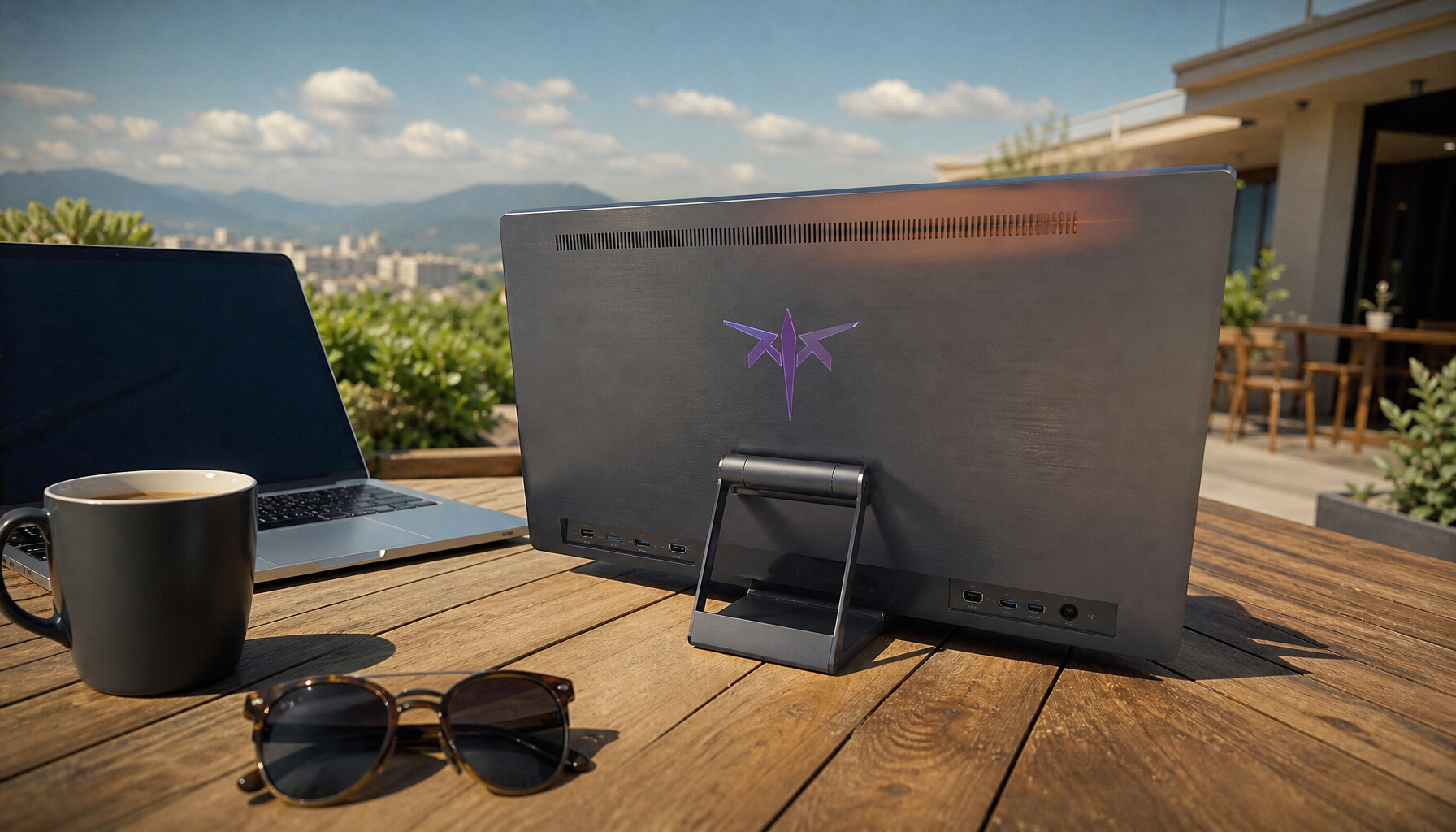
A built-in monitor crosshair usually is not disappearing from the display itself. In most cases, the problem comes from the game HUD, an overlay app, or a fullscreen rendering mode that blocks the overlay.
Most of the time, the crosshair is not truly disappearing from the monitor at all. The usual cause is a game HUD bug or a software overlay that the game mode, graphics API, or display setup is blocking.
If your aim marker looks fine on the desktop, then vanishes when a match starts or after a patch, the cause usually falls into one of three layers: the monitor, the overlay app, or the game itself. Once you separate those layers, the problem becomes much easier to diagnose.
The first thing to know: a true monitor crosshair is different from a game crosshair
A built-in monitor crosshair is a hardware on-screen-display overlay generated by the display itself, not by the game engine. That matters because a real monitor reticle does not depend on the game’s HUD files, weapon settings, or patch state. If your center marker disappears only in one title, only after a patch, or only when you switch weapons, the failure is often inside the game rather than inside the monitor.
That distinction gets blurred because many players call any extra reticle a “monitor crosshair,” even when it is actually an app sitting on top of the game. A crosshair overlay app is far more vulnerable to rendering-mode conflicts. In practice, that is why two games can behave very differently on the same display.

Why it disappears in some games but not others
The most common reason is that exclusive fullscreen with older rendering paths can block overlays. If your reticle comes from an overlay utility rather than the monitor’s own on-screen display, the game can take control of the frame in a way that prevents the overlay from being drawn. Borderless Fullscreen or Windowed Fullscreen is usually more overlay-friendly, which is why the same crosshair often returns when you change display mode.
A second pattern is a game-side bug. A recent shooter patch caused missing crosshairs for some players, including reports of profiles being erased at startup until a later fix was prepared. That is not a monitor defect, and changing monitors will not solve it. When a reticle disappears after a specific update, after loading a profile, or only in one title, treat it as a game or settings problem first.
A third cause shows up on multi-display desks. Wrong-monitor overlay placement can happen in multi-monitor setups, especially when the app picks the wrong panel after initial setup. If your game is on the center screen and the reticle is quietly sitting on the left display, it feels like the crosshair vanished when it really moved.

How to tell which layer is actually failing
The fastest test is simple. Open your monitor’s on-screen display and toggle the crosshair there. If the reticle appears over the desktop, a browser window, and a paused video, the monitor hardware is doing its job. If it vanishes only when a game launches, you are probably not dealing with the monitor’s own reticle in the first place.

The next clue is whether the problem follows a rendering mode. If the marker is missing in Exclusive Fullscreen but returns in Borderless Fullscreen, that points strongly to overlay compatibility rather than panel failure. CenterPoint’s troubleshooting flow supports that pattern, and it is one of the most repeatable fixes because it addresses the rendering path instead of guessing at random settings.
The third clue is whether the game’s native HUD is also broken. If your in-game crosshair, hit marker, or ADS reticle disappears together, the issue is usually inside the title. Reports around recent shooter patches show that behavior clearly: the game still runs, but the aiming UI becomes unreliable. In those cases, reinstalling an overlay app or buying a new display wastes time.
The practical fixes that usually work
If you are using a software overlay, start by switching the game to Borderless Fullscreen or Windowed Fullscreen, then test another graphics API if the title allows it. CenterPoint’s troubleshooting notes specifically mention better behavior in Borderless Fullscreen and suggest trying other graphics modes where available. This is the highest-value first move because it changes the condition most likely to suppress the overlay.
If the issue started after a game patch, handle it like a game bug. The recent patch issue is a clear example: crosshair profiles could disappear, and restarting did not reliably restore them. In that kind of case, back up your preferred profile if the game supports it, then watch for the developer’s fix rather than chasing monitor settings that were never the cause.
If you run more than one display, verify the overlay’s target monitor manually. Multi-monitor setups are useful, but they create one more place for overlay tools to get confused. A quick check in the app’s monitor-selection menu can solve what looks like a game-specific failure.
Pros and cons of built-in monitor crosshairs versus software overlays
A monitor’s built-in hardware crosshair avoids anti-cheat concerns entirely. That makes it reliable for players who want a static reference point without depending on a game patch or overlay app. It is also the safer choice if you play competitive titles with strict rules around injected overlays.
The tradeoff is flexibility. The TeamFortress community discussion highlights a long-running complaint: built-in options can be too large, too busy, or simply not the shape you want. Software overlays are better when you need a tiny dot, a specific color, or fast per-game customization. The catch is that flexibility brings more compatibility risk.
That is why the best choice depends on the problem you are solving. If you want maximum reliability across anti-cheat-sensitive games, a true monitor reticle is the sturdier tool. If you want precise styling and do not mind adjusting display mode, an overlay may be more useful.
What to do before blaming the monitor
A proper gaming display setup starts with native resolution, because display misconfiguration can affect how games present on-screen elements. While that will not usually erase a hardware crosshair, it can complicate fullscreen behavior, scaling, and which display an overlay targets.
A practical workflow is to test the desktop, then Borderless Fullscreen, then Exclusive Fullscreen, then another game. If the reticle survives everywhere except one title, it is usually a game issue. If it fails only in Exclusive Fullscreen, it is usually an overlay compatibility issue. If it never appears even during the desktop on-screen-display test, then the monitor itself is the likely suspect.
Your display should be the stable part of the chain, not the mystery. When you separate the monitor on-screen display, overlay software, and the game HUD into three distinct layers, a disappearing crosshair becomes much faster to diagnose and fix.