Input lag can change between USB ports because each port may use a different controller path, share bandwidth with different devices, draw power differently, or pass through a hub before reaching the CPU.
Does your mouse feel crisp in one rear USB port but slightly heavy in another, even though nothing else changed? A practical port audit can reveal whether the issue comes from the port path, a shared hub, power saving, or the display pipeline, giving you a cleaner setup for gaming, editing, and everyday productivity.
What “USB Input Lag” Really Means
For keyboards, mice, capture dongles, USB audio gear, and drawing tablets, input lag is the time between your physical action and the system receiving, processing, and showing the result. For a gaming monitor user, that delay is only one part of the full chain. The peripheral sends data, the operating system processes it, the game or app reacts, the GPU renders, and the monitor scans out the new frame.
That broader chain matters because input latency in PC games is affected by rendering and display timing, not only the USB connection. A mouse plugged into the most stable USB port can still feel delayed if VSync buffering, heavy graphics settings, or a slow display mode is adding frames of delay downstream.
Why Two USB Ports Can Feel Different
Some Ports Use Different Controllers
On many desktop motherboards, not every USB port is wired the same way. Some ports may connect through a CPU-attached controller, while others route through the chipset. That path can influence how devices appear in system tools, how they share resources, and how they behave under load.

In one gaming latency forum test, a user reported no measurable latency difference between CPU-connected and chipset-connected USB controllers, not even a 1 ms gap. The same discussion still found a slight polling-graph difference and recommended checking where your mouse actually lands in the system’s USB tree, because CPU-connected USB ports are not always clearly labeled in motherboard manuals.
The practical reading is simple: do not assume a red, blue, or black port is automatically faster for input. Test the actual port. If your mouse tracks better on one rear-panel port than another, keep it there, but do not buy a motherboard based only on vague “direct CPU USB” promises.
Ports Can Share Bandwidth Through Internal Hubs
A USB hub does not automatically ruin input latency, but it does make devices share an upstream connection. That matters when a low-bandwidth mouse is sharing the same path with a webcam, external SSD, capture device, lighting controller, or audio interface.
A hub expands one USB connection into multiple downstream ports, and devices connected through a hub share the host connection. For a keyboard and mouse alone, the effect is often small. For a streaming setup with a 1080p webcam, USB microphone, lighting controller, and mouse receiver on one compact hub, the chance of stutter or delayed polling rises.

A useful real-world test is to move only your mouse or wireless receiver to a rear motherboard port, then leave storage, charging, webcams, and decorative devices on the hub. If aim tracking or cursor smoothness improves, the hub path was part of the problem.
Setup |
Responsiveness Risk |
Best Use |
Mouse alone on rear motherboard USB |
Low |
Competitive gaming, precision work |
Keyboard and mouse on same quality hub |
Usually low |
Office desk cleanup |
Mouse plus webcam plus external SSD on one hub |
Medium to high |
Avoid for ranked play or capture work |
Bus-powered hub with several active devices |
Higher |
Light accessories only |
Powered hub for storage and high-draw devices |
Lower power risk |
Docks, drives, audio gear |
Power Management Can Add Delays
USB devices are not just data devices; they also depend on stable power and wake behavior. Windows power-saving settings, selective suspend, low-quality hubs, and overloaded bus-powered docks can create lag that appears only after several minutes.
That pattern is different from pure port latency. If a keyboard works normally at startup, then becomes delayed after 30 minutes, then recovers after being idle, the likely cause is system-level USB behavior rather than a permanently slow port. In practice, that points toward chipset drivers, USB power management, BIOS or UEFI updates, and background device handling.

For a performance display setup, treat power as part of latency hygiene. Put your mouse and keyboard on stable rear ports, avoid charging a phone from the same small hub used for input, and use a powered dock when the desk setup includes storage, audio, and multiple screens.
USB Version Is Not the Whole Story
USB 3.x ports have far more bandwidth than USB 2.0, but a keyboard or mouse does not need massive throughput. A 1,000 Hz mouse sends frequent small reports; it needs consistent timing more than huge transfer speed.
That is why some builders deliberately put a keyboard on USB 2.0 and a mouse on a separate USB 3.x controller when available. The goal is not that USB 2.0 is faster. The goal is separation, stability, and less traffic competition.
For office productivity, this distinction matters less. A spreadsheet, browser, or video call will not expose tiny timing differences the way a flick shot or rhythm input can. For esports, the cleanest layout is still worth the two minutes it takes to test.
The Display Can Hide or Exaggerate USB Differences
A port change can feel dramatic when the real bottleneck is the display pipeline. If your monitor is running at 60 Hz, the screen updates every 16.7 ms. At 120 Hz, it updates every 8.3 ms. At 240 Hz, the frame window is even tighter. That means a tiny USB timing difference is easier to notice on a high-refresh monitor because the rest of the chain is faster.
Display settings also matter. Research on vertical synchronization configurations shows that buffering and sync behavior can change input latency while improving smoothness. In plain terms, the game can look cleaner but feel heavier if frames are waiting in line before reaching the monitor.
The right balance depends on the job. For competitive shooters, use the monitor’s low-lag mode, the highest stable refresh rate, and a frame rate your PC can actually sustain. For color work, coding, finance dashboards, or long document sessions, a slightly more processed picture mode may be acceptable if it improves comfort and accuracy.
How to Test Which USB Port Is Best
Start with the most controlled change: move only the mouse. Keep the same polling rate, same game, same monitor mode, same frame cap, and same desk surface. Use a repeatable task such as aim training, a mouse polling graph, a rhythm game, or fast cursor movement across a high-refresh desktop.

System-monitoring tools can help identify whether a device appears under a different USB controller. The forum discussion describes checking the PCI bus view and watching where the USB root hub changes as the mouse moves between ports. That is more reliable than guessing from port color or case location.
For USB-to-serial adapters and specialized devices, latency may also be controlled by driver buffering. One adapter driver uses a configurable latency timer with a 16 ms default, and lowering that timer can reduce read-cycle delay at the cost of more CPU overhead. That example does not apply directly to every gaming mouse, but it proves a key point: device drivers can buffer data before the host sees it.
Best Port Strategy for Gaming, Work, and Portable Screens
For a serious gaming monitor setup, plug the mouse or wireless mouse receiver into a rear motherboard USB port. Put the keyboard on another controller if you can identify one. Keep webcams, external drives, capture devices, lighting hubs, and charging cables away from the mouse path during competitive play.

For office productivity displays, prioritize reliability over theoretical latency. A quality powered dock is usually fine for keyboard, mouse, webcam, and storage, especially when the monitor is used for documents, meetings, and multitasking. If the cursor stutters during video calls or file transfers, separate the mouse receiver from the dock first.
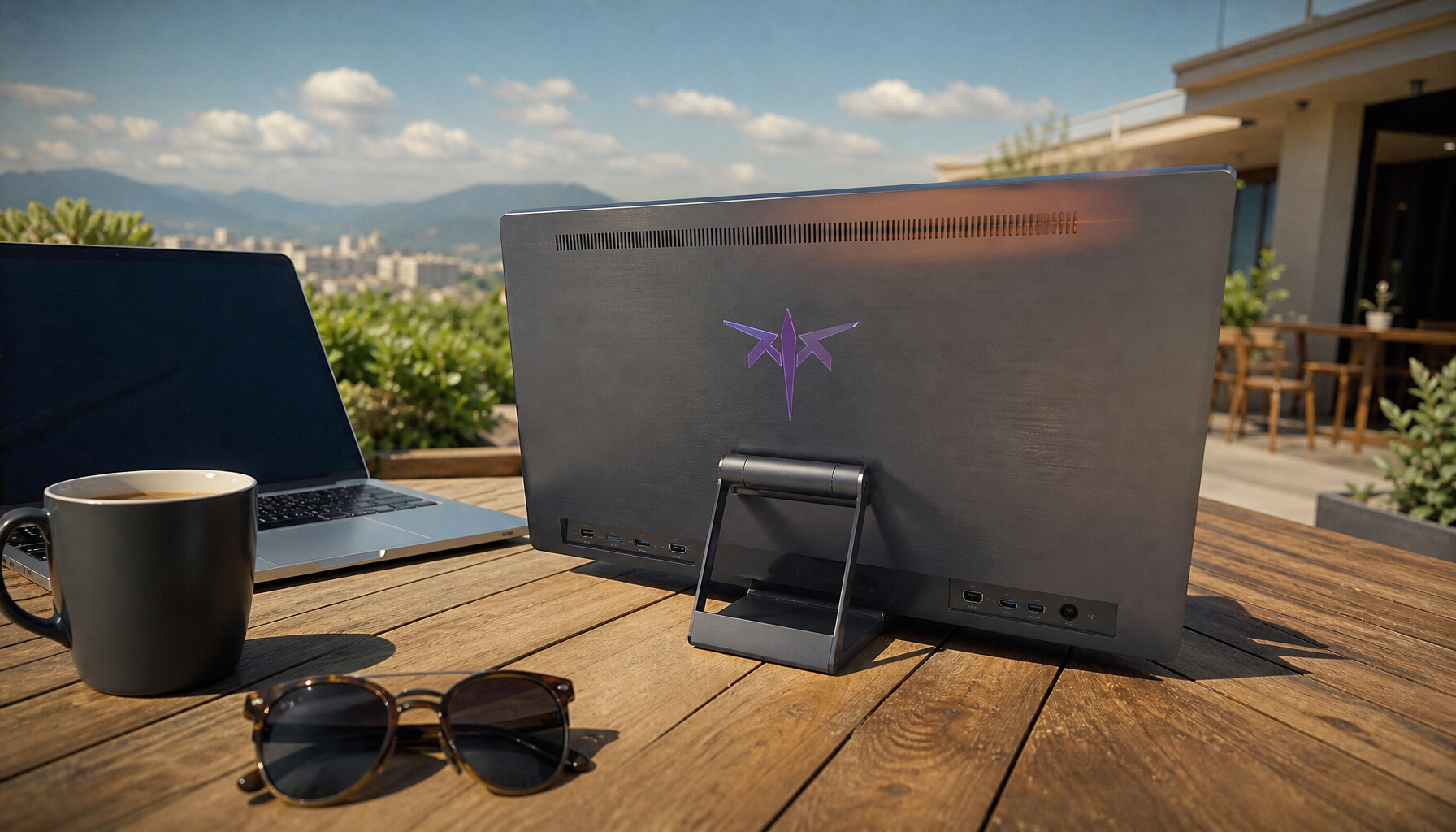
For portable smart screens and laptop docks, be more selective. Compact USB-C hubs often combine display output, power delivery, data ports, and card readers through one small device. That is convenient, but if the mouse feels inconsistent while an external SSD or portable monitor is active, move the mouse receiver to another laptop port or use Bluetooth only when latency is not critical.
Pros and Cons of Chasing the Lowest-Lag USB Port
Optimizing USB placement has real upside. It can reduce stutter, isolate flaky hubs, improve wireless receiver performance, and make a high-refresh monitor feel more direct. It costs nothing and usually takes less than 15 minutes.
The downside is that USB port tuning can become a distraction. If your game is GPU-bound, your monitor is stuck at 60 Hz, VSync is adding buffering, or your display preset is doing heavy processing, moving a mouse between ports will not transform the system. The biggest gains usually come from the full chain: stable power, clean USB routing, high polling rate, high refresh rate, low-lag display mode, and consistent frame pacing.
FAQ
Should I use USB 2.0 or USB 3.0 for my gaming mouse?
Use the port that tests most consistently on your system. A mouse does not need USB 3.x bandwidth, but a USB 3.x port on a separate controller may perform better in your exact build. If both feel identical, choose a rear motherboard port and keep high-traffic devices elsewhere.
Do USB hubs always add input lag?
No. A good hub with light devices may feel identical for normal use. Lag risk rises when the hub is bus-powered, overloaded, poorly built, or shared with bandwidth-heavy devices.
Why does my mouse lag only after a while?
That pattern often points to power management, driver behavior, sleep states, heat, wireless interference, or a busy USB controller. Try disabling USB selective suspend, updating chipset drivers, testing rear ports, and removing high-power devices from the same hub.
A Clean Signal Wins
The best USB port is not the one with the newest color or the biggest speed label. It is the port path that keeps your input device stable, isolated, powered, and predictable while the rest of the system drives the display at a fast, steady pace. For a monitor setup built around immersion and performance, that clean signal is where responsive control starts.