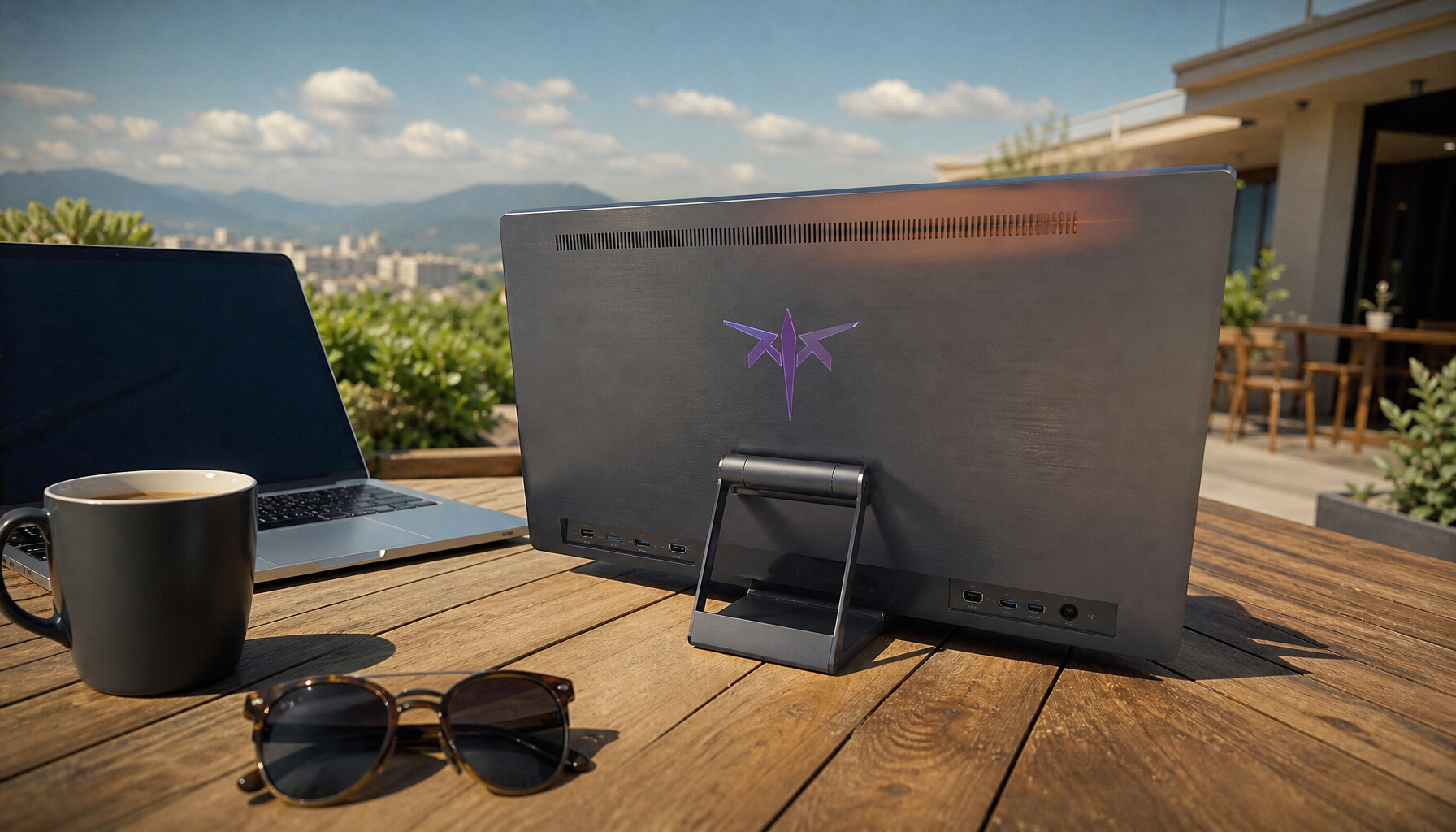
Display uniformity matters more in 3D sculpting because sculpting depends on subtle light, shadow, and surface-value judgment across the whole screen. Polygon modeling is more topology-driven, so vertices, edges, and face flow can remain readable even when the panel is less consistent.
Sculpting Is a Surface Judgment Workflow
3D sculpting is closer to shaping digital clay than assembling a clean technical mesh. Artists push, smooth, pinch, scrape, and layer surface detail, often judging form by tiny shifts in highlight and shadow rather than by visible wireframe structure.

That makes uniform brightness and color critical. If the left side of a monitor is slightly warmer or dimmer than the center, pores, wrinkles, bevels, anatomy planes, and fabric folds can look deeper or flatter than they really are.
Physical sculptors already know this problem: flat overhead light can hide form, while directional light reveals depth, contours, and value changes. A non-uniform display creates the digital equivalent of bad studio lighting.
Polygon Modeling Has More Structural Feedback
Polygon modeling is still visual, but it gives the artist stronger technical anchors. You can inspect vertices, edges, face loops, normals, UV seams, measurements, and topology density directly.
That means a slightly uneven panel is annoying, but less likely to distort the core task. A hard-surface modeler building a chair leg, product shell, or wall panel can rely on grid snapping, dimensions, symmetry, bevel settings, and shaded wireframe views.

Sculpting has fewer hard rails. Organic forms, characters, creatures, and natural assets depend on whether a cheek plane feels right, whether a tendon transition is too sharp, or whether a surface texture is visually balanced. Those are exactly the decisions a poor panel can bias.
Uniformity Protects Detail, Symmetry, and Material Read
Pixel uniformity means brightness and color output stay consistent across pixels and screen regions. On modern high-resolution OLED and microLED-style displays, each pixel or subpixel can vary, so manufacturers often use measurement and correction to improve consistent luminance.
For sculptors, the risk is practical: one side of a model can appear more polished, rough, red, gray, shadowed, or inflated simply because that part of the viewport sits on a weaker area of the panel.
For example, if you rotate a bust and a forehead wrinkle disappears near the upper-right corner but returns at screen center, you may over-carve detail that was never missing from the model. That wastes time and can damage the sculpt’s natural rhythm.

The Tradeoff: Uniformity Compensation Is Not Free
Uniformity compensation can help even out brightness and color variation, but it may reduce contrast or lock certain monitor controls. Some professional users compare compensation on and off because uniformity compensation can create a real choice between panel consistency and punchier contrast.
For sculpting, uniformity usually matters more than maximum contrast, especially for character, creature, collectible, medical, or product-detail work. A dramatic image is less useful than a trustworthy one when you are deciding whether a surface plane is correct.
For polygon modeling, the balance can shift. Higher contrast may help read edges and silhouettes, while exact corner-to-corner tone consistency matters less unless you are also texturing, rendering, or presenting final assets.
What to Look for in a Sculpting Monitor
Choose a display that supports your eyes and your pipeline, not just a spec sheet. The goal is confidence: when you make a surface decision, the monitor should not be part of the uncertainty.
A good sculpting monitor should have strong brightness and color uniformity across the full panel, factory calibration or hardware calibration support, 4K resolution or higher for dense brush and texture work, wide color coverage if you texture or review materials, and a uniformity mode you can compare instead of blindly trusting.
Polygon modeling can tolerate a more budget-focused screen because its feedback is often geometric. Sculpting rewards a more disciplined display because the artist is reading form through light. For organic 3D work, uniformity is not a luxury feature; it is part of the toolchain.