Resolution limits usually come from the weakest link in the chain: the USB-C port, adapter, HDMI cable, monitor, power delivery, or display settings. A “4K” adapter label does not guarantee 4K output unless every part of the setup supports the same resolution and refresh rate.
USB-C Ports Are Not All Video Ports
USB-C is a connector shape, not a promise of video output. For a USB-C to HDMI adapter to work properly, the source device typically needs DisplayPort Alternate Mode, Thunderbolt, or another video-capable standard; many USB-C ports only handle charging and data.

That matters most with portable monitors because many users expect one small adapter to unlock desktop-class clarity. In reality, a laptop or tablet without DisplayPort Alt Mode may show no signal, limited resolution options, or unstable output.
This is why two identical-looking USB-C ports on the same device can behave differently. One may support external displays, while another may be data-only.

Bandwidth Caps Limit Resolution and Refresh Rate
Resolution is only half the workload. Refresh rate also consumes bandwidth, so 4K at 60Hz is much harder to drive than 1080p at 60Hz.
A common portable setup may fall back to 1920 x 1080 at 60Hz when the adapter, cable, or HDMI port cannot sustain a higher signal. Some adapters advertise 4K support but only at 30Hz, which can feel sluggish for gaming, cursor movement, and fast spreadsheet navigation.

For performance-focused users, match the entire chain to the target mode. Most adapters and portable monitors can handle 1080p at 60Hz, while 1440p at 60Hz needs stronger adapter and display support. Many “4K” adapters top out at 4K at 30Hz, and 4K at 60Hz requires higher-bandwidth hardware throughout.
If your setup cannot reach 4K at 60Hz or 144Hz, confirm that the computer, adapter, cable, and monitor all support the same mode, because all devices in the chain must align.
HDMI Cables, Power, and Adapter Quality Still Matter
HDMI carries video and audio, but not monitor power. Many portable monitors need a second USB power cable when connected over HDMI, and insufficient power can trigger flicker, blackouts, or lower negotiated display modes.

Cable quality also affects resolution. A weak or damaged HDMI cable may pass 1080p but fail at higher bandwidth, especially with longer runs or compact travel cables packed tightly in a bag.
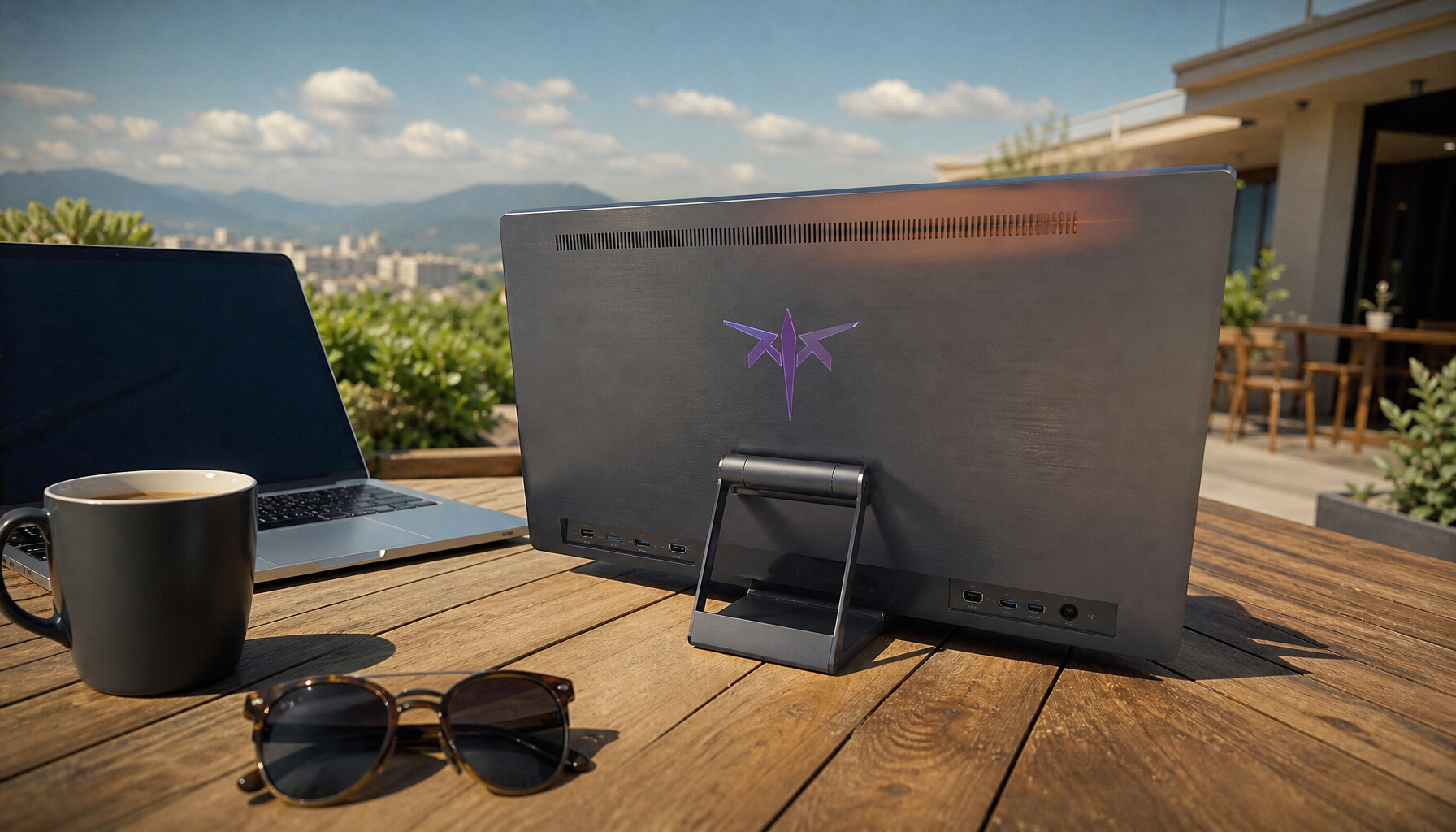
Portable monitor workflows are especially sensitive because everything is small: mini HDMI ports, slim adapters, short cables, and battery-powered hosts. A full-featured USB-C setup can carry video, audio, and power through one cable, but only when the device supports Power Delivery and DisplayPort Alt Mode.
If USB-C direct works better than USB-C to HDMI, the issue may be the conversion path, not the portable monitor panel.
Display Settings Can Force the Wrong Mode
Sometimes the hardware is capable, but the operating system chooses a conservative mode. A computer may default to mirroring, overscan, scaled resolution, or an older refresh rate after detecting an adapter.
Check the display settings, choose the portable monitor, and review both resolution and refresh rate. If the expected option is missing, update graphics drivers or test the adapter on another device.

Older TVs and some HDMI displays can also apply overscan, cutting off edges or making the desktop look incorrectly scaled. For PC-style use, set the display aspect mode to screen fit or disable overscan where available; HDMI resolution problems are often tied to display scaling rather than true panel limits.
Quick Fix Checklist Before Replacing the Adapter
Start with the highest-impact checks before buying new gear.
- Confirm that the USB-C port supports video output.
- Test 1080p at 60Hz before attempting 4K.
- Use a high-quality HDMI cable rated for the target mode.
- Power the portable monitor separately when using HDMI.
- Update graphics drivers, firmware, and display settings.
For office productivity, 1080p at 60Hz on a 15- to 17-inch portable monitor is often sharp enough and reliable. For immersive gaming or creator work, buy based on verified port specs, not connector shape or “4K-ready” packaging.