Yes, but usually not through the monitor’s USB-C port. The reliable setup is Thunderbolt 2 or Mini DisplayPort to the monitor’s DisplayPort input for video, plus separate USB and power cables.
Is your older laptop or workstation sitting next to a sleek USB-C monitor while the one-cable setup refuses to work? The practical win is clear: with the right cable path, you can still get a sharp external display without wasting money on adapter chains that only match the shape of the port. You’ll learn what works, what does not, and how to build a stable desk setup.
The Short Compatibility Answer
A laptop with only Thunderbolt 2 can often drive a USB-C monitor if that monitor also has DisplayPort or HDMI inputs. The problem is that a USB-C monitor usually expects video through USB-C DisplayPort Alt Mode, USB data, and sometimes USB Power Delivery over the same cable, while Thunderbolt 2 does not output a modern USB-C Alt Mode signal.
That distinction matters because USB-C display output works only when the source port, cable, and display all support the needed video features. A Thunderbolt 2 port uses the Mini DisplayPort-shaped connector and can carry DisplayPort video, but that does not mean it can become a full USB-C monitor connection with charging, USB hub data, and video over one plug.
For a 2015-era laptop, for example, the clean setup is typically a Mini DisplayPort-to-DisplayPort cable from the Thunderbolt 2 port to the monitor, then a USB-A-to-USB-B cable from the laptop to the monitor’s upstream USB hub port if you want a keyboard, mouse, webcam, or USB ports on the monitor to work. The laptop still charges from its original power connector, not from the USB-C monitor.
Why the USB-C Port Is the Trap
USB-C is a connector shape, not a promise. It can carry USB data, video, power, Thunderbolt, or some mix of those capabilities, depending on the hardware. That is why two USB-C ports can look identical and behave completely differently.

The confusion gets worse because some Thunderbolt 3-to-Thunderbolt 2 adapters have a USB-C-shaped plug on one end. The adapter may look like the missing bridge, but a user working through this exact desk-sharing problem correctly identified the risk: a chain of USB-C adapters, female-to-female couplers, and Thunderbolt conversion parts can cost around $100 without proving that display and USB peripheral data will pass through the whole path for an older Thunderbolt 2 laptop.
The key performance lesson is simple: match the signal, not just the connector. If your monitor is a USB-C display with a normal DisplayPort input, use DisplayPort. If it is a Thunderbolt display, use Thunderbolt. If it is a USB-C-only portable screen with no HDMI or DisplayPort input, a Thunderbolt 2 laptop is usually the wrong source unless the screen specifically documents compatibility through an active adapter.
What Works in Practice
Best Setup for Most USB-C Monitors
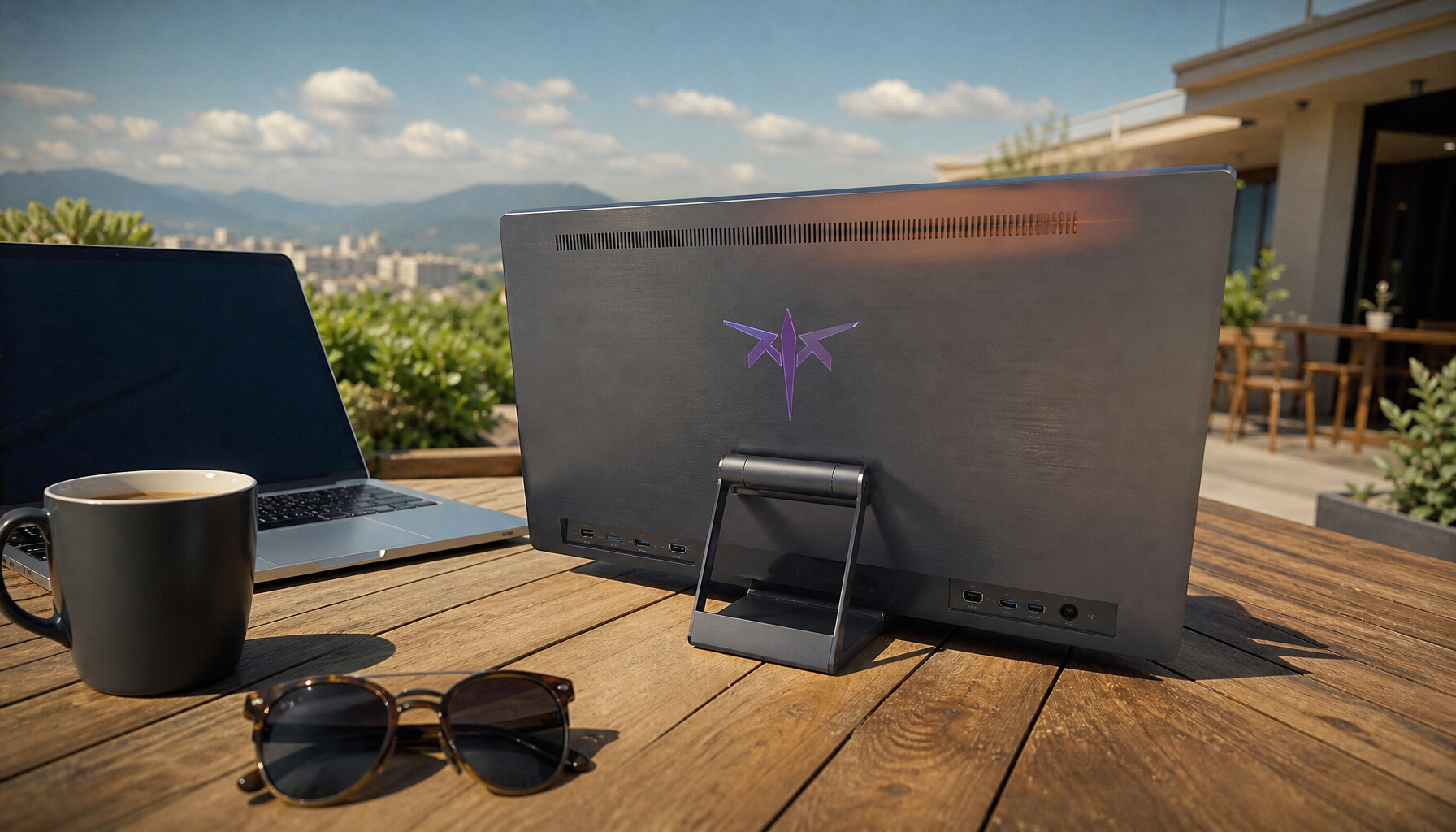
The most reliable setup is Thunderbolt 2 to DisplayPort for video. Since Thunderbolt 2 ports on older laptops share the Mini DisplayPort connector shape and can output DisplayPort video, a Mini DisplayPort-to-DisplayPort cable is often the simplest and most stable route when the monitor has a DisplayPort input.

For a productivity desk, this is usually good enough. A 34-inch ultrawide USB-C monitor with DisplayPort and HDMI inputs can still become an excellent external display for spreadsheets, timelines, browser-heavy research, and writing. You lose the single-cable elegance of USB-C, but you keep the core value: more screen area, sharper multitasking, and lower setup risk.

When HDMI Is Acceptable
HDMI can work if the laptop and monitor both support the resolution and refresh rate you want. It is a reasonable fallback for office work, presentations, and casual use. The limitation is that HDMI carries display and audio, not the monitor’s USB hub data. In the user discussion scenario, the monitor’s HDMI connection worked for display output, but it did not carry mouse and keyboard data through the monitor setup.
For a performance monitor, this is where you need to be deliberate. If you bought a high-refresh gaming display, HDMI from an older laptop may not unlock the monitor’s best mode. DisplayPort is more often the right target from a Thunderbolt 2 or Mini DisplayPort source.
When You Need the Monitor’s USB Hub
If you want the monitor’s USB ports to run your keyboard, mouse, webcam, audio interface, or storage, video alone is not enough. You need a separate upstream USB connection from the laptop to the monitor. Many office monitors provide a USB-B upstream port for this exact reason.
That means your desk may use three connections: Mini DisplayPort to DisplayPort for video, USB-A to USB-B for peripherals, and the laptop’s original charger for power. It is not as elegant as USB-C, but it is predictable and serviceable.
Adapter Choices: Good, Risky, and Wrong
Goal |
Likely Result |
Practical Path |
Use USB-C monitor as a display |
Usually possible if the monitor has DisplayPort or HDMI |
Use Mini DisplayPort to DisplayPort first |
Use one USB-C cable for video, USB, and charging |
Usually not practical from Thunderbolt 2 |
Use separate video, USB, and power cables |
Use a Thunderbolt 3-to-Thunderbolt 2 adapter with a USB-C monitor |
Often wrong for non-Thunderbolt USB-C displays |
Use it only for actual Thunderbolt devices |
Use monitor USB ports for keyboard and mouse |
Possible if the monitor has USB upstream |
Add USB-A to USB-B or another supported upstream cable |
Use a USB-C dock meant for new laptops |
Unreliable or unsupported |
Prefer a Thunderbolt 2 dock or direct display cable |
A Thunderbolt 2 dock can help, but it does not magically turn an older laptop into a USB-C host. Thunderbolt 2 dock guidance shows why dock display behavior must be treated carefully: display support depends on the computer, display type, and host platform, and some HDMI plus DisplayPort combinations do not work together.
For demanding multi-monitor work, docking technology matters even more. Thunderbolt docks pass display signals from the laptop GPU, while DisplayLink uses software compression over USB and can support broader mixed-laptop desks with tradeoffs in latency and driver dependence.
Pros and Cons of Using a USB-C Monitor with Thunderbolt 2
The biggest advantage is value. You can keep using an older laptop while upgrading to a modern display that also works well with newer USB-C and Thunderbolt laptops. For a shared home office, that means one monitor can serve an older personal laptop and a newer work laptop, even if each machine connects differently.
The second advantage is display quality. A good USB-C monitor often includes DisplayPort and HDMI, so the screen itself is not locked to USB-C. You can still benefit from a larger panel, better ergonomics, sharper text, and more usable workspace.
The downside is cable simplicity. You probably will not get one-cable docking from a Thunderbolt 2 laptop. You also should not expect USB-C Power Delivery to charge the older laptop, and you should not assume the monitor’s USB hub will work unless you connect a separate USB upstream cable.
The final downside is purchasing risk. USB-C hubs and docks can fail for reasons that look similar: insufficient power, unsupported video output, display settings, or weak cables. Troubleshooting advice for USB-C hubs starts with confirming that the laptop port supports video, checking power delivery, and isolating cables or ports when a monitor is not detected.
Buying Advice Before You Spend Money
Choose a USB-C monitor that also has DisplayPort input. That one port is the difference between a clean older-laptop setup and a frustrating adapter experiment. HDMI is useful, but DisplayPort is the stronger first choice when coming from Thunderbolt 2 or Mini DisplayPort.
Check for a USB upstream port if you want the monitor to act like a basic dock. If the monitor only has USB-C upstream and no USB-B upstream, your older Thunderbolt 2 laptop may not be able to use the monitor’s hub features. If the monitor has USB-B upstream, a simple USB-A-to-USB-B cable can bring the hub online.
Treat USB-C KVM docks and switch docks as tools for newer machines unless they explicitly support your older host. Modern USB-C switching docks can offer dual-display output, high-speed USB, and up to 100 W charging for compatible laptops through a USB-C switch, but that does not mean they accept Thunderbolt 2 as a full-featured source.
A Simple Setup Example
Picture a 2015 laptop and a modern 32-inch USB-C productivity monitor. The monitor has USB-C, DisplayPort, HDMI, and a USB-B upstream port. The performance-driven setup is Mini DisplayPort to DisplayPort for the screen, USB-A to USB-B for the monitor’s USB hub, and the laptop’s original charger for power. Your keyboard and mouse plug into the monitor, your laptop uses its native charger, and the display runs through the most direct video path.

Now add a newer work laptop with USB-C. That machine can use the monitor’s USB-C cable for video, hub data, and charging if both sides support those features. The monitor becomes a shared display, but the older laptop uses a different connection strategy. That is the reliable compromise.
FAQ
Can a Thunderbolt 2 port connect directly to a USB-C monitor?
Usually no, not directly through USB-C. It can often connect to that same monitor through DisplayPort or HDMI if the monitor provides those inputs.
Will a Thunderbolt 3-to-Thunderbolt 2 adapter solve this?
Only for Thunderbolt devices, not ordinary USB-C DisplayPort monitors. The adapter’s USB-C-shaped side does not mean it converts every USB-C monitor into a Thunderbolt 2-compatible display.
Can the USB-C monitor charge my Thunderbolt 2 laptop?
No, not in normal setups. Older Thunderbolt 2 laptops generally charge through their original power connector.
Can I still use the monitor’s keyboard and mouse ports?
Yes, if the monitor has a compatible USB upstream connection. For many office monitors, that means adding a USB-A-to-USB-B cable from the laptop to the monitor.
Final Word
A USB-C monitor can still be a smart upgrade for a Thunderbolt 2 laptop, but the winning setup is rarely one cable. Buy for DisplayPort, keep USB hub data separate, avoid expensive adapter chains, and you’ll get the screen space without sacrificing reliability.