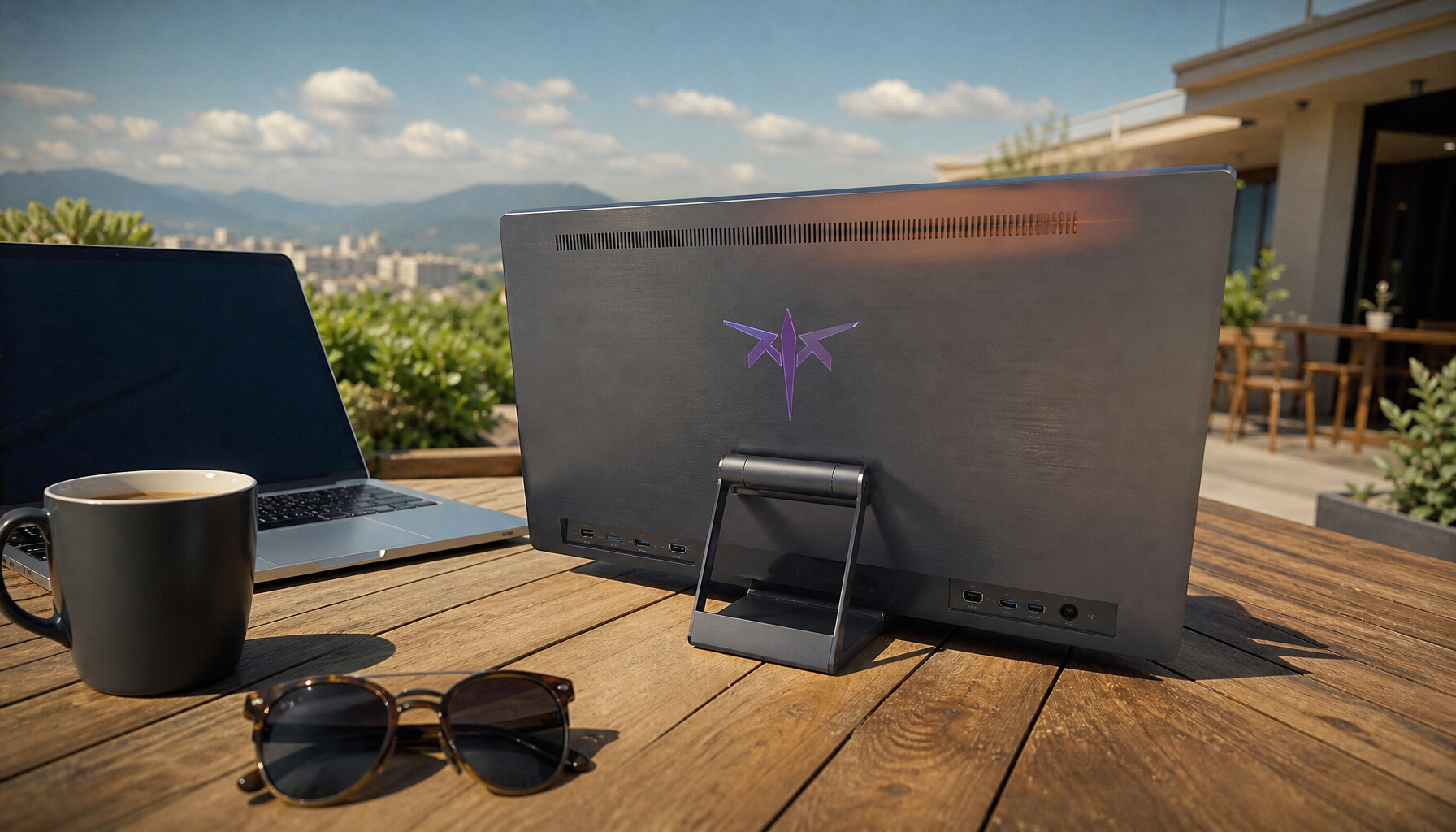
To keep a laptop charging from a USB-C monitor while it sleeps, the monitor must support USB-C Power Delivery in standby or power-off mode, the laptop must accept USB-C charging on that port, and the cable must support both power and display.
Does your laptop wake up at 42% battery even though it was plugged into the monitor all night? A correct one-cable setup can keep a desk clean, preserve battery during breaks, and restore your workstation with one lid-open action. Here is how to check the monitor, laptop, cable, and power settings so sleep-mode charging actually works.
Why Sleep-Mode Charging Fails on USB-C Monitors
USB-C looks simple, but the connector is only the shape of the port. The useful features behind it are separate: video, data, Power Delivery, hub support, Thunderbolt, USB4, and DisplayPort Alternate Mode can vary from one port to another, even on the same monitor or laptop. A community troubleshooting thread shows the classic symptom: monitors work as displays but do not charge because Power Delivery compatibility is a separate requirement from video output through USB-C.
That distinction matters more in sleep mode because some monitors shut down their USB-C power rail when the display enters standby. Others keep charging only if a menu setting such as “Standby Charging,” “Power-Off Charging,” “USB-C Charging,” or “Always On USB” is enabled. If your screen turns off and the laptop stops charging, the issue is usually not the desktop wallpaper, refresh rate, or operating system alone. It is the power negotiation between monitor, laptop, and cable after the display state changes.
The Three Requirements for Charging While Asleep
The Monitor Must Supply USB-C Power Delivery in Standby
A USB-C monitor can carry video, audio, data, and power over one cable, but only when the model includes the required features. A USB-C monitor overview makes the same practical distinction: basic USB-C monitors may handle video or data without charging, while USB-C monitors with Power Delivery can charge a connected device during display use.
Open the monitor’s on-screen display menu and look under sections such as System, Power, USB, Type-C, Hub, or Eco. Enable the setting that keeps USB-C charging active during standby or power-off. If the monitor has an energy-saving mode, deep sleep mode, or auto power-off feature, temporarily disable it for testing because aggressive power saving can shut down the same USB controller that supplies the laptop.
A real-world example is a creator desk with a 27-inch 4K USB-C monitor, keyboard, mouse, and Ethernet connected through the display. If the monitor’s standby USB power is off, the laptop may charge while you are working but stop the moment the panel sleeps. Turning on standby charging lets the monitor behave more like a docking station instead of only a display.
The Laptop Must Accept Charging Through That USB-C Port
Not every USB-C port accepts power input. Some laptop ports are data-only, some support DisplayPort video but not charging, and some support full USB-C charging only on specific sides of the chassis. The safest check is the laptop manufacturer’s specification page for terms like USB Power Delivery, USB-C charging, Thunderbolt charging, or USB4 charging.

For productivity and gaming displays, this is where performance discipline pays off. A laptop can send video to a monitor while refusing to charge from that same connection. The KTC USB-C hub and KVM troubleshooting guide separates USB-C display, charging, USB data, and KVM behavior as different functions, which is exactly how you should diagnose the problem.
If you have two USB-C ports, test both. On some laptops, one port is wired for full charging and display, while another is better suited for accessories. If charging works on one side but not the other, the monitor is probably fine and the laptop port capability is the limiting factor.
The Cable Must Be Full-Feature and Rated for Enough Power
A charge-only USB-C cable can look identical to a full-feature cable. For a one-cable monitor setup, use a short, full-feature USB-C cable that supports video, data, and the wattage your laptop needs. Portable monitor listings often describe 100 W pass-through charging and USB-C connectivity for portable screen setups.
If your monitor came with a USB-C cable, start with that. If you are replacing it, look for a cable explicitly rated for USB-C video and 100 W charging, preferably USB4-class for demanding setups. A weak cable can cause slow charging, flicker, hub dropouts, or a display that works only at lower refresh rates.
How Much Power Do You Need?
Sleep-mode charging uses much less power than active rendering, but the monitor still has to negotiate enough Power Delivery for the laptop. The bigger problem appears when the laptop wakes or runs background tasks while connected. A 65 W monitor may maintain a slim office laptop comfortably, while a 16-inch performance laptop may still drain under load.
Laptop Type |
Practical USB-C PD Target |
What to Expect |
13-inch ultraportable |
45 W to 65 W |
Usually enough for sleep and normal office work |
Business performance laptop |
65 W to 100 W |
Better stability when waking, docking, and multitasking |
Creator or workstation laptop |
90 W to 140 W class |
Monitor charging may help, but heavy loads can still need the original charger |
Gaming laptop |
Often above USB-C monitor limits |
Use the monitor for display and hub features, then keep the main charger connected |
One monitor review site notes that a serious productivity display provides 90 W USB-C Power Delivery, enough to charge many laptops while connected. In practice, 90 W is the sweet spot for many office, coding, and creative laptops because it leaves more headroom than entry-level 45 W monitor charging.
Step-by-Step Setup Without Guesswork
Start with the monitor powered on and connected directly to wall power. Connect the laptop to the monitor’s USB-C upstream or Type-C display port, not a downstream accessory-only USB-C port. Many monitors have multiple USB-C ports, and only one may support video plus Power Delivery.

Next, open the monitor menu and enable standby or power-off USB-C charging. If the monitor has Eco Mode, Deep Sleep, Auto Standby, or USB power-saving options, turn them off during testing. You can re-enable energy-saving features later, one at a time, after confirming charging survives sleep.
Then check the laptop battery icon while the machine is awake. It should show charging, not merely connected. Put the laptop to sleep for 10 minutes, wake it, and confirm the battery percentage did not fall. For a stronger test, let it sleep for an hour with the lid closed and the monitor in standby. A stable or higher battery percentage means the USB-C power path is staying active.
If charging stops only after the laptop sleeps, inspect the laptop’s firmware and power settings. On Windows laptops, look for BIOS or vendor utility settings related to USB-C charging, USB power in sleep, Modern Standby, or always-on USB. On laptops that usually handle USB-C display charging automatically, failures more often point to monitor standby behavior, the wrong port, or insufficient wattage. Community reports around display charging issues reinforce the same practical lesson: the cable, monitor port, and device compatibility all matter before assuming the laptop is defective.
Pros and Cons of Always-On Monitor Charging
The upside is workstation speed. One USB-C cable can wake your display, restore your keyboard and mouse, connect storage, and keep the laptop topped up. USB-C monitor positioning often centers on this single-cable workspace value, where the display becomes the central connection point instead of another device on the desk.

The trade-off is power behavior. Keeping USB-C charging alive in standby may use more wall power than deep sleep. It can also keep the monitor’s internal hub partially active. For a home office, that small cost is often worth the convenience. For a shared office, hotel setup, or travel station, you may prefer to disable standby charging when you do not need it.
Battery health is another practical concern. If your laptop supports a charge limit such as 80%, use it for a desk-bound setup. That lets you keep the convenience of monitor charging without holding the battery at full charge every day.
Troubleshooting When It Still Will Not Charge in Sleep Mode
If the laptop charges while awake but not asleep, the monitor’s standby charging setting is the first suspect. If the laptop never charges from the monitor, compare the monitor’s USB-C PD output with the laptop’s original charger rating. A 45 W monitor is not a real replacement for a performance laptop that shipped with a much larger adapter.
If video works but charging fails, switch to another USB-C port on the monitor. Some displays include one USB-C port for upstream video and charging, while other USB-C ports are downstream data or accessory ports. If the monitor has a KVM, make sure the active input is assigned to the USB-C upstream path.
If charging works until you attach accessories, unplug the external SSD, webcam, Ethernet adapter, and hub devices from the monitor. USB-C bandwidth and power budget are shared across the display, USB hub, and peripherals. USB-C monitor coverage often treats hub capability, charging power, and display specs as buying criteria because the whole docking experience depends on more than panel resolution.
If nothing changes, update the monitor firmware if the manufacturer provides one, update the laptop BIOS or firmware, and retest with the original monitor cable. Firmware fixes can improve USB-C negotiation, especially around sleep, wake, Thunderbolt, and USB4 compatibility.
FAQ
Can a USB-C monitor charge a laptop while the monitor screen is off?
Yes, but only if the monitor supports charging during standby or power-off mode and that setting is enabled. If the monitor enters a deep sleep mode that disables USB-C power, laptop charging will stop.
Why does my laptop show charging but still lose battery?
The negotiated wattage may be below the laptop’s demand. This is common with larger performance laptops connected to 45 W or 65 W monitors, especially when the laptop wakes for background tasks or runs heavy apps after sleep.
Does Thunderbolt guarantee sleep-mode charging?
No. Thunderbolt can improve bandwidth and compatibility, but charging still depends on Power Delivery support, monitor firmware, cable rating, and laptop charging input. Community troubleshooting is a good reminder that USB-C, USB4, and Thunderbolt behavior can vary by implementation.
Final Word
Enable standby or power-off USB-C charging in the monitor menu, use the correct PD-capable Type-C port, and pair it with a full-feature cable rated for your laptop’s power needs. A clean one-cable display setup is only reliable when power, video, data, and sleep behavior are all verified together.