Build two display presets, one for bright work hours and one for low-light evenings, then connect them to your monitor software, operating system settings, or a supported preset utility so brightness, contrast, color mode, and refresh behavior change on a schedule.
Ever finish a late match, spreadsheet review, or editing session and realize your monitor still feels like a storefront sign at midnight? A 15-minute calibration pass can make text easier to read, preserve shadow detail, and stop your display from fighting the room. Here is a practical path to day and night presets that change with your environment instead of your patience.
Why Time-Based Presets Matter
A display preset is a saved group of screen settings. For this workflow, it usually includes brightness, contrast, color temperature, picture mode, HDR state, refresh rate, and sometimes blue-light or eye-comfort settings. The point is not to make the screen warmer by habit; it is to match luminance and contrast to the room so your monitor stays readable, immersive, and comfortable across the day.
The strongest starting principle is simple: your monitor should not overpower the space. Basic display calibration should preserve black detail, prevent white clipping, and keep neutral grays from drifting red, green, or blue. In a real desk setup, that means a bright preset for glare-heavy daytime work and a restrained preset for night sessions when the room is dim.
Gaming and productivity setups also place different demands on the same panel. A competitive FPS preset may raise contrast or dark visibility, while a writing or spreadsheet preset should reduce harsh brightness and keep text clean. Gaming monitor setup guidance notes that brightness should be adjusted for the room, with lower brightness often working better at night and higher brightness helping during daylight.
Build the Day Preset First
Start with the preset you will use during your brightest normal working conditions, not the brightest possible room. If sunlight hits the display directly, fix the room first with a shade or repositioning; driving the backlight harder is a workaround, not a premium setup strategy.
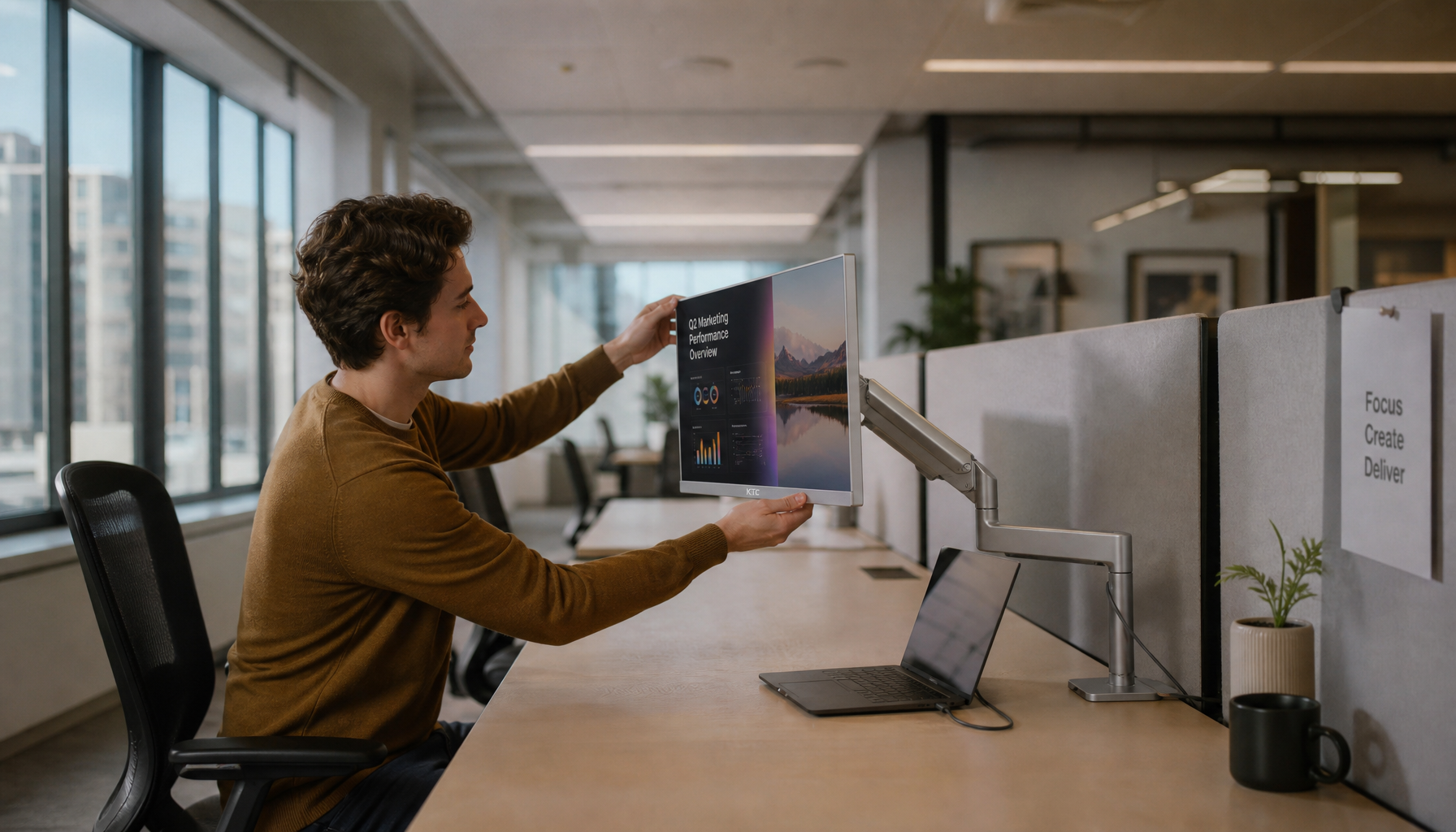
For a daytime office preset, set the monitor to its native resolution, confirm the correct refresh rate, and choose a neutral picture mode. Users with multiple displays should first arrange their screens so the desktop matches the physical layout, because a multiple-monitor layout is easier to tune when each panel is correctly identified and positioned. A practical example is a 27-inch main display beside a portable screen: set the main monitor as your high-refresh work and gaming display, then keep the portable panel slightly dimmer so your eyes do not bounce between two different brightness levels all day.

For daytime gaming, keep performance settings separate from comfort settings. If your monitor supports 144Hz, 240Hz, or higher, make sure the panel and operating system are actually using that refresh rate. High-refresh guidance is clear that 240Hz support depends on the GPU, cable, ports, and manual system settings, not just the badge on the box. A day preset for gaming might use higher brightness, Adaptive Sync, the correct overdrive level, and an SDR or HDR mode suited to the game.
Build the Night Preset Around Comfort and Contrast
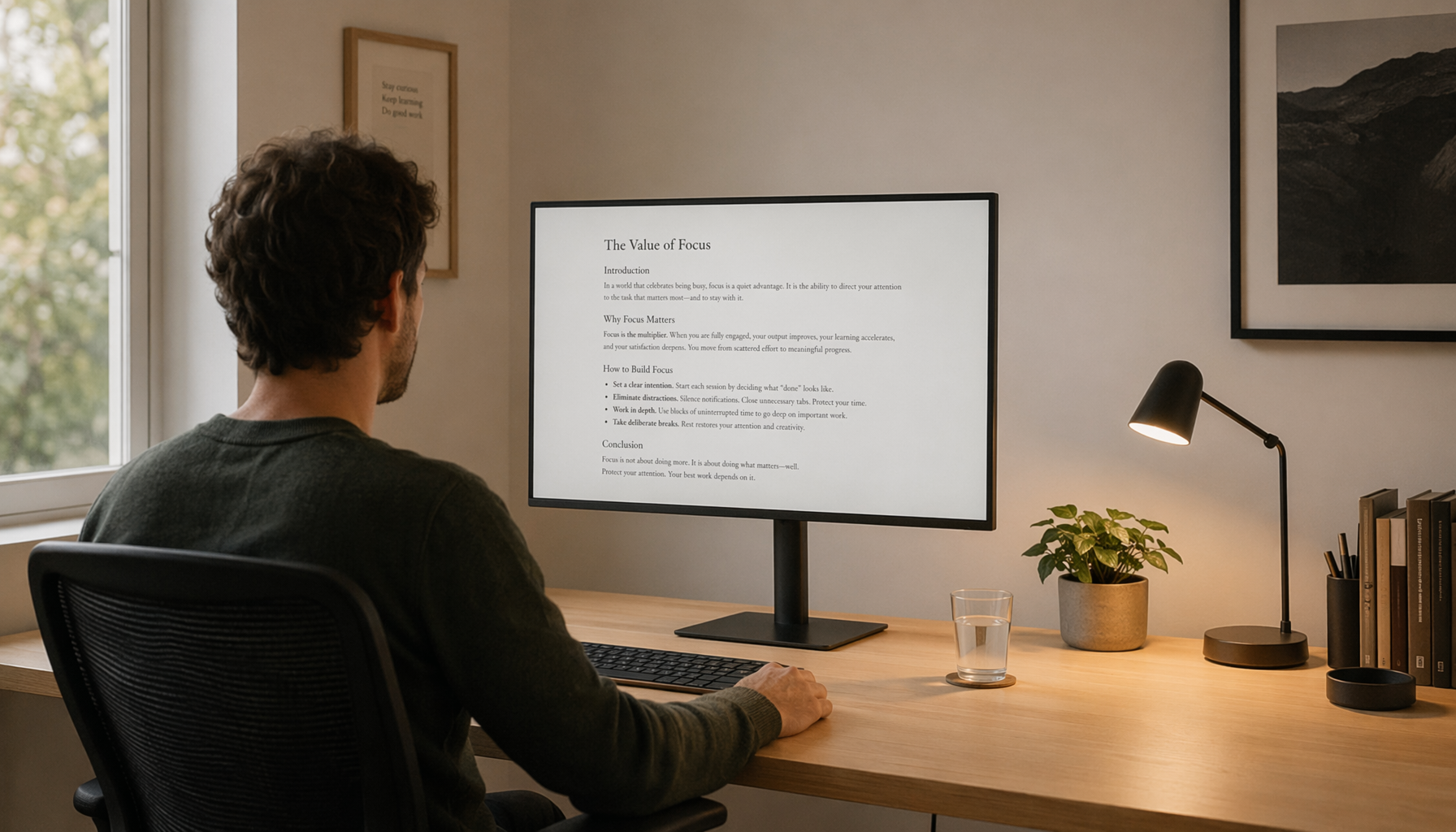
The night preset should feel controlled, not dull. Reduce brightness until white backgrounds stop glowing, then adjust contrast so bright areas keep detail instead of turning flat. A useful test is a white shirt in a photo or a light-gray spreadsheet grid: if the folds, gridlines, or pale UI borders disappear, contrast is too aggressive.

Contrast ratio matters because it shapes perceived depth and dark-scene visibility. A screen contrast ratio describes the gap between the brightest white and darkest black a display can produce, so a night preset should avoid crushing blacks just to look dramatic. For a story game, you want caves, night skies, and shadowed rooms to feel deep while still revealing intentional detail. For office work, you want text and interface boundaries to remain readable without making the whole screen feel washed out.
A common night configuration is lower brightness, a warmer color temperature such as a 6500K target where available, moderate contrast, and reduced local dimming aggressiveness if subtitles or desktop windows bloom too much. If your monitor has an sRGB mode, use it when color accuracy matters; setup guidance notes that sRGB mode is useful for content creation and SDR material mastered for that color space. The tradeoff is that sRGB can look less vivid than wide-gamut modes, especially if you are used to boosted color.
Choose the Control Method That Can Actually Automate
Automatic switching requires three things: saved presets, a way for software to control the display, and a scheduler. If any one piece is missing, you may still have quick switching, but not true time-based automation.
Method |
Best For |
Main Advantage |
Main Limitation |
Monitor OSD profiles |
Gaming monitors with built-in picture modes |
Reliable and stored on the monitor |
Often manual unless monitor software adds scheduling |
Operating system display settings |
Multi-monitor layout, resolution, refresh rate |
Built into the operating system |
Limited for monitor-level brightness and OSD presets |
Monitor-control apps |
External displays with software control |
Can manage brightness, contrast, and presets from the desktop |
Depends on display compatibility |
GPU control panel |
Refresh rate, color depth, VRR, HDR behavior |
Strong for performance tuning |
Not a full replacement for monitor calibration |
On computers with external displays, utilities can be useful when the monitor supports software control. Some preset systems support monitor control for brightness, contrast, volume, and additional settings, which makes them relevant for users who want preset switching outside the monitor’s physical buttons. Before relying on scheduling, verify the current preset options for your exact display, because documentation may confirm preset-related controls without covering every workflow detail.

Treat operating system display settings as the foundation rather than the entire automation layer. They can identify displays, extend or duplicate desktops, arrange monitor positions, and expose advanced display settings, but monitor-specific picture modes still usually live in the OSD, monitor software, or DDC/CI-capable control tools. A practical setup is to let the operating system handle layout and refresh rate, while your monitor software handles day and night brightness profiles.
Suggested Preset Values by Use Case
The best numbers depend on your room, panel type, and work. Still, the pattern is consistent: daytime presets overcome ambient light, while nighttime presets lower glare and protect shadow detail.
Scenario |
Day Preset Direction |
Night Preset Direction |
Office writing and spreadsheets |
Moderate-high brightness, neutral color, sharp text |
Lower brightness, warm-neutral white, no blown-out whites |
Competitive gaming |
Higher refresh, Adaptive Sync, visibility-focused mode |
Lower brightness, same refresh, careful dark boost |
Creative photo or video work |
Accurate color mode, controlled brightness, native resolution |
Use a reference-style mode only if it matches the output |
Slightly dimmer than main monitor, matching color tone |
Low brightness, simple layout, avoid harsh mirrored white windows |
For resolution and workspace, 4K gives sharper text and more detail, while 1440p is often easier to drive at high frame rates. Monitor testing notes that 4K resolution has about 8.3 million pixels versus about 3.7 million at 1440p, which explains why a 4K day preset may be excellent for editing and office work but demanding for high-refresh gaming. In a mixed setup, use the monitor’s native resolution for desktop work and let demanding games run at a lower render resolution when needed.
Pros and Cons of Automatic Presets
The upside is consistency. Your display stops depending on memory, mood, or whatever setting you used last night. For office productivity, this helps keep text readable through long sessions. For gaming, it keeps performance settings like refresh rate and Adaptive Sync from being buried under a casual media preset.
The downside is that automation can hide mistakes. If your night preset accidentally disables HDR, clamps color, or changes refresh rate, you may blame the game or app instead of the schedule. Setup advice emphasizes that gaming monitor setup depends on the PC, graphics card, cable, ports, resolution, refresh rate, and monitor settings working together, so verify the whole chain after you automate.
There is also a color-accuracy tradeoff. A comfortable night preset may be great for writing and browsing but wrong for judging photos, print proofs, or brand colors. If you do creative work, keep a separate accuracy preset and switch into it only when the room lighting and output target make sense.
A Reliable Setup Workflow
Create the day preset first in a bright but normal room. Save it under a plain name such as “Day Work” or “Day Game,” depending on your monitor software. Then create the night preset after sunset or in your usual evening lighting, because guessing at night brightness during the afternoon almost always ends too bright.
After both presets are saved, connect them to the scheduling layer your setup supports. If your monitor app supports timed preset changes, set the day preset around your work start time and the night preset around your normal evening session. If it only supports shortcuts, bind each preset to a keyboard shortcut or menu command, then use your operating system’s automation tools only if they can trigger those commands reliably.
Test with real content, not just a settings screen. Open a white document, a dark game scene, a video call window, and a browser with small text. Move between monitors if you use more than one. For a dual-display desk, the best result is not identical brightness; it is matched perceived comfort, where neither screen pulls your attention simply because it is brighter.

FAQ
Should I use Night Light or a real monitor preset?
Night Light can reduce blue-heavy appearance, but it is not the same as a full preset. A real preset can include brightness, contrast, color mode, refresh behavior, and monitor-specific features. Use Night Light as a supplement, not the whole system, especially on gaming or color-sensitive displays.
Should HDR be on all day?
Not necessarily. HDR can look excellent for HDR games and video, but SDR desktop work may look inconsistent if the monitor or operating system handles tone mapping poorly. Keep HDR tied to a gaming or media preset unless your display handles HDR desktop use cleanly.
Do portable monitors need separate day and night presets?
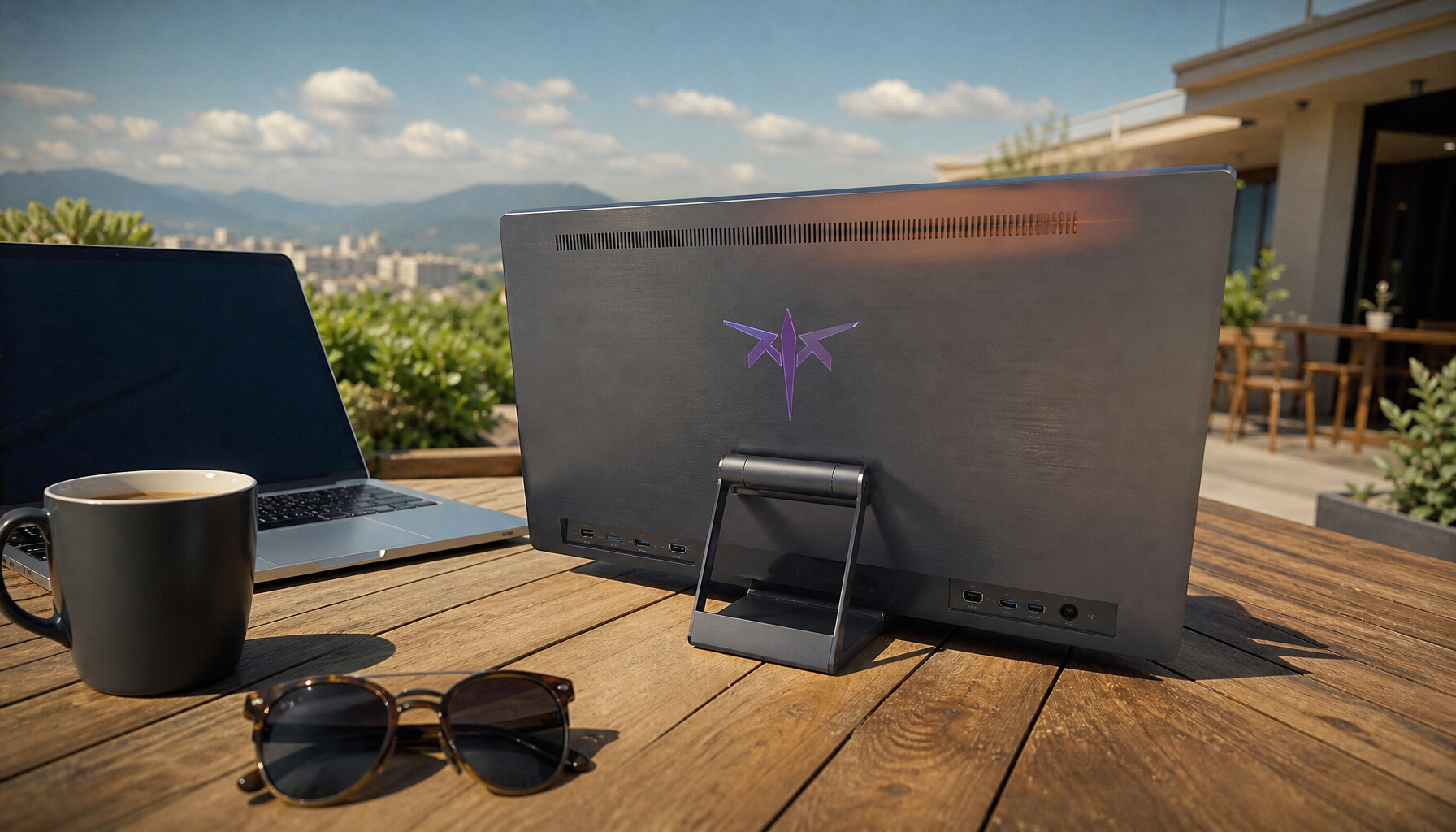
Yes, especially if they sit beside a brighter main display. Portable smart screens often run from laptops or USB-C power, so a lower night brightness can improve comfort and may reduce power draw during travel or compact desk use.
Final Calibration Mindset
The best automatic preset system is quiet: it changes with the room, preserves performance, and keeps your eyes focused on the work or the game instead of the monitor menu. Build separate day and night profiles, verify them with real content, and let the schedule handle the repetition.