Power your portable monitor separately whenever possible, then let your phone send video only. Lower brightness, use 60Hz, choose 1080p over 4K for travel, and confirm that your USB-C cable supports video and enough power.
Is your phone dropping from comfortable to panic mode before your second coffee because your portable screen is pulling power through one USB-C cable? In real setups, a standard travel display can draw roughly 8W to 15W, which is enough to overwhelm a phone battery fast when brightness, touch, speakers, or wireless casting add to the load. Here is a practical setup path that keeps the screen useful without turning your phone into the power supply.
Why a Portable Monitor Drains a Phone So Quickly
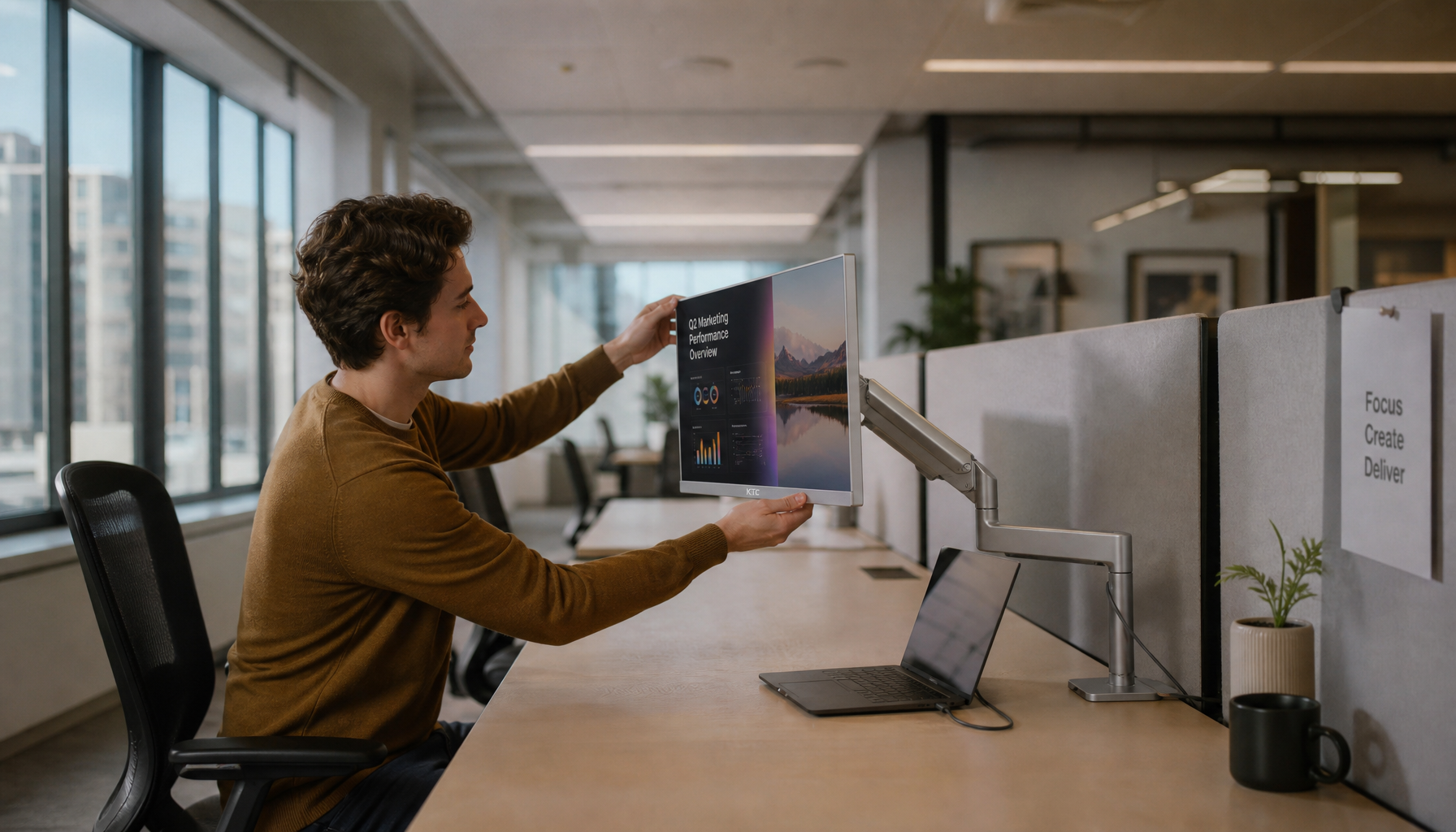
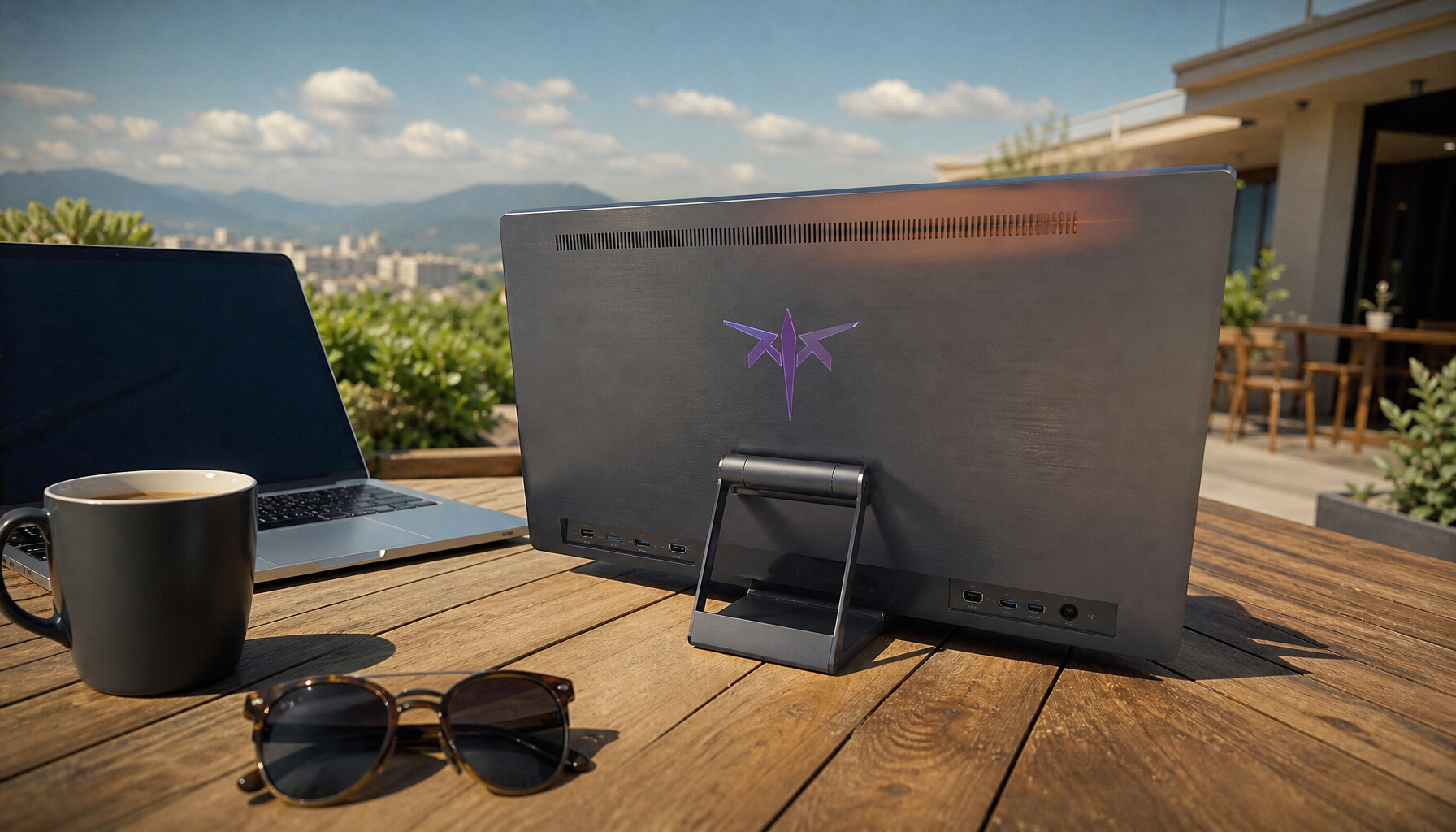
A portable monitor is not just a bigger phone screen. It is an external display with its own backlight, controller board, ports, and sometimes speakers, touch hardware, or a battery. Many models are designed to connect over USB-C, and USB-C portable monitors are commonly marketed for phones, tablets, laptops, consoles, and compact workstations.

The battery problem starts when the monitor has no independent power source. In that setup, your phone may be sending video and supplying power at the same time. A 15.6-inch 1080p portable monitor commonly sits in the 8W to 10W range during productivity use, while brighter, 4K, touchscreen, dual-screen, or high-refresh models can demand more. For a phone, that is a heavy external load, especially if the phone is also running desktop mode, screen mirroring, cellular data, Bluetooth, and background apps.
Think of it this way: if your monitor is asking for power every second, your phone is acting like a tiny wall outlet. A laptop with a 50Wh or 60Wh battery can absorb that load better; a phone battery cannot. That is why a setup that feels acceptable on a laptop can feel brutal on a phone.
The Best Fix: Stop Making the Phone Power the Display

The strongest solution is to power the portable monitor from a wall charger or USB-C power bank, then use the phone mainly for video. This is where USB-C Power Delivery passthrough matters. In a passthrough setup, the charger feeds the monitor, and the monitor manages power while maintaining the video connection to the source device.
For laptop workflows, guides often recommend a 65W or 100W USB-C PD adapter because USB-C PD passthrough can keep the external screen powered while leaving headroom for the computer. With phones, the same principle applies, but the goal is different: you are not trying to charge a workstation under load; you are preventing the monitor from pulling directly from the phone.
A phone-friendly setup looks like this: plug a USB-C PD charger or PD power bank into the portable monitor’s power input, then connect the phone to the monitor’s video-capable USB-C input. If the monitor supports touch, remember that touch may require data over the same link and can increase power demand. If the screen flickers, dims, disconnects, or cycles on and off, treat it first as a power budget or cable issue, not as proof that the display is defective.

Choose the Right Display Settings Before Blaming the Battery
Brightness is the first control to adjust because the backlight is one of the biggest power draws. For indoor document work, 250 nits is often enough, while brighter cafes and sunlit rooms may need around 300 nits or more. A battery-focused buying guide notes that 250 nits is enough for many indoor offices and can extend battery life compared with brighter operation.
Resolution is the next lever. A 1080p display is usually the practical sweet spot for phone productivity: email, documents, chat, browser tabs, dashboards, and video calls remain sharp enough without pushing the phone and monitor as hard as 4K. A 4K portable screen can look excellent, but it raises the workload and often increases power demand. If your priority is battery survival, 1080p at 60Hz is the reliable mode.
Refresh rate also matters. For office productivity, 60Hz is adequate. High-refresh screens are valuable for gaming and fast motion, but they are usually the wrong choice when you are trying to keep a phone alive through a work session. Touch input, built-in speakers, HDR modes, and wireless casting can also add drain or reduce efficiency, so disable what you are not actively using.
Setting or Feature |
Battery Impact |
Best Phone-Powered Choice |
Brightness |
High |
Use the lowest comfortable level |
Resolution |
Medium to high |
Prefer 1080p for travel work |
Refresh rate |
Medium |
Use 60Hz unless gaming |
Touch input |
Medium |
Enable only when needed |
Speakers |
Low to medium |
Use phone audio or earbuds |
Wireless casting |
Medium |
Use only when cable-free placement matters |
Use the Right Cable, Not Just Any USB-C Cable

USB-C is a connector shape, not a guarantee that the cable can handle video and power correctly. Some phone charging cables are built mainly for charging and basic data. A portable monitor setup may need video support, stable data negotiation, and enough wattage headroom to avoid flicker or failed charging behavior.
Modern portable monitor guidance consistently points to USB-C with DisplayPort Alt Mode for video and USB-C Power Delivery for charging or passthrough. USB-C DisplayPort Alt Mode lets a compatible USB-C port carry video to the portable screen, but your phone must support video output too. Many Android flagships do; many budget phones do not. USB-C iPhones vary by model and app workflow, so compatibility should be checked before buying a monitor for phone-first use.
For a serious portable setup, use the cable that came with the monitor or a certified USB-C cable rated for video and adequate power. If your monitor supports 100W PD passthrough, a cable rated for 100W gives you more predictable behavior. A cheap cable can create the exact symptoms users often blame on the phone: blackouts, brightness drops, repeated reconnects, or charging that starts and stops.
Battery Monitor vs. Non-Battery Monitor: Which Helps Your Phone?
A portable monitor with a built-in battery can reduce phone drain because the screen powers itself for a while. These models typically run for several hours depending on brightness, size, and workload. A buying guide for battery models describes built-in battery capacities commonly ranging from 4,000mAh to 10,800mAh, with moderate-use runtime often around 3 to 5 hours.
The tradeoff is weight, price, and long-term battery aging. Battery-powered portable monitors are more flexible in airports, hotel rooms, classrooms, and couch setups, but they are thicker and heavier than non-battery models. Non-battery monitors are often lighter, cheaper, and better for desk use, but they must get power from somewhere: the phone, laptop, charger, or power bank.
For phone-first use, the best choice is not automatically a battery monitor. It is a monitor that gives you power control. A non-battery monitor with a second USB-C power input can be excellent when paired with a PD power bank. A battery monitor is better when you need fewer cables for short sessions. Either way, avoid a design that forces the phone to be the only power source.
Monitor Type |
Pros |
Cons |
Best Use |
Built-in battery |
Less phone drain, cleaner short sessions |
Heavier, pricier, battery ages |
Travel, cafes, presentations |
No battery with PD input |
Lighter, often cheaper, flexible with power bank |
Needs external power |
Longer work sessions |
Phone-powered only |
Minimal gear |
Fast phone drain, instability risk |
Short demos or emergency use |
Phone Settings That Actually Help
Once the monitor is powered correctly, tune the phone itself. Lower the phone’s own screen brightness, because the internal display may stay active during mirroring or desktop mode. Enable battery saver when you do not need peak performance. Close games, camera apps, mapping apps, and other background-heavy tools before connecting the monitor.
General phone battery guidance emphasizes checking battery usage in settings, restricting background activity for power-hungry apps, using adaptive brightness, disabling radios such as Bluetooth or GPS when they are not needed, and avoiding heat while charging. That advice matters more with a portable monitor because the phone may be charging, outputting video, and working harder at the same time.
Heat is the quiet performance killer. If your phone is warm in a case while driving an external display, charging speed may slow and battery drain may feel worse. Remove a thick case during longer sessions, keep the phone out of direct sun, and avoid placing it under the monitor or next to a hot power bank. For longevity, avoid making 0% to 100% cycles your normal routine; keeping the battery in a moderate range is better for long-term health.
A Practical Setup for Different Scenarios
For a 30-minute presentation, a phone-powered 1080p monitor can work if the phone starts near full, brightness is moderate, and you are not using speakers or touch. This is the lightweight option, but it is not the reliable all-afternoon option.
For a two-hour cafe work block, use a PD power bank into the monitor, set the display to 1080p and 60Hz, and keep brightness at the lowest comfortable level. If the monitor has a battery, start with it full and let it carry the screen load before leaning on the phone.

For hotel-room productivity, use a wall charger. Connect the charger to the monitor’s power input and the phone to the display input. If your phone supports a desktop mode, this setup can feel close to a compact workstation, especially with a Bluetooth keyboard and mouse. Turn off GPS and unnecessary background apps, and keep the phone cool.
For gaming, accept the tradeoff. Higher refresh rates, brighter screens, audio, controllers, and wireless features all push power consumption up. A PD power bank or wall power becomes part of the setup, not an accessory.
Quick FAQ
Can a portable monitor damage my phone battery?
The monitor itself is unlikely to damage the battery just by being connected, but repeated heavy drain, heat, and poor charging habits can accelerate wear over time. The safer pattern is to power the display separately, keep the phone cool, and avoid deep discharges during long sessions.
Why does my portable monitor flicker when connected to my phone?
Flicker usually points to insufficient power, an incompatible USB-C video mode, or a weak cable. Try external power to the monitor first, then use a known video-capable USB-C cable and confirm that the phone supports video output.
Is wireless casting better for battery life?
Not necessarily. Wireless casting can reduce cable clutter, but it may introduce latency, compression artifacts, and extra wireless workload. For serious productivity, a powered USB-C setup is usually more stable and predictable.
Final Screen Check
The fastest way to stop portable-monitor battery drain is to separate video from power: let the phone drive the image, not the backlight. Pair a 1080p 60Hz monitor with real USB-C PD support, use a capable cable, keep brightness disciplined, and bring wall power or a PD power bank when the session matters.