Full-screen video usually pauses because the browser, operating system, or video site treats your click on the second monitor as a focus change. The fastest fix is to test a browser with a different engine, use extended display mode, avoid native full-screen desktop spaces when needed, and disable power-saving behavior that suspends background video.
Does your game stream, training video, or market briefing freeze the moment you click chat, email, or a spreadsheet on the other display? A quick browser swap and display-layout check can confirm whether the issue is browser-based, desktop-space-related, or caused by a player setting within minutes. Here’s how to keep your video running while your second screen stays useful.
Why Full-Screen Video Pauses on a Second Monitor
A full-screen video is not just a larger video window. In many browsers and operating systems, full screen becomes a special display state with its own focus, power, and window-management rules. Background video playback means the video keeps playing after its browser tab or window is no longer the active place where your keyboard and mouse are working.
The most common pattern is browser focus loss. A community report from February 1, 2026, describes full-screen videos pausing when the browser goes into the background, with the same behavior reported across several Chromium-based browsers, while a different browser engine reportedly continues playback correctly in the same kind of workflow full-screen videos pausing. That matters because a problem that appears across browsers with the same engine is less likely to be a single-site glitch.
There is also a platform layer. Some desktop systems treat native full-screen windows as their own Desktop Space, so clicking elsewhere can move your active workspace away from the video rather than simply placing another app beside it. A forum discussion describes this as a system-wide full-screen behavior, not only a single-site or single-browser issue system-wide full-screen behavior. On a dual-monitor desk, that distinction is critical: you want the video to stay visible on one panel while your second display remains a live work surface.
Start With the Fast Browser Test
The cleanest diagnostic is to play the same video on the same monitor in two browsers that use different engines. If one browser family pauses when you click another monitor and another does not, your hardware is probably fine. Your 144 Hz gaming display, USB-C portable screen, or office productivity monitor is not the root cause; the behavior is happening at the browser or player layer.

A browser-engine swap is a practical first workaround because the community report notes that one engine handled background full-screen playback correctly while several Chromium-based browsers did not. The advantage is speed: no driver hunt, no registry edit, and no new monitor software. The downside is that your saved logins, extensions, casting options, or HDR behavior may differ from your main browser.
If you rely on a specific browser profile for work, try a smaller adjustment before changing your default browser. Play the video in a separate normal browser window, maximize it inside the window, and avoid the player’s true full-screen button. You lose a sliver of screen space to browser controls, but you often avoid the exclusive full-screen state that triggers focus-sensitive pausing.
Configure the Displays Before Blaming the Video Player
A second monitor works best when the operating system understands the desk exactly as you use it. In desktop display settings, you can identify displays, detect missing screens, drag display boxes into the same physical order as your desk, and choose Extend rather than Duplicate multiple-monitor setup. For this problem, Extend is the right mode because each screen becomes part of one larger workspace.

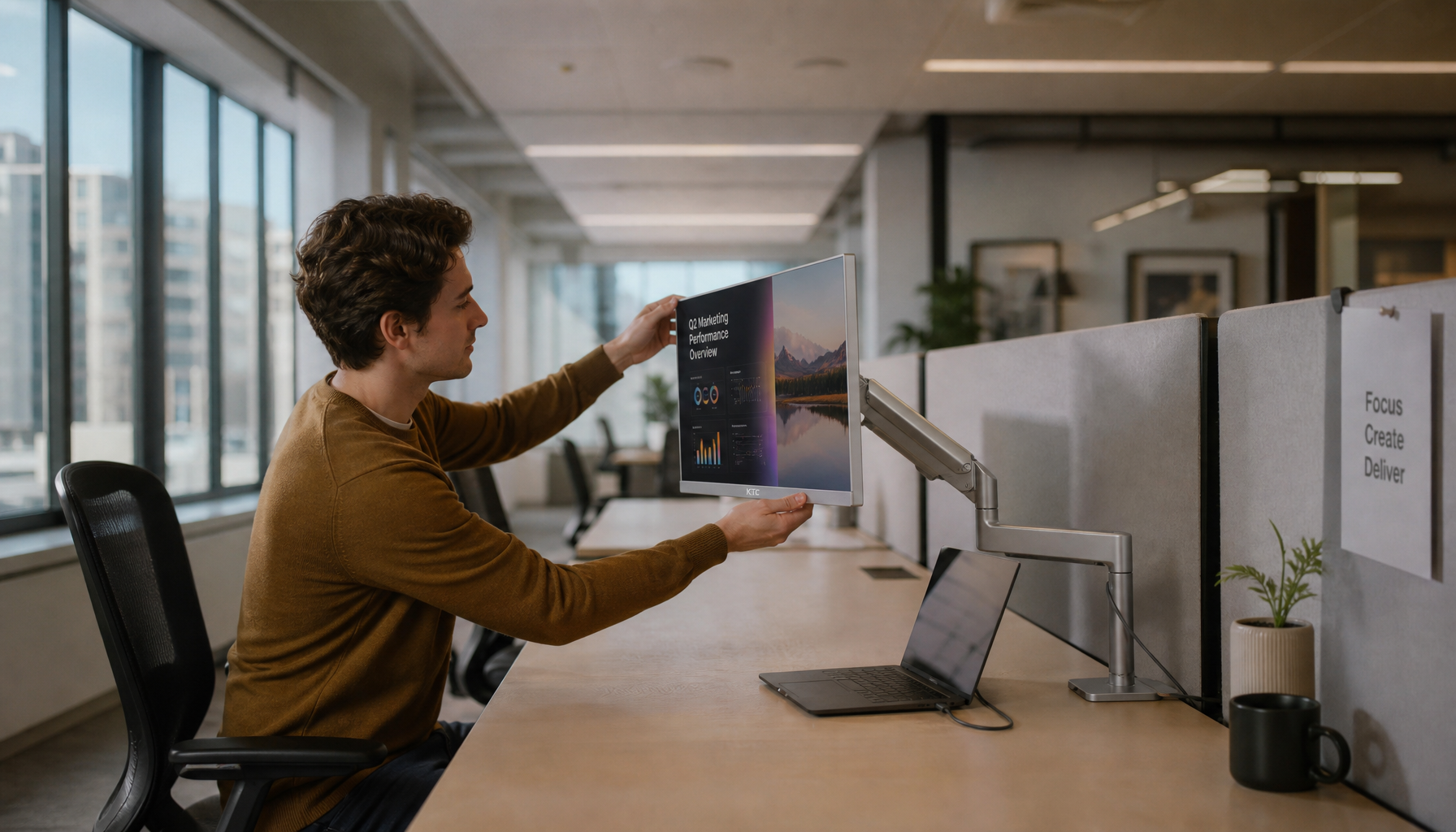
A practical example: put the video on your left 27-inch display, place chat or notes on the right display, then drag the display boxes so the mouse crosses the same physical edge your hand expects. If the system thinks your right monitor is above the left one, every click and cursor movement feels unpredictable, and you may accidentally change focus more often than necessary.

Some lightweight laptops and browser-first systems have a similar choice between extended and mirrored modes. Extended mode gives you more workspace instead of duplicating the same content on both screens extended display mode. That will not override every browser or app-level pause rule, but it gives the video the best chance of staying in a stable display role.
Setup Choice |
Best Use |
Tradeoff |
True browser full screen |
Maximum immersion for movies, esports, and demos |
More likely to trigger focus or Space behavior |
Reliable multitasking across monitors |
Slightly less screen coverage |
|
Extended desktop |
Working while watching on another display |
Requires correct display arrangement |
Mirrored displays |
Presenting the same content to others |
Poor for multitasking |
Fixes for Multi-Monitor Desktop Setups
Start with display mode and driver hygiene. Use the system display shortcut or display settings to choose Extend, then confirm each monitor is arranged correctly. It is also worth checking cable connections and running normal system updates before deeper troubleshooting, because graphics drivers and display detection updates often arrive through routine updates.
Next, isolate browser behavior. Open the same video in multiple browsers if available, including at least one that uses a different engine. Click into a document, spreadsheet, or messaging app on the second monitor while the video is full screen. If only one browser family pauses, treat it as browser behavior and use a different engine for long sessions where uninterrupted playback matters.
If every browser pauses, check system interference. Background utilities, overlay tools, GPU control panels, capture software, and aggressive power managers can change how full-screen apps behave. A clean boot can help test whether third-party startup software or services are interfering with normal behavior, though it should be used carefully because it temporarily disables nonessential services. In plain terms, if playback works during a clean boot and breaks again after one utility is re-enabled, that utility is the likely culprit.
Multi-monitor software can help when your core issue is window placement rather than playback itself. Some display-management apps include triggers that react to window and system events, allowing automated window movement or custom scripts automated window movement. The pro is repeatability: you can place the browser on a chosen monitor and recover layouts faster. The con is that automation cannot always force a website or browser engine to continue playback if the engine deliberately pauses background full-screen video.
Fixes for Space-Based Dual-Display Workflows
On desktop systems that place native full-screen windows into separate spaces, the most reliable move is often to avoid native full-screen mode for the video. Use theater mode, a maximized window, or a separate browser window sized to fill the monitor. The visual result is close to full screen, especially on a clean desktop, but the operating system is less likely to move the video into a separate workspace.
This matters because native full-screen behavior can create a separate desktop for the full-screen window, and switching tasks can slide focus away from that desktop. If you use one monitor for a video feed and the other for work, the practical goal is not “more full screen”; it is stable visibility.
Browser users should also check site-specific settings and the video player controls. Forum guidance for unwanted full-screen behavior points users toward per-site website settings and notes that some sites have their own full-screen controls site-specific settings. If a single website behaves differently from every other video platform, look at that site’s player first.
For a real-world setup, place a webinar in a large non-full-screen window on the external monitor, keep your notes app on the laptop display, and test clicking between the two. If the video continues, your issue was native full-screen handling. If it still pauses, compare browsers before changing hardware.
Video Site and Extension Settings Can Override Everything
Some pauses are caused by the player or extension layer, not the monitor. Browser flags are often mentioned in old fixes, but they change or disappear across versions, so they are a weak long-term solution. A better workflow is to test with extensions disabled, then re-enable only the ones you need.
Video players can also behave differently across modes such as playlists, theater view, and full screen. A practical iOS workaround notes that playlist playback can exit full screen between videos, and closing the playlist panel before returning to full screen can stop that behavior playlist playback. That is not the same as a desktop dual-monitor pause, but it proves the broader point: player interface state can change full-screen behavior.
For a work PC or gaming station, test one variable at a time. Use the same video, the same monitor, the same click target on the second display, and only change the browser, extension state, or full-screen mode. That is the fastest way to separate a monitor issue from a software issue.
Pros and Cons of the Main Workarounds
A browser with a different engine is the strongest low-friction workaround when one browser family pauses background full-screen video. Its main benefit is that it directly targets the suspected browser-family behavior. Its downside is ecosystem friction if your daily workflow depends on engine-specific extensions, profiles, or enterprise policies.
Using a maximized window instead of true full screen is the most reliable display-focused fix. It preserves nearly all of the immersive viewing area on a 24-inch to 32-inch monitor while keeping the operating system out of exclusive full-screen rules. The tradeoff is cosmetic: you may see the browser toolbar or window border unless you clean up the interface.
Display-management software is valuable for power users who change layouts often, dock and undock laptops, or run portable smart screens beside a primary display. It improves control and recovery, but it is not magic. If a browser engine or video site intentionally pauses background full-screen playback, window automation may reduce the pain but not remove the root cause.
Practical Troubleshooting Path
Begin by switching the desktop to Extend mode and arranging the monitors correctly in system display settings. Then test the same video in two browsers that use different engines. If one works and the other pauses, use the working browser for video sessions or avoid true full screen in the browser that pauses.

If the issue happens everywhere, disable extensions and overlays, update the browser and graphics drivers, then test again. On desktop systems where native full-screen windows become separate spaces, test a maximized player window before trying to fight the operating system’s full-screen behavior.
For performance-focused desks, the best durable setup is simple: video on a dedicated display, work on the second display, Extend mode enabled, browser chosen by actual playback behavior, and true full screen reserved for moments when you are not actively clicking elsewhere.
FAQ
Why does the video pause only when it is full screen?
Full screen can trigger special browser or operating-system behavior. When you click another monitor, the browser may decide the full-screen video is no longer the active foreground experience, so it pauses or loses its full-screen state.
Is this a monitor problem?
Usually no. If the second display works normally for windows, cursor movement, and extended desktop use, the pause is more likely caused by the browser, operating system, website player, extension, or power setting.
Should I buy multi-monitor software?
Buy it for layout control, hotkeys, window placement, and repeatable workflows, not as a guaranteed video-playback fix. These tools can make a multi-monitor station feel sharper and faster, but they cannot always override browser playback rules.
A high-performance screen setup should let you watch, work, and react without babysitting windows. Treat the issue as a focus-management problem first, test browsers before replacing hardware, and use maximized-window playback when reliability matters more than absolute edge-to-edge video.