A frozen monitor menu or sticky control button is usually caused by a locked OSD, residue around the buttons, a temporary electronics glitch, or a failing button board. Start with power cycling, cable isolation, and gentle dry cleaning before you consider opening the display or replacing parts.
Is your monitor stuck on a brightness menu mid-match, or refusing to open settings right before a presentation? A careful, one-variable-at-a-time check can separate a simple control lock or cable issue from a real hardware fault before you spend money on repair. Here is the practical path to regain control without risking the panel.
Understand the Problem Before You Press Harder
The OSD, or on-screen display, is the monitor’s built-in settings menu for brightness, contrast, input source, refresh-rate modes, color presets, HDR, overdrive, and factory reset. It lives inside the monitor firmware, so it can misbehave even when your computer, operating system, or console is working normally.
A stuck OSD problem usually falls into one of two categories. The first is a response problem, where buttons click normally but the menu does not open, does not move, or ignores selections. The second is a mechanical problem, where a button feels mushy, jammed, gritty, or physically trapped in the bezel. That distinction matters because software-style fixes help the first group, while cleaning or repair helps the second.
For high-refresh gaming monitors and USB-C productivity displays, symptoms can overlap. A bad cable or input mismatch can look like a dead monitor, while a faulty button can repeatedly open the menu and change settings by itself. Monitor troubleshooting works best when you change one variable at a time, because common monitor symptoms such as wrong input, loose cables, refresh-rate mismatch, and unstable power can create misleading monitor symptoms.
First: Do a Clean Power and Input Reset
Unplug the monitor from power, disconnect HDMI, DisplayPort, USB-C, and USB hub cables, then wait about one minute before reconnecting only power. If the OSD still appears, refuses to respond, or behaves erratically while no computer is attached, the monitor itself is the likely source rather than the graphics card, operating system, or dock.

After that, reconnect a single known-good display cable to one device. Choose the simplest path first, such as HDMI directly from a laptop or console, rather than a dock, adapter chain, or KVM. If the OSD works with one source but fails with another, the control buttons may be fine, and the problem may be a signal, adapter, or sleep-wake interaction.
This matters in real setups. A 32-inch external display connected through a dock can create menu or interface problems after sleep, and switching adapters does not always eliminate the issue, as shown in a community thread about an external display setup where menu responsiveness returned only temporarily after restarts. The practical lesson is simple: isolate the monitor before blaming the monitor.
Check for OSD Lock, Control Lock, and Accidental Pressure
Many monitors have an OSD lock or button lock mode. It is useful in offices, classrooms, retail counters, and shared gaming spaces because it prevents accidental brightness, input, or color changes. The downside is obvious: when it is enabled unintentionally, the monitor can feel broken.
Try holding the Menu button for 10 to 15 seconds, then test the directional or power buttons again. Some models use a joystick press, an Enter button, or a combination of Menu plus a directional key, so check the exact manual if the basic hold does not work. Also inspect the bezel and underside of the monitor for anything pressing the controls: a soundbar, desk riser, cable sleeve, cleaning cloth, or monitor light bar clamp can hold a button just enough to keep the OSD active.

Control lock adds stability by preventing a shared office display or tournament practice monitor from drifting out of calibrated settings. It can also hide a genuine button fault. If the lock icon appears repeatedly without you touching the controls, the button may be electrically or mechanically stuck.
Clean Sticky Buttons Without Flooding the Monitor
Power off the display, unplug it, and inspect the buttons under bright light. Dust, skin oil, spilled coffee mist, and snack residue can collect around small menu buttons and joystick controls. On slim portable screens, the gap around a side button is often so tight that a little buildup is enough to stop a clean click.
Start dry. Use short bursts of compressed air around the button gap, then work the button gently through its travel. A microfiber or eyeglass cloth can clean the surrounding plastic, but avoid forcing fibers into the gap. Electronics repair discussions about sticky buttons repeatedly stress restraint: exposed screen layers, bezels, adhesives, and internal boards can attract dust or become harder to clean once opened.

If you need moisture, use only a lightly dampened microfiber cloth with distilled water or a screen-safe cleaner, and never spray liquid directly onto the monitor. Safe display cleaning starts with powering off and unplugging the screen, avoiding ammonia-based products, and keeping liquid away from openings. For a stuck OSD button, excess liquid is not a repair tool; it is a risk to the button board and panel electronics.
Decide Whether It Is Firmware, Button Hardware, or Display Electronics
If the button feels normal but commands do not register, the issue may be firmware, a temporary logic-board state, or a source-device interaction. A factory reset through the OSD is worth trying if you can reach it. If not, a full power drain and simplified cable setup are the next best options.
If one button feels different from the others, focus on the switch. A gritty or slow-returning Menu button usually points to debris, residue, or a worn tactile switch. A button that repeatedly triggers without being touched points toward a stuck switch or failing control board.
If the monitor also has flicker, no signal, dim backlight, distorted image, or random shutdowns, widen the diagnosis. LCD failures can come from component wear, physical damage, loose internal connections, power faults, backlight failure, or driver-board issues. At that point, the OSD symptom may be only one part of a larger electronics problem.
Symptom |
Most Likely Area |
Best Next Move |
Buttons click, but no OSD opens |
Lock mode, firmware state, or power glitch |
Hold Menu, power drain, reconnect only power |
OSD opens by itself |
Button pressure or faulty switch |
Clear bezel area, test with all cables removed |
Button feels sticky or gritty |
Debris or residue |
Dry air, microfiber cleaning, gentle repeated presses |
OSD works on one input but not another |
Cable, dock, adapter, or source behavior |
Test direct cable and alternate device |
OSD issue plus dim image or flicker |
Power, backlight, or board fault |
Stop guessing and consider technician diagnosis |
When DIY Stops Being a Good Value
Opening a monitor can be reasonable for an experienced repairer, but it is rarely the first move. Modern panels are thin, flexible, and easy to damage. Back cover clips can crack, ribbon cables can loosen, and exposed boards can be harmed by static or pressure. Display repair resources emphasize matching the exact display model and using device-specific guidance rather than treating all monitors as the same.
The value calculation is straightforward. If the monitor is a budget office display and the button board is buried behind a fragile bezel, replacement may be smarter than repair. If it is a premium OLED, mini-LED, ultrawide, or esports display, a professional diagnosis may protect the investment. Repair becomes less attractive when the suspected fault involves the panel, backlight, power supply, or multiple boards, because display electronics can quickly approach the cost of replacement.
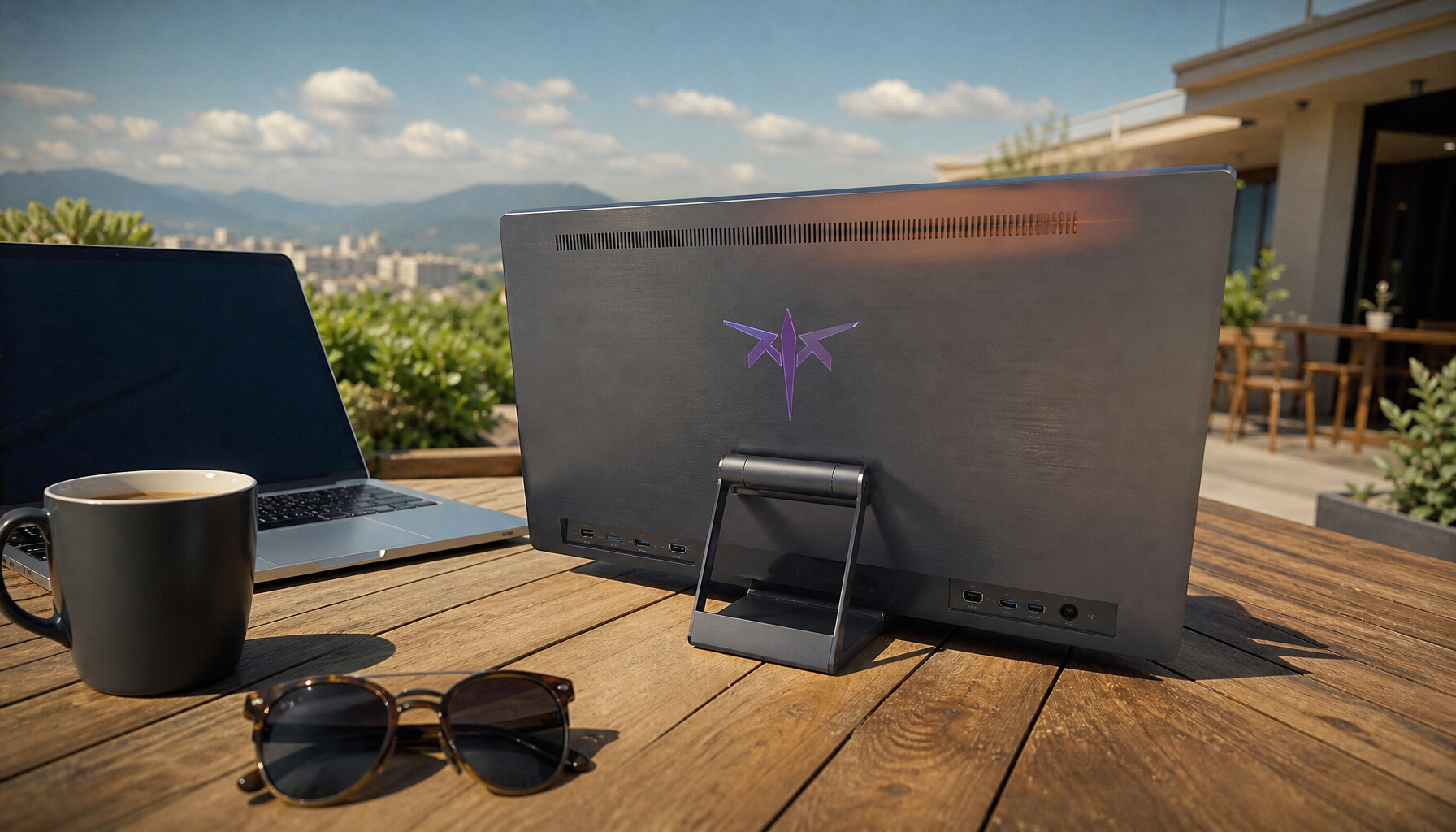
For portable smart screens, be even more cautious. Their side buttons are often integrated tightly with the chassis, battery, USB-C controller, and thin panel stack. A forced pry can turn a sticky OSD key into a cracked screen.
Prevent the Problem From Coming Back
Keep the button area clean, especially on displays used for gaming setups, standing desks, shared offices, and portable travel kits. Do not eat over the controls, do not rest cables against the menu cluster, and avoid pressing buttons with wet or oily hands. If the monitor has a joystick, press straight in rather than dragging it sideways.

Document your working settings before resetting anything. For a gaming monitor, write down refresh rate, adaptive sync state, overdrive level, HDR mode, black equalizer, and color preset. For an office display, note brightness, input source, USB-C power behavior, scaling, and blue-light mode. Troubleshooting is faster when you can recreate the issue and explain the exact steps, a basic principle taught in structured technology troubleshooting resources.
FAQ
Why does my monitor menu keep popping up by itself?
The most common causes are a stuck Menu button, something pressing against the control area, or a failing button switch. Disconnect the monitor from the computer and leave only power connected. If the menu still appears, the cause is inside the monitor or its physical controls.
Can I use rubbing alcohol on monitor buttons?
Use caution. For the screen and bezel, a lightly dampened microfiber cloth with distilled water or screen-safe cleaner is the safer baseline. Do not drip liquid into button gaps or spray the monitor directly.
Is an unresponsive OSD a graphics card problem?
Usually no. The OSD is generated by the monitor, not the computer. However, docks, adapters, sleep states, and signal problems can make the whole display experience seem frozen, so testing the monitor with a direct cable and a second device is still worth doing.
Should I factory reset the monitor?
Yes, if you can reach the menu and you have recorded your important settings. A reset can clear bad configuration states, but it will not fix a physically jammed button or failing control board.
A responsive display should feel immediate: click, adjust, return to work or play. Treat stuck OSD controls like a performance issue, not an annoyance; isolate power and input, clean gently, protect the panel, and escalate only when the evidence points to real hardware failure.