A rolling smart display family command center setup works best when the household needs a shared screen that can move with the routine, not just sit on one wall. It is a practical option for families that want calendars, chores, reminders, and quick home-control access in one visible place, but only if the screen can be parked safely, kept private enough for the room it is in, and supported by a stable stand or cart.

Why Families Outgrow Static Screens
A fixed screen is fine until family life stops behaving like a single-room routine. School schedules change, meal prep happens in the kitchen, homework happens somewhere else, and a front-hall calendar can be out of sight the moment someone needs it. That is when a rolling display starts to make sense: not because it is automatically better, but because it can follow the household's real movement.
Static screens also have a ceiling. A wall tablet or mounted monitor is useful when everyone naturally passes that spot every day. But if the family keeps missing reminders, the issue may not be the app or the calendar; it may be the location. A digital family command center helps manage school events, medical appointments, and work commitments in one place, which is why placement matters so much.
The boundary matters here: mobility helps only when it reduces friction. If rolling the screen from room to room creates more steps, more cable handling, or more clutter, the setup is probably too mobile for the job.
Where a Rolling Display Fits at Home
The most natural places for a rolling display are transitional family spaces: kitchen, dining area, playroom, mudroom corner, or a shared home office that changes use throughout the day. In those spots, the screen can act like a temporary command post for the people who are physically there.
Typical uses include:
- morning calendar review in the kitchen
- chore charts and homework reminders after school
- dinner plans and grocery notes while cooking
- a weather, calendar, and task dashboard in a shared living area
- a weekend planning board that moves wherever the family gathers
The key phrase is "wherever the family gathers." A rolling smart display is usually not ideal for solo, in-hand use. It is better understood as a shared screen on wheels. A monitor-on-wheels setup works best when the same screen needs to be present in a room only as long as it is needed, such as for shared viewing or temporary office spillover.
For placement, high-traffic areas often make the most sense. Family-command-center layouts are commonly built around the kitchen or another daily pass-through spot, which supports the idea that the screen should be easy to glance at during normal routines. A high-traffic family hub spot is often more useful than a perfect-looking corner that nobody passes.
For safety, avoid placing the screen in high-traffic paths where it can be bumped, snagged, or tipped. Wheels make a display easier to move, but they do not make it childproof. A parked screen should feel deliberately placed, not casually left in the middle of a walkway.
Set Up the Screen for Daily Movement
A good rolling setup begins with two questions: how will it move, and where will it rest? Daily movement should be simple enough that one adult can reposition the unit without wrestling cables or lifting the display awkwardly.
Start with the physical base. The cart or stand should be rated for the screen size and weight, with locking casters that actually stay locked on your floor type. Safe mobile stands rely on a heavier, wider base and locking casters to reduce tipping risk, so the display should not feel top-heavy once it is parked.
Then plan the cable path. If the setup uses power, HDMI, USB, or touch/data connections, leave enough slack for turning and repositioning without pulling connectors. It is better to route cables in a way that tolerates gentle movement than to rely on constant unplugging. KTC's smart dashboard setup guide is a useful internal follow-up if you want a home-dashboard setup that stays readable and manageable.
For families that want a broader planning reference, the workflow guide for hybrid teams is useful for thinking about how a shared screen moves between rooms without becoming a cable tangle.

A simple routine helps keep the system usable:
- Park the screen against a wall or in a corner when not in use.
- Lock the casters before anyone interacts with it.
- Keep chargers and adapters off the floor.
- Use one person's routine, if possible, to reduce accidental damage.
- Power down or sleep the display when privacy matters.
Privacy deserves explicit boundaries. A family dashboard can expose calendars, messages, photos, camera feeds, or reminders that were never meant for visitors. If the screen is in a room where guests may enter, keep sensitive widgets off the main page or require a quick sign-in. A rolling display should make shared life easier, not create a public bulletin board for private information.
Product Fit for Family Command Centers
A rolling smart display is a conditional fit, not a universal recommendation. It makes the most sense when the household wants a larger shared screen, room-to-room flexibility, and a display that stays upright without a separate handheld device.
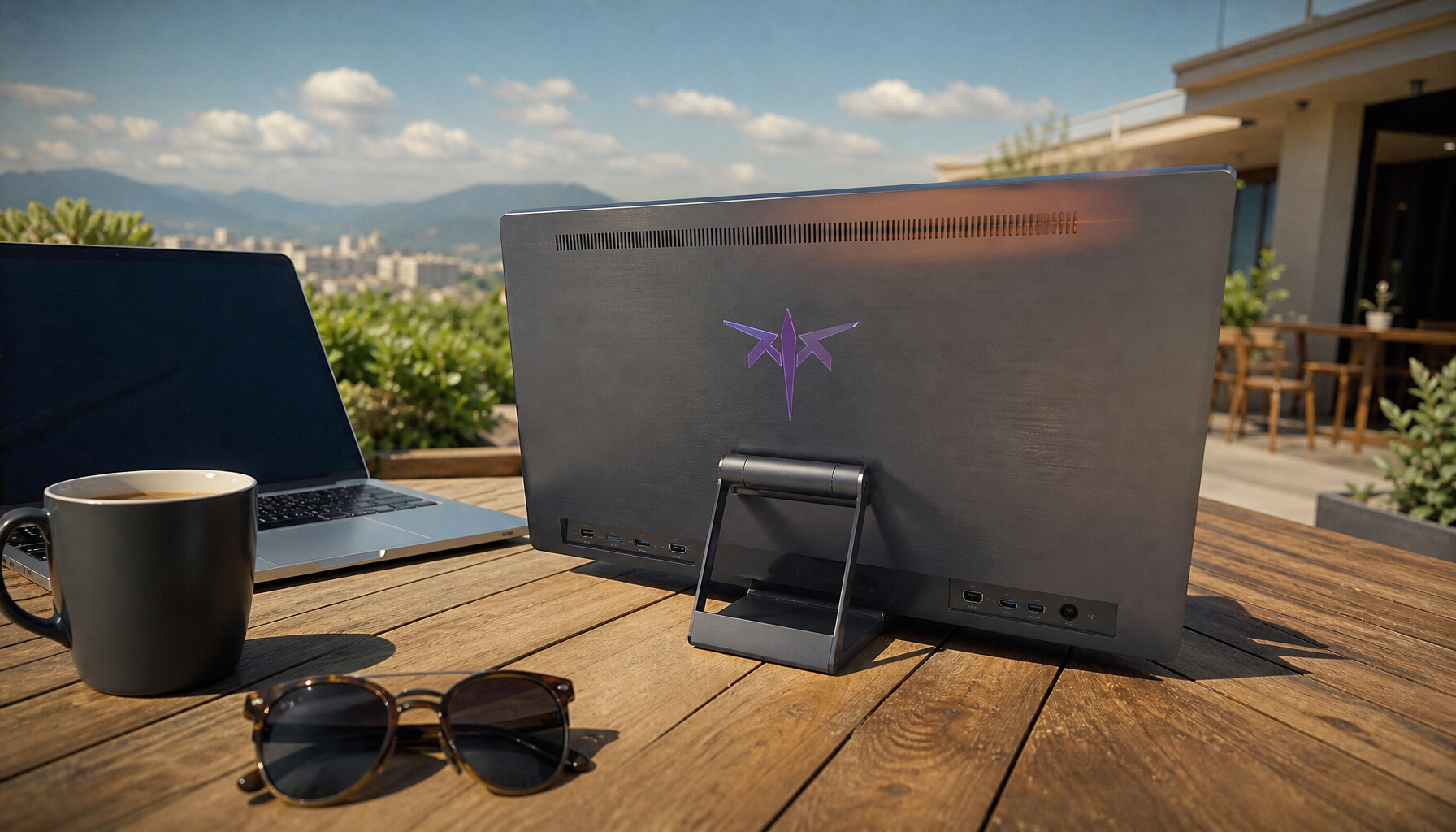
If you are considering a featured model for that kind of setup, the KTC MEGAPAD 27-inch family display is best treated as a fit check, not a guarantee. The supported product facts point to a 27-inch FHD touch display, built-in wheels, Android 14, Google EDLA, Wi-Fi 5, Bluetooth 5.1, 8GB RAM, 128GB storage, a built-in 8MP camera, stereo speakers, and a 9500mAh battery. Those features can suit room-to-room family use if the household wants a screen that can be parked, moved, and used for shared viewing or calls.
If your use case is closer to a connected-home dashboard, the Matter-ready hub setup can help you think through when a rolling screen works as a shared home hub and when a wall spot is simpler.
What matters more than specs is fit:
- Is the screen easy to read from the distance your family actually stands?
- Can it move without becoming unstable?
- Does the stand or cart match the room's traffic pattern?
- Are you comfortable with a shared screen being visible in that location?
- Can you keep it tidy when it is parked?
If the answer to any of those is "not really," a different format may be better.
Compare It With Fixed Screens and Tablets
The simplest way to compare the options is by job, not by hype.
| Option | Best when | Main tradeoff |
|---|---|---|
| Fixed screen | The family always checks one spot | Least flexible if routines move |
| Tablet | One person needs a personal, handheld device | Small for shared viewing |
| Rolling display | The household needs a shared screen that can move | More setup and safety planning |
A fixed screen wins when the command center belongs to one room and one route. A tablet wins when one person wants to carry the information with them. A rolling display wins when the family wants the screen to follow the action without becoming a handheld device.
That tradeoff is why the right choice is often situational. If your family already has a predictable stop point near the entryway, a wall-mounted option may be simpler. If your routines change between kitchen and living room, mobility adds real value. If your need is mainly to check a calendar privately on the go, a tablet remains the lighter solution.
What to Check Before You Buy
Before buying a rolling display for a family command center, verify the basics carefully:
- Stability: locks, wheel quality, and resistance to tipping
- Screen size: large enough for quick family reading, but not so large that it becomes hard to move
- Connection needs: power, video, and any touch or network requirements
- Placement: a clear parking spot away from stairs, doors, or play zones
- Privacy: whether the screen can be dimmed, locked, or signed out quickly
- Maintenance: cleaning, cable management, and battery or outlet dependence
- Safety: child access, cord routing, and safe turning radius
For internet-connected family displays, the Federal Trade Commission recommends practical steps like multi-factor authentication and firmware updates, and a visible camera cover or shutter can help in shared rooms when video calls are part of the setup.
Also be cautious about overbuying features you will not use. A family command center does not need the most advanced panel on the market; it needs the most reliable routine support. A bright, color-rich display can be helpful, but only if it remains readable, easy to move, and practical in the room where it lives.
Final Takeaway
A rolling smart display family command center setup works best when mobility solves a real household problem. If your family's routines move across rooms, a shared screen on a stable rolling base can reduce missed reminders and make daily planning easier. If your routines are fixed, a wall screen may be simpler. If the screen is mostly personal, a tablet may be enough. The best choice is the one that fits your house, your privacy needs, and your comfort with movement and safety.