A USB-C portable monitor usually fails to wake because the video signal, power delivery, or USB-C device state does not resume cleanly after sleep. The fastest fix is to isolate the chain: power, cable, port, input source, operating system settings, and dock behavior.
Does your travel display stay black while your laptop wakes normally? In field troubleshooting, the biggest practical win is testing one known-good high-bandwidth cable and one direct connection before changing every setting. That gives you a clear path to determine whether the problem is the monitor, the USB-C cable, the laptop port, a dock, or power management.
The Real Reason USB-C Wake Problems Feel Random
USB-C looks simple, but it carries several different jobs through the same reversible connector. A portable monitor may depend on USB-C for power, DisplayPort Alt Mode video, data, audio, and sometimes touch control. When sleep mode interrupts that chain, every device has to renegotiate correctly when the laptop wakes.
A monitor waking from standby needs an active video signal, not just electrical power. That is why a portable screen can show a power light, display “No Signal,” or stay black even though the laptop is awake. Troubleshooting advice from portable monitor support resources consistently points to the same chain: source device, cable, adapter or dock, monitor input, and monitor port. A portable monitor showing “No Signal” usually has power but is not receiving a valid video feed.
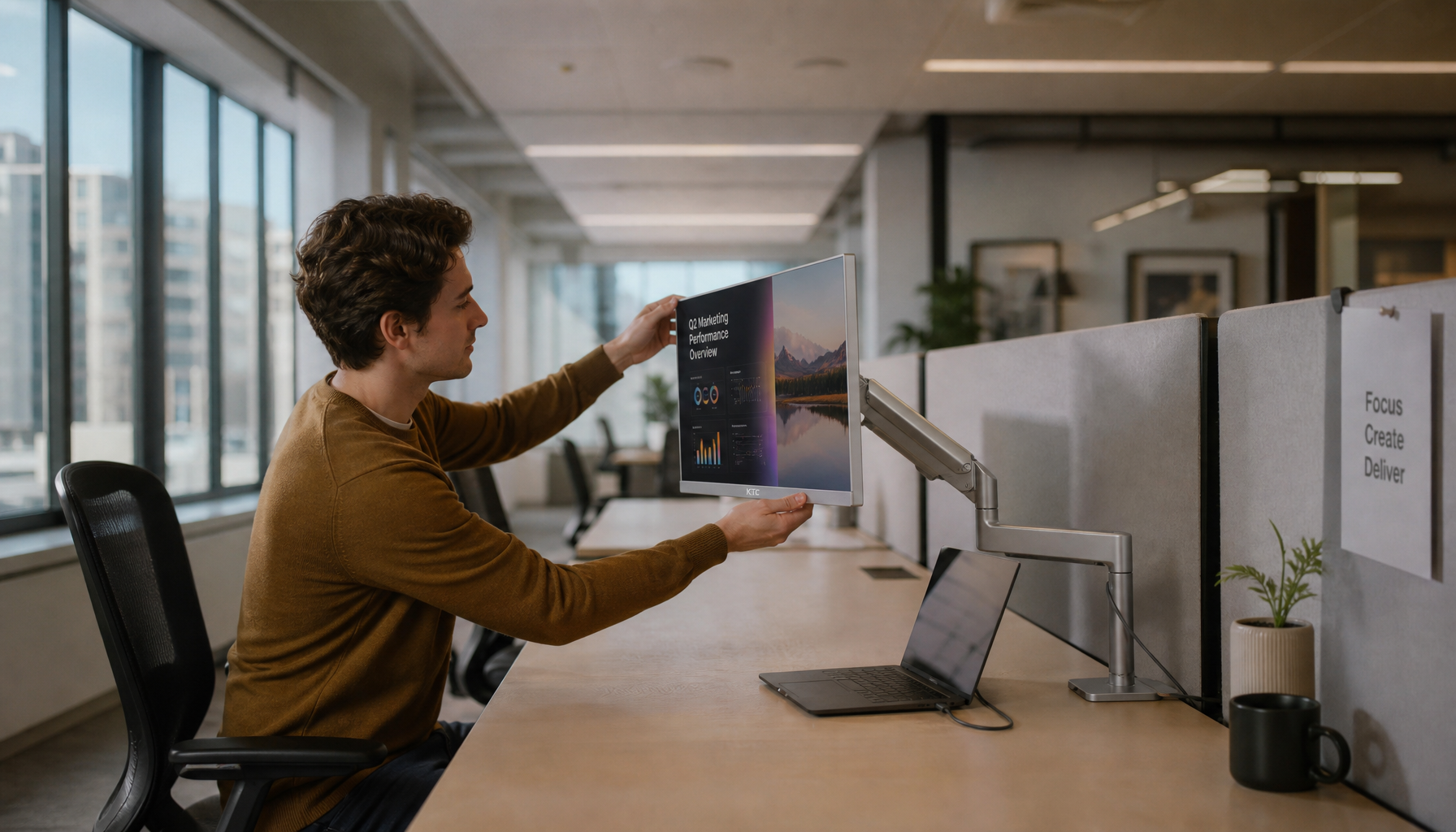
A real-world example: a 15.6-inch portable display connected through one USB-C cable may work perfectly at your desk, then fail after sleep at an airport lounge because the laptop battery is lower, brightness is higher, and the USB-C port is managing power more aggressively. Nothing broke. The wake handshake simply stopped being reliable.
USB-C Is a Connector, Not a Promise
The most common misunderstanding is assuming every USB-C cable and port can carry video. They cannot. Some USB-C cables are charge-only, some handle basic data, and others support high-bandwidth video through DisplayPort Alt Mode, USB4, or similar high-speed display-capable standards.
For one-cable portable monitor use, the laptop port, monitor port, and cable all need to support video. A USB-C connector shape does not guarantee video output, and many phone charging cables will never wake a display because they never carried a display signal in the first place.
Here is the practical distinction that matters when a portable monitor will not wake.

Connection Type |
What It Can Do |
Wake-from-Sleep Risk |
Charge-only USB-C |
Powers some devices |
Monitor may power on but never receive video |
USB-C with data only |
Handles peripherals |
Often useless for display output |
USB-C with DisplayPort Alt Mode |
Sends video and sometimes power |
Usually correct for portable monitors |
USB4 or high-speed display-capable USB-C |
High-bandwidth video, data, and power |
Best choice for docks and demanding displays |
HDMI plus USB power |
Separates video from power |
Less elegant, often easier to diagnose |
For gaming, high-refresh portable displays make cable quality even more important. For productivity, even a 1080p 60 Hz panel can fail to wake if the cable is marginal or the host port does not reinitialize video after sleep.
Start With Power, Then Signal
A portable monitor can be awake electrically but asleep visually. That means the screen may be powered, yet the panel has no valid input to show. The cleanest diagnostic order is to stabilize power first, then test the video path.

If your monitor supports external power, connect it to a wall charger or power bank before waking the laptop. Power instability is a known cause of sudden black screens and wake failures, especially when a laptop tries to run the display and charge itself through the same path. The portable monitor troubleshooting principle is straightforward: power first, signal second; cable first, settings second.
A simple example works well. If your monitor wakes reliably when plugged into wall power but fails on laptop-only USB-C, the display panel is probably fine. The weak point is likely USB-C Power Delivery, laptop battery state, or the port’s ability to maintain enough power during resume.
Check the Monitor’s USB-C Port, Not Just the Cable
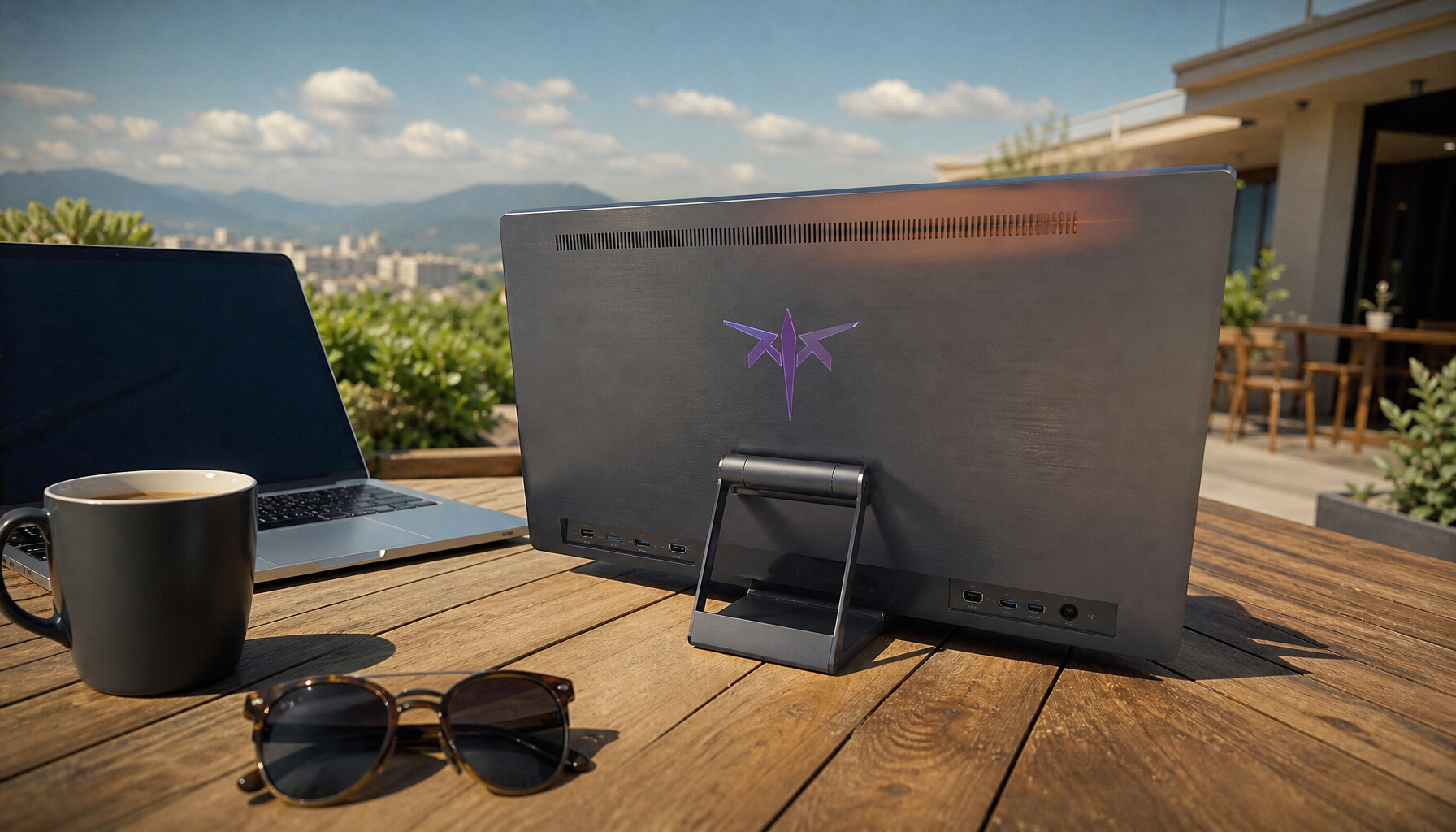
Many portable monitors have more than one USB-C port, and not all ports do the same job. One port may be power-only, while another accepts video. This creates a frustrating symptom: the monitor lights up but still reports no signal or refuses to wake.

Support notes from portable monitor makers repeatedly emphasize this hidden trap. Some models separate power and display input, so using the wrong USB-C port can mimic a dead screen. A power-only port can make the monitor turn on while still receiving no video.
The practical test is direct and fast. Move the cable to the other USB-C port on the monitor, manually choose USB-C as the input in the on-screen menu, and wake the laptop again. If HDMI works but USB-C does not, the issue is probably USB-C video negotiation rather than the display panel.
Docks Add Convenience and Another Failure Point
USB-C docks and hubs can make wake behavior less predictable because the laptop, dock, cable, and monitor must all resume together. A dock may keep USB devices active while dropping the display signal, or it may fail to wake until power-cycled.

One community case described an external monitor connected through USB-C on Linux where the laptop display woke but the external monitor stayed asleep after screen timeout. The likely cause was USB autosuspend, a power-management feature that suspends inactive USB devices to save battery. In that report, disabling USB autosuspend through TLP was the fix.
PC dock setups can show a different version of the same problem. Technical support notes describe a case where replacing an older USB-C cable with a USB4 cable supporting 40 Gbps data and 240 W charging resolved the wake issue, and reconnecting the old cable brought the problem back. The lesson is not that every user needs a 240 W cable. The lesson is that docks are unusually sensitive to cable capability.
When to Change Settings
Settings matter, but they should come after the physical chain. Updating graphics drivers, checking display detection, and adjusting sleep behavior are valid steps, yet they often waste time if the cable cannot carry stable video.
On a PC, force display detection after wake, confirm the portable monitor is set to “Extend” rather than disabled, and check whether the system changed resolution or refresh rate after sleep. Portable monitor troubleshooting resources recommend using system display settings to select the secondary display and choose a supported resolution, with 1920 by 1080 often used as a stable baseline for Full HD panels. A triple portable monitor setup is especially sensitive to incorrect refresh rates, outdated drivers, and adapter compatibility.
On Linux, USB autosuspend is a prime suspect when the laptop wakes but the USB-C display does not. If you use TLP, the community fix was to set USB_AUTOSUSPEND=0 in /etc/tlp.conf. That can reduce battery savings, but for a mobile workstation or tournament travel rig, a display that wakes reliably is usually worth the tradeoff.
Cable Upgrade or Monitor Reset?
A cable upgrade is the right move when the problem follows the cable, happens through a dock, appears after sleep but not during active use, or gets worse at higher brightness, resolution, or refresh rate. Choose a certified USB4 or clearly labeled DisplayPort Alt Mode cable from a reputable maker.
A monitor reset is the right move when the on-screen menu behaves strangely, the monitor remembers the wrong input, brightness controls lock up, or the display remains unresponsive after cable swaps. Reset guidance often separates resets into soft resets and hard resets, with a soft reset recommended first because it is quick and does not erase saved settings. Disconnect the cables, hold the power button if your model supports it, leave the monitor unplugged briefly, and reconnect power before signal.
The downside of resetting is that it can hide the real fault. If a reset fixes the monitor for one day and the failure returns, the deeper issue is probably cable quality, unstable power, port looseness, or operating system power management.
Buying Lessons for Fewer Wake Issues
Portable monitors vary widely in build quality, connectivity, warranty, and power behavior. Recent portable monitor testing highlights how different models target different users, from basic office displays to high-refresh gaming panels and color-focused OLED options. A different portable monitor models comparison is useful not just for specs, but for checking whether a model includes the ports and warranty support your workflow needs.
For office productivity, prioritize two full-function USB-C ports, HDMI backup, a stable stand, and a strong warranty. For gaming, verify that your laptop or handheld can actually output the refresh rate you are buying. For travel, treat the cable as part of the display system, not an accessory tossed in the bag.
Quick Diagnosis: What the Symptom Usually Means

Symptom |
Most Likely Cause |
Best First Move |
Monitor has power but says “No Signal” |
Wrong input, wrong port, or no USB-C video |
Select input and test HDMI |
Laptop wakes but monitor stays black |
USB-C resume handshake failed |
Replug cable or test better USB-C cable |
Works direct but not through dock |
Dock or dock cable issue |
Bypass dock, then upgrade cable |
Works on wall power but not laptop power |
Insufficient USB-C power delivery |
Use external monitor power |
Works until sleep only on Linux |
USB autosuspend |
Disable autosuspend and retest |
Flickers after waking |
Bandwidth, refresh rate, or driver issue |
Lower refresh rate and update drivers |
FAQ
Can a portable monitor wake from sleep through one USB-C cable?
Yes, if the laptop port, monitor port, and cable all support video and enough power. If any one part is charge-only, data-only, underpowered, or unstable after sleep, the monitor may stay black even though the laptop wakes.
Is HDMI more reliable than USB-C for waking a portable monitor?
HDMI is often easier to troubleshoot because it separates video from power. You still need USB or wall power for most portable monitors, but HDMI can confirm whether the screen itself is working.
Should I disable sleep completely?
Only as a temporary workaround. A better setup is a full-feature USB-C or USB4 cable, stable external power when needed, correct input selection, updated graphics drivers, and adjusted USB power management if your operating system is suspending the device too aggressively.
Final Word
A portable monitor that will not wake over USB-C is usually not dead; it is usually losing the resume handshake between power and video. Stabilize power, prove the cable, verify the correct port, bypass the dock, then tune settings. That sequence keeps your mobile display setup fast, reliable, and ready when the next session starts.