To work outdoors with a portable monitor, focus on brightness, glare control, and shade. A 400-nit portable display can handle bright cafe shade, but direct beach sun still requires careful positioning, a hood, or a move to filtered light.
Choose Brightness Before Size
Outdoor usability starts with luminance. Many travel displays are built for hotel desks and coworking tables, not noon sun bouncing off sand or concrete.
For patio work, target a portable monitor rated around 400 nits or higher; several premium portable displays now list 400-nit brightness, while budget models may sit closer to 250 nits. That difference is practical: it can decide whether spreadsheet gridlines stay readable or fade into gray.

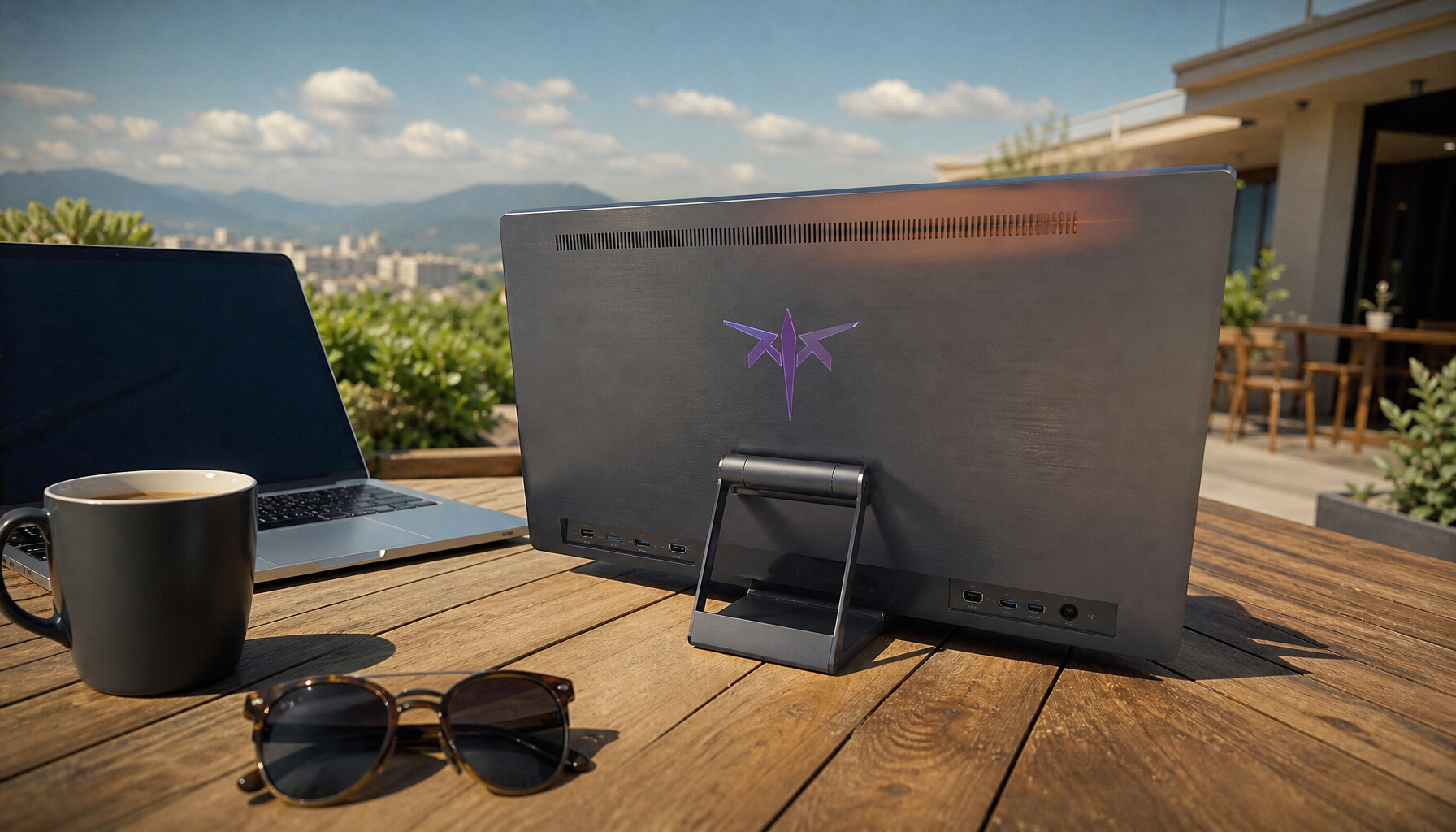
Do not chase screen size first. A 16-inch 1080p monitor that washes out is less useful than a sharper 14-inch 2K panel you can actually read. For outdoor productivity, prioritize brightness, a matte finish, a sturdy kickstand, USB-C video, and enough battery life or pass-through power to avoid cable stress.
Control Glare Outdoors
Direct sunlight is the main problem; reflected sunlight is close behind. Glossy screens can look richer indoors, but outdoors they often mirror the sky, your shirt, and every person moving behind you.
An anti-glare surface helps because it diffuses reflections instead of sending them straight back at your eyes. For outdoor and cafe use, anti-glare portable monitors are the practical choice, even if glossy panels can look punchier in controlled lighting.
Quick setup steps:
- Sit with the sun behind the monitor, not behind you.
- Tilt the screen slightly downward to avoid sky reflections.
- Use a matte screen protector if your panel is glossy.
- Add a folding shade hood for beach or poolside work.
- Switch to light mode for documents, and use dark mode only when contrast improves.

Higher brightness does not cancel glare; it only gives the screen more power to fight through it.
Build a Shade-First Workstation
Outdoor displays are easiest to read when placed in shade or protective cover, and larger outdoor display planning also recommends shaded areas to reduce glare and improve comfort. The same rule applies to portable monitors.
At a cafe, pick a table under an awning, umbrella, tree line, or building shadow. At the beach, bring a canopy or sit at the back edge of shade where wind and sand are lower. Full sun may feel productive for 10 minutes, but your screen, eyes, and laptop thermals will quickly work against you.

Keep the monitor close. A 15.6-inch screen is usually comfortable at laptop distance, but outdoors you may need it a few inches nearer than usual. Larger text scaling, 125% zoom, and fewer open panes often beat squinting at a dense dashboard.
Protect Power, Ports, and the Panel
Outdoor work is harder on gear than indoor desk use. Sand, salt air, spilled iced coffee, pressure inside a tote, and loose cables can damage the setup faster than normal travel.
Use a padded sleeve or hard case because portable monitors are exposed to knocks and pressure more often than desktop displays; screen protection matters when the panel rides beside chargers, keys, and adapters. Store cables separately so connector tips do not press into the display.

Power planning is equally important. A single USB-C cable is clean, but maximum brightness can drain a laptop quickly. For long sessions, carry a compact high-output USB-C charger or power bank, and confirm that your cable supports video, not just charging.
Reduce Eye Fatigue During Long Sessions
Outdoor screen work pushes your eyes harder because brightness, reflections, and changing light force constant refocusing. Digital eye strain can include dryness, headaches, and blurred vision after prolonged screen use.
Use larger UI scaling, raise the monitor near eye level, and take short visual breaks. If your work requires color accuracy, make edits in shade and do a final check indoors; sunlight can distort your perception of contrast and saturation.
The winning outdoor setup is not the brightest monitor alone. It is a bright matte display, placed in shade, angled with intent, powered reliably, and protected like performance gear.