OLED monitor settings for office productivity are less about chasing perfect specs and more about building a calmer desk routine. If you keep spreadsheets, dashboards, or browser tools open for hours, the right brightness, sleep behavior, and text tuning can make OLED feel more manageable. It still helps to accept one boundary up front: settings can reduce risk and improve comfort, but they do not remove burn-in concern entirely.

Why OLED Worries Office Users
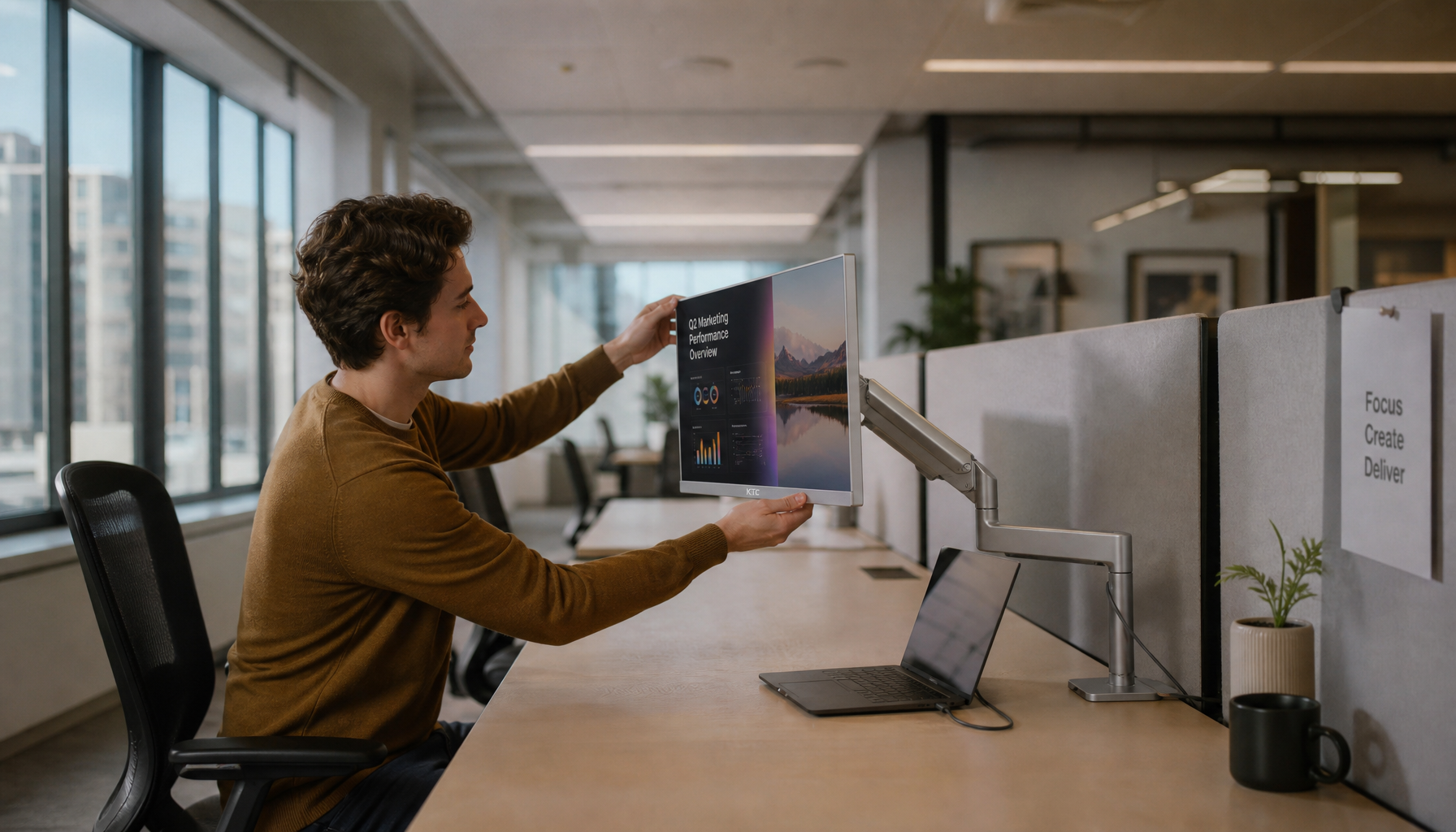
The main hesitation is not hard to understand. Office buyers see static taskbars, menus, spreadsheets, and dashboards, then worry those same on-screen elements will linger too long. That is a normal buyer objection, especially for people who leave one app open all day.
Text clarity is the other concern. For documents and browser-based work, some users notice softness or fringing before they ever think about games or HDR. That is why OLED monitor settings for office productivity should be treated as part of ownership, not an afterthought.
For most office desks, the question is not whether OLED can work at all. It is whether your workflow is mixed enough to justify the upkeep. If your screen is mostly static and bright all day, Mini-LED is often the calmer default. If you split time between work and gaming, OLED becomes easier to justify.
If you want a deeper look at maintenance habits for long-running displays, this burn-in prevention guide covers the same practical concern from a dashboard-heavy angle.
Set Brightness and Sleep Controls First
Start with brightness. Use the lowest comfortable level for the room instead of running the panel brighter than you need all day. In a bright office, that usually means raising brightness only enough to keep spreadsheets and menus readable, not pushing it to maximum just because the option exists.
Next, combine monitor sleep with operating system sleep. The goal is simple: shorten the time static content stays visible when you step away for calls, lunch, or meetings. If your desk sees a lot of idle time, this matters more than almost any single picture setting.
A useful rule is to think in layers. Let the monitor sleep, let the computer sleep, and use a screen saver or idle lock when your workflow pauses often. That stack is more reliable than trusting one setting to do all the work.
Do not overthink pixel refresh, but do not ignore it either. Treat it as a routine maintenance prompt you plan around, not as a reason to baby the monitor every minute. If your display asks for a refresh cycle, handle it during a break or after work instead of trying to force a perfect schedule.
For office buyers who want a model-level follow-up, the article on burn-in prevention cycles for 24/7 displays is a useful companion because it matches the same static-content problem.

A practical decision sentence: if you are already comfortable keeping brightness moderate and letting idle sleep do its job, OLED is much easier to live with. If you expect one static dashboard to stay on from morning to night with almost no breaks, Mini-LED or a simpler office LCD is the safer fit.
Make Text Easier to Read
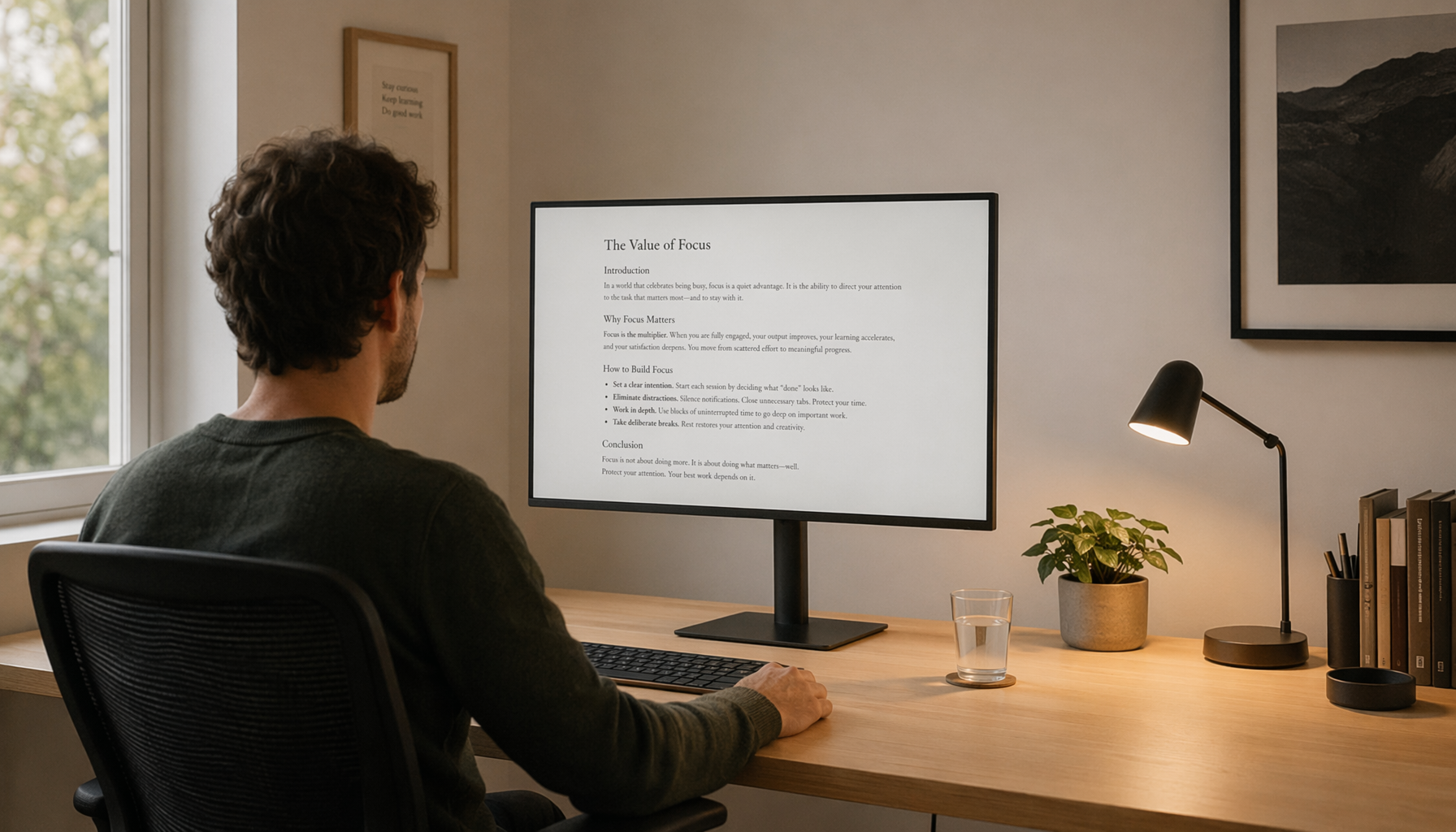
For spreadsheets and documents, don't judge OLED before you tune the software side. Text sharpness depends on native resolution, scaling, and viewing distance as much as panel type. If the desktop feels too large, too tiny, or just a little fuzzy, the fix is often in scaling rather than the panel itself.
Windows users should try the ClearType Text Tuner for OLED screens, which can improve perceived sharpness and reduce text fringing on some setups. Mac users can adjust font smoothing in macOS to help external text look cleaner. Those changes do not change the panel's resolution, but they often change how office text feels at a normal desk distance.
Viewing distance matters too. Sitting too close makes any subpixel behavior or pixel grid more noticeable, especially in dense browser tabs and spreadsheet rows. If text looks soft, first move the monitor a little farther back, then check scaling and UI zoom before blaming the monitor.
One useful comparison check: if a cleaner picture mode makes text edges look more settled, the panel may be fine and the current processing is the real problem. Disabling local dimming sometimes improves perceived sharpness because it can reduce blooming around text and UI edges.
For a broader explanation of why the same app can look different across screens, typography rendering varies by display type is the right background read.
Balance Work and Gaming on One Desk
Mixed-use desks are where OLED starts to make more sense. If your day is mostly office work but your evenings include gaming, separate presets help a lot. Keep one profile conservative for work, then switch to a brighter or faster-feeling game preset after hours.
USB-C can also reduce friction if the monitor doubles as a laptop display. A single cable for video and charging makes the desk easier to live with, especially when you swap between a work laptop and a gaming source.
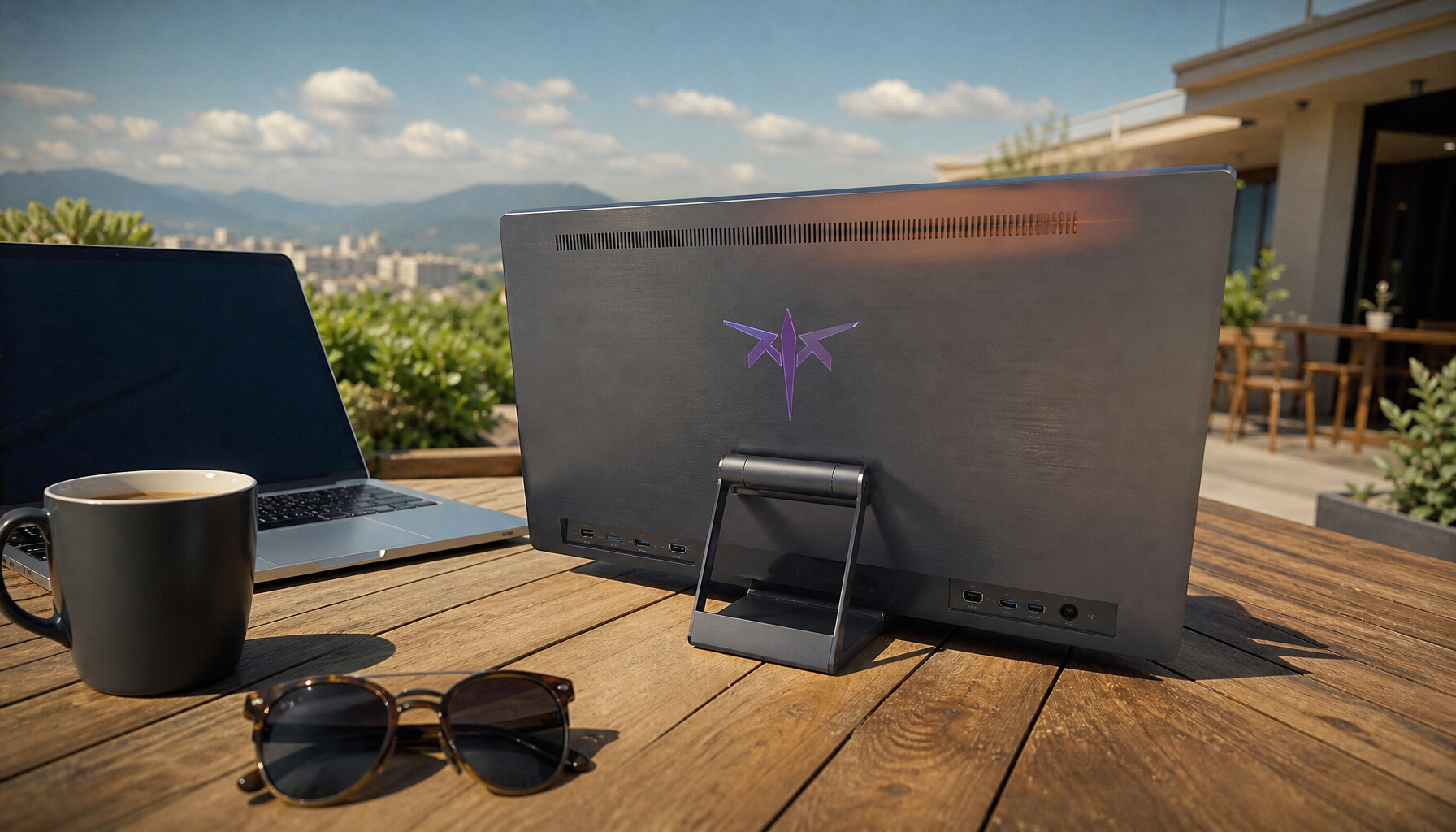
The featured option here is the KTC OLED 27" 2K 240Hz/0.03ms USB-C Gaming Monitor | G27P6. In practical terms, it is a fit example for buyers who want a 27-inch OLED, 2560×1440 resolution, 240Hz refresh, 65W USB-C charging, and a 3-year warranty without turning the article into a sales pitch.
That does not mean it is the universal office answer. It is a reasonable mixed-use candidate when you want OLED benefits, one-cable convenience, and gaming responsiveness on the same desk. If your office day is mostly static dashboards in a bright room, the better path may still be Mini-LED.
OLED Versus Mini-LED for Office Dashboards
This is the part that usually flips the decision. OLED is attractive when you want deeper contrast, strong mixed-use appeal, and better gaming performance after work. Mini-LED is often the safer choice when bright-room readability, static dashboards, and lower burn-in anxiety matter more.
| Decision Factor | OLED Fit | Mini-LED Fit | What To Do If This Matters Most |
|---|---|---|---|
| Static dashboards | Better when use is mixed and you can vary content | Better for long, repetitive dashboards | Choose Mini-LED if the same UI stays open all day |
| Bright room comfort | Can work, but brightness discipline matters | Often stronger in daytime rooms | Choose Mini-LED if the desk is bright or near windows |
| Burn-in anxiety | Manageable, but still part of ownership | Lower-anxiety option | Choose Mini-LED if you want the simpler default |
| Text-heavy work | Can be good after tuning, but setup matters | Usually feels more straightforward | Choose Mini-LED if text clarity is your top priority |
| Mixed-use gaming | Strong option | Still workable, but less OLED-like | Choose OLED if gaming is a real part of the same desk |
That comparison lines up with RTINGS' Mini LED vs OLED overview, which is especially clear on the bright-room and static-content trade-off.
Browse OLED options if you already know you want the OLED path. If you want the lower-anxiety office branch, compare Mini-LED monitors before deciding.
OLED vs Mini-LED for Office Productivity
Use this to judge which display type fits static dashboards, bright rooms, burn-in anxiety, text-heavy work, and mixed-use gaming.
View chart data
| Display Type | Static dashboards | Bright room | Burn-in anxiety | Text clarity | Mixed-use gaming |
|---|---|---|---|---|---|
| OLED | 1 | 1 | 1 | 1 | 2 |
| Mini-LED | 2 | 2 | 2 | 2 | 1 |
A Practical OLED Office Checklist
Use OLED if you can answer yes to most of these: your desk is mixed-use, you are willing to keep brightness reasonable, you will use sleep timers, and you are comfortable tweaking text settings once. If not, Mini-LED is usually the easier office choice.
If your workday is mostly static dashboards in a bright room, skip the anxiety and start with Mini-LED or a simple office monitor. If your desk is half work and half gaming, OLED can be a smart choice as long as you treat settings discipline as part of the setup, not a one-time fix.
Frequently Asked Questions
How Do I Reduce Burn-In Anxiety on an OLED Office Monitor?
Use the basics together: moderate brightness, monitor sleep, OS sleep, and a screen saver or idle lock. That combination helps limit static exposure during office work. It lowers anxiety, but it does not make burn-in impossible.
What OLED Settings Help Text Look Sharper for Spreadsheets?
Start with native resolution, then adjust scaling and text rendering. On Windows, ClearType can help, and on Mac, font smoothing can improve external text appearance. If the text still feels soft, move the monitor back a little before assuming the panel is the problem.
Can an OLED Monitor Work Well for a Shared Work-And-Gaming Desk?
Yes, if you are willing to keep separate presets for office and gaming use. That way, work mode stays comfortable and readable while game mode can favor motion and responsiveness. It is a better fit for mixed-use desks than for all-day static dashboards.
When Is Mini-LED the Better Office Choice Than OLED?
Mini-LED makes more sense when your desk is bright, your workload is mostly static, or you want less ownership overhead. If you care more about a calm work setup than OLED's gaming appeal, Mini-LED is usually the safer office default.
Does Pixel Refresh Mean I Should Avoid OLED for Work?
Not necessarily. Pixel refresh is a maintenance routine to plan around, not a deal-breaker by itself. The bigger question is whether you are comfortable with a little more upkeep than you would need on a standard office display.
Final Takeaway
OLED monitor settings for office productivity are about making the desk easier to manage, not pretending the trade-offs do not exist. If you use moderate brightness, sleep settings, and a little text tuning, OLED can work well for mixed-use desks. If static dashboards and bright-room work dominate, Mini-LED is the simpler pick. Check your workflow first, then choose the panel that matches it.