Most people should not use the exact same monitor brightness for gaming and productivity. A better approach is to keep separate profiles: one tuned for readable text and long work sessions, and another tuned for game visibility, contrast, and HDR behavior.
Ever finish a few hours of spreadsheets, then launch a game and feel like the same display suddenly looks either washed out or painfully bright? A practical setup can often be improved by moving desktop work into the 80-150 nit range, then using a separate gaming preset that protects shadow detail without making bright scenes harsh. This guide shows how to choose settings that fit your monitor, room lighting, and daily use.
Why One Brightness Setting Usually Falls Short
Productivity work and gaming ask different things from a monitor. Writing, coding, reading, email, and spreadsheets keep large white or light-gray areas on screen for long periods, so excessive brightness can make the display feel like a lamp aimed at your face. Gaming shifts more often between dark scenes, bright flashes, colorful HUD elements, and fast motion, so the goal is not just comfort; it is also visibility and stable contrast.
Factory presets are rarely a good final answer because many monitors ship with showroom-style settings that can push brightness above 300 nits, which is often too intense for a home office or gaming room. Treat those presets as starting points, not finished calibration, because factory monitor presets are commonly tuned to look vivid under bright retail lights.
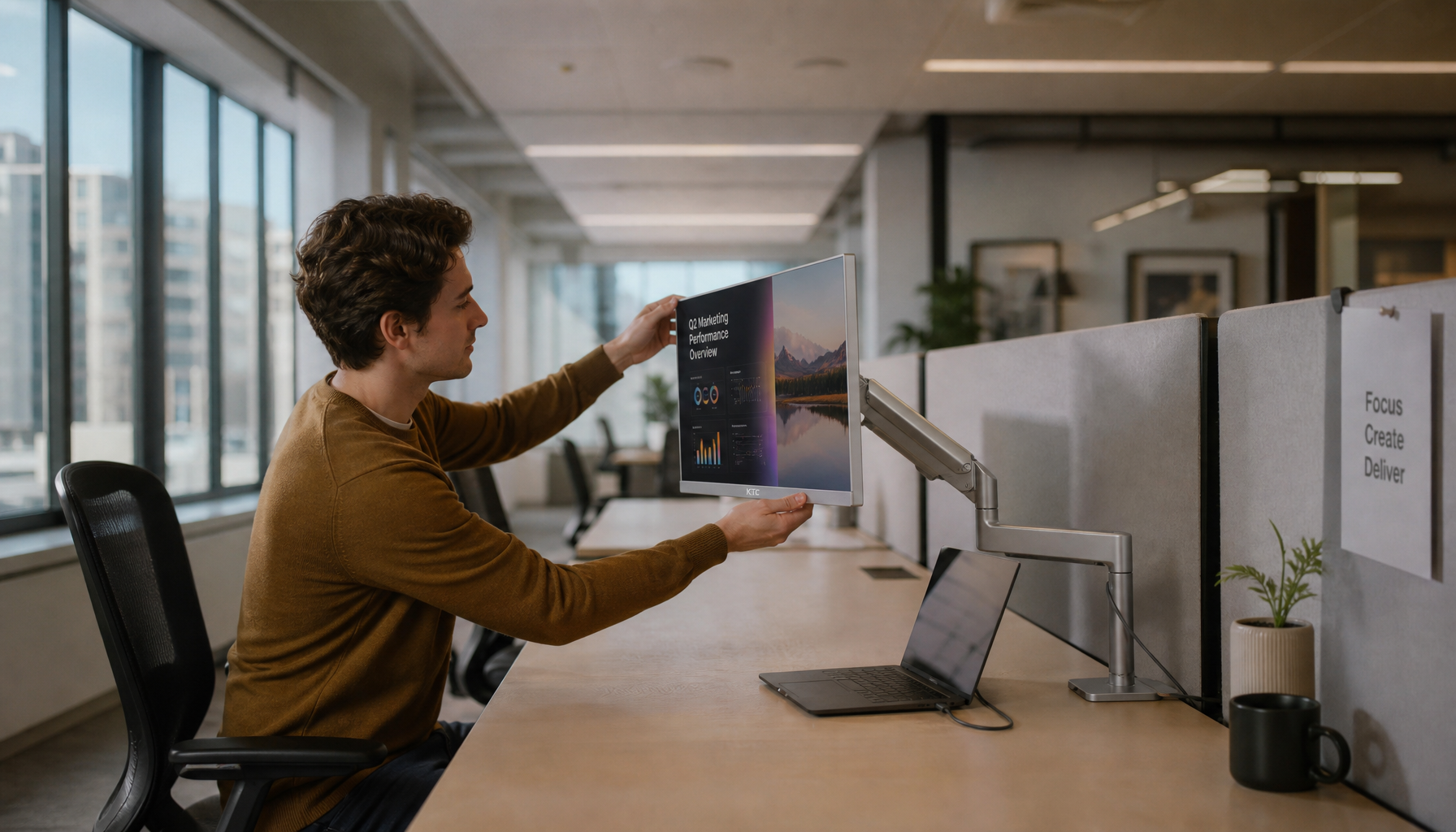
A good dual-use setup usually has at least two saved modes. For example, a 27-inch 1440p high-refresh-rate monitor in a typical home office might use a lower SDR brightness profile for documents during the day, then a slightly brighter or higher-contrast gaming profile at night. An ultrawide used for both work and games may need even more control because the larger screen area makes bright backgrounds feel more intense across your field of view.
Match Brightness to the Room Before Matching It to the Task
The biggest mistake is setting brightness in isolation. Your eyes adapt between the monitor and the surrounding room, so a bright screen in a dark room can feel fatiguing, while a dim screen in a sunny room can make you squint and lose detail. For most monitor owners, ambient light is the first variable to fix.

For office-style computer work, EN 12464 recommendations cited in a desktop lighting study place typical office tasks around 200-750 lux, with about 500 lux for writing, typing, reading, data processing, and workstation use. The same study found that warm 3000K lighting at 1500 lux reduced visual and cognitive fatigue in its tested dark-environment setup, but that does not mean every desk needs 1500 lux; it shows that room lighting and display comfort are connected, and comfortable desktop lighting can materially affect screen use.
For practical monitor brightness, a useful starting point is 120-150 nits in a bright office, 100-120 nits in a typical room, and 80-100 nits in a dark room. Those ranges align with guidance that screen brightness should match surrounding light instead of chasing the brightest possible image.
The White Paper Test
A simple way to tune a monitor without a light meter is the White Paper Test. Open a blank white document, place a sheet of white printer paper near the screen under your normal desk lighting, and compare them. If the screen looks like a glowing light source next to the paper, lower brightness. If it looks gray or dull, raise brightness.

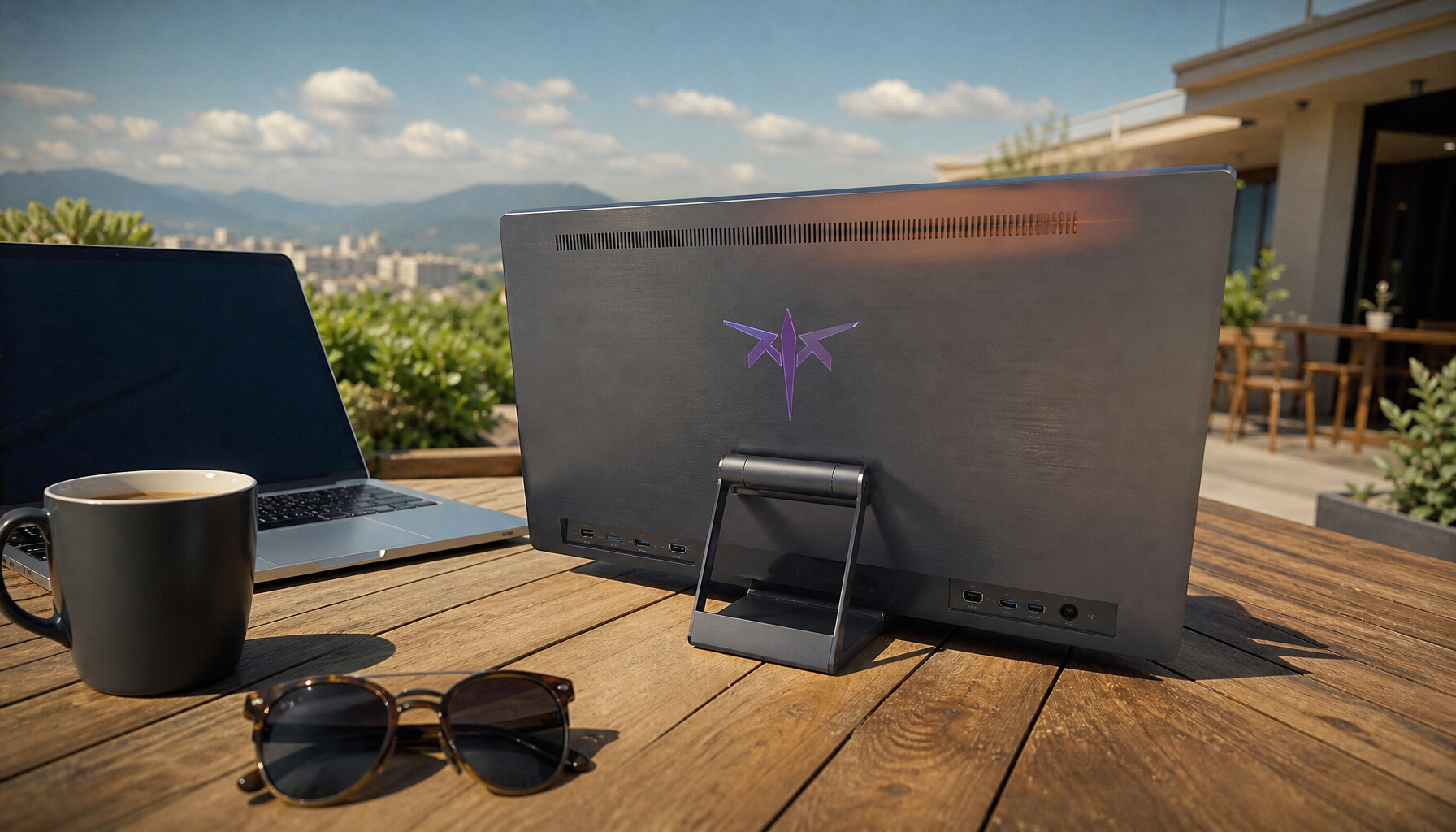
This test is especially useful for productivity work because documents, web pages, design tools, and dashboards often show large bright surfaces. It also helps on portable monitors, which are frequently used in inconsistent lighting: a hotel desk, a coffee shop table, an airport lounge, or a temporary second-screen setup beside a laptop.
Productivity Profiles: Prioritize Comfortable Whites and Crisp Text
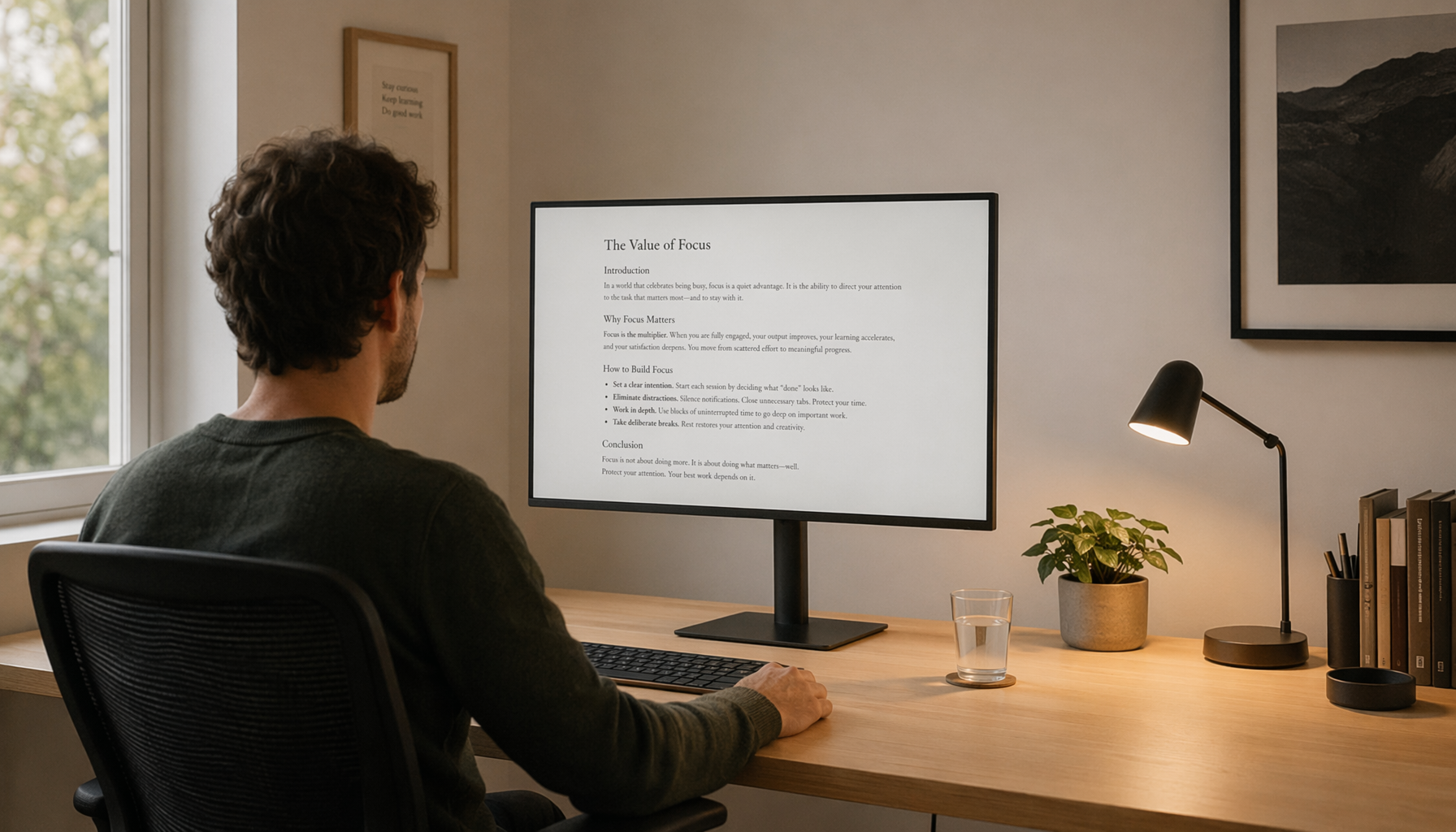
For productivity, brightness should make white backgrounds readable without turning them into glare. In a typical room, start around 100-120 nits; in a bright office, try 120-150 nits; in a dark room, move closer to 80-100 nits. If your monitor menu only shows percentages, a rough starting range might be 20%-45% on many desktop monitors, but the exact percentage varies by panel, backlight, and preset.
Contrast matters too. Productivity work usually benefits from strong contrast because crisp text reduces effort when reading cells, code, documents, and browser tabs. However, excessive contrast in a dark room can create harsh white-on-black transitions, halos, and glare stress, so higher contrast can improve legibility only when it is balanced against the room.
For a practical work profile, set your monitor to native resolution, use comfortable scaling, and avoid pushing brightness just to make text seem sharper. A 27-inch 2560 x 1440 display often works well at 100%-125% scaling depending on viewing distance, while many ultrawide 3440 x 1440 monitors feel better when windows are arranged so large white apps do not fill the entire display all day.
Reading, Spreadsheets, and Creative Work
Reading and spreadsheets usually need the most conservative brightness because they are static and white-heavy. If your eyes feel dry after 30-60 minutes, lower brightness before changing color settings. Warm room lighting can help at night, but do not make the screen so warm that white documents look yellow during color-sensitive tasks.
Creative work is different. Photo, video, and design work need consistent brightness and color behavior more than comfort-only tuning. If you edit visuals, avoid constantly switching brightness mid-project, use a known color profile when available, and keep the room lighting repeatable so your perception does not drift from morning to evening.
Gaming Profiles: Prioritize Visibility, Stability, and Scene Detail
Gaming brightness is not simply “brighter is better.” A too-dim image can hide enemies, crush shadow detail, and make you squint. A too-bright image can make menus, snow maps, muzzle flashes, and white UI elements uncomfortable, especially on larger gaming monitors or in dark rooms.

For many gaming monitors, a practical OSD brightness range is about 25%-60%, depending on panel type, room lighting, screen size, and viewing distance. The key is to preserve dark-scene visibility without making bright scenes harsh, because brightness should match room lighting rather than being set as low as possible.
Competitive gaming also benefits from stable settings. Turn off auto-brightness and content-adaptive brightness when visibility consistency matters, because changing brightness during a dark-to-bright scene can affect how quickly you recognize silhouettes, crosshairs, minimaps, health bars, and enemy outlines. For fast games, brightness works together with refresh rate, overdrive, and resolution: 120Hz, 144Hz, 165Hz, 240Hz, or higher can improve motion clarity, but it cannot fix a brightness setting that hides detail.
Competitive vs Cinematic Games
For competitive shooters, battle royale games, and fast multiplayer titles, use a fixed brightness setting that keeps dark corners readable. Keep contrast high enough to separate targets from the background, but avoid black crush. If the game has its own gamma or brightness calibration screen, adjust it after setting the monitor’s brightness, not before.
For cinematic single-player games, you may prefer deeper blacks and less raised shadow detail. In a dark room, lowering hardware contrast by about 5%-10% can be more comfortable for dark scenes, especially if bright subtitles or HUD elements feel sharp against black backgrounds. This is one reason gaming and productivity profiles should rarely be identical.
HDR, Local Dimming, and System Controls Need Separate Thinking
HDR complicates the question because HDR gaming may use very bright highlights while your desktop SDR apps still need comfortable white levels. If HDR is left on all the time, desktop whites can feel wrong unless SDR brightness is controlled separately. On a computer, brightness can be adjusted through quick settings or display settings, while many external monitors still require physical buttons or the monitor’s on-screen display; system brightness settings vary by hardware support.

For HDR gaming, run an HDR calibration tool if your system supports it, then tune the SDR content brightness slider so desktop apps stay comfortable. A common practical range is 0%-20% for SDR content, often keeping desktop whites near 80-120 nits while still allowing HDR games to use higher peak brightness when needed.
Local dimming also deserves separate profiles. For desktop work, Low or Medium local dimming often reduces blooming around text, cursors, and window edges. For HDR games, a stronger local dimming mode may improve contrast and highlight impact, but check subtitles, health bars, star fields, and dark menus for blooming before keeping it enabled.
Practical Settings Table and Checklist
The best setting is the one that survives real use: a long document session, a spreadsheet, a dark game scene, a bright game scene, and a few minutes of browsing. Use the table below as a starting point, then refine by eye with your actual room lighting.
Use Case |
Starting Brightness |
Contrast Approach |
Room Lighting |
Notes |
Long productivity work |
100-120 nits |
Strong but not harsh |
Typical room, 150-300 lux |
Good for email, writing, coding, and dashboards |
Bright office productivity |
120-150 nits |
Strong text contrast |
Bright room, 500+ lux |
Useful near windows or under strong desk lighting |
Dark-room reading |
80-100 nits |
Moderate contrast |
Under 50 lux |
Avoid making white pages glow |
SDR gaming |
25%-60% OSD range |
Preserve shadow detail |
Match room brightness |
Use fixed brightness for competitive play |
HDR gaming |
Monitor HDR mode plus calibration |
Let HDR handle highlights |
Dim-to-moderate room |
Keep SDR desktop brightness controlled |
Ultrawide productivity |
80-130 nits |
Avoid full-screen glare |
Even lighting across desk |
Large bright windows can feel more intense |
Portable monitor use |
Adjust per location |
Moderate contrast |
Highly variable |
Recheck brightness whenever the room changes |
A concise setup process:
- Reset only the picture mode you plan to tune, leaving unrelated monitor settings untouched.
- Set SDR brightness by room: 80-100 nits for dark rooms, 100-120 nits for typical rooms, or 120-150 nits for bright offices.
- Use the White Paper Test with a blank document and printer paper under your normal desk light.
- Save a productivity preset with stable brightness, readable text scaling, and restrained local dimming.
- Save a gaming preset with fixed brightness, visible shadow detail, native resolution, and medium overdrive.
- For HDR, run calibration and keep SDR desktop whites comfortable with the SDR content brightness slider.
- Recheck settings after changing room lighting, moving the monitor, switching to an ultrawide, or adding a second display.
FAQ
Q: Can I use one monitor brightness setting if I do both work and gaming?
A: Yes, but it works best if your room lighting is consistent and you mostly use SDR content. A hybrid setting around 100-120 nits can be comfortable for general desktop work and casual gaming in a typical room. If you play HDR games, competitive games, or work long hours with white documents, separate profiles are usually better.
Q: Is lower brightness always better for eye comfort?
A: No. A screen that is too dim can cause squinting, reduce text clarity, and hide shadow detail in games. The goal is balanced brightness: the monitor should feel similar to the surrounding workspace, not like a flashlight in a dark room or a dull panel in a bright office.
Q: Should I change brightness at night?
A: Usually, yes. If your room gets darker at night, lower SDR brightness and consider warmer room lighting. Night light or warmer color settings can help some users in the evening, but brightness is still the first setting to adjust because it has the most direct effect on glare from white pages and menus.
Final Takeaway
Do not force one brightness setting to handle every job. For most gaming monitors, high-refresh-rate displays, ultrawides, and portable monitors, the most comfortable setup is a productivity profile for stable text and controlled whites, plus a gaming profile for scene visibility, contrast, and motion clarity.
Start with the room, not the monitor spec sheet. If your screen looks like it is glowing brighter than the space around it during work, lower brightness. If games look muddy or dark areas hide important detail, raise brightness or adjust in-game gamma. The right setup is not the brightest one; it is the one that lets you work for hours and play clearly without fighting the display.
References
- Desktop lighting for comfortable use of a computer screen
- Ergonomic Brightness: Monitor Contrast for Eye Comfort
- Ergonomic Brightness: Monitor Contrast for Eye Comfort
- Ergonomic Brightness: Monitor Contrast for Eye Comfort
- Gaming Display Settings to Reduce Eye Fatigue
- Change display brightness and color in Windows