Yes, you can mix different resolutions across three monitors, but the cleanest setup keeps each screen at native resolution and adjusts operating-system scaling per display instead of forcing every monitor to match.
Does your cursor jump between screens, your browser look huge on one monitor, or your game stretch awkwardly across three panels? A practical mixed-resolution setup can make a 4K center screen, a 1440p gaming display, and a 1080p side monitor feel predictable without giving up sharpness.
The Short Answer: Mixed Resolution Works, But Scaling Must Be Intentional
A three-monitor setup does not need three identical resolutions. Modern desktop systems let you identify, arrange, and configure multiple displays individually, including each monitor’s resolution, orientation, and main display through multiple monitors. That means a 3840 x 2160 4K display can sit beside a 2560 x 1440 QHD display and a 1920 x 1080 Full HD portable screen.
The problem is not that mixed resolutions are unsupported. The problem is that operating systems arrange monitors by pixel dimensions, not by how large the panels look on your desk. A 27-inch 4K screen and a 27-inch 1440p screen may be the same physical size, but the system represents the 4K monitor as a larger rectangle because it has more pixels. That can cause window-size changes and uneven cursor travel across edges. The relative size of multiple monitors issue is why mixed setups can feel wrong even when every display is technically working.
Resolution, Scaling, and Upscaling Are Not the Same Thing
Resolution is the pixel grid a monitor uses, such as 1920 x 1080, 2560 x 1440, or 3840 x 2160. Display scaling changes the size of text, icons, menus, and app interfaces without necessarily changing the monitor’s native pixel grid. Upscaling is different: it happens when you run a monitor below its native resolution and the display maps that lower-resolution image across more physical pixels.
That distinction matters. A 4K monitor has 8,294,400 pixels, while a 1080p monitor has 2,073,600 pixels, so the 4K panel has exactly four times as many pixels as 1080p. A multi-display setup usually feels best when the sharper panel keeps its native resolution and scaling handles readability.

For example, 1920 x 1080 maps cleanly to 3840 x 2160 because each source pixel becomes a 2-by-2 block on the 4K screen. But 2560 x 1440 into 3840 x 2160 is a 1.5x ratio, so the monitor has to interpolate because it cannot light half a pixel. That is why many native resolution plus OS scaling discussions favor native resolution over forcing every panel into the same non-native mode.
Best Practice: Keep Native Resolution, Then Tune Scaling
For productivity, the reliable starting point is simple: set every monitor to its native resolution, choose the sharpest and most comfortable display as the primary screen, then adjust scaling per monitor until text and windows feel consistent. A common real-world setup would use a 27-inch 4K monitor in the center at 150% scaling, a 27-inch 1440p monitor on the side at 100% or 125%, and a 24-inch 1080p monitor at 100%.

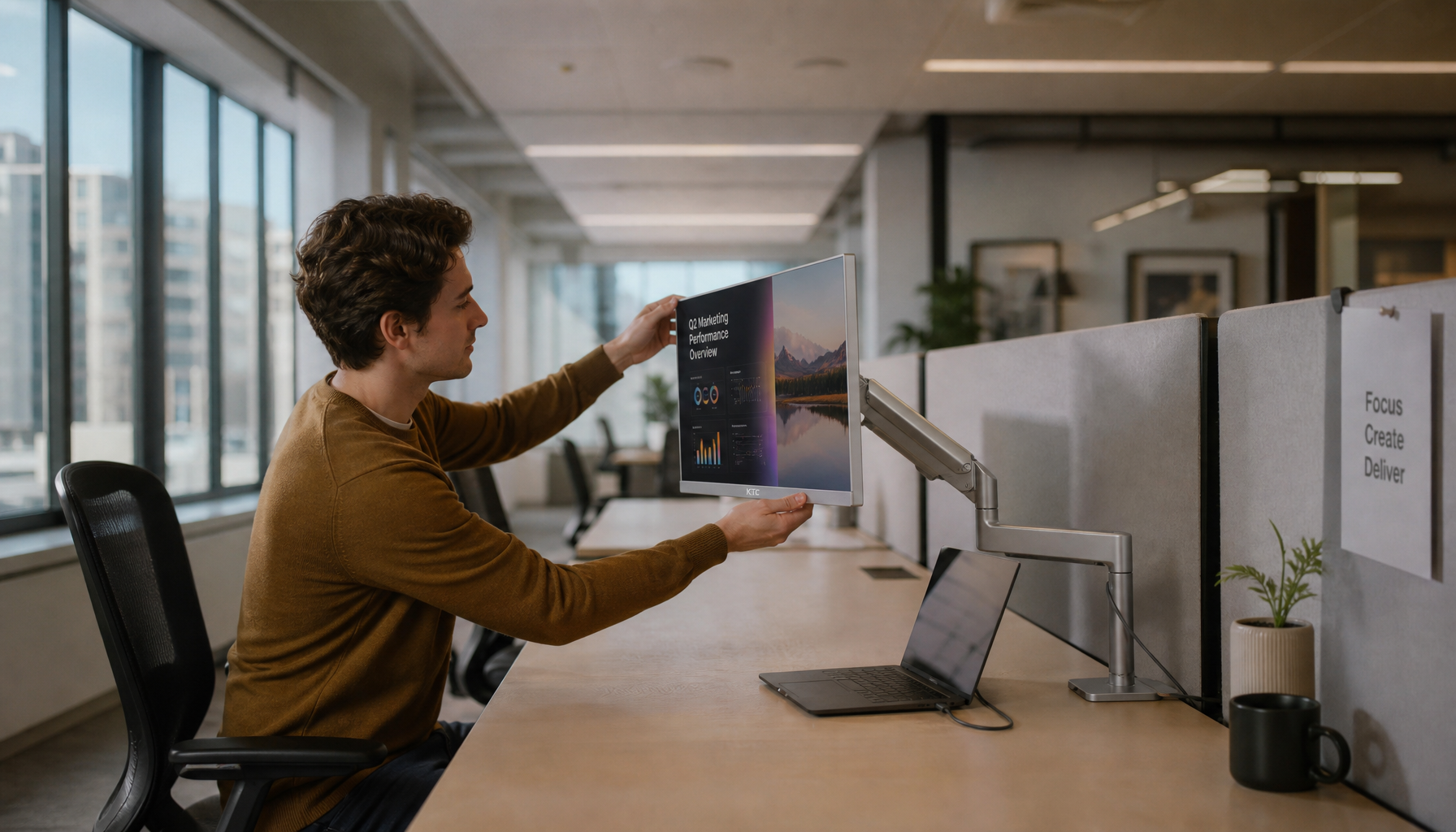
This preserves clarity where it matters most. A 4K center display gives you crisp text, dense spreadsheets, detailed timelines, and better image review. A 1440p side display keeps gaming performance and workspace balanced. A 1080p portable or office screen remains useful for chat, email, monitoring dashboards, or reference material without asking your GPU to push unnecessary pixels.
The downside is visual inconsistency. A window dragged from the 4K screen to the 1080p screen may resize, jump, or appear less sharp. The fix is not always to match resolutions. The better fix is to make the effective size of interface elements similar enough that your eyes and mouse movement stop fighting the layout.
Monitor Role |
Typical Native Resolution |
Practical Scaling Start |
Best Use |
Primary detail screen |
3840 x 2160 |
125% to 150% |
Writing, editing, coding, creative review |
Balanced side screen |
2560 x 1440 |
100% to 125% |
Gaming, dashboards, reference windows |
Utility or portable screen |
1920 x 1080 |
100% |
Chat, email, music, stream controls |
Why Cursor Movement and Window Alignment Feel Strange
When monitor rectangles do not line up in the display settings panel, your cursor may hit an invisible wall or enter the next screen higher or lower than expected. This is especially noticeable when a 4K display sits beside a 1080p display. The pixel height of 2160 does not match 1080, so only part of the monitor edge lines up unless you manually arrange the displays.
Open display settings, use Identify, then drag the monitor rectangles so their top or center edges match your actual desk layout. If your main issue is cursor travel, center-aligning the displays often feels better. If your main issue is dragging windows across the top edge, top-aligning may feel cleaner.

There is a catch: perfect alignment is not always possible when physical size, pixel resolution, and scaling all differ. The same physical size example shows why two 27-inch screens can behave differently if one is 4K and the other is 1440p. You can reduce the mismatch with scaling, but you may not eliminate it completely without matching monitor specs.
When You Should Avoid Lowering Resolution
Lowering resolution is tempting because it makes the display rectangles look more uniform, but it often costs sharpness. A 4K monitor running at 1080p can look acceptable because the scaling ratio is clean. A 4K monitor running at 1440p can look softer because the pixels do not map evenly.
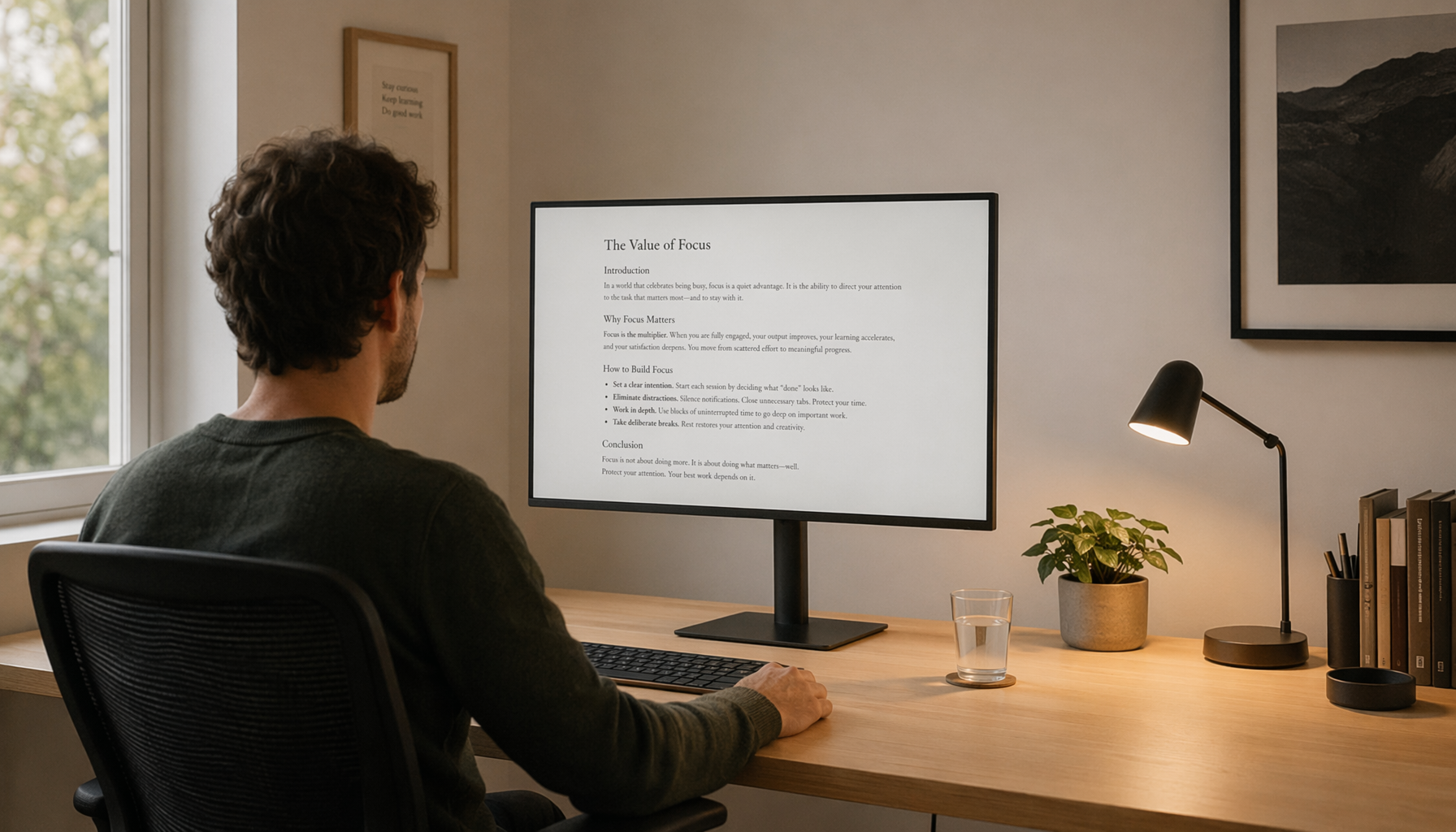
For office work, text softness is the dealbreaker. Emails, code, dashboards, and spreadsheets punish poor scaling because your eyes spend hours reading fine lines and small characters. For gaming, non-native resolution may be acceptable if higher frame rate matters more than desktop clarity, but for a triple-monitor work setup, native resolution is the sharper default.
The exception is an app that handles scaling badly. Older software, certain remote desktop sessions, or niche tools may render tiny menus or blurry panels when moved across displays. In that case, lowering one monitor’s resolution can be a practical fallback, but treat it as a targeted workaround rather than the default configuration.
Operating System and Advanced Scaling Notes
Mainstream desktop systems usually expose per-monitor layout, resolution, orientation, and scaling in the normal settings workflow. Start there before changing GPU control panels or using third-party tools.
Some open-source desktops also support independent scaling, and the built-in display settings are the first place to start. For deeper control, different resolutions can be managed with xrandr, but that path needs care because xrandr --scale changes effective resolution behavior rather than simply making text larger. A command such as xrandr --output eDP-1 --scale 2x2 can zoom out, while 0.5x0.5 zooms in, but the side effects can include awkward rendering or layout surprises.
For a production desk, use command-line scaling only when the graphical settings cannot achieve the result. For a gaming cockpit or creator station, stability matters more than cleverness; a reliable display profile beats a fragile tweak that breaks after a driver update.
Pros and Cons of Mixing Resolutions Across Three Monitors
Mixed resolutions are valuable when each display has a defined job. You can put a 4K panel in front for sharp text and visual detail, keep a high-refresh 1440p display for gaming or motion-heavy work, and use a budget 1080p screen for secondary tools. This lets you spend money where the experience improves most instead of buying three identical premium panels.
The tradeoff is consistency. Brightness, color, pixel density, refresh rate, bezel thickness, and scaling may differ. Windows spanning multiple monitors can look uneven, and full-screen games may behave unpredictably unless they are configured for the exact display arrangement. The GPU can usually output mixed resolutions, but your workflow still needs discipline.
The cleanest buying strategy is to match what matters for your use case. For competitive gaming across three screens, identical monitors with the same resolution and refresh rate create the most seamless field of view. For office productivity, matching physical height and using one high-quality center display is often a better value. For portable smart screens, accept 1080p as a utility layer and keep the heavy visual work on the primary panel.
Practical Setup Recipe for a Smooth Triple Display
Start by connecting all three monitors directly to reliable ports when possible, preferably high-bandwidth video ports or USB-C DisplayPort Alt Mode for high-resolution displays. If a dock or adapter caps 4K at 30 Hz, causes flicker, or hides the expected resolution, the bottleneck is likely bandwidth rather than the monitor itself. The multi-display setup guidance is practical here: confirm native resolution first, arrange screens digitally second, then tune scaling with real apps open.

Set the main display to the monitor where your focus work happens. Place it physically centered, keep side monitors angled inward, and align the top third of the screens near eye level. For a 27-inch monitor, a viewing distance around 24 to 36 inches is a comfortable starting range; for a 24-inch display, about 20 to 30 inches is more typical.
Then test the setup the way you actually work. Drag a browser, spreadsheet, code editor, chat window, and video call across all three screens. If text size changes too aggressively, adjust scaling in small steps. If the cursor catches on edges, rearrange the monitor rectangles. If a single app looks bad on one screen, troubleshoot that app before compromising the whole setup.
FAQ
Can I use 4K, 1440p, and 1080p monitors together?
Yes. This is one of the most practical mixed-resolution triples. Keep each monitor at native resolution, use the 4K panel for your primary work, and tune scaling so text feels similar across displays.
Will mixed resolutions hurt gaming performance?
The desktop itself is usually fine, but gaming across all three monitors is more demanding. A triple-screen game view has to render a much wider image, and mixed resolutions can complicate full-screen behavior. For panoramic gaming, identical monitors are easier; for single-screen gaming with side monitors for tools, mixed resolution works well.
Why does my wallpaper look wrong on one monitor?
The operating system can mishandle wallpaper sizing when monitors have different resolutions, especially when one display is much larger or smaller in pixel count. A temporary resolution change and revert can sometimes refresh display handling, but persistent wallpaper issues are usually cosmetic rather than a sign that the monitors are configured incorrectly.
Should I buy three matching monitors?
Buy three matching monitors when seamless gaming, color consistency, or visual symmetry is the priority. Mix monitors when value, desk utility, and role-based performance matter more. For most productivity setups, one excellent primary display plus two well-chosen support screens is the smarter investment.
Final Word
Mixed-resolution triple monitors can be sharp, immersive, and reliable when you let each screen do its best job. Preserve native resolution, scale per display, align the layout carefully, and reserve resolution downgrades for stubborn apps or performance-driven gaming compromises.