MegPad battery life real-world test results only make sense when you match them to brightness, volume, and workload. The short version is simple: the MegPad can last much longer in moderate indoor use than it does at max brightness, and that gap matters if you plan to stream, travel, or work unplugged for hours.

What Battery Life Usually Means Here
For a portable smart display, battery life is best treated as a range, not a promise. The same device can feel generous for couch streaming and cramped for bright travel viewing, especially if you also raise volume or leave wireless features active.
That is why a MegPad battery life real-world test should be read as a fit check. If your normal use looks like quiet indoor playback, the runtime is much friendlier than if you expect a bright screen, louder sound, and constant app switching. If you need one simple rule, use this one: the more visible the screen and the louder the room, the shorter the unplugged session usually becomes.
What Drains MegPad Battery Fastest
Brightness is the first setting most buyers notice, and it is usually the fastest way to shorten runtime. In the published conditions for the 25-inch MegPad, the battery drops from 11 hours at 55% brightness and 30% volume to 4 hours at 100% brightness and 100% volume. That is a big swing, so brightness is not a minor tuning detail.
Volume matters too, because the published figures tie it to the brightness level. In practice, loud audio in a noisy room can push you toward the shorter end of the range even if the screen content looks the same.
Video streaming is a useful benchmark because it reflects a common real-world load, but it is not the only one. Wireless casting, camera use, and frequent app switching can add overhead, so a mixed-use day may land somewhere between the best and worst published cases.
Brightness and Screen Output
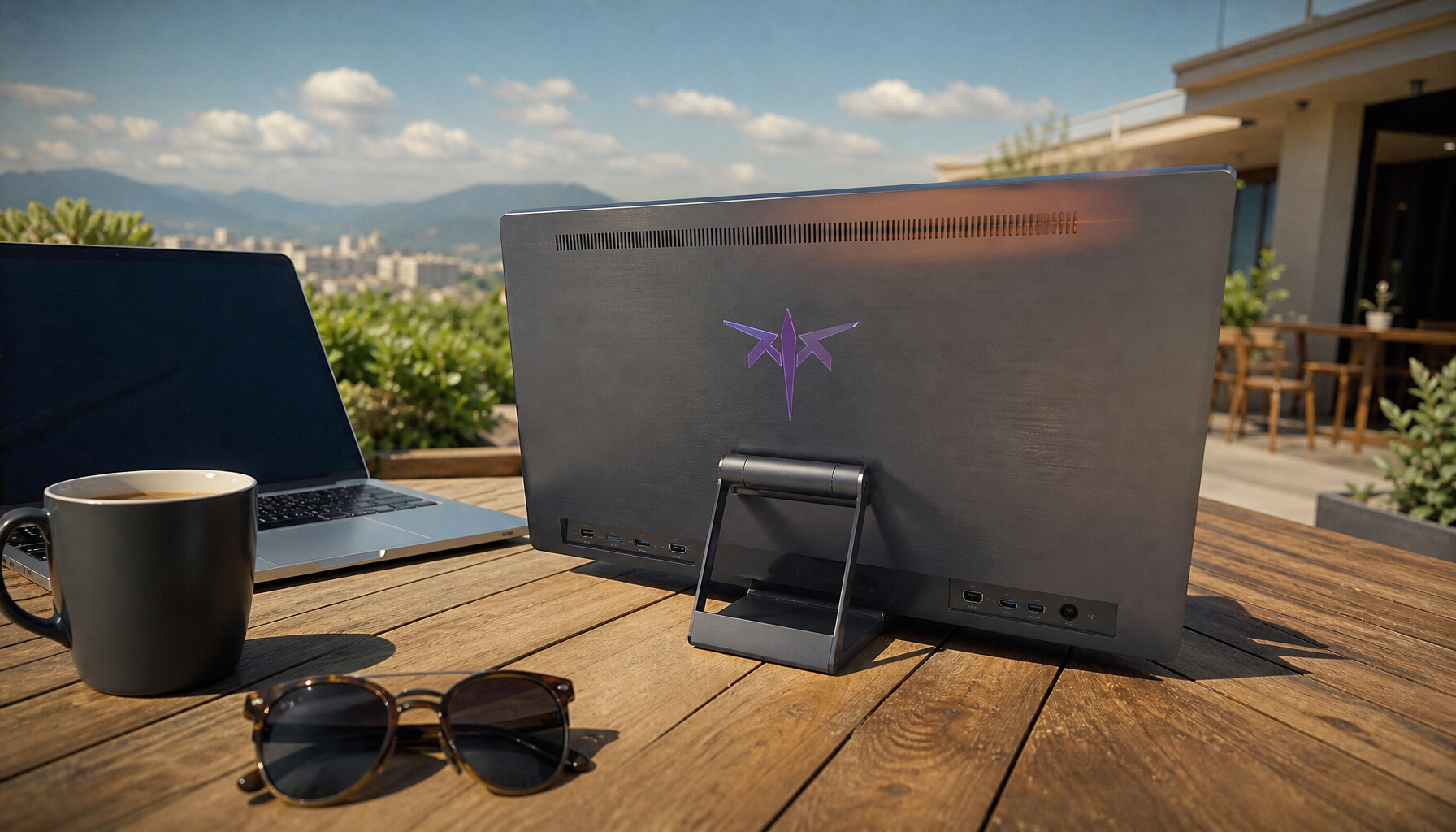
If you mostly watch in a dim bedroom or a shaded living room, the screen can often stay in a moderate setting. That is where the MegPad is most comfortable on battery. If you move outdoors, sit near a window, or want a brighter image for shared viewing, runtime usually shrinks faster than buyers expect.
Volume and Audio Load
Volume is easy to overlook because it feels like a separate issue from battery life. But when the published runtime examples pair higher brightness with higher volume, they signal a simple reality: louder sessions are part of the heavier-use scenario, not a free add-on.
App Mix and Wireless Activity
Streaming is one workload. Browsing, reading, and light productivity are different. If your routine includes casting from another device, keeping the camera on, or jumping between apps, expect more drain than a single, steady playback session would suggest.
Background Settings and Standby Behavior
Standby and wake behavior can also chip away at usable time. If you keep the display waking often, or you leave features on that make the screen more responsive, the battery budget gets spent faster even when the main content is not changing much.
MegPad Runtime by Brightness
The clearest way to read the battery story is by published runtime at specific settings. These numbers come from the manufacturer's 2K video streaming conditions, so they are most useful as a reference point, not a universal estimate for every app.
| Brightness Setting | Volume Setting | Workload | Published Runtime |
|---|---|---|---|
| 55% | 30% | 2K video streaming | 11 hours |
| 80% | 50% | 2K video streaming | 7 hours |
| 100% | 100% | 2K video streaming | 4 hours |
The pattern is the main takeaway. Moderate settings are much more forgiving than max settings, and the runtime gap is large enough to change how you plan a session. If you expect outdoor viewing or a noisy room, assume the shorter end of the band is the safer planning number.

Which Workload Matches Your Day
For most buyers, the real question is not "How long does MegPad last on battery?" in the abstract. It is "Which version of my day does the published runtime actually resemble?" That is where the decision gets clearer.
Bedside or Couch Streaming
If your main use is relaxed streaming at moderate brightness, the published 11-hour condition is the closest match. That is the easiest scenario for the MegPad battery because the screen does not have to fight bright ambient light or louder room audio. This is the best fit if you want a screen you can move around the house without thinking about charging after every session.
Travel and Outdoor Viewing
Travel use is where runtime expectations usually break down. Bright daylight, reflections, and louder surroundings all push the display toward higher brightness and volume. In that case, the 4-hour published condition is the more realistic planning anchor, especially if you will be away from an outlet for most of the day.
Light Productivity and Video Calls
Light work can be easier on battery than intense video playback, but mixed use is less predictable. A browser tab, a video call, and a few app switches may not drain exactly like the streaming test. If you want the screen to behave like a mobile second display for work, plan with a safety margin instead of assuming the longest published runtime.
Parent-Friendly Entertainment Sessions
For parents, the biggest regret usually comes from assuming "portable" means "all day." Shorter daytime cartoons, homework support, or after-dinner viewing fit the battery much better than a long stretch of max-brightness entertainment. If the screen will move between rooms, moderate settings are the better habit to build.
The 25-inch MegPad model is the featured model to compare against those conditions because its published runtime is tied directly to brightness and volume. It also gives you a useful anchor for checking whether your own routine looks more like the 11-hour, 7-hour, or 4-hour scenario.
How to Choose the Right MegPad Battery Setup
Before you buy, work through the decision in this order:
- Identify your main use. Streaming, travel, bedside use, and light productivity all place different demands on the battery.
- Match your usual brightness to the published bands. If you know you will stay near moderate brightness, the longer runtime is more believable.
- Decide whether volume will stay modest or need to be loud. Noisy rooms shorten the practical battery window.
- Ask how often you can recharge between sessions. If you can plug in daily, the runtime is easier to live with.
- If you need a larger mobile screen with different trade-offs, compare the Mobile Touch Screen collection rather than assuming every MegPad behaves the same.
For shoppers who want a bigger rolling screen, the 27-inch MegPad is a sensible next comparison point. It is built for room-to-room use and reports up to 6 hours of runtime, so it fits a different mobility pattern than the 25-inch model.
If you are choosing between models, the 32-inch MegPad is worth checking when screen size matters more than maximum portability. Its spec set points to a larger shared-viewing setup, not a lightweight carry-around screen.
A useful decision sentence is this: if your day is mostly bright, loud, or mixed-use, the shorter runtime band is the one to plan around; if your day is quiet, indoor, and moderate-brightness, the longer band is the more relevant expectation.
Battery Checks Before You Buy
Before you add a MegPad to cart, confirm the runtime number that matches your likely brightness, not just the biggest battery headline. The published figures are useful precisely because they show how quickly runtime changes when the screen gets brighter and louder.
Also check whether you need several hours of unplugged use or just occasional room-to-room mobility. If you can charge between sessions, the MegPad is much easier to justify. Review warranty, shipping, and returns too, because battery questions feel a lot smaller when the purchase is backed by a policy you understand.
- Match expected brightness to the 4-hour, 7-hour, or 11-hour band.
- Confirm daily recharge access versus all-day mobility needs.
- Compare room-to-room versus carry-out use cases.
Related Resources
FAQs
Q1. How Long Does the MegPad Last at High Brightness?
At the published maximum setting, the 25-inch MegPad is listed at 4 hours under 2K video streaming with brightness and volume both at 100%. That is the safest figure to use if you expect bright rooms, outdoor use, or louder audio.
Q2. What Runtime Should I Expect for Casual Indoor Streaming?
Casual indoor streaming lines up best with the 55% brightness and 30% volume condition, which is listed at 11 hours. If your room is dim and you keep audio moderate, that is the most realistic published anchor.
Q3. Why Does Battery Life Change So Much Between Use Cases?
Because runtime depends on more than capacity alone. Brightness, volume, and workload all change the drain rate, so a quiet indoor session and a loud high-brightness session are not comparable in daily use.
Q4. Can I Use a MegPad All Day Without Charging?
Only in the best-case setting range, and even then it depends on how you use it. The published figures run from 4 to 11 hours, so all-day use is only realistic if your brightness, volume, and workload stay on the gentler side.
Q5. Which MegPad Should I Pick If Battery Matters Most?
If you want the exact published battery story covered here, start with the 25-inch model. If you want more screen size or a different room-to-room setup, compare the 27-inch and 32-inch MegPad options next and check whether their runtime lines up with your routine.
What to Do Next
If battery life is your main concern, treat the published runtime bands as a fit test, not a headline. The MegPad makes sense when your real sessions are moderate and movable, not when you expect bright, loud, all-day unplugged use. Match your own brightness habits to the table, then decide whether the 25-inch model or a larger MegPad is the safer pick.