Judge white balance by separating the image’s neutral point from the screen’s own bias: use a calibrated display, stable room lighting, neutral gray references, and known color targets instead of trusting a white-looking monitor.
Is your photo, product render, or game capture clean on your desk monitor but yellow on a laptop and blue on a portable screen? A disciplined 15-minute baseline calibration can make whites, grays, and highlights easier to judge without chasing random screen presets. You’ll get a practical workflow for reading white balance through the image, not through your monitor’s color temperature.
Why Display Color Temperature Misleads Your Eyes
White balance is about whether neutral tones in the content are truly neutral. Display color temperature is about whether the screen itself leans warm, neutral, or cool. When those two get mixed together, you start correcting the wrong problem.
A monitor set to a cool preset can make a correctly balanced image look too blue, so you warm the edit and accidentally make the file orange. A warm preset can do the opposite. The common display calibration target is around 6500K, often described as D65, and RGB color balance should make grayscale bars appear neutral rather than tinted.
For gaming monitors, office displays, and portable smart screens, the trap is even bigger because Vivid, FPS, Movie, and Eye Care modes often change color temperature, saturation, contrast, and gamma at once. The image may look punchier, but it becomes a poor judging tool.
The Baseline: Build a Neutral Viewing Chain
The most reliable first move is not adjusting the photo or video. It is stabilizing the display.
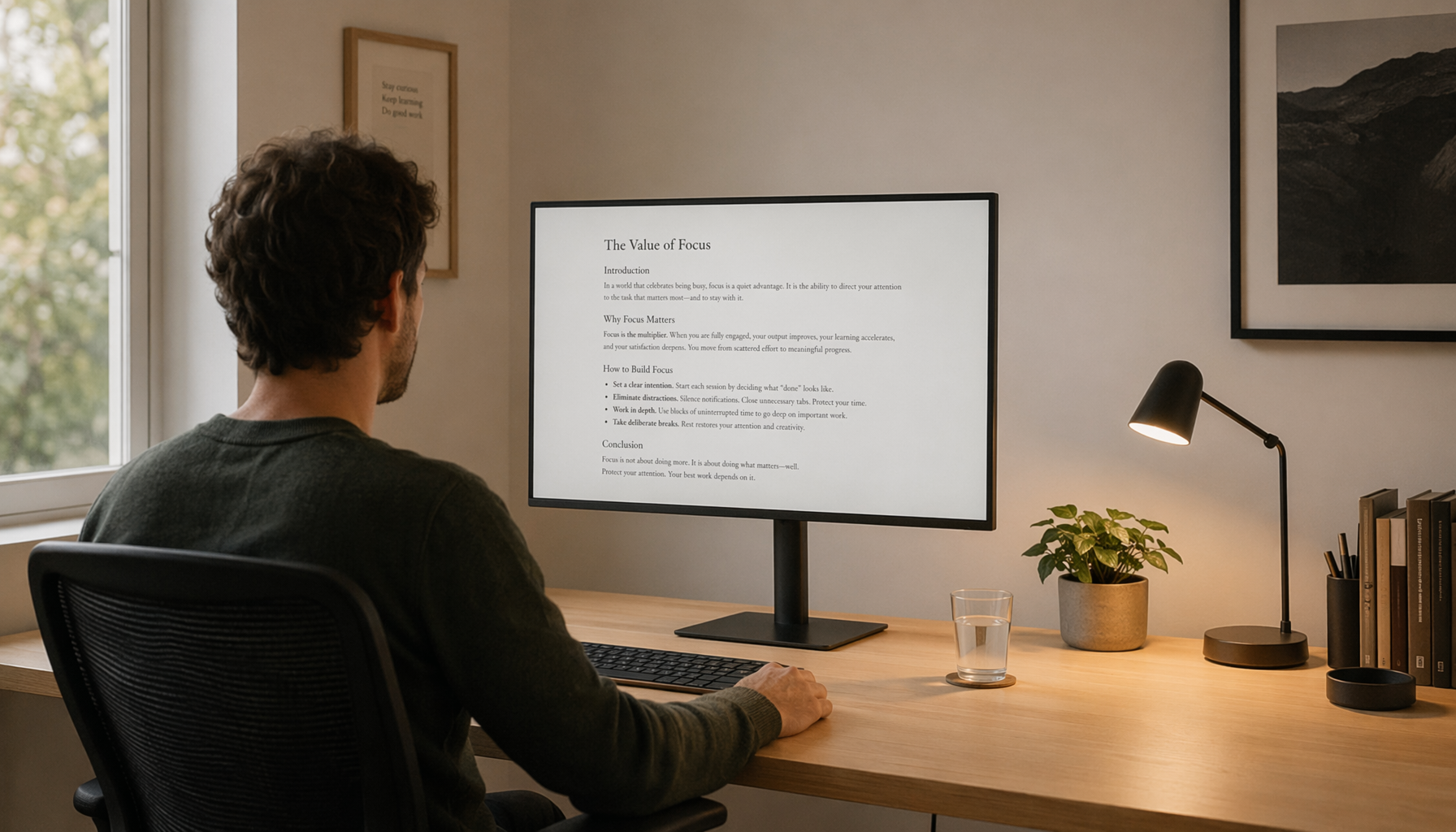
Let the screen warm up before judging color. Keep the monitor in its normal working position, remove direct sunlight and strong reflections, and avoid comparing white balance under shifting room light. A screen in a bright window at noon and the same screen under a warm desk lamp at night can push your eyes toward different corrections.
Hardware calibration is the strongest option because it measures actual screen output instead of asking your eyes to guess. A colorimeter or spectrophotometer reads known patches, compares them with target values, and creates a profile to reduce error; screen calibration is especially important because default monitor brightness and color can mislead editing decisions.

If you do not own a calibrator, start with the monitor’s physical controls before touching graphics driver sliders. Set the most accurate preset available, usually named Custom, User, sRGB, or Standard. Avoid Vivid and overly blue Cool modes. Then adjust brightness, contrast, gamma, and RGB balance with test patterns before making creative decisions.
What Settings Matter Most
White balance judgment depends on more than the white point. Brightness, gamma, contrast, and gamut can all change what your eye believes is neutral.
Setting |
Practical Target |
Why It Matters |
White point |
Around 6500K |
Keeps whites from looking artificially blue or yellow |
Gamma |
Around 2.2 |
Preserves believable midtones and shadow transitions |
Brightness |
Matched to room light |
Prevents over-dark or over-bright edits |
Contrast |
No highlight clipping |
Keeps white detail visible |
Gamut mode |
sRGB for web and most games |
Avoids oversaturated color on wide-gamut panels |
A useful real-world check is a grayscale ramp. If the dark-to-light strip shifts from reddish shadows to greenish midtones or bluish highlights, your display is interfering with judgment. A neutral ramp should look like changing brightness, not changing color.
Use Gray, Not White, as Your Anchor
Pure white is often a bad judge because it can clip, glare, or reflect the display’s maximum brightness behavior. Mid-gray is more revealing.
When reviewing a photo, product image, UI mockup, or video frame, look for objects that should be neutral: a gray wall, white paper in soft light, black fabric with visible texture, stainless steel, clouds, or a calibration card. If those neutral surfaces drift yellow, magenta, green, or blue across the tonal range, the file likely has a white balance issue.
For production work, a gray card or color checker is better than memory. White balance establishes the baseline for rendering other colors accurately, and color accuracy is about matching intended values, not making the image look vivid.
A simple example: if a product photo includes a neutral gray packaging insert, sample that gray in your editor. If red, green, and blue values are close, the file is probably balanced. If the display still looks warm while the values are neutral, your monitor or viewing environment is the suspect.

Do Not Trust Matching by Eye Across Multiple Monitors
Multi-monitor setups are where white balance confidence often falls apart. Two displays can both measure near 6500K and still look different because panel technology, backlight spectrum, viewing angle, coating, and uniformity affect perception.
A calibration forum case described three monitors that measured similarly with two calibration devices, yet one screen still looked visibly warmer in a white text-editor window. That kind of white balance difficulty shows why matching numbers alone does not always create a perceptual match across different panels.
For a gaming and productivity desk, the practical answer is to choose one reference display for color decisions. Use the best-calibrated, most uniform screen as the judging monitor, then treat the others as secondary UI, chat, browser, timeline, or dashboard space. If you need multi-display color consistency, buying the same model and panel type improves the odds, but it still does not guarantee a perfect match.
Wide-Gamut Screens Need Extra Discipline
Wide-gamut monitors are powerful, but they can exaggerate color if the app, browser, operating system, or content is not color-managed correctly. A wide-gamut panel showing ordinary sRGB content without proper handling can make skin, reds, greens, and brand colors look too saturated.
Before judging white balance in browser-based tools or online previews, test whether your screen and browser handle color profiles properly. The wide-gamut display checks help reveal whether sRGB, Display P3, ICC profiles, and HDR content are being interpreted as expected.
This matters for portable smart screens too. Many portable displays are convenient for travel editing, presentations, and console gaming, but their brightness stability, glare control, and color modes vary widely. A portable display can be excellent for review and field work, yet still be a weak primary reference unless it supports stable calibration and a usable sRGB mode.
Hardware Calibration: Pros and Cons
Hardware calibration is the cleanest way to reduce display color temperature interference. It gives you measurements instead of impressions, creates a monitor-specific profile, and makes repeat checks possible over time.
The tradeoff is cost and setup time. You also need to recalibrate periodically because displays drift with age, brightness use, and environment. Photography calibration workflows commonly recommend regular checks, and measured patches can help confirm whether a display remains trustworthy.
Visual calibration costs nothing and is still worth doing, especially for office work, gaming, and general content review. Its weakness is that your eyes adapt quickly. Sit in front of a warm screen for 10 minutes and it may begin to look neutral. That adaptation is useful for comfort but dangerous for judging white balance.
A Practical Workflow for Clean White Balance Judgment
Start by choosing the display mode closest to accuracy, not the one that looks most dramatic. Use sRGB for web images, UI work, product listings, and most game captures when available. Set brightness so a white document on screen feels similar to white paper on your desk, not like a flashlight.

Next, check grayscale. Use a calibration page, operating system tool, or trusted test image. Adjust contrast until bright detail remains visible, then adjust black level or gamma until near-black detail is present without making blacks look washed out. Only after tonal behavior is stable should you fine-tune RGB balance.
Then judge the content. In a photo editor, sample neutral objects and check whether RGB channels are close. In video, pause on a frame with neutral materials rather than colored lighting. In game capture, disable reshade filters, night modes, and dynamic contrast before evaluating whether the capture itself is too warm or cool.
Finally, verify on a second device only as a sanity check, not as the master truth. Phones, tablets, TVs, and office laptops often run adaptive brightness, color enhancement, night shift, HDR tone mapping, or device-specific presets. If your calibrated reference looks neutral and consumer screens vary, the reference should carry more weight.
Common Mistakes That Create False White Balance Problems
A too-bright monitor is one of the most common causes of bad edits. If the display is blasting light, you may darken the image and misread highlights as clean white. Calibration advice warns that many LCDs are set far too bright by default, especially for desk reading.
Another mistake is using blue-light reduction while editing. Low-blue-light modes are valuable for comfort during late office work, spreadsheets, coding, and reading, but they intentionally warm the display. Turn them off when judging white balance, then turn them back on when color accuracy no longer matters.
A third mistake is copying someone else’s ICC profile or RGB settings. Even two units of the same monitor can differ. Treat published settings as a starting point for comfort, not as proof of accuracy.
FAQ
Is 6500K always the correct white point?
For most web, gaming, office, and photo workflows, 6500K is the safest practical target. Some print workflows or controlled studio environments may use a different white point, but switching targets only helps when the whole viewing chain is managed.
Can I judge white balance on a gaming monitor?
Yes, if the monitor has a reasonably accurate mode, stable brightness, neutral grayscale, and controlled room lighting. High refresh rate does not automatically mean poor color, but budget gaming displays often prioritize speed over uniformity and factory calibration.
Should I use a portable monitor for color decisions?
Use it for review, client previews, travel work, and secondary checks. For final white balance decisions, rely on a calibrated main display unless the portable screen has proven calibration support, good uniformity, and stable power behavior.
Final Word
Accurate white balance judgment starts before the edit: neutralize the display, control the room, read grayscale behavior, and use measured references whenever possible. Once the screen stops adding its own temperature bias, your creative decisions become faster, cleaner, and far more portable across gaming rigs, office desks, and smart portable setups.