Eye strain is likely from monitor position if it comes with neck, shoulder, or posture discomfort. It is more likely from monitor settings if symptoms worsen with glare, brightness, tiny text, flicker, or long sessions in mismatched room lighting.
Start With the Symptom Pattern
Digital eye strain is not one single problem; it can include dry eyes, blurred vision, headaches, glare sensitivity, and neck or shoulder discomfort during screen use, according to a clinical review of digital eye strain.
If your eyes feel tired and your body also feels pulled forward, twisted, or compressed, suspect position first. A display that is too high can force head tilt and increase neck and back strain, which workplace safety guidance flags as a workstation risk with monitor placement.

If your posture feels neutral but your eyes burn, squint, water, or struggle to refocus, settings and lighting move higher on the suspect list.
Signs Your Monitor Position Is the Problem
Position problems usually show up as whole-workstation fatigue. You may lean toward the screen, lift your chin, drop your head, rotate toward a secondary display, or sit closer as the day goes on.

Use this quick setup check:
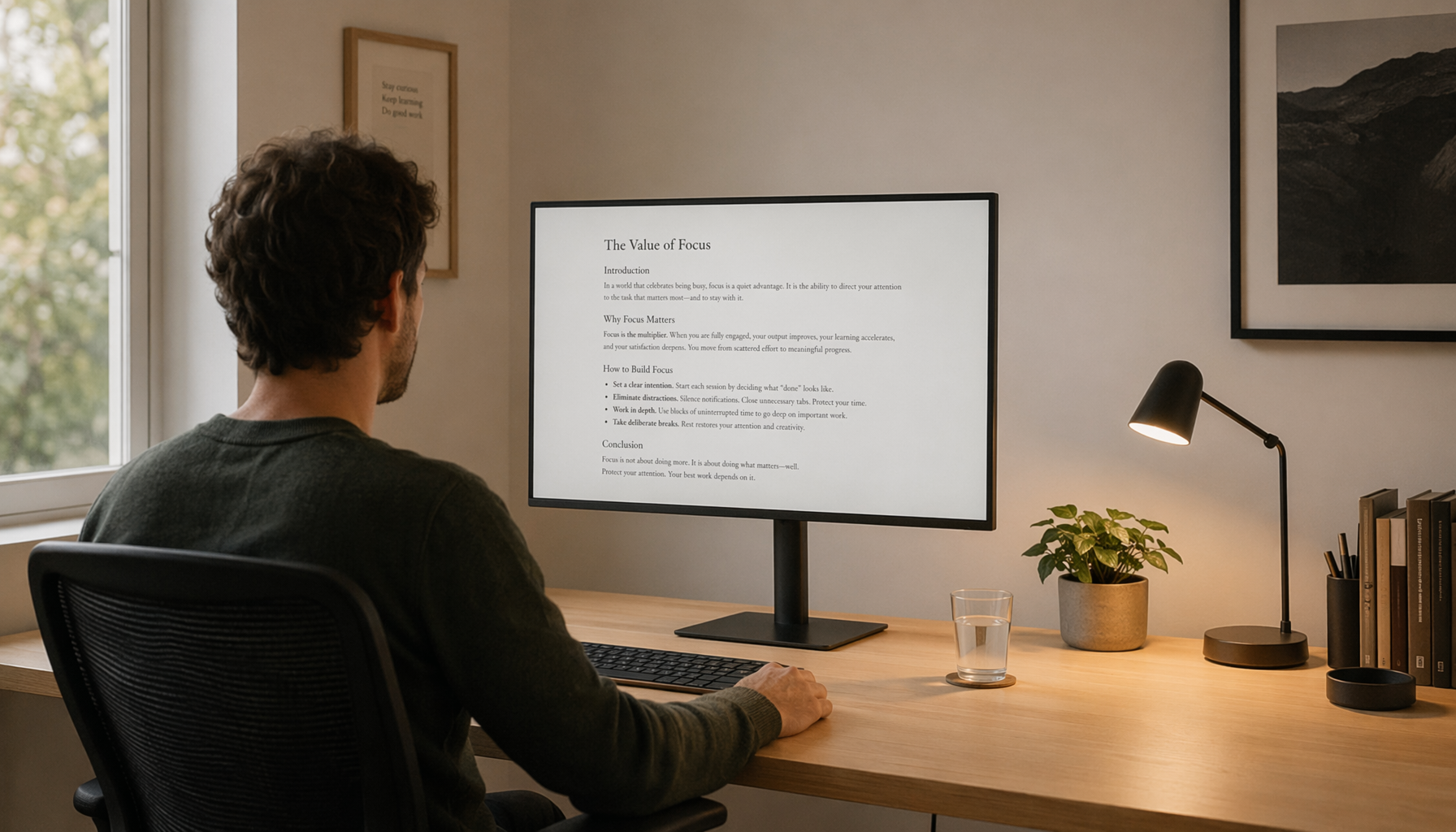
- Distance: Keep the screen about 20-28 inches from your face.
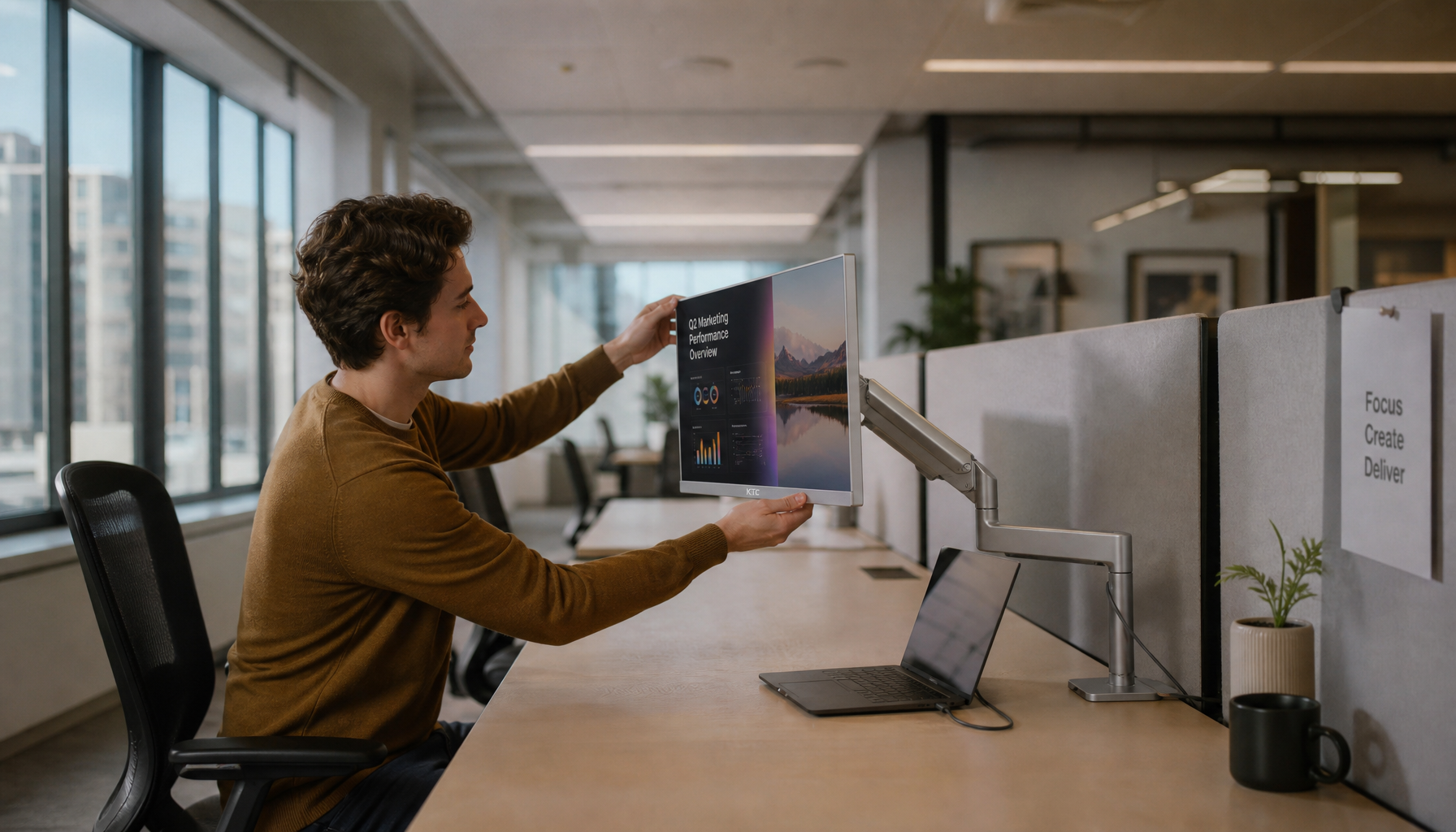
- Height: Place the top of the screen at or slightly below eye level.
- Gaze: Aim for a slight downward look, not a chin-up angle.
- Alignment: Keep your primary monitor directly in front of you.
- Laptop use: Raise the screen and use an external keyboard and mouse.
Posture guidance recommends placing monitors about an arm’s length away and near eye level, with lower placement for progressive lens users to avoid neck craning.
For gaming, ultrawide productivity, or portable smart screens, distance matters even more. If a 32-inch 4K display feels sharp but you still lean in, increase UI scaling before moving the panel closer.
Signs Your Monitor Settings Are the Problem
Settings problems feel more visual than structural. The giveaway is discomfort that changes quickly when you adjust brightness, contrast, text size, color temperature, or refresh behavior.
Brightness should feel similar to the room around it. Ergonomics guidance notes that glare and poor lighting can contribute to eye strain, so the best screen is not always the brightest screen; it is the one balanced with workspace lighting.
Check these in order:
- Brightness: Match the room, and lower it in dim spaces.
- Contrast: Make text crisp without a harsh white blast.
- Text size: Enlarge text before leaning forward.
- Color temperature: Use warmer tones at night.
- Glare: Tilt or reposition the screen until reflections disappear.
Blue-light modes can help evening comfort, but they are not a cure-all. If glare, small fonts, or poor distance remain, a warmer screen will not fix the root cause.
Run a 10-Minute A/B Test
Change only one variable at a time. First, leave settings alone and fix position: move the screen 20-28 inches away, center it, lower the top edge to eye level or just below, and sit fully back.
Work for 10 minutes. If your neck relaxes, your shoulders drop, and your eyes feel less forced, position was a major factor.
Next, keep that position and tune settings. Adjust brightness to the room, increase text scaling by 10-25%, remove glare, and use the 20-20-20 rule: every 20 minutes, look 20 ft away for 20 seconds, a break pattern also recommended for computer users.

If symptoms persist after both tests, consider an eye exam, especially if headaches, blurry vision, dry eye, or focusing trouble continues. A high-performance screen should make work and play feel immersive, not physically expensive.