Display lag can make live annotation feel disconnected, and the best fix is usually a low-lag monitor with higher refresh rather than a bigger screen alone.
If you’ve ever written on a lesson slide and watched the ink arrive a fraction late, you know how quickly a smooth explanation turns into a choppy one. On many standard monitors, total input lag lands around 10 to 30 ms, and a 60 Hz screen adds 8.33 ms at the center before pixel response is even counted. The payoff for choosing the right display is simple: cleaner handwriting, tighter cursor control, and lessons students can follow without fighting the screen.
Why Live Annotation Feels Worse on a Laggy Display
Hand-eye timing breaks first
Input lag is the delay between your pen, mouse, or touch action and the moment the stroke appears on screen. During a live lesson, that gap disrupts the tiny corrections you make while underlining, circling, or writing symbols, so even neat handwriting starts to look hesitant. In practice, the problem shows up first when you try to close a parenthesis, draw a tight circle around a typo, or write small math notation at normal speaking speed.

Students feel the delay too
Saved digital markup works best when the class can watch the edit happen in one continuous motion and then review it later. A common teaching pattern is to rewrite a sentence in color, mark a draft directly on screen, and save those notes for follow-up; when the display lags, students split their attention between your hand and the late-arriving ink, which makes the explanation harder to track.
When Lag Starts to Matter
The noticeable range is lower than many teachers expect
Delays around 20 to 30 ms can become noticeable in reaction-based work, and live annotation falls into that category more often than people expect. For teachers, the issue is not just raw speed. It is rhythm. Quick check marks, cursor-guided highlights, and short handwritten notes stop landing exactly where your hand expects them to land.
Why the same number can feel different on two displays
A zero-lag display does not exist, and real latency behaves more like a range than a single fixed number. Because flat panels refresh from top to bottom, the center of a 60 Hz screen already carries about 8.33 ms of timing delay, while 120 Hz cuts that to 4.17 ms and 240 Hz drops it to 2.09 ms before you even add pixel response time or the rest of the system pipeline. That is one reason a large classroom display can feel slightly different at the top and bottom during fast writing.
Which Monitor Specs Matter Most for Smooth On-Screen Ink
Input lag and response time solve different problems
Input lag and response time are not interchangeable specs. Input lag decides when the line appears, while response time decides how clean that moving line looks. For live teaching, both matter: low lag keeps the stroke attached to your hand, and faster pixel transitions reduce the faint trails that can show up when you underline quickly or move a cursor across dense text.
Refresh rate helps, but only with the right settings
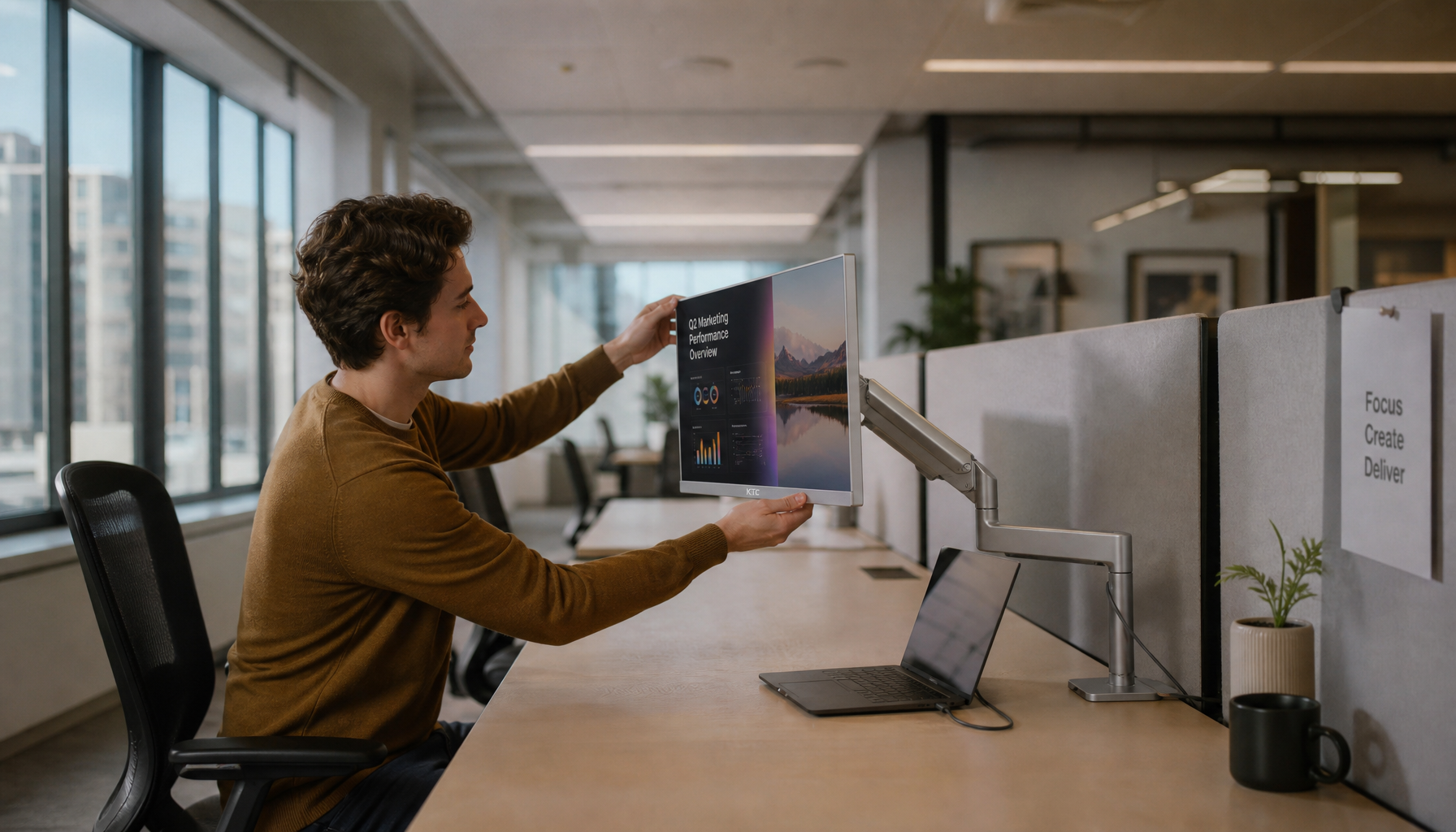
A 240 Hz panel refreshes every 4.17 ms, while 144 Hz refreshes every 6.94 ms, so high-refresh-rate monitors can make digital ink feel more attached to your hand. The catch is that aggressive overdrive can create inverse ghosting, frame-sync features can add delay, and a heavily buffered PC pipeline can erase the benefit. For buying guidance, it is smarter to look for strong average gray-to-gray performance with low overshoot than to trust a best-case “1 ms” marketing claim. For teachers who want smoother on-screen ink without moving to a larger or more specialized display, a 27-inch 2K 100Hz/120Hz home and office monitor such as the a brand’s 27-inch 2K 100Hz/120Hz home and office monitor can be a reasonable middle ground.
Standard, Ultrawide, and Portable Monitors Serve Different Teaching Styles
Standard and gaming-style monitors
Independent lag databases show that some low-processing displays can sit around 9 to 14 ms at 60 Hz, which is already responsive enough for many lesson demos. A 120 Hz or 144 Hz gaming monitor still has the stronger edge for daily annotation because it lowers the timing floor and usually gives you cleaner motion than a basic office display.
Ultrawide monitors
Extra screen space reduces overlapping windows and cramped text, which is why ultrawide monitors are useful for teachers juggling slides, chat, a document camera, and annotation tools. Their main advantage is layout, not inherently lower lag, so the safest workflow is to annotate in a centered lesson window instead of sharing the entire wide desktop, where text and pen strokes can look small to students on standard 16:9 screens.
Portable and touch displays
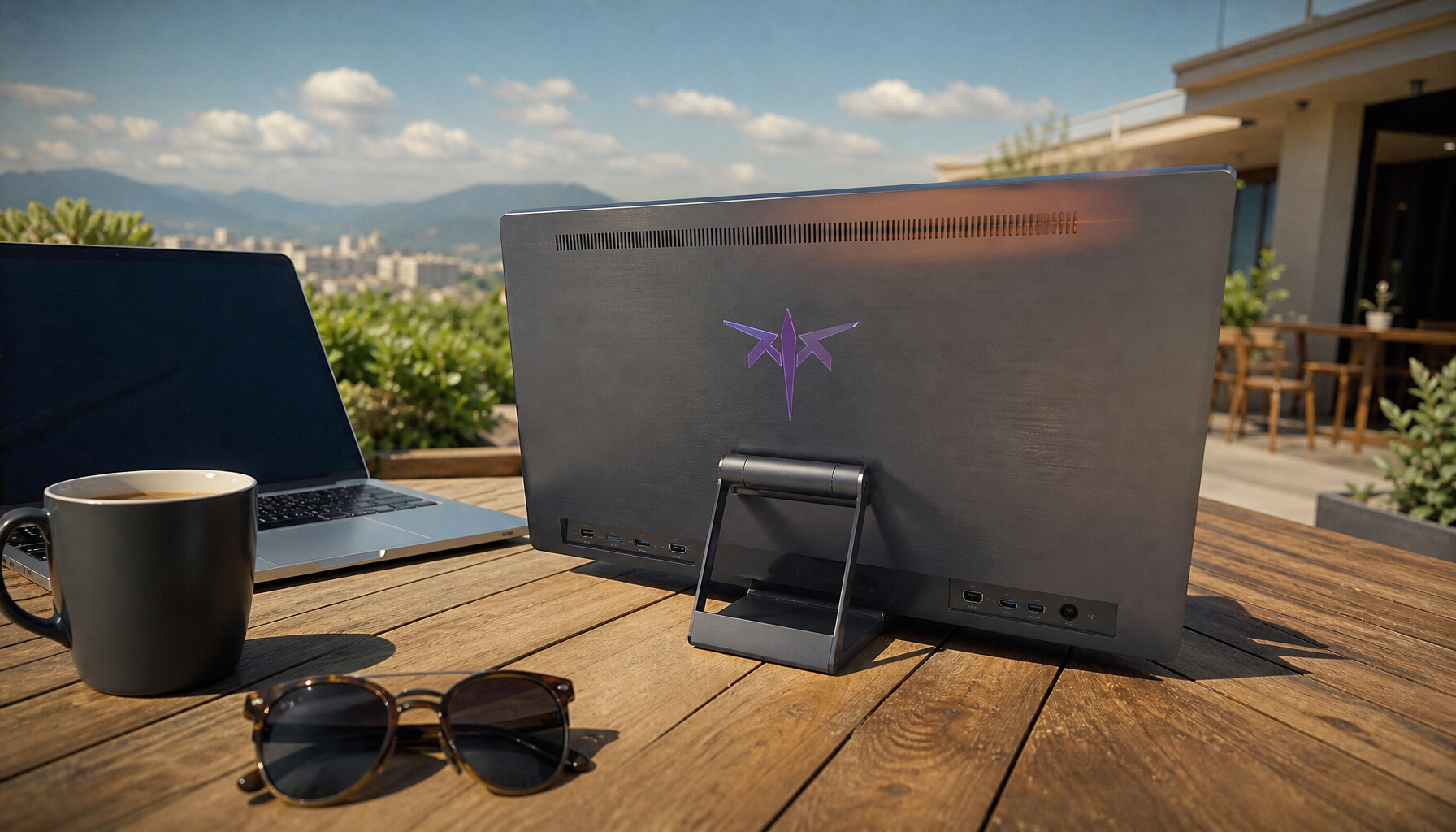
Touch-enabled annotation displays are practical when you want a dedicated writing surface next to a laptop or you teach from different rooms. Portable monitors are especially useful for tutoring and hybrid sessions because a single-cable connection simplifies setup, but they deserve the same scrutiny as any desktop monitor: stable power, a firm stand, comfortable palm placement, and some form of trustworthy lag testing.

A Buying Framework for Live Teaching Displays
What to prioritize first
Independent input-lag testing matters more than a box spec because manufacturer response-time claims do not measure the full delay from signal to visible change. For most teachers, the safest target is under 15 ms at native resolution and maximum refresh rate, with 120 Hz or higher worth the premium if you write on screen for long stretches.
Display format |
Lag target for live annotation |
Refresh rate to look for |
Strongest fit |
Main caution |
24 to 27-inch standard monitor |
Under 15 ms |
60 to 75 Hz |
Occasional markup, fixed desk setup |
Ink feels less attached at 60 Hz |
27-inch high-refresh monitor |
Under 15 ms, ideally near 10 ms |
120 to 144 Hz |
Daily live handwriting, slide edits, math work |
Verify real testing, not just “1 ms” marketing |
27 to 32-inch very high-refresh monitor |
Under 10 to 15 ms |
240 Hz |
Fast diagramming and motion-heavy demos |
Benefits shrink if PC or app latency is high |
34-inch ultrawide monitor |
Under 15 ms |
100 to 144 Hz |
Remote teaching with many open windows |
Full-screen sharing can reduce student readability |
15.6-inch portable touch monitor |
Under 15 ms if independently tested |
60 to 120 Hz |
Travel, tutoring, hybrid teaching |
Fewer published lag results; stand stability matters |
Settings matter almost as much as hardware
Performance modes and higher refresh rates can reduce lag, while extra image processing can push it upward. Set the monitor to native resolution, run the highest stable refresh rate, keep overdrive at the highest setting that does not create visible haloing, and favor wired peripherals over wireless ones when you need your pen or mouse to feel immediate.
Large classroom displays add another layer of complexity
Wall-mounted classroom displays can improve visibility and let teachers save annotations for later review, but they also add setup overhead, with installations commonly taking 2 to 3 hours and equipment costs often falling between $600 and $2,000. If your teaching is mostly desk-based or remote, a lower-lag desktop monitor or portable touch screen is usually the simpler path to responsive live ink.
FAQ
Q: Is 30 ms of lag acceptable for live teaching?
A: Around 30 ms is often fine for static slides, but it becomes much easier to notice once you start writing, drawing, or tracking a cursor in real time. If annotation is central to the lesson, aim lower.
Q: Does a 144 Hz gaming monitor help more than a bigger 60 Hz monitor?
A: A 144 Hz refresh cycle is much shorter than 60 Hz, so ink appears sooner and looks smoother during fast strokes. Size helps visibility, but refresh rate usually changes pen feel more.
Q: Are portable monitors good enough for online tutoring?
A: Portable second screens can make remote teaching less cramped and reduce window overlap, especially when a laptop screen alone forces too much switching. They are a good fit if you prioritize mobility, but only if the panel, stand, and connection stay stable during writing.
Final Takeaway
Display lag affects live annotation most when it interrupts hand-eye timing, not when it shows up as a dramatic pause. If you teach with live handwriting or on-screen markup, buy for tested low input lag first, then add 120 Hz or higher refresh for smoother ink, and choose the format that fits your workflow: a high-refresh desktop monitor for the cleanest feel, an ultrawide for workspace, or a portable touch monitor for mobility.
References
- A publication: A wall-mounted computer monitor for your classroom
- A company: Understanding Input Lag and Response Times
- A company: Monitor Response Times and Input Lag: A Comprehensive Guide
- A company: Monitor Response Times and Input Lag: A Comprehensive Guide
- A website: Input Lag Database
- A website
- KTC Play: What Makes a Gaming Monitor Feel Fast?
- A university center: Engage Students Using the Annotation Monitor
- A university knowledge base: How to Use Classroom Annotation Tablets
- A university: Digital Annotation Monitor Support Guide