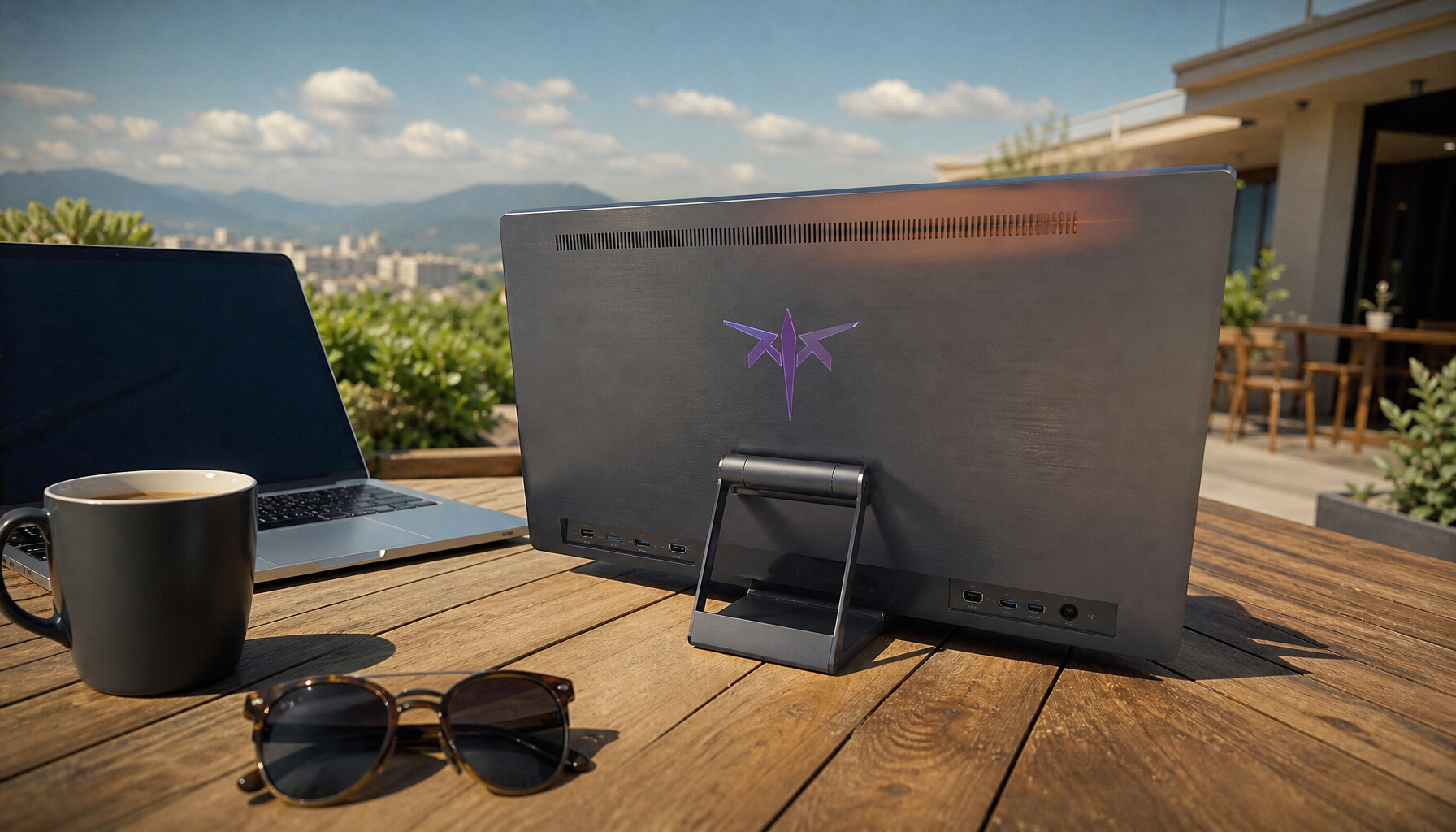
Curved ultrawide monitors usually do not create more dust than flat screens, but they make dust easier to notice and give it more exposed surface to land on. In most setups, visibility, placement, and cleaning habits matter more than the curve itself.
Ever wipe a 34-inch gaming monitor in the morning, load a dark game at night, and feel like the dust already came back? A monitor owner who moved from a laptop to a full-time desk display described that exact pattern: the separate monitor looked dusty sooner, especially with the room light on and dark content on screen. The good news is that you can usually fix the real cause without over-cleaning or risking the panel.
Why Curved Ultrawides Seem to Get Dusty Faster
Bigger screen, longer exposure
A desktop monitor that stays on the desk simply spends more time exposed than a laptop that closes or a portable monitor that goes back into a sleeve. That matters even more with 34-inch, 38-inch, and 49-inch ultrawide monitors, because you have a larger face collecting whatever is floating through the room all day.
The curve itself is probably not the main reason. Based on these sources, the stronger explanation is simple exposure: more visible screen area, a wider top edge sitting open for hours, and the fact that ultrawide gaming monitors usually stay in one place instead of being put away after use.
Dust is often more visible than it is heavy
One common dust-on-screen complaint is that the particles show up most with the light on and against a dark background. That matches real-world ultrawide use, because gaming monitors spend plenty of time showing dark scenes, loading screens, letterboxed video, or night maps where fine dust stands out immediately.

A Q&A platform explanation also points out that some displays may look dustier because the surface is reflective enough to reveal every speck. That is why a glossy or semi-gloss panel can feel dirtier than a matte gaming monitor even when the actual dust load is similar.
What Actually Increases Dust Buildup in a Gaming Setup
Room traffic and airflow matter more than refresh rate
A gaming-room dust discussion makes a useful point: computers do not magically attract more dust than everything else, but a busy room kicks dust up constantly. In a monitor setup, that means foot traffic, fabric chairs, rugs, bedding, open windows, ceiling fans, and HVAC airflow usually matter more than whether your display runs at 60 Hz or 240 Hz.
That matters for high-refresh-rate ultrawide monitors because they are often placed beside a gaming tower, a desk fan, speakers, or a warm exhaust path. The panel is not generating dust, but the setup can push more airborne particles across the screen than a quieter office display or a portable monitor used only when needed.
Screen finish and idle-time habits change the result
In the same screen-dust thread, one reply noted that glossy screens show everything while matte screens hide dust better. That tracks with monitor buying advice in general: a glossy portable monitor may look cleaner when freshly wiped, but it often reveals fingerprints, haze, and fine dust faster than a matte gaming display.
If your ultrawide sits unused overnight or during the workday, covering it can reduce how much settles directly on the panel. Products such as this anti-static dust cover show that the simplest prevention tool is sometimes just blocking open-air exposure when the monitor is off.

When the “Dust” Is Actually a Panel Problem
Surface dust does not spread under the panel
A reported “cloudy dust-like” issue inside a monitor looked subtle on white, clearer on black, and appeared to spread over time. The accepted diagnosis was panel-layer delamination, not ordinary surface dust. That distinction matters because curved ultrawide owners can waste a lot of time cleaning a panel that is not dirty in the first place.
If the mark seems trapped under the surface, grows slowly, or refuses to change after a careful wipe, stop treating it like everyday dust. On a gaming monitor, that is a sign to inspect the panel under a black screen, check warranty status, and rule out internal damage before doing anything aggressive.

Do not clean harder when the symptom is internal
The same repair answer says true delamination usually means full panel replacement, and replacing the whole monitor is often cheaper than replacing the panel alone. That is especially relevant for mainstream a brand or a brand-based displays where panel costs can make repair poor value.
A practical rule is this: if the “dust” moves, it is probably on the surface; if it spreads, stays under the top layer, or appears like a cloudy patch, assume defect first. That can save you from pressing too hard on an already failing ultrawide panel.
How to Clean a Curved Ultrawide Monitor Safely
Start dry and use almost no pressure
A technician cleaning walkthrough recommends powering the monitor down, unplugging it, letting it cool, and starting with a clean, dry microfiber cloth. That is the safest first pass for most gaming monitors, OLED monitors, and ultrawide LCDs because loose dust is usually the problem, not oily residue.
Curved panels deserve extra restraint. Pressing harder on the center to “reach” the edges is a common mistake, especially on large 34-inch or 49-inch screens. Instead, support the motion with your hand, wipe lightly, and let the cloth do the work.

Only add a little moisture when dust is not the only problem
The same cleaning guidance suggests using a slightly damp microfiber cloth with distilled water for stubborn spots, never spraying liquid directly onto the screen, and avoiding ammonia-based cleaners. That is a good low-risk routine for monitor coatings, especially on premium gaming displays where anti-glare and anti-reflective layers are easy to damage.
For routine dust, dry wiping is enough. Save damp cleaning for fingerprints, sneeze mist, or food specks, and keep the cloth barely moist rather than wet. If you clean correctly once or twice a week and the screen still looks dusty after one day, the room setup is usually the real problem.
FAQ
Q: Do curved ultrawide monitors really attract more dust than flat monitors?
A: Usually not by a large margin. The better explanation is that ultrawides have more exposed area, stay out on the desk longer, and make dust easier to see during dark gaming or office scenes.
Q: Does a 165 Hz or 240 Hz gaming monitor collect more dust than a 60 Hz office monitor?
A: There is no strong evidence in these sources that refresh rate alone changes dust buildup. Placement, airflow, room traffic, and screen finish matter more.
Q: Can I use compressed air on a monitor screen?
A: Light use at a safe distance can help remove loose dust around edges, but it should not replace a microfiber cloth on the panel itself. Do not blast the screen up close or spray liquids directly onto it.
Final Takeaway
If you want a curved ultrawide to stay cleaner, treat it like a large exposed surface rather than a mysterious dust magnet. The most effective fixes are simple and testable:
- Keep the monitor away from direct vent, fan, or tower exhaust airflow.
- Wipe with a clean, dry microfiber cloth before dust turns into smears.
- Use a slightly damp cloth with distilled water only for stubborn spots.
- Avoid ammonia-based cleaners and never spray liquid on the panel.
- Check dark-screen visibility under room light to tell normal dust from panel defects.
- Cover the monitor when it sits unused for long periods.
- If marks spread under the surface, stop cleaning and check for panel failure or warranty service.