Console performance mode usually does not directly make a monitor overheat. It can, however, push the display into higher-refresh, HDR, VRR, or brighter operating modes that create more heat and may make a monitor fan more noticeable.
Your monitor feels warmer after switching a game to performance mode, or a faint fan sound starts showing up during late-night console sessions. In practice, the useful fix is often specific: confirm whether the display is running at 120Hz, HDR, high brightness, or a demanding overdrive setting before assuming the monitor is faulty. This guide explains what is normal, what is not, and how to troubleshoot heat or fan noise on gaming monitors, ultrawide displays, and high-refresh console setups.
What Console Performance Mode Actually Changes
Console performance mode is mainly a game-side setting. It usually prioritizes frame rate and responsiveness over image quality, often targeting 60 fps or 120 fps instead of a higher-resolution 30 fps mode. A 120Hz display mode does not guarantee 120 unique frames every second, and frame pacing still matters for smoothness because drops to 100, 83, or 60 fps can change motion feel noticeably 120Hz display mode.
For the monitor, the important change is the signal it receives. A console game may switch the monitor from 60Hz SDR to 120Hz HDR with VRR enabled. That combination can increase the workload for the panel electronics, scaler, backlight system, and image processing, even though the console is still doing most of the rendering work.

Why the Monitor May Feel Warmer
A typical 24-inch LED or IPS monitor often draws around 15W to 30W, while more demanding gaming monitors can reach 40W to 80W or more depending on brightness, refresh rate, HDR capability, panel type, and feature set gaming monitors. That power becomes heat, so a warmer rear shell or top vent area is not automatically a warning sign.
The key distinction is normal warmth versus heat buildup. Normal warmth is steady, localized near vents or the power section, and does not come with flicker, signal drops, dimming, burning smells, or sudden shutdowns. Heat buildup is more likely when the monitor is in a tight desk hutch, pressed near a wall, placed above a warm console, or running high brightness and HDR for hours.
Can 120Hz Cause Overheating?
A supported 120Hz mode should not overheat a healthy monitor by itself. Monitors are designed and validated for their listed refresh rates, such as 60Hz, 120Hz, 144Hz, 165Hz, 180Hz, or 240Hz. Problems are more likely when users force unsupported refresh rates, use unstable custom timings, or run settings beyond the display’s rated specification supported refresh rate.
For console gaming, 120Hz is usually safer than computer-style refresh overclocking because the console and monitor negotiate standard video modes over a video connection. If the display advertises 120Hz support and the console enables it normally, the monitor should handle that mode without damage.
The Real Heat Drivers
The bigger heat contributors are usually brightness, HDR, local dimming, panel size, and processing features. A 32-inch 4K HDR monitor running at high brightness can feel much warmer than a 24-inch 1080p monitor at medium brightness, even if both are set to 120Hz.

VRR can also change how a display behaves because the panel timing adapts to the console’s frame output. VRR is useful because it reduces tearing and stutter when frame rates fluctuate within the monitor’s working range, but it can keep the display in a more active gaming mode instead of a simpler fixed 60Hz desktop-like mode.
Why Fan Noise May Appear During Console Gaming
Most basic monitors are passively cooled and do not have a fan. Fan noise is more likely on high-end HDR monitors, some OLED or mini-LED gaming displays, large ultrawides, and models with aggressive thermal management. If the fan gets louder only when HDR is active, the likely cause is higher internal heat from brighter highlights, local dimming zones, or sustained high luminance.
HDR is not automatically better or heavier in every scene, but it can change brightness behavior significantly. HDR gaming monitors are designed to show more detail between bright highlights and dark shadows, and real-world HDR presentation can vary by game, monitor, and calibration HDR gaming monitors. If your monitor fan ramps up during bright HDR scenes, that is more plausible than performance mode alone being the cause.
Make Sure the Noise Is Actually the Monitor
Console fans, external speakers, USB hubs, power bricks, and even coil whine from the console can be mistaken for monitor noise. A simple test is to mute speakers, pause the game in a bright scene, and place your ear near the monitor’s top or rear vents without blocking airflow. Then switch the monitor from HDR to SDR or reduce brightness and listen again after a few minutes.

If the sound changes only when the console is under load, the console may be the source. If the sound changes when the monitor brightness, HDR, or local dimming setting changes, the display is more likely involved.
How High Refresh Rate and Power Use Are Connected
Refresh rate alone is not always the largest power draw, but it can trigger related changes. In one test from a publication using a gaming monitor, the monitor increased by only about 1W when moving to higher refresh settings, while the full system jumped from about 76W to nearly 134W at 144Hz because the graphics processor left its low idle clock state system idle power.
That example is from a computer, not a console, but it explains the diagnostic lesson: the display mode can indirectly cause other hardware to work harder. On a console, the heat may come from the console chasing higher frame rates, the monitor running HDR or 120Hz, or both.
Practical Console Example
Suppose your monitor feels cool during a 4K quality mode at 60Hz SDR but noticeably warm during a 120Hz performance mode with HDR and VRR. The most likely explanation is not that 120Hz is unsafe. It is that the full display stack changed: higher refresh timing, HDR brightness behavior, active gaming processing, and possibly local dimming all started working together.
A good troubleshooting test is to change one variable at a time. Run the same game at 120Hz SDR, then 60Hz HDR, then 120Hz HDR. If the monitor fan only ramps up in HDR, brightness and backlight behavior are the main suspects. If it happens only at 120Hz, check overdrive, VRR, video connection bandwidth, and monitor firmware settings.
When Heat Is Normal and When It Is a Problem
A warm monitor is normal during long gaming sessions, especially for high-refresh, ultrawide, 4K, OLED, or HDR models. The rear casing, top edge, and vent area may feel warm to the touch because that is where heat exits. Warm is not the same as overheating.
Warning signs include flickering, repeated black screens, sudden signal loss, unstable color, frame skipping, excessive fan noise at low brightness, or the monitor shutting down. Unsupported refresh rates can cause issues such as black screens, flicker, skipped frames, unstable color depth, heat, or repeated signal loss unsupported refresh rates.
Setup Problems That Make Heat Worse
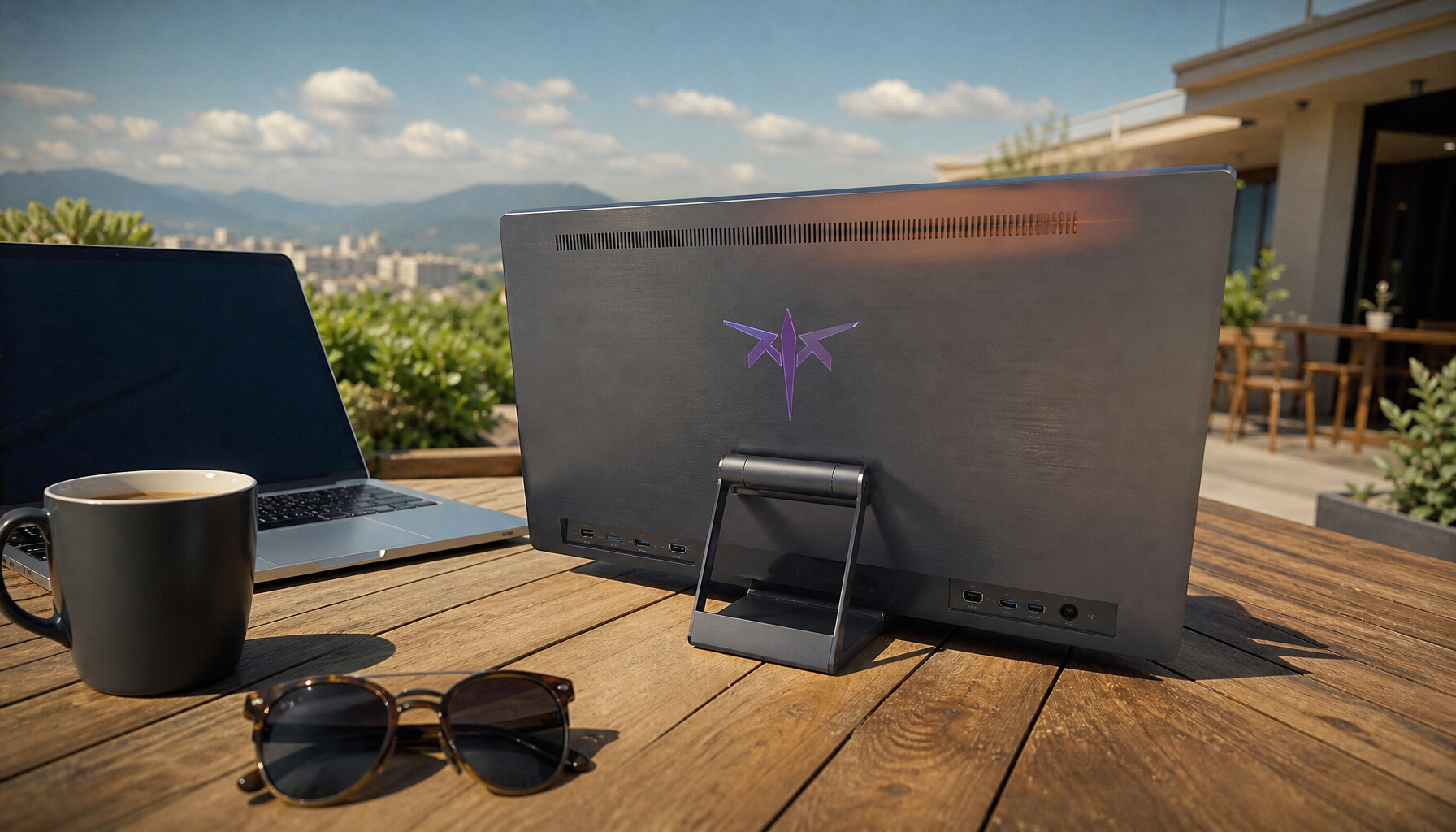
Poor airflow is a common cause. Leave open space behind the monitor, avoid covering vents, and keep the console’s exhaust away from the display. If the monitor uses an external power brick, do not place the brick directly behind the panel or under papers, fabric, or a closed shelf.
Brightness is another easy win. Many gaming monitors ship with very bright default modes. Dropping brightness from a showroom-like setting to a comfortable desk setting often lowers heat without hurting gameplay. For a typical desk at night, many users can reduce brightness substantially and still keep clear visibility.
Troubleshooting Checklist
Use this checklist before replacing the monitor or assuming performance mode is dangerous:

- Confirm the signal mode in the monitor’s on-screen display: 60Hz, 120Hz, HDR, VRR, and resolution.
- Test the same game in quality mode and performance mode for at least 10 minutes each.
- Turn HDR off temporarily and check whether fan noise or heat drops.
- Reduce brightness and local dimming intensity, then retest the same scene.
- Disable aggressive overdrive or motion blur reduction if the monitor offers those settings.
- Check airflow behind the monitor and move the console’s exhaust away from the display.
- Use a certified video cable and the correct video port for 120Hz, VRR, and HDR.
If you own a wall power meter, measure the monitor at 60Hz SDR, 120Hz SDR, and 120Hz HDR. A small increase is usually normal. A large jump, unstable signal, or fan ramp at modest brightness may point to a configuration issue or a monitor that needs service.
FAQ
Q: Can console performance mode damage my gaming monitor?
A: Not if the monitor is running a supported mode through normal console settings. Damage risk is more associated with forcing unsupported refresh rates or unstable custom timings, which is much more common on computers than on consoles.
Q: Is fan noise normal on an HDR gaming monitor?
A: It can be normal on some high-end HDR, mini-LED, OLED, or large-format gaming monitors. The noise should be steady and tied to demanding modes such as HDR or high brightness. Grinding, rattling, or sudden loud fan spikes at low brightness are not normal.
Q: Should I turn off 120Hz to reduce monitor heat?
A: Try brightness and HDR settings first. If the monitor still gets uncomfortably hot or noisy, test 60Hz and 120Hz in the same game. Keep 120Hz for competitive games where responsiveness matters, and use 60Hz or quality mode for slower games if it noticeably reduces heat and noise.
Practical Next Steps
Performance mode is rarely the direct cause of monitor overheating. It is better understood as a trigger that may enable 120Hz, HDR, VRR, higher brightness, or more active display processing. Start by checking the monitor’s actual signal mode, then test HDR, brightness, and airflow one at a time.
For buying decisions, choose a gaming monitor with native console-friendly features: the right video connection where needed, clear 120Hz support, VRR compatibility, good thermal design, and honest HDR performance. A monitor that handles its rated modes quietly and predictably will make performance mode feel like an upgrade instead of a troubleshooting project.