Your eyes and brain keep recalibrating to different brightness levels, white points, contrast levels, gamuts, and room lighting, so colors can feel “wrong” even when both displays are working normally.
Do your office whites look clean at 9:00 AM, then your home monitor looks yellow, icy, or oversaturated by dinner? A practical calibration pass can make two everyday displays feel more consistent in under an hour, even without studio-grade gear. Here is how to identify the real causes and tune both screens for steadier comfort, sharper productivity, and more believable color.
Why Switching Displays Makes Color Feel Tiring
Color perception fatigue is the feeling that your eyes are working too hard to interpret color after repeated changes in display environment. It is not only “eye strain,” and it is not only “bad color.” It is the combined load of visual adaptation, brightness mismatch, text contrast, gamut differences, and room lighting.
The retina adapts quickly, but not perfectly. Staring at intense or fixed colors can temporarily fatigue cone cells, and normal color perception usually returns after about a minute. That short recovery window matters when you move from a bright office spreadsheet to a wide-gamut gaming monitor at home, then immediately judge skin tones, edit slides, or read dense text.
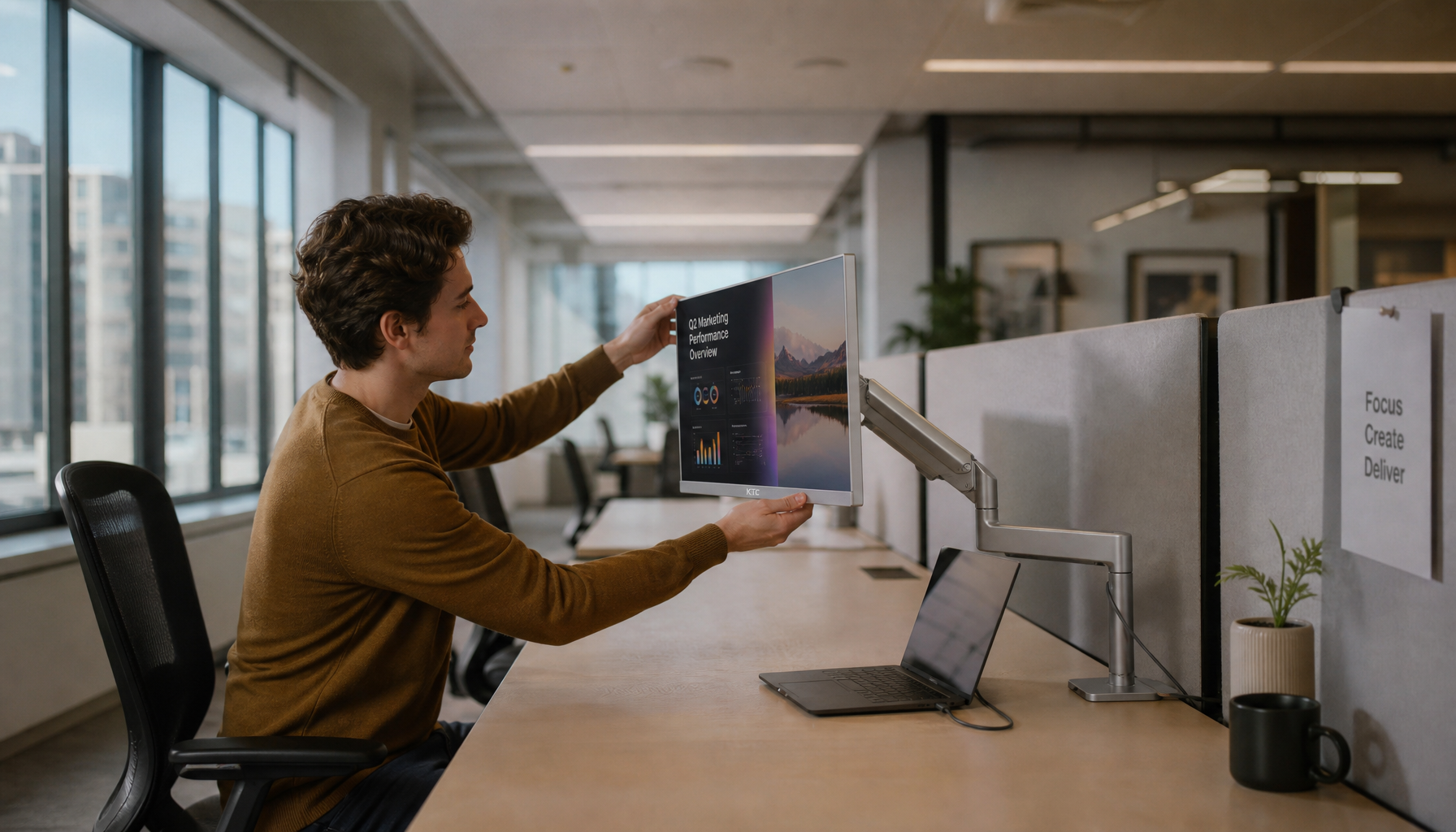
In real display setup work, the most common complaint is not “my monitor is broken.” It is “my eyes do not trust what they are seeing.” One screen may run cool and bright for office clarity, while another runs warm, saturated, and contrast-heavy for gaming or streaming. The user becomes the adapter between two different visual systems, and that adaptation has a cost.
The Main Causes
Brightness Mismatch Is Usually the First Problem

Screen brightness that does not match the room is a major trigger. If your office display is tuned for overhead lighting and your home monitor is left in a vivid gaming preset at night, your pupils and focusing system keep changing workload. University research on screen fatigue notes that computer-related eye strain is strongly tied to screen behavior, including reduced blinking; blink rate can drop from about 12 blinks per minute to about six during screen focus.
If your office is bright and your home setup is dim, the same white document can feel clean in one place and glaring in the other. The goal is not to make every display equally bright. The goal is to make each display feel similar relative to its room. A monitor that looks excellent at noon can be punishing at 10:30 PM.
Set brightness by environment, not by habit. Open a white document beside a sheet of white paper under the same lighting. If the display looks like a light source instead of a surface, lower it. If text looks dull or muddy, raise it slightly. This is not lab calibration, but it is a reliable first pass for comfort.
Different White Points Make Whites Look Yellow or Blue

White point is the color temperature of “white.” A higher white point looks cooler and bluer, while a lower one looks warmer and more yellow or orange. When your office monitor runs near a cool default and your home display runs a warmer eye-comfort mode, your brain has to reinterpret neutral colors several times a week.
This is why a spreadsheet background may look neutral at work and slightly tea-stained at home. The display has not necessarily changed; your reference point has. For most computer work, a 6500K white point is a practical target because it aligns with common sRGB-style workflows, while warmer settings can make sense in evening viewing if color judgment is not critical.
Create two intentional modes instead of letting random presets decide. Use a neutral work mode for documents, design review, and shopping images. Use a warmer night mode for low-stakes reading after hours. Avoid editing product photos, brand colors, or competitive gaming visuals while a heavy warm filter is active.
Gamut Differences Can Make One Screen Look More Colorful but Less Trustworthy

Color gamut is the range of colors a display can reproduce. A wide-gamut monitor can show richer reds, greens, oranges, teals, and blues than a standard sRGB display. DCI-P3, for example, is a wide-gamut standard associated with cinema, HDR, gaming, and modern high-end displays; it offers a wider range than sRGB or Rec. 709.
The advantage is obvious: games look more immersive, HDR content has more punch, and creative work can reveal more color nuance. The drawback is equally important: unmanaged wide gamut can make web graphics, office icons, skin tones, and product colors look overdone. If your home display is wide-gamut and your office screen is closer to sRGB, switching between them can feel like moving between two color dialects.
For office productivity, accurate sRGB is often more useful than maximum saturation. For gaming and cinematic content, a well-managed P3 or HDR mode can be a major upgrade. Fatigue starts when one display is in a saturated showcase mode while the other is tuned for neutral work.
Contrast and Text Polarity Change the Work Your Eyes Do

Luminance contrast is the brightness difference between text and background. For productivity, contrast usually matters more than the specific hue pairing. Low-contrast gray text can look elegant, but it forces the visual system to resolve weak edges for hours. Text-background separation determines how easily content can be perceived.
Dark mode is not automatically better or worse. A study on display color mode and luminance contrast found that under low screen brightness and low ambient illumination, dark mode reduced objective visual fatigue, while participants still reported liking light mode more, likely because they were used to it. Display color mode and luminance contrast both changed fatigue outcomes.
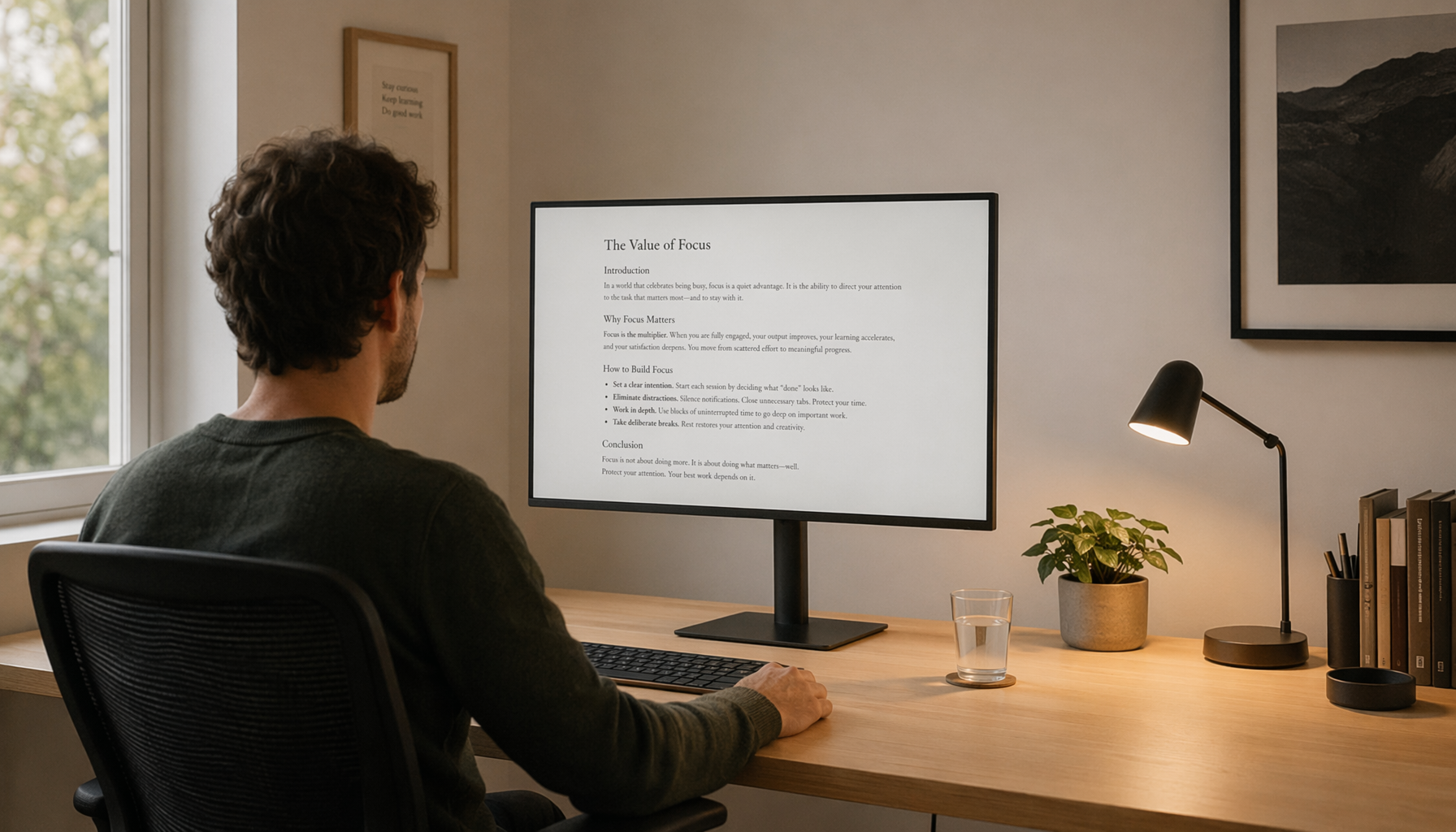
Your best setting depends on task and timing. Light mode can be excellent for daytime spreadsheets and writing. Dark mode can be more comfortable at night, especially if contrast is high enough and the screen is not glowing aggressively. The weak option is low-contrast text in either mode.
Scenario |
Better Starting Point |
Why It Helps |
Bright office with documents |
Light mode, neutral white, strong text contrast |
Keeps text crisp under ambient light |
Dim home office at night |
Dark mode, moderate brightness, high enough contrast |
Reduces perceived glare while preserving legibility |
Gaming or HDR viewing |
Wide-gamut or HDR mode when content supports it |
Improves immersion and color depth |
Product photos or design review |
Calibrated sRGB or managed color mode |
Reduces oversaturation and mismatch |
Why It Gets Worse When You Switch Several Times Per Week
Frequent switching prevents your visual system from settling into one stable reference. Monday morning may reset your eyes to a bright office panel. Tuesday evening may push them toward a saturated home display. By Thursday, you may notice that neutral gray looks slightly green, white looks too cold, or game environments feel harsher than usual.
A low-light study on negative-polarity displays found that text color significantly affected pupil accommodation, blink rate, cognitive performance, and visual fatigue ratings, with red text producing the most fatigue and yellow the least under the tested conditions; text color was not a cosmetic detail in that experiment. The study used 50 participants and tested five text colors across three very low ambient illumination levels.
That does not mean every interface should be yellow. It means color choices become more fatiguing when lighting is low, contrast is uneven, and the task requires sustained focus. A red-heavy dashboard at night, a green-tinted office monitor, and a blue-white home display can each be tolerable alone. Rotating among them all week is where perception fatigue becomes obvious.
Calibration Is the Reliable Fix Before Buying New Hardware

Calibration is the process of adjusting a display so brightness, white point, gamma, and color behavior are more predictable. It is not only for photographers. It is also for anyone who wants spreadsheets, web pages, games, presentations, and video calls to stop changing personality from one screen to the next.
A good baseline is simple. Disable extreme vivid, dynamic contrast, showroom, and aggressive eye-protection modes when judging color. Set both displays to sRGB or standard mode if available. Choose a similar white point, usually 6500K for work. Then tune brightness to the room, not to the maximum output of the panel.
For more precision, a colorimeter is the better long-term tool. Display calibration communities often favor a modern colorimeter for matching displays, especially when one screen uses a wider-gamut backlight; colorimeter correction helps compensate for differences between the sensor response and average human color vision. This matters because two monitors can measure close numerically yet still appear different if their backlights and panel behavior diverge.
Calibration also has a practical cost-benefit curve. A basic manual setup is enough for many office and gaming users. A colorimeter becomes valuable when you handle product images, video, design files, or multiple monitors that need to match. Professional reference displays still exist for a reason, but most home-office users get the biggest improvement from disciplined settings and one reusable calibration device.
Pros and Cons of Common Fixes
Manual monitor tuning has the best cost profile. It is fast, free, and often good enough for office work, browsing, and casual gaming. The downside is that your eyes are the measuring device, so tired eyes can make inconsistent decisions.
ICC profiles improve color-managed workflows by telling compatible software how the monitor behaves. The benefit is better consistency in supported apps. The limitation is that not every game, video player, browser path, or system overlay handles color management the same way, so an ICC profile is not a magic override for every pixel.
Hardware calibration offers the strongest everyday reliability. A colorimeter measures the display and helps create a corrective profile. The downside is cost and the need to recalibrate periodically, especially when monitors age, move rooms, or change settings. Calibration guidance often notes that monitor color calibration helps reduce discrepancies caused by manufacturing differences, aging hardware, environmental lighting, and changed settings.
Wide-gamut and HDR modes are excellent when content is mastered for them. They are less ideal for normal office content if colors are unmanaged. Treat them as performance modes, not default truth modes.
A Practical Home-and-Office Display Routine

Start by making both displays boring on purpose. Select standard, custom, or sRGB mode. Turn off dynamic contrast, super resolution, vivid color, and game genre presets while doing productivity work. If the home monitor is used for gaming, keep a separate gaming profile so immersive color does not contaminate work judgment.
Next, align white point. Set both screens near 6500K for daytime productivity. If your home display feels harsh at night, use a warmer evening mode only after color-critical tasks are finished. This protects accuracy when it matters and comfort when it matters.
Then match perceived brightness. Use the white-paper method in each room. Do not chase identical brightness percentages, because 35% on one display can be brighter than 70% on another. Match the visual result in the actual room.
Finally, standardize the content you use for checks. Keep the same neutral webpage, a grayscale ramp, a skin-tone photo, and a familiar spreadsheet available on both machines. If the grayscale ramp has a color tint or skin tones swing from healthy to sunburned, your display mode is probably too warm, too cool, or too saturated.
When the Problem Is Not the Monitor
Sometimes color perception fatigue is aggravated by the body, not the panel. Dry eyes, outdated prescriptions, long uninterrupted sessions, and reduced blinking can make color judgments feel unstable. University research on screen fatigue emphasizes that blue light is often blamed too broadly, while blue light from normal screens is not the main proven cause of retinal damage, eye fatigue, or sleep loss compared with brightness, timing, and viewing behavior.
Use breaks as part of your display system. Look away from near screens regularly, blink deliberately during dense work, and avoid using a cell phone as your “break” from the monitor. If colors look inconsistent only after long sessions, the display may be revealing fatigue rather than causing all of it.
FAQ
Is blue light the main reason colors feel tiring?
Usually no. Brightness, contrast, room lighting, blink rate, and viewing duration are more practical suspects. Blue-heavy, cool displays can still feel harsh at night, but solving brightness and white point usually helps more than relying only on blue-blocking products.
Should home and office monitors use the same settings?
They should use the same targets, not necessarily the same menu numbers. Aim for similar white point, readable contrast, and room-matched brightness. A 27-inch gaming monitor, a laptop panel, and an office display may need different brightness percentages to feel visually aligned.
Is dark mode better for color perception fatigue?
Dark mode can help in dim environments, especially with strong text contrast and controlled brightness. In bright offices, light mode may feel cleaner and easier for documents. The stronger choice is the mode that fits the room and preserves legibility.
Bottom Line
Color perception fatigue is a systems problem: display settings, panel gamut, lighting, task type, and eye behavior all interact. Set stable work modes, reserve vivid modes for the content that deserves them, and calibrate when matching matters. A display should extend your focus, not make your eyes renegotiate reality every time you sit down.