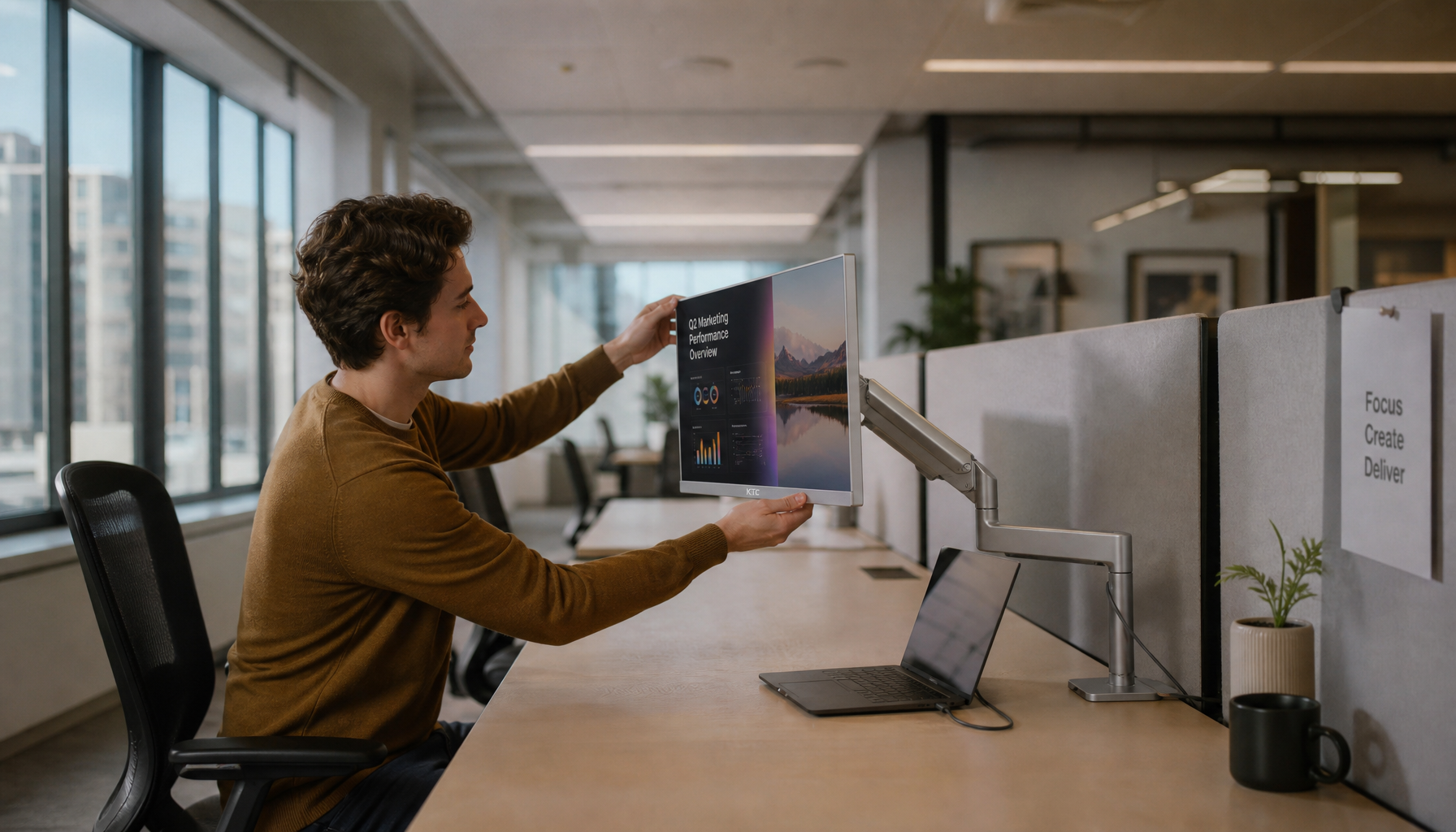
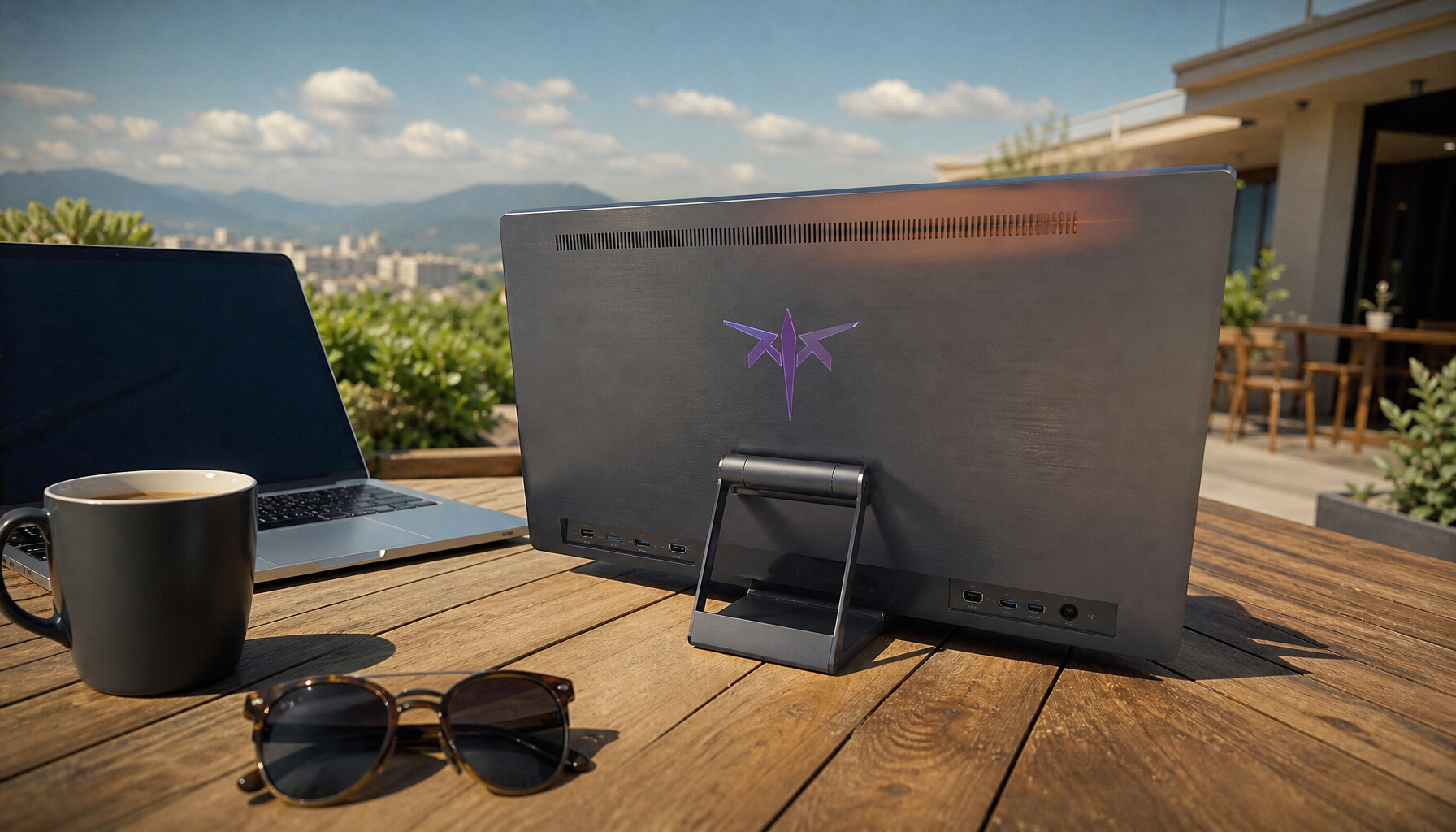
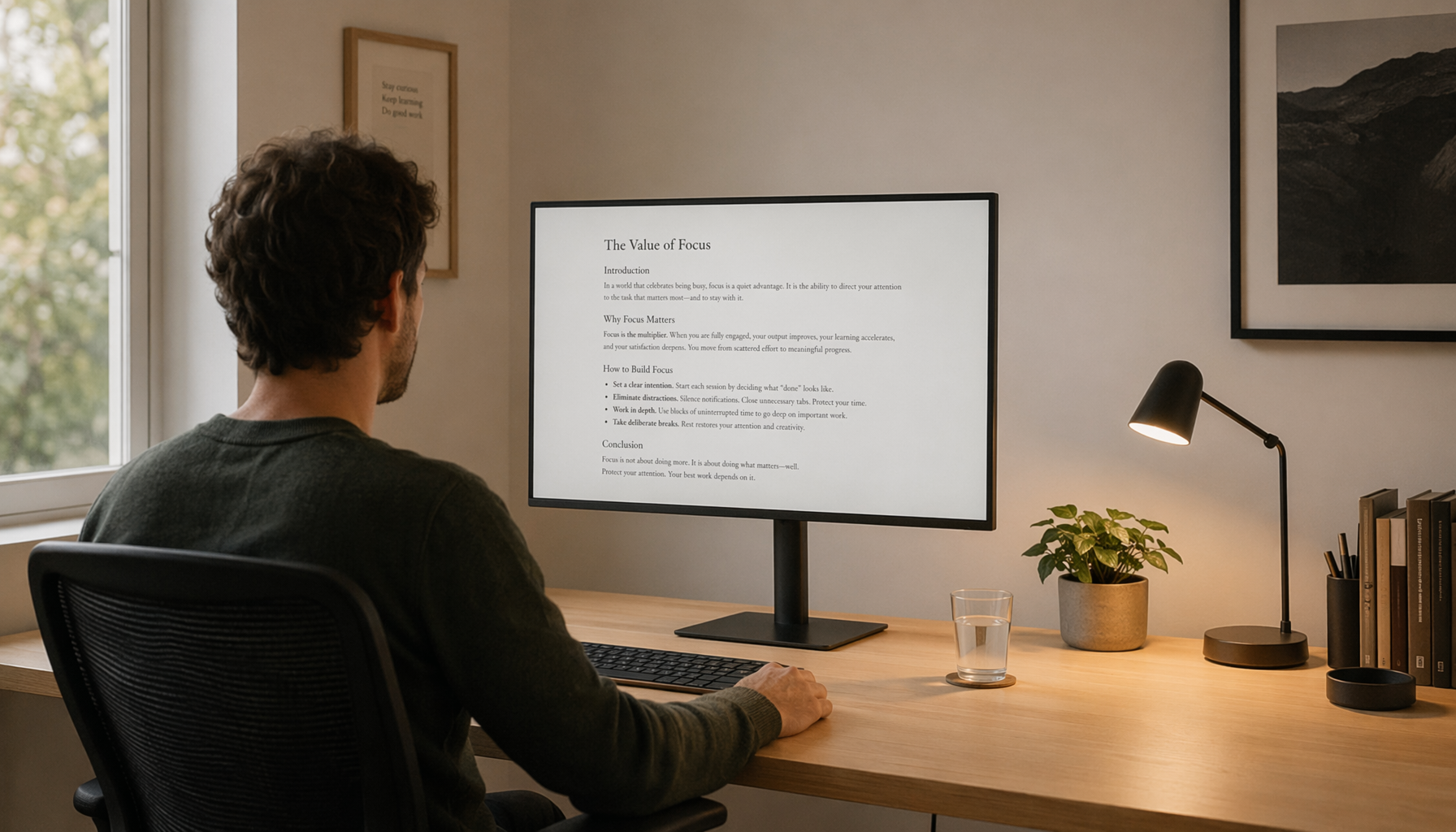
A calibrated monitor profile can look different after a graphics driver update because the driver may change the color path before the image ever reaches your screen. The monitor itself may still be accurate, but output range, GPU color controls, refresh-rate behavior, HDR state, or calibration loading may have shifted.
Did your gaming monitor suddenly look washed out, warmer, cooler, or darker right after a driver update? A real calibration validation case showed that a profile could still be valid after a GPU platform change, with measured luminance at 116.8 nits versus a 118-nit profile target and an average ΔE*00 of 0.34. This guide shows what to check before you blame the panel, delete your color profile, or recalibrate from scratch.
What a Calibrated Monitor Profile Actually Controls
A monitor calibration profile is not a magic lock on every display setting. In a typical desktop operating system setup, the color profile describes how your monitor reproduces color, while the calibration curves may be loaded into the GPU’s video card gamma table so grayscale, white point, and tone response line up with the target. If a graphics driver update changes how that table is loaded, bypassed, or combined with driver color features, the same calibrated profile can produce a visibly different result.
For monitor buyers and owners, this matters most on gaming displays and high-refresh-rate monitors because they often run through more complicated output paths: 144Hz or higher refresh rates, HDR toggles, variable refresh rate, 8-bit or 10-bit color, RGB or YCbCr pixel formats, and full or limited output range. A 27-inch gaming monitor, a 34-inch ultrawide, and a portable monitor may each respond differently to the same graphics driver update because each connection and mode can expose different driver options.
Calibration Is Only One Layer

A calibrated profile usually assumes that the monitor’s OSD mode, brightness, contrast, color temperature, connection type, and GPU output settings are the same as when the profile was created. If you calibrated in a standard color mode at 120 nits and the driver later enables a display enhancement, switches output range, or changes HDR behavior, the profile is no longer operating in the same conditions.
That does not automatically mean the profile is bad. It means you need to verify the output chain: operating system color management, the graphics control panel, monitor OSD settings, and any calibration loader used by calibration tools.
Why Driver Updates Can Change the Look of a Gaming Monitor
A graphics driver update can alter supported display modes, reload default settings, or expose new options. Operating system refresh-rate options depend on the monitor, graphics adapter, and display driver, and platform documentation notes that users can change them under advanced display settings. That dependency matters because a new driver may affect which refresh rates, dynamic refresh behavior, or display modes are offered after the update.
The most common symptom is not “slightly inaccurate color.” It is a bigger shift: blacks look gray, whites look tinted, games look flatter, or both monitors suddenly look washed out. In one documented graphics-driver update case, a user reported that after installing a driver released on August 14, 2017, both monitors showed very washed-out colors on a graphics card system using a 144Hz primary display and a 60Hz secondary display.
Common Settings That Move After an Update

Driver updates can affect more than one color-related switch. On gaming monitors, the practical suspects are output dynamic range, color format, bit depth, HDR state, refresh rate, variable refresh mode, and driver-side color enhancements. Even if only one of those changes, the result can look like a failed calibration.
Setting to Check |
What Can Change |
Typical Symptom |
Where to Look |
Color profile |
Default profile may be reassigned |
Colors look generally off in color-managed apps |
Operating system color management |
Calibration curves |
GPU gamma table may not load |
Grayscale or gamma looks wrong everywhere |
Calibration loader or calibration tool tray |
RGB output range |
Full range may switch to limited, or the reverse |
Washed-out blacks or crushed shadows |
Graphics control panel |
Pixel format |
RGB may switch to YCbCr |
Text fringing, color shift, softer desktop image |
Graphics control panel |
Color depth |
10-bit may fall back to 8-bit, or mode may change |
Banding or changed HDR behavior |
Advanced display settings and GPU panel |
HDR |
HDR may turn on or off |
SDR desktop looks dull, bright, or flat |
Operating system display settings |
Refresh rate |
144Hz, 165Hz, or 240Hz may change |
Motion feel changes; some modes alter color options |
Advanced display settings |
Game, standard color, HDR, or custom mode may be active |
Different white point, brightness, or saturation |
Monitor buttons or joystick menu |
Why High Refresh Rates Complicate Color
High-refresh-rate monitors can have bandwidth tradeoffs, especially at higher resolutions. A 1440p 240Hz display, a 4K 144Hz display, or a 49-inch ultrawide may expose different color-depth or chroma options depending on the cable, port, GPU, and driver. After a driver update, the system may fall back to a supported but different combination.
That is why the right first question is not “Do I need a new calibration?” It is “Am I still using the same display mode I calibrated?” If the monitor was profiled at 144Hz in RGB full range and is now running at 60Hz, YCbCr, limited range, or HDR mode, your profile is being judged under different conditions.
Do You Need to Recalibrate After a Driver Update?
You do not always need to recalibrate. A calibration forum case involving a change from one integrated graphics platform to another integrated GPU found that recalibration was generally unnecessary if pixel format, output levels, and GPU LUT behavior remained unchanged; the recommended validation was a calibration measurement report rather than guessing from appearance alone. That is the right mindset for monitor owners: verify first, recalibrate only when the evidence says the profile no longer matches the display.
The numbers in that case are useful because they show what “still fine” can look like. The profile luminance was 118 nits, measured luminance was 116.8 nits, black luminance was 0.2102 nits, and contrast was 555.5:1. The measured white point was xy 0.3164, 0.3327 at 6285K, with average ΔE00 of 0.34 and maximum ΔE00 of 1.83, both marked OK.
When Recalibration Is Usually Not Needed

If the monitor OSD mode, brightness, refresh rate, output range, pixel format, and profile assignment are unchanged, a driver update alone may not justify recalibration. This is especially true for a desktop monitor that has not been moved, has stable brightness, and is still connected through the same digital display connection path.
For a practical example, a 27-inch 144Hz monitor calibrated to roughly 120 nits for a dim home office should not suddenly need a full new profile just because the GPU driver changed. If a validation report still shows a low average ΔE, near-target luminance, and acceptable grayscale tracking, the profile is likely still doing its job.
When Recalibration Makes Sense
Recalibration becomes more reasonable when you changed the GPU, display cable, monitor input, monitor picture mode, operating brightness, or refresh-rate/color-depth combination. It is also worth recalibrating if validation fails after you have confirmed that driver enhancements are off and the correct color profile is active.
Portable monitors deserve extra care because they are often used across laptops, docks, hubs, and different power states. If the same portable display looks neutral on one laptop but tinted on another after a driver update, check the host system’s color settings before assuming the panel has drifted.
The First Checks to Make Before Touching the Monitor Controls
Start with software settings before changing the monitor’s physical OSD controls. Driver color controls should be disabled before judging calibration, and examples flagged in the calibration discussion include custom color, color deficiency correction, display color enhancement, and standard color simulation. If those are active, they can stack on top of your calibrated profile and make the result look wrong even when the monitor is behaving normally.
Next, confirm that the operating system is using the intended color profile for the exact display. This is especially important on dual-monitor desks where a 144Hz gaming monitor sits next to a 60Hz secondary monitor, because profiles can be assigned to the wrong display after driver changes, monitor re-detection, cable swaps, or docking changes.
Post-Update Action Checklist
- Open the operating system display settings and confirm the correct monitor is selected.
- Go to advanced display settings and verify the expected refresh rate, such as 144Hz, 165Hz, or 240Hz.
- Check the GPU control panel for RGB full range, expected pixel format, and intended color depth.
- Disable driver-level color enhancements, standard color simulation, color deficiency filters, and saturation boosts.
- Confirm that HDR is in the intended state for SDR desktop use.
- Open operating system color management and verify that the correct color profile is assigned to the correct monitor.
- Run a calibration verification or measurement report before creating a new profile.
A Practical Order for Gaming Displays
For a gaming monitor that looks washed out, check output range first. A limited/full RGB mismatch can make blacks look gray or crushed in seconds, and it is far more likely to create a dramatic change than mild panel drift. Then check HDR, because SDR content viewed through an unintended HDR desktop path can look dull, bright, or inconsistent depending on the monitor and operating system tone mapping.
After that, check refresh rate and color format. A monitor running at 240Hz may have different available output options than the same monitor at 120Hz, depending on resolution, cable bandwidth, and driver support. If the image only looks wrong at one refresh rate, the problem may be tied to that specific mode rather than the calibration profile.
How to Validate Instead of Guessing
The most reliable way to know whether your calibrated profile still matches your display is to measure it. In the calibration case, the recommended check was to run a measurement report with no simulation profile and verify whether the current calibration still matched the existing display profile. That approach separates a real calibration failure from a driver setting that merely made the desktop look different.
You do not need to be a lab technician to use this logic. If you own a colorimeter, run a verification after the driver update using the same monitor settings you used during calibration. Look at white point, luminance, grayscale, and ΔE results rather than relying only on a wallpaper, a game menu, or memory of how the screen looked yesterday.

What Good Validation Looks Like
A strong validation result should be close to your intended brightness target and should show low grayscale and color error. For general monitor use, an average ΔE00 under 1 is typically excellent, while values under 2 are often hard to notice in everyday desktop and gaming use. The calibration example’s average ΔE00 of 0.34 and maximum of 1.83 show why a visible concern after a hardware or driver change does not automatically mean the profile failed.
For gaming monitors, also test the mode you actually use. If you calibrated at 120Hz but play at 240Hz with HDR enabled, your validation does not fully describe your gaming setup. If you use separate SDR and HDR modes, treat them as separate display conditions.
Special Cases: Ultrawide, Multi-Monitor, and Portable Setups
Ultrawide monitors add complexity because they often use high bandwidth modes, picture-by-picture features, docking, or KVM switching. A graphics driver update can re-detect the screen, rename it, or expose a different mode list. If your 34-inch or 49-inch ultrawide looks different after an update, confirm that it is still on the same input, refresh rate, color format, and OSD preset used during calibration.
Multi-monitor setups are also prone to profile mix-ups. A hardware forum case involved two 1920 x 1080 monitors, with the primary running at 144Hz over a digital display connection and the secondary at 60Hz through an adapter. That kind of mixed setup gives the driver multiple paths to manage, and one update can change how each display is detected or configured.
Portable Monitor Checks
Portable monitors are often connected through compact display connections, docks, or adapters, and those connection paths can change color behavior. After a driver update, check whether the portable display is being treated as a TV-like output with limited range, whether the operating system assigned a generic profile, and whether the monitor’s brightness dropped because of power limits.
For buying guidance, this is one reason serious color users should favor portable monitors with clear OSD controls, stable brightness settings, and documented standard color coverage. A portable screen that depends entirely on software controls is harder to troubleshoot when a graphics driver changes the output pipeline.
FAQ
Q: Why does my calibrated monitor look washed out after a graphics driver update?
A: The most likely causes are an output range change, HDR state change, disabled calibration loader, or driver color enhancement. Check RGB full versus limited range first, then confirm HDR, pixel format, refresh rate, and color profile assignment.
Q: Should I recalibrate every time I update graphics drivers?
A: No. Recalibrate only after you verify that the same monitor mode and calibration path are active and the profile no longer measures correctly. If validation still shows near-target luminance, white point, grayscale, and low ΔE, the existing profile may still be valid.
Q: Can refresh rate affect monitor color?
A: Indirectly, yes. Refresh rate itself controls how often the image updates, but available refresh-rate modes depend partly on the graphics driver and hardware. On high-refresh displays, changing from one mode to another can also change available color depth, pixel format, HDR behavior, or bandwidth-related settings.
Key Takeaways
A calibrated profile can look different after a graphics driver update because the driver may have changed the conditions around the profile, not because the monitor suddenly became inaccurate. For gaming monitors, high-refresh-rate displays, ultrawides, and portable monitors, the highest-value checks are output range, pixel format, HDR state, refresh rate, profile assignment, and driver color enhancements.
The practical rule is simple: restore the same display path first, then measure. If your validation report still shows near-target luminance, acceptable white point, and low ΔE, keep the profile. If validation fails after the settings are corrected, create a fresh calibration for the exact mode you use every day.