Usually, no. A 32-inch 1440p monitor and a 24-inch 1080p monitor are so close in pixel density that the bigger screen is not inherently blurrier, but it can look worse if you sit too close or expect 4K-level text sharpness.
If you are shopping for a larger gaming monitor and worry that 1440p will look stretched, that concern makes sense because big panels expose flaws quickly on a shallow desk. The useful part is that this comparison is not mainly about marketing labels; it comes down to pixel density, viewing distance, operating system scaling, and the kind of games and work you do every day. You will leave with a clear answer on when 32-inch 1440p is a smart buy, when 24-inch 1080p is still the better fit, and when it is worth jumping to something sharper.
The Pixel Density Reality
Raw sharpness is basically a tie
The density math is unusually close: 24-inch 1080p is about 92 PPI and 32-inch 1440p is about 93 PPI. In plain English, that means text, icons, and game edges can look similarly sharp when both monitors are used from an appropriate desk distance.

Resolution and pixel density are different measurements. A 32-inch 1440p panel still gives you far more total pixels than 24-inch 1080p, so you get more desktop workspace and more image detail overall, even though the per-inch sharpness is nearly the same.
Quick comparison
Monitor setup |
Resolution |
Approx. PPI |
What it feels like in use |
Best fit |
24-inch 1080p |
1920 x 1080 |
92 |
Decent sharpness at normal desk distance |
Budget gaming, esports, dual-monitor setups |
32-inch 1440p |
2560 x 1440 |
93 |
Similar raw sharpness, larger and more immersive |
Mixed gaming and everyday work |
27-inch 1440p |
2560 x 1440 |
109 |
Noticeably crisper text and edges |
Best mainstream all-around choice |
32-inch 4K |
3840 x 2160 |
138-140 |
Clearly sharper for text and fine detail |
Productivity-first or premium gaming setups |
That table also explains why buyers often feel conflicted. A 32-inch 1440p screen is not a downgrade from 24-inch 1080p in density terms, but it is also not the crisp leap that 27-inch 1440p or 32-inch 4K can deliver.
Why a 32-Inch 1440p Monitor Can Still Look Worse on Your Desk
Viewing distance changes everything
Perceived detail depends heavily on viewing distance. If you keep the same close seating position you used with a smaller monitor, the 32-inch screen fills more of your field of view and makes its pixel structure easier to notice.
A 32-inch 1440p gaming monitor is commonly treated as a 2 to 3 ft desk display. That matters because many shallow desks push the screen closer than that, which is exactly when buyers start describing 32-inch 1440p as soft, grainy, or “too big” for the pixel count.

Bigger screens are less forgiving of bad ergonomics
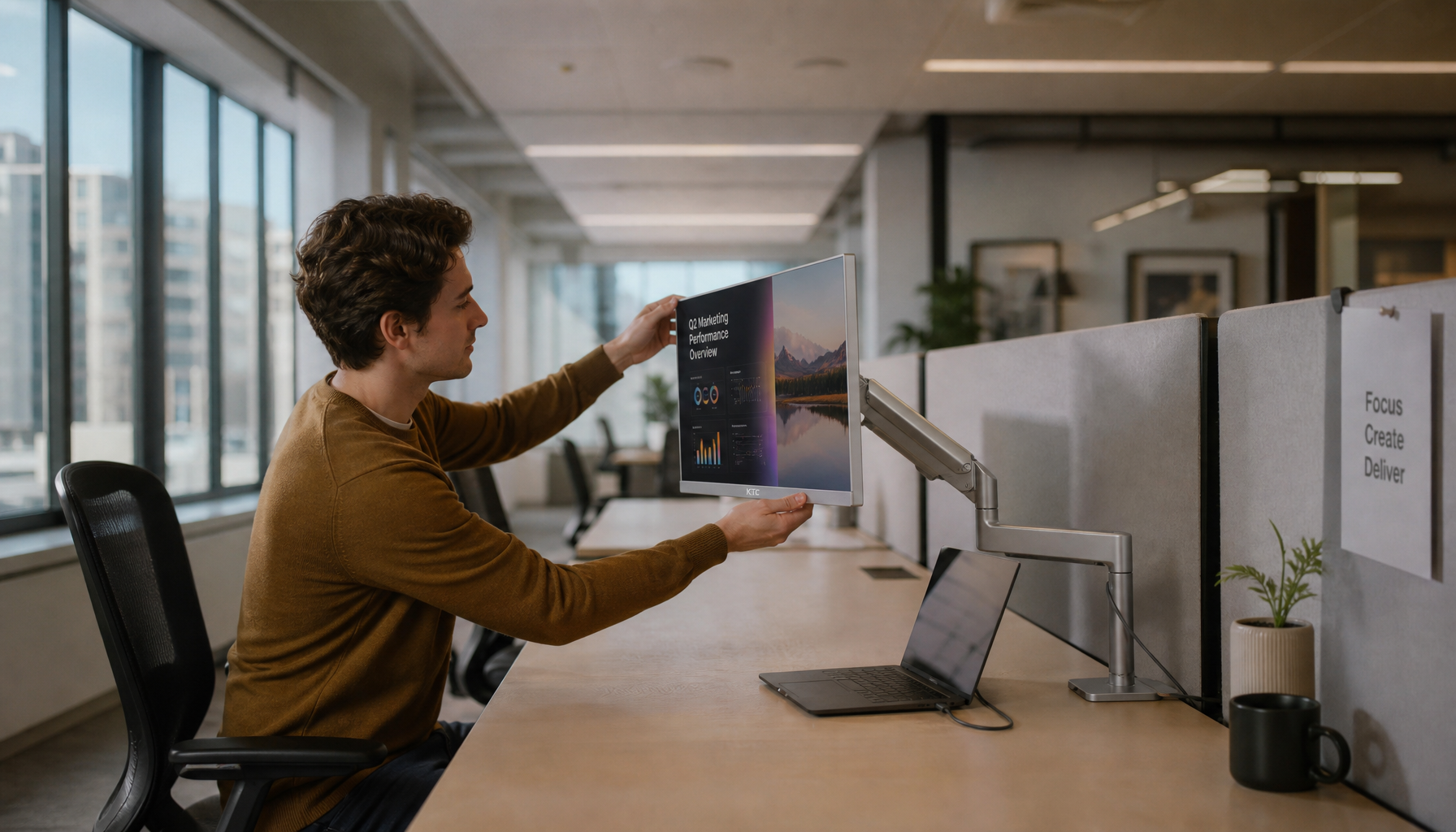
A 32-inch 4K setup guide notes that 24-inch-deep desks often place users too close, while a monitor arm can add 4 to 6 inches of useful distance. The same practical logic applies to 32-inch 1440p: if you cannot move it back, you will see more of its limitations.
Advanced display discussions often frame sharpness as resolution plus viewing distance, not PPI alone. That is why two monitors with nearly identical density can still leave very different impressions in the same room.
Gaming Tradeoffs: More Detail, More GPU Load
1440p is the common performance middle ground
A 32-inch 1440p gaming monitor is widely positioned as a balance between clarity and hardware demand. Moving from 1080p to 1440p raises the render load from about 2.1 million pixels to about 3.7 million pixels, so you gain noticeably more fine detail but ask much more from your GPU.
That tradeoff is usually worth it on modern mid-range and high-end gaming PCs, especially if you are shopping in the 144 Hz to 180 Hz range. On a 32-inch panel, the extra desktop space and larger image can make open-world games, racing titles, and slower-paced shooters feel more immersive than a 24-inch screen.
Real-world reports show the cost
One user comparing 1080p and 1440p in actual play reported dropping from roughly 150 FPS to 100 FPS. That is only one anecdote, not a lab test, but it matches what many buyers discover after moving up in resolution: image detail improves, yet the performance hit is immediate.
If your main goal is maximum frame rate in competitive games, 24-inch 1080p still has a strong case. If you play a mix of single-player and multiplayer titles and want one larger display for gaming, browsing, and streaming, 32-inch 1440p is often the more satisfying compromise.
Text Clarity Is the Real Weak Spot of 32-Inch 1440p
Games hide softness better than spreadsheets do
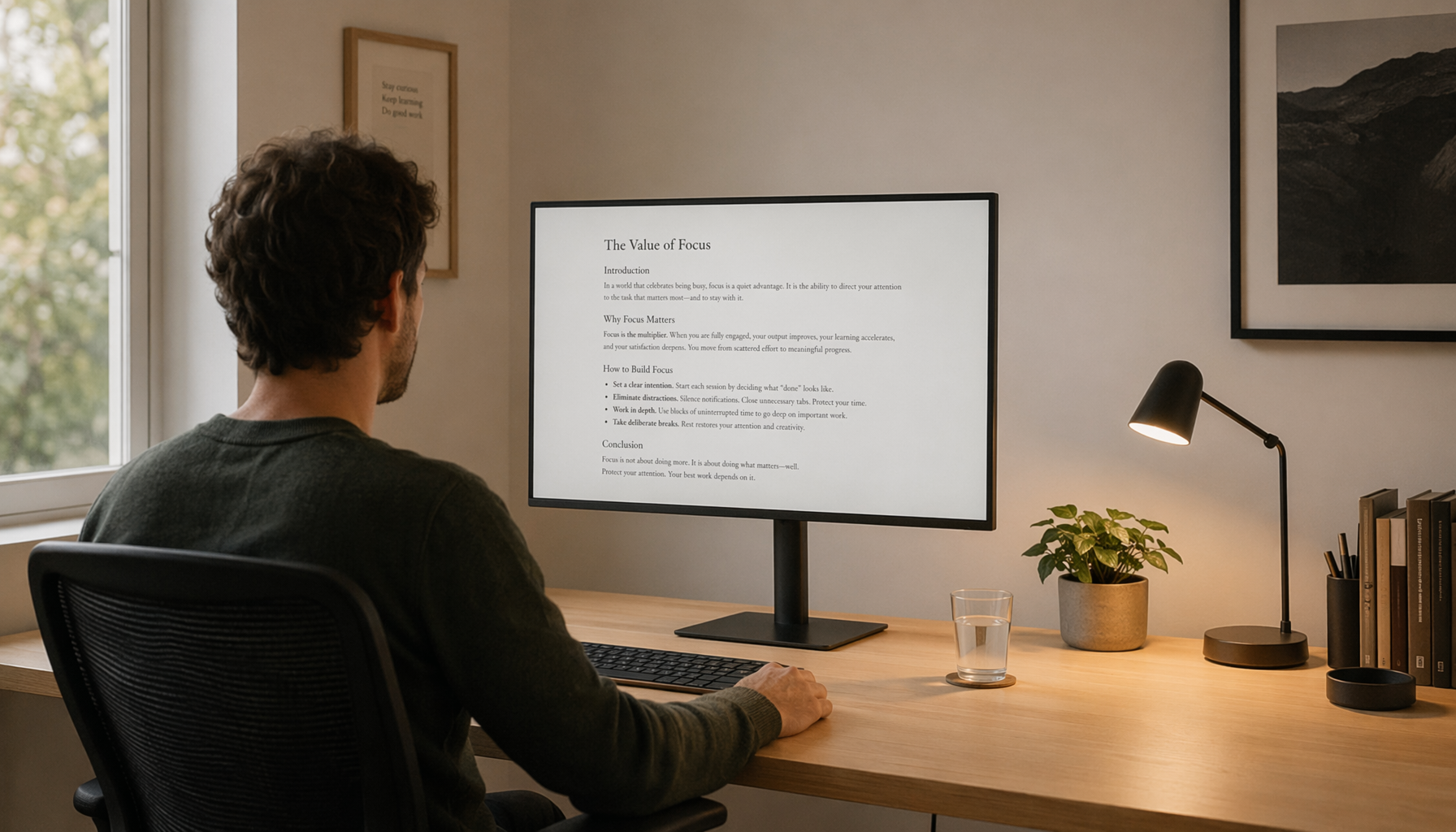
Text clarity depends on pixel density, text rendering behavior, screen coating, and even subpixel layout. That is why 32-inch 1440p can look perfectly fine in motion-heavy games but still feel a little rough when you spend hours in email, coding, spreadsheets, or subtitles.
The jump from roughly 93 PPI at 32-inch 1440p to about 138-140 PPI at 32-inch 4K is large enough to change how text looks at normal desk distance. That is also why 27-inch 1440p remains such a popular sweet spot: it pushes density to about 109 PPI without bringing 4K-level GPU demands. If you are considering a 32-inch 2K IPS model from a brand like a brand’s 32-inch 2K IPS model, it is best treated as a desk-space and workload choice rather than an automatic text-sharpness upgrade.

Scaling can make a decent monitor look worse
Fractional operating system scaling such as 125% or 150% can soften letters because the system resamples edges. On 32-inch 1440p, 100% scaling is usually comfortable enough, so adding scaling can create blur you did not need in the first place.
A text tuning guide also matters on lower-density desktop monitors. If a 32-inch 1440p display looks fuzzier than expected, the fix is often practical: stay at native resolution, keep scaling consistent across displays, run the text tuner, and check whether the panel uses a text-friendly RGB subpixel layout.
Which Buyers Should Choose Each Option
Choose 32-inch 1440p if you want one bigger all-purpose gaming monitor
A shopper moving up from a 27-inch 1080p display described a visible “screen door effect” while typing and gaming before targeting 32 inches as the next step. That is the kind of buyer who often likes 32-inch 1440p most: someone who wants a larger screen, noticeably more detail than 1080p, and high refresh rates that are still realistic to drive.
This option makes the most sense when you sit about 2 to 3 ft from the display, use a single-monitor setup, and care more about immersion and usable desktop space than perfect text crispness. It is especially attractive in the gaming monitor market, where 1440p high-refresh panels are still easier to run than 4K models.
Choose 24-inch 1080p if your priorities are speed, simplicity, and price
Enthusiast discussions keep landing on 24-inch 1080p as a sensible pairing. The reason is straightforward: the size fits compact desks well, the pixel density is acceptable, and lower GPU load makes it easier to sustain very high frame rates.
A 24-inch 1080p monitor is still a smart buy for esports players, budget gaming PCs, and dual-monitor setups where desk space matters more than cinematic scale. It is also the safer choice if you sit close to the screen and mostly care about motion performance rather than desktop sharpness.
Skip both and go higher if text quality is your top priority
For office-style use, sharper desktop baselines are usually framed as 27-inch 1440p or 32-inch 4K. If you read and write all day, those options reduce visible pixel structure enough to be worth the extra cost for many buyers.
That is the key buying takeaway: 32-inch 1440p is not worse than 24-inch 1080p in a simple mathematical sense, but it is easier to judge harshly because buyers usually sit close enough to notice that it is only “acceptable” for text, not truly crisp.
FAQ
Q: Is 32-inch 1440p good for competitive gaming?
A: Yes, if your GPU can keep your target refresh rate and you have enough desk depth. It is less ideal than 24-inch 1080p for pure esports because the larger screen demands more eye movement and the higher resolution costs performance.
Q: Will 32-inch 1440p look blurry for work?
A: Not necessarily, but it is more likely to feel soft than 27-inch 1440p or 32-inch 4K. If you spend long hours reading small text, that is where the compromise shows up first.
Q: Is 32-inch 4K the better long-term buy?
A: Usually yes for mixed productivity and premium gaming, especially if text clarity matters. The tradeoff is higher price, heavier GPU demand, and the need to manage scaling correctly.
Final Takeaway
A 32-inch 1440p monitor does not really look worse than 24-inch 1080p in raw density terms; they are nearly the same. The bigger screen only starts to look worse when it is used too close, paired with poor scaling, or judged against sharper benchmarks like 27-inch 1440p and 32-inch 4K.
Use this checklist before you buy:
- Measure your real viewing distance; 2 to 3 ft is a much better fit for 32-inch 1440p than a shallow desk.
- Match the monitor to your GPU; 1440p asks for substantially more graphics horsepower than 1080p.
- Prioritize 24-inch 1080p if you mainly play competitive titles and want the easiest path to very high frame rates.
- Prioritize 32-inch 1440p if you want a single large gaming monitor for mixed use and can tolerate only decent, not elite, text sharpness.
- Step up to 27-inch 1440p or 32-inch 4K if text clarity and everyday desktop comfort matter as much as gaming.
References
- A brand: What Is Pixel Density And Pixels Per Inch (PPI)?
- A company: How to Evaluate the Best 32-Inch 1440p Gaming Monitor for Different Needs
- A company: Monitor Resolution and Pixel Density: A Comprehensive Guide
- A brand: 32-Inch 4K Monitor Optimal Viewing Distance
- A brand: Fix Blurry Text on Monitors: A Guide to Scaling & PPI
- A brand: Our Monitor Picture Quality Tests - Text Clarity
- A company: Display Size, Resolution, and Ideal Viewing Distance
- A platform: 4k vs 1440p at 32 inches
- A platform: It’s not worth it upgrading from 1080P to 1440P on 27” Monitor
- A platform: Monitor size affect resolution?
- A platform: Basic Question About Pixel Density