A rolling smart display vs tablet decision usually comes down to movement pattern first, not specs. If you want a screen that stays useful while moving between rooms, the KTC MEGAPAD 27" FHD Android 14 Google EDLA Smart Touch Monitor with 9500mAh Battery is the clearest starting point. If you want something for lap use, travel, and one-person app use, a tablet still fits better.

Start With the Way You Move Screens
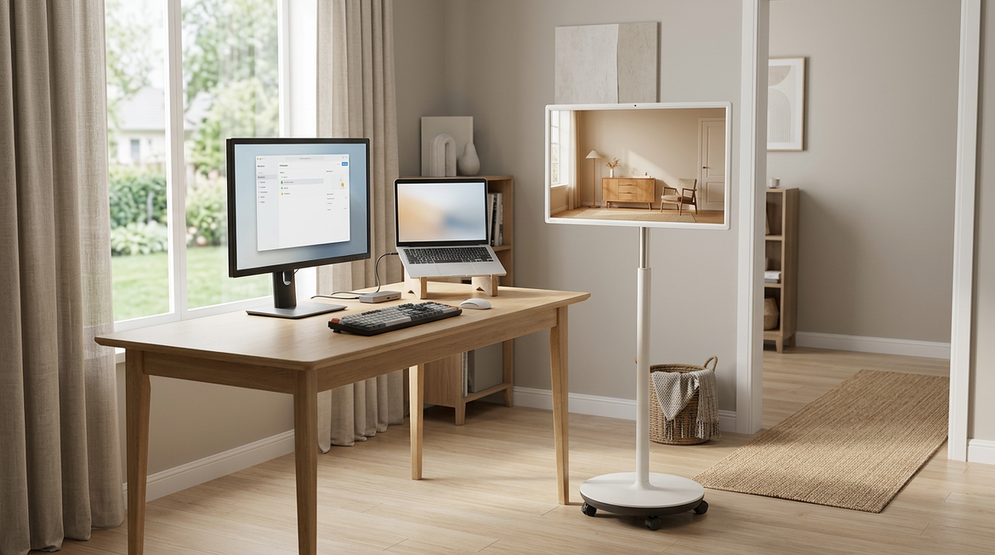
A rolling smart display makes more sense when the screen needs to stay visible and hands-free as you move around the house. A tablet makes more sense when the device needs to come with you, sit on your lap, or disappear into a bag. Wall mounts work best when the screen mostly stays put and daily mobility is not part of the job.
For a broad overview of what a smart display can do without a PC, the article smart display overview is a useful follow-up. For shared-room use, this is the first filter: if you keep lifting the screen by hand, you are probably in tablet territory; if you keep rolling it from one zone to another, a mobile display is closer to the fit.
Kitchen Counter to Dining Table
In real kitchen use, the big question is whether you want to glance at a recipe from across the counter or keep picking up a device. A rolling smart display is the better fit when the screen needs to sit at counter height and stay hands-free while you cook. A tablet is better when the recipe flow is short, the space is tight, or you want to hold the device close while stirring and chopping.
Desk to Living Room Calls
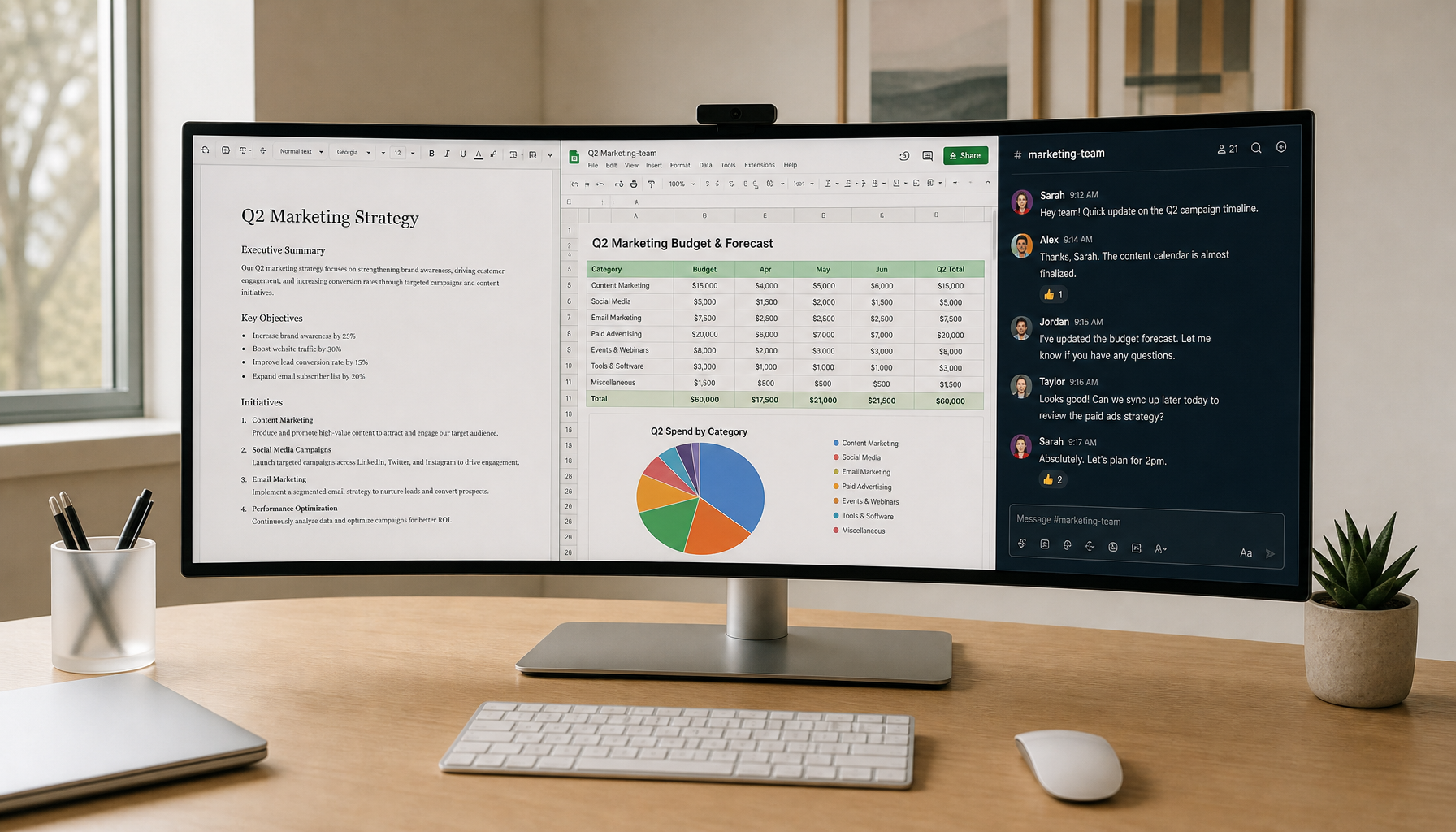
For home office calls, the difference is less about app count and more about posture and screen size. A rolling smart display works well when you want to move from a desk to a couch without changing the way you interact with the screen. A tablet is better if the call is personal, the app is already on your phone ecosystem, or you need to carry the same device outside the house.
Multi-Room Entertainment and Work
A mobile display is the better long-session choice when multiple people need to see the screen and the viewing spot changes. Tablets win when the experience is mostly one person, one set of apps, one pair of hands. That is why the rolling smart display vs tablet choice is really a question of shared placement versus personal portability.
Battery Life Changes the Mobility Trade-Off
Battery runtime matters most when the screen moves away from an outlet during cooking, calls, or casual viewing. A built-in battery reduces cable switching, but real runtime still depends on brightness, app load, audio level, and how hard the device is working. That is why battery should be treated as a session-length check, not a promise of all-day use.
The Battery vs Plugged-In Smart Display Comparison is a good context piece if you are still deciding between battery-powered and fixed setups. The biggest regret trigger is assuming every mobile screen behaves like a tablet battery. It does not, especially once you add a larger panel and louder audio.
The featured KTC model gives a practical example of the trade-off. The KTC MEGAPAD 27" FHD Android 14 Google EDLA Smart Touch Monitor with 9500mAh Battery is built for room-to-room use, and its product facts list up to 6 hours of runtime. That is enough for many mixed home sessions, but it is still a check against your longest normal use window, not a guarantee for every brightness level or app mix. MegPad Battery Life Audit: Real-World Runtime for 2026 Apps adds real-session data for similar models.
For buyers comparing battery-capacity claims, the useful habit is simple: compare the rated battery with the kind of session you actually run. A long streamed video, louder audio, and brighter screen use more of the battery budget than a dim recipe screen or short check-in. As a rule of thumb, if you need uninterrupted use across a full workday, neither a rolling display nor a tablet should be bought on battery claims alone.
App Access Is Not Always the Same
App access is where the rolling smart display vs tablet comparison often flips. Tablets usually win on app breadth, app maturity, and handheld convenience. Smart displays can still work well when the goal is a shared-room screen with built-in apps and touch control, but shoppers should verify the exact services they rely on before buying.
Google EDLA is worth checking when you care about official Google services and Play Store access, but it should be treated as a compatibility checkpoint, not a blanket promise that every streaming or productivity app behaves the same way on every device. The key move is to test the specific apps, logins, and casting paths you use most.
The practical takeaway is this: if your home workflow depends on one or two specific services, check those exact apps first; if you just want broad app flexibility, a tablet is usually the safer default.
A second point matters for streaming. Login rules and casting behavior can vary by device family, so the easy assumption that "it runs Android, so everything works" is risky. That is especially true when a screen is shared among family members, because re-authentication and app behavior differences are more annoying in a common space than on a personal tablet.
Ergonomics Decide Whether Moving Still Feels Easy
Ergonomics are what make a mobile screen feel easy after the first week. The basic rule is straightforward: the top of the screen should sit at or slightly below eye level for seated or standing use, and a slightly downward gaze is usually more comfortable than looking up. OSHA's monitor guidance and CCOHS's monitor positioning advice both point in that direction.
That matters because a tablet on a simple stand can be fine for short sessions, but it often gives less built-in height control than a rolling display with an integrated stand. If you switch between counter height, desk height, and seated viewing, the extra adjustment range can save a lot of small annoyances.
For the buyer, the decision sentence is simple: if you need repeated height changes and shared viewing, a rolling display is usually the better fit; if you mostly sit in one place, a tablet stand is enough. The difference shows up less in spec sheets than in neck comfort, viewing angle, and how often you have to reset the setup during the day.
The selected model is a good example of why ergonomics matter. The KTC MEGAPAD 27" FHD Android 14 Google EDLA Smart Touch Monitor with 9500mAh Battery includes built-in wheels and a height-adjustable stand, which makes it more suitable for shared kitchen and office movement than a tablet on a desk dock. That does not make it better for travel, but it does make it easier to keep the screen at a useful height as you move room to room.

Where a Rolling Display Beats a Tablet
A rolling display usually wins when the job is shared viewing, mixed-room placement, and a screen that stays readable without handholding. A tablet usually wins when the job is private use, quick pickup, and app-first portability. A wall mount wins when the screen has a fixed home and you do not want to roll or lift anything.
Here is the practical comparison for the most common use cases:
| Use case | Rolling smart display | Tablet | Wall mount |
|---|---|---|---|
| Kitchen prep | Strong fit if you want hands-free viewing at counter height | Good if you only need short recipe checks | Poor fit if you move often |
| Home office calls | Strong fit for shared-screen movement | Strong fit for personal calls and travel | Good if the desk never changes |
| Family entertainment | Strong fit for room-to-room viewing | Good for one person or headphones | Strong fit for one fixed room |
| App flexibility | Good, but verify the exact apps first | Usually best | Depends on connected source |
| Portability | Room-to-room mobility | Best for personal carry | Not portable |
| Setup friction | Medium, because stand and battery matter | Low, especially for handheld use | Higher upfront install effort |
If you want to browse the category more broadly, the Mobile Touch Screen collection and the Smart Monitor collection are the right places to compare screen sizes and mobility styles. For buyers who want a broader monitor comparison set, the All Monitors collection is the widest starting point.
The neutral conclusion here is that rolling smart displays sit between tablets and wall mounts. They are not the universal best choice, but they are the better compromise when the screen needs to move, stay hands-free, and remain large enough for a shared room.
Choose the Right Setup Before You Buy
- Confirm where the device will live most days and how often it needs to move between rooms.
- Check battery capacity and expected runtime against your longest normal session.
- Verify the apps, inputs, and casting methods you rely on before purchase.
- Compare height adjustment, tilt, and stand stability if the screen will be shared across users.
- Decide whether you want handheld convenience, desk-based flexibility, or a rolling, hands-free screen experience.
- If you want a featured rolling model to compare against a tablet, review the KTC MEGAPAD 27" FHD Android 14 Google EDLA Smart Touch Monitor with 9500mAh Battery again and check whether its runtime, app support, and mobility match your longest typical session.
For shoppers who still want to keep browsing, the Mobile Touch Screen collection is best for mobile display options, while the Smart Monitor collection is better if you are leaning toward built-in apps in a more fixed entertainment setup. If you are torn between formats, start with the room, then battery, then apps.
What Buyers Usually Regret Most
The most common mistake is buying for the spec sheet instead of the room. A screen can look great on paper and still be a poor fit if it is too heavy to move, too short on runtime, or too awkward to position at eye level. The next most common regret is expecting every app or casting path to behave identically across devices.
That is why the rolling smart display vs tablet question should be answered in order: movement first, battery second, app access third, ergonomics last. If the device will mostly stay in one room, the rolling format can be unnecessary. If the device has to follow one person everywhere, the tablet is usually the cleaner buy.
A final decision sentence: choose the rolling screen when shared viewing and hands-free placement matter more than pocket portability, and choose the tablet when app maturity and carry-anywhere convenience matter more than screen size. That boundary keeps the purchase from drifting into an expensive compromise that never quite feels right.
FAQs
Q1. How Long Does a Rolling Smart Display Battery Usually Last?
Runtime depends on brightness, volume, app load, and how hard the screen is working. In practice, a battery-powered mobile display is best judged by your longest normal session, not by a generic all-day claim. A tablet's battery is easier to interpret because the device is built for handheld use.
Q2. Can a Tablet Replace a Rolling Smart Display in the Kitchen?
Yes, if you only need short recipe checks and you are fine holding or propping the screen. A rolling display is better when you want hands-free viewing at counter height, larger text, or a screen that can stay visible while you cook.
Q3. What Apps Should I Check Before Buying?
Check the exact apps you use for streaming, video calls, and productivity, plus any login or casting requirements. EDLA helps with Google services access, but it does not guarantee that every app behaves the same way on every device family.
Q4. How High Should the Screen Sit for Comfortable Use?
For seated or standing use, the top of the screen should sit at or slightly below eye level, with a slight downward gaze. That is one reason a rolling stand can feel better than a low tablet dock when the screen is shared by more than one person.
Q5. Why Choose a Rolling Display Over a Wall Mount?
Choose a rolling display when the screen needs to move between rooms or users. Choose a wall mount when the screen stays in one place and you want the cleanest permanent setup. If you need flexibility every day, wall mounting usually becomes the wrong trade-off.
The Best Fit Depends on Movement, Not Hype
Shared-room movement favors rolling smart displays when the screen must follow cooking, calls, and family viewing without constant lifting. Tablets remain preferable for single-user travel and pocket portability. Test your longest session length, required apps, and typical room changes before purchase; the format that matches those three factors avoids later compromise.
Battery runtime data from sources such as Ars Technica and Wirecutter further support checking real-world use over advertised specs.