Mini-LED vs OLED usually comes down to how your desk is used every day, not which panel sounds better on paper. If you split 4 to 8 hours between spreadsheets, browser tabs, and games, the real questions are text comfort, blooming, and how much static UI you leave on-screen. In a bright home-office setup, the better choice often flips based on whether you care more about work comfort or darker-game contrast.

What Changes in Daily Desktop Use
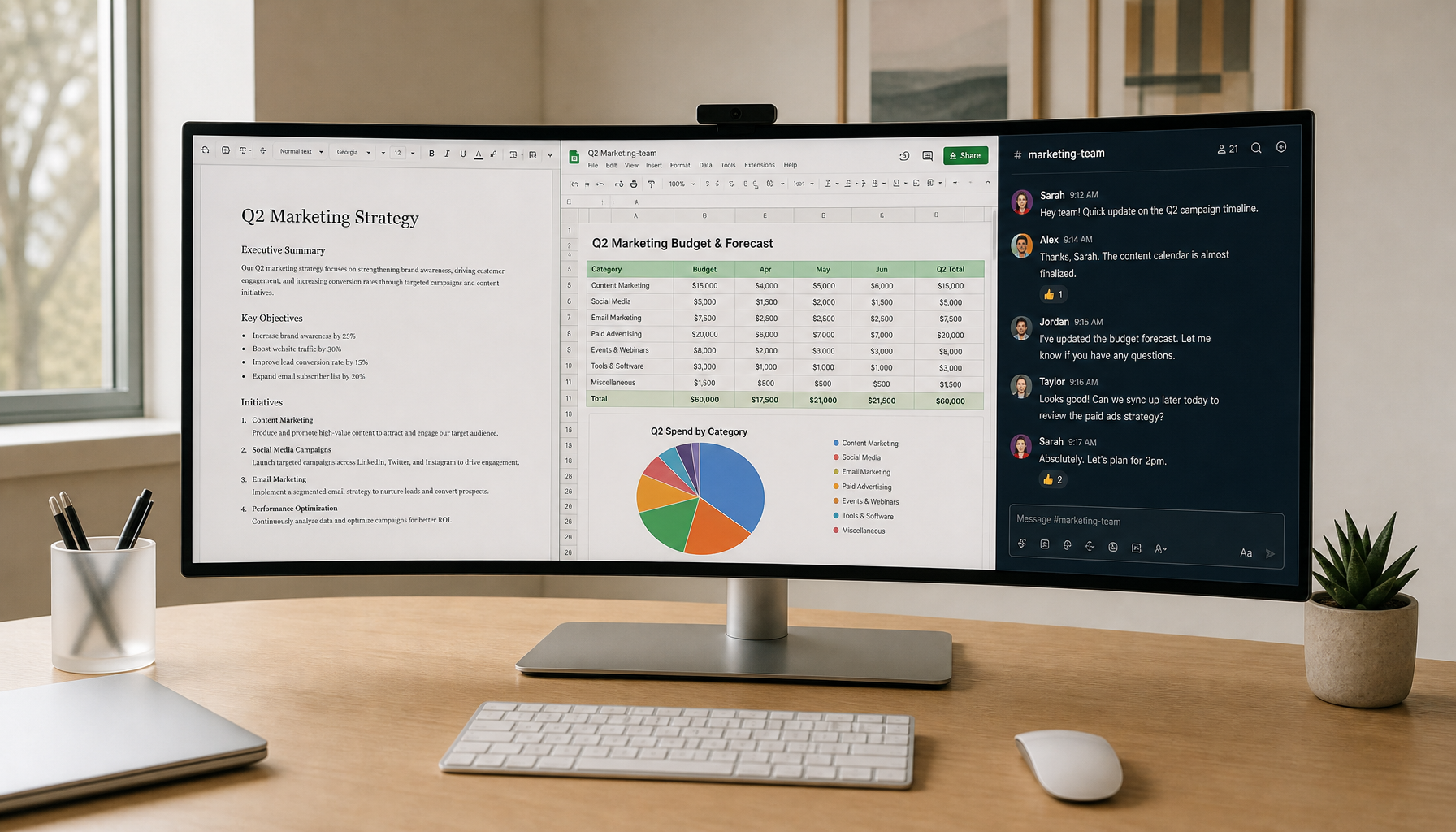
For most hybrid PC buyers, Mini-LED vs OLED is less about peak refresh rate and more about what feels easy to live with at a desk. The same monitor can look great in games and still be annoying in a morning spreadsheet session if text halos, glare, or static UI behavior get in the way.
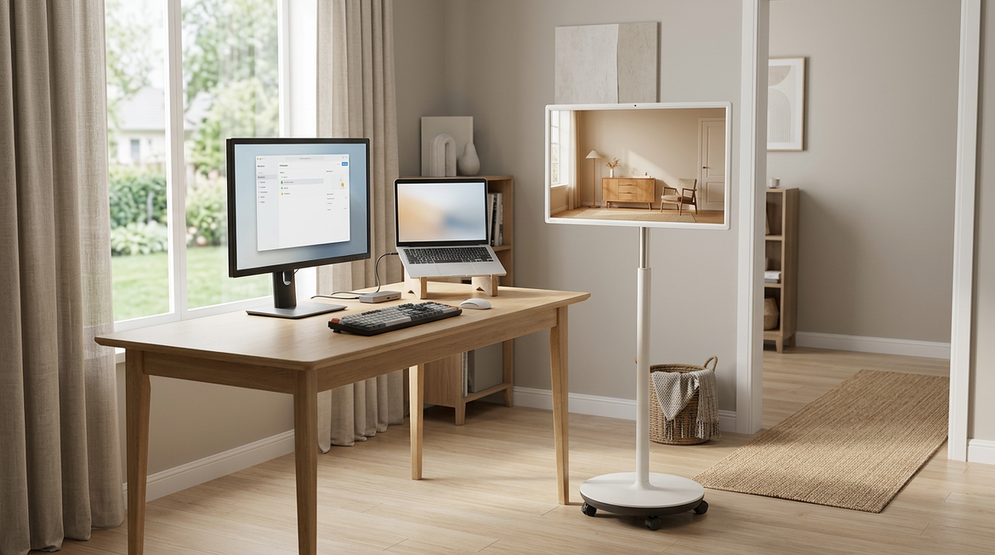
A single-monitor home office is the right mental model here. If your desk gets daylight, overhead light, and long stretches of email, docs, or dashboards, the safer-feeling panel is often the one that stays readable and predictable under those conditions. If you mainly work briefly and spend more time gaming after hours, the trade-off shifts toward image quality in dark scenes.
One practical rule is worth keeping in mind: if your desktop stays open all day, choose the panel that creates the fewest annoyances in static windows; if your desk is mostly for evening games, choose the panel that gives you the picture you notice most in motion and dark scenes.
Text Clarity and Desktop Sharpness
For text-heavy work, Mini-LED usually feels more familiar because it behaves more like a conventional LCD. That does not mean every Mini-LED panel is identical, but it often avoids the text-fringing complaints that some OLED desktop users notice.
OLED text clarity can vary with subpixel layout and scaling, and that matters most on Windows desktops where many windows, icons, and spreadsheets stay visible at once. As PCWorld's explanation of OLED clarity notes, non-RGB layouts can make text edges look less clean than a typical RGB LCD. PC Monitors makes a similar point in its look at QD-OLED and WOLED fringing issues, especially when pixel density is lower or scaling is awkward.
What that means in practice is simple. If you sit at a 27-inch or 32-inch desk and read a lot of text, Mini-LED is usually the more predictable choice. OLED can still look excellent, but it is the one more likely to need the right resolution, scaling, and distance before it feels fully comfortable.
If you want a deeper follow-up on that part of the decision, OLED for 2026 Productivity: Comparing Subpixel Layouts for Text Clarity is a useful next stop.

Blooming, Blacks, and Bright Rooms
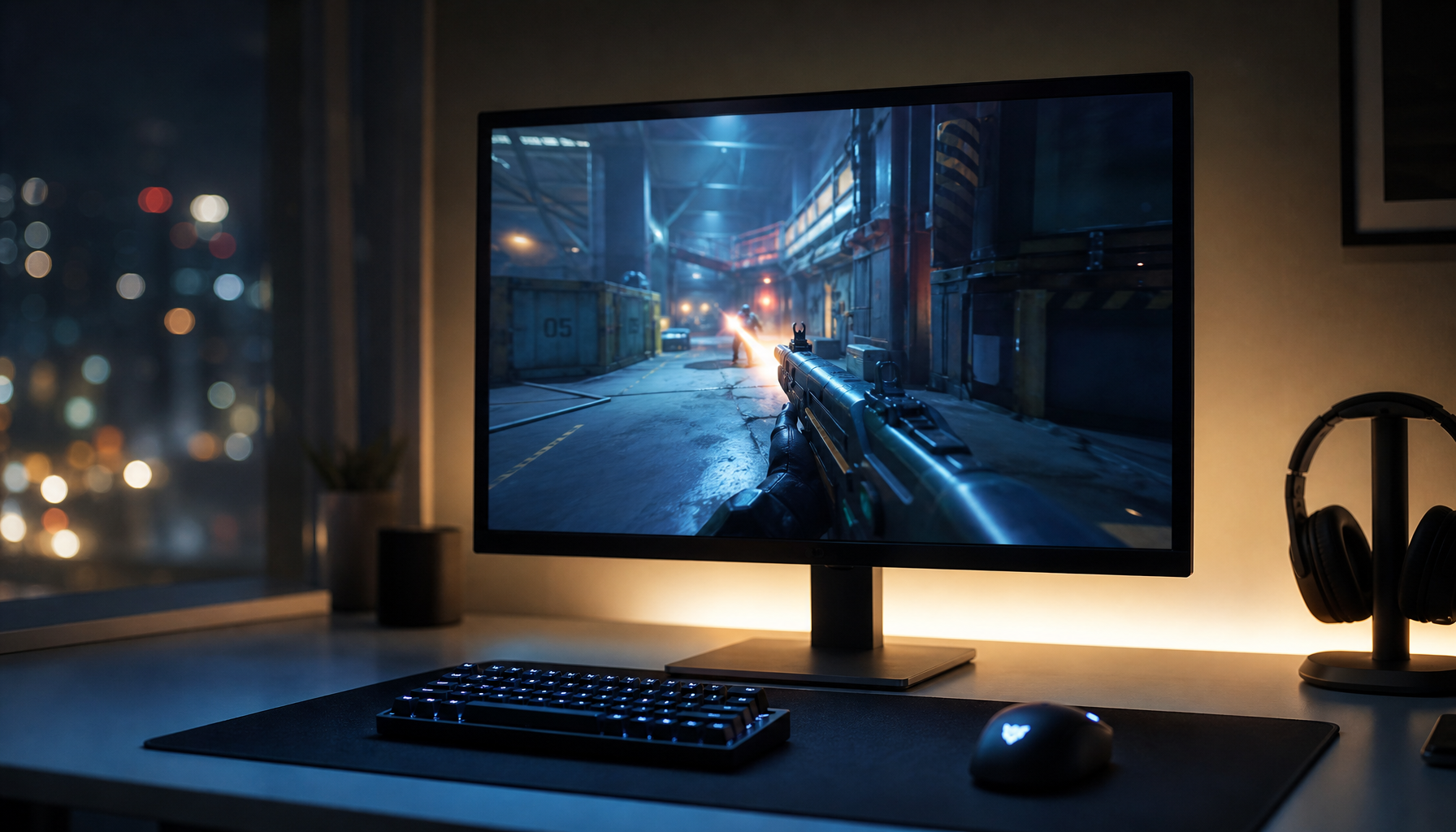
This is where Mini-LED vs OLED becomes most visible in everyday use. Mini-LED uses local dimming zones, so bright objects on dark backgrounds can show blooming or halos around them. That effect is easy to ignore in some games and very obvious in others, especially when white text sits on a dark app or launcher.
OLED handles that differently because each pixel turns on and off by itself. That is why OLED usually wins on black level and dark-scene contrast. For game menus, space scenes, and dark-room viewing, the result can look cleaner and more cinematic. The catch is that room light changes what you notice. In a bright office, glare and reflections can reduce the benefit of perfect blacks, while blooming from a zone-based backlight may stand out around UI elements.
A helpful shortcut is this: if your desk is bright and you keep a lot of white text over dark backgrounds, Mini-LED is usually the more forgiving compromise; if your room is dim and you want the strongest dark-scene contrast, OLED tends to be the more satisfying panel.
If you want a deeper look at why local dimming changes the picture, the article on Halo Effects From Local Dimming Zones is the better background read. The note on How Do Different Zone Shapes (Square vs. Rectangular) Impact Blooming Patterns? is also useful if you are trying to understand why halos look different from one Mini-LED monitor to another.
Burn-In Risk and Static Desktop Habits
Burn-in is the main reason many hybrid users hesitate on OLED. The risk is tied to usage pattern, not to every OLED owner equally, but prolonged static UI is the scenario that deserves caution. Prolonged exposure to static elements such as taskbars or icons can raise burn-in concerns over time, so users who keep the same layout visible for many hours each day should weigh that factor carefully.
Mini-LED does not have that same burn-in risk because it uses an LCD panel with a backlight rather than self-emissive pixels. For users who leave the same app dock, status bar, or spreadsheet layout open for long stretches, that is a meaningful peace-of-mind advantage.
A good not-a-fit filter is simple: if your screen spends most of the day on static documents, pinned taskbars, or dashboards, OLED is harder to justify unless you are comfortable managing that habit; if your desktop changes constantly and your gaming sessions are the main event, OLED becomes much easier to consider.
For a product-side example of the more practical side of Mini-LED, the All-Mini-LED Monitors collection is the cleanest browsing path. If you are comparing the class rather than the spec sheet, it is a better starting point than chasing the most extreme refresh number first.
Which Panel Fits Your Mixed-Use Desk
Here is the simplest way to think about Mini-LED vs OLED for a mixed-use desk: pick the panel that protects your most common annoyance.
| Buyer profile | Best fit | Why it fits | Watch-out |
|---|---|---|---|
| Bright-room office gamer | Mini-LED | Better daytime practicality, less concern about static UI, more forgiving for bright desks | Blooming can show around white UI on dark backgrounds |
| Text-heavy daytime worker | Mini-LED | More familiar desktop look, often cleaner text behavior, easier to live with for long documents | Dark-scene contrast is usually less dramatic than OLED |
| Night gamer who wants cinematic contrast | OLED | Deeper blacks and cleaner dark scenes in games and menus | Static desktop habits need more discipline |
| Buyer who leaves taskbars and dashboards open for hours | Mini-LED | No burn-in concern from static desktop elements | You may still notice local-dimming halos in some apps |
If you want to browse the store-side category once you know Mini-LED is the better fit, the All-OLED Monitor collection and Mini-LED options are the two broad paths to compare. For this topic, the collection pages are most useful as navigation, not as proof that one panel is always better.
One decision sentence to keep in mind: if your workday is long and your gaming is secondary, Mini-LED is usually the safer default; if gaming image quality is the emotional priority and your desktop is mostly flexible, OLED becomes the more interesting choice.
Practical Shortlist for a Mixed Desk
Before you buy, check three things in order: room light, desk distance, and how much static UI you leave visible. Those are more important than chasing a small refresh-rate bump that you may not notice in mixed work and gaming. On a 27-inch or 32-inch desk, resolution and pixel density matter for text long before motion numbers do.
Ergonomics matter too. A stand with height adjustment, swivel, or quick release can save you more annoyance over a year than a slightly higher refresh spec. If you switch from work posture to game posture often, the monitor should be easy to position, not just fast on a spec sheet.
If you are leaning OLED and want a 27-inch 2K option, the KTC OLED 27" 2K 240Hz/0.03ms USB-C Gaming Monitor | G27P6 fits the high-contrast, high-refresh side of the trade-off, but it makes the most sense when your desktop habits do not center on static UI all day. If you are leaning Mini-LED and want a similarly sized mixed-use pick, the KTC Mini LED 27" 200Hz 2K HDR1000 Gaming Monitor | M27T6S is the more natural fit for a work-first desk that still games hard at night. For users who prefer higher resolution in the same size class, the KTC Mini LED 27" 4K 160Hz HDR1400 Gaming Monitor | M27P6 offers another practical option.
My practical rule of thumb is still the same: Mini-LED for safer mixed-use practicality, OLED for deeper contrast when the desk habits fit the panel.
Mini-LED vs OLED fit matrix
| Scenario | Mini-LED fit | OLED fit | Notes |
|---|---|---|---|
| Text-heavy work | Strong | Weaker | LCD-style rendering feels more consistent |
| Mixed work + gaming | Balanced | Balanced | Depends on room light and static UI hours |
| Dark-game focus | Weaker | Strong | Per-pixel blacks give cleaner contrast |
| Bright UI on dark backgrounds | Weaker | Strong | OLED avoids blooming around bright elements |
| Long daily static UI sessions | Strong | Weaker | No burn-in risk with Mini-LED |
FAQs
Q1. How Do Mini-LED and OLED Differ for Text-Heavy Work?
Mini-LED usually feels more familiar for desktop text because it behaves closer to a conventional LCD. OLED can look excellent, but subpixel layout and scaling can make text edges seem less consistent on some Windows setups. If you spend hours in docs or spreadsheets, that difference matters more than gaming speed.
Q2. What Is the Main Trade-Off Between Blooming and Burn-In?
Mini-LED can show blooming around bright UI on dark backgrounds, while OLED raises more concern about static UI sitting on-screen for long periods. The choice is not about absolute good or bad. It is about which annoyance you are more willing to manage in daily use.
Q3. Why Does Bright-Room Use Change the Recommendation?
Ambient light makes reflections, glare, and UI visibility more important. In many bright rooms, Mini-LED is easier to live with because it feels more forgiving for work and daytime use. OLED still looks strong, but its dark-scene advantage is less obvious when the room itself is bright.
Q4. Can OLED Work Well for a Single PC Used for Both Work and Gaming?
Yes, if your static desktop habits are light and you value deep blacks and dark-scene contrast. OLED is most attractive when gaming is the emotional priority and work is important but not dominated by static taskbars, dashboards, or all-day document windows.
Q5. What Should I Check Before Buying a Mixed-Use Monitor?
Check room lighting, desk distance, resolution, stand adjustability, warranty, and return policy before you get too deep into panel debates. Those details affect whether the monitor feels comfortable every day. The best panel on paper can still be the wrong choice if the room or workflow is a poor match.
The Safer Choice Depends on Your Desk Habits
Mini-LED vs OLED is really a choice between everyday convenience and deeper contrast. If your desk is bright, text-heavy, and full of static windows, Mini-LED is usually the safer pick. If your room is dim, your work is lighter, and gaming image quality matters most, OLED can be the more satisfying monitor. The right answer is the one that matches how you actually sit at the desk, not how you wish you used it. Test both panels under your typical lighting and workload when possible; return policies give you a low-risk way to confirm the fit before committing long-term.