A matte coating can make a screen look slightly less sharp than a glossy one, but it usually affects perceived sharpness more than actual pixel detail. In a bright room, matte often delivers the clearer overall experience because reflections on glossy screens can hide far more detail than the coating itself.
Do text edges look a little fuzzy on your work monitor even though the resolution is high, or do dark game scenes feel flatter than they should? In side-by-side use, the difference is easy to spot: glossy usually looks cleaner in controlled light, while matte stays easier to use once daylight, ceiling lights, or a lamp hit the panel. The right choice depends on how and where you use the display.
Sharpness vs. perceived sharpness
A glossy screen can look clearer because it lets more of the panel’s light and edge definition reach your eyes without being diffused by a stronger anti-glare layer. That does not mean the monitor has more real resolution. If two 27-inch 4K panels use the same subpixel structure and are both set to native resolution, they still show the same amount of image information.
What changes is how the surface handles light. Glossy coatings reflect room light more directly, like a mirror. Matte coatings scatter that light across the surface, which cuts glare but can also add a faint haze or grain over fine edges. On dense panels, that may show up as slightly softer fonts, less crisp spreadsheet lines, or a light texture over large bright areas.
That is why people sometimes say matte reduces sharpness. A more accurate statement is that matte can reduce perceived edge clarity. A screen finish does not change the pixel grid; it changes how cleanly you can see it.
Why glossy often looks sharper
A clearer image with stronger perceived contrast is the main reason glossy remains appealing to gamers, editors, and anyone who values visual impact. Blacks often look deeper, highlights pop more, and small UI elements can seem more precisely defined. On a desktop setup with controlled lighting, that cleaner optical path is obvious.

For example, if you place a glossy and a heavy-matte 27-inch 1440p monitor side by side in a dim room and open a black-on-white document, the glossy panel will often make the letter edges look more defined even though both displays may be rendering the same text at the same native resolution. The finish is not creating extra detail; it is simply hiding less of it.
That matters even more with high-quality OLED and high-PPI panels. In controlled ambient light, glossy typically preserves intended contrast and fine detail more effectively.
Why matte can be the better real-world choice
A matte finish reduces reflections, and that can matter more than a slight loss in apparent crispness once you leave the ideal demo-room setup. If your monitor faces a window, sits under office lighting, or travels between coffee shops, a glossy panel may look spectacular for 30 seconds and frustrating for the next 8 hours.

This is where many buyers get tripped up. They compare coatings in isolation instead of comparing the full viewing environment. A glossy screen that reflects a window across the middle of your spreadsheet is not sharper in practice. It is simply more optically pure under the wrong conditions. Guidance on reducing glare also notes that adjusting brightness and placing the screen about an arm’s length away can help reduce digital eye discomfort, which is a useful reminder that clarity and comfort are linked.
In office use, that tradeoff is easy to feel. Slightly softened text from matte is often less damaging to productivity than fighting visible reflections every time you shift position or the sun moves across the room. For portable smart screens, that practical advantage becomes even more important because lighting is rarely consistent.
How much sharpness do you actually lose?
The answer depends on how aggressive the coating is. A light matte or semi-glossy layer usually gives up very little clarity while controlling enough glare for mixed-use rooms. Heavier matte coatings can add more visible haze, especially on white backgrounds, fine fonts, and high-density displays where you are close enough to notice the surface texture.

Finish |
Perceived sharpness in dim light |
Glare control |
Best fit |
Glossy |
Highest |
Lowest |
Dark-room gaming, media, color-rich visuals |
Semi-glossy or light matte |
Very good |
Moderate |
Mixed gaming and productivity |
Heavy matte |
Lower |
Highest |
Bright offices, portable use, uncontrolled lighting |
That middle category matters. Notes on semi-glossy and lighter matte treatments describe them as a compromise that preserves more clarity than traditional matte while still reducing mirror-like reflections. For many people, that is the sweet spot.
What matters more than the coating
A monitor’s native resolution and setup often matter more than the finish alone. If you are running the wrong resolution, using poor scaling, or pushing a sharpness slider until it adds halos, you can make either coating look worse.
This shows up constantly in productivity setups. A 27-inch 1080p matte monitor can look less sharp not just because of the coating, but because pixel density is already limited at that size. Meanwhile, a 15-inch portable 1080p display can look very clean despite using matte because the pixels are packed tighter. Finish and pixel density work together; they do not replace each other.
Calibration also matters for creative work. Color accuracy depends more on panel quality and calibration than on finish alone. Glossy may preserve the panel’s look better in controlled light, but a poorly tuned glossy display is still a poor display.
When to choose matte, glossy, or something in between
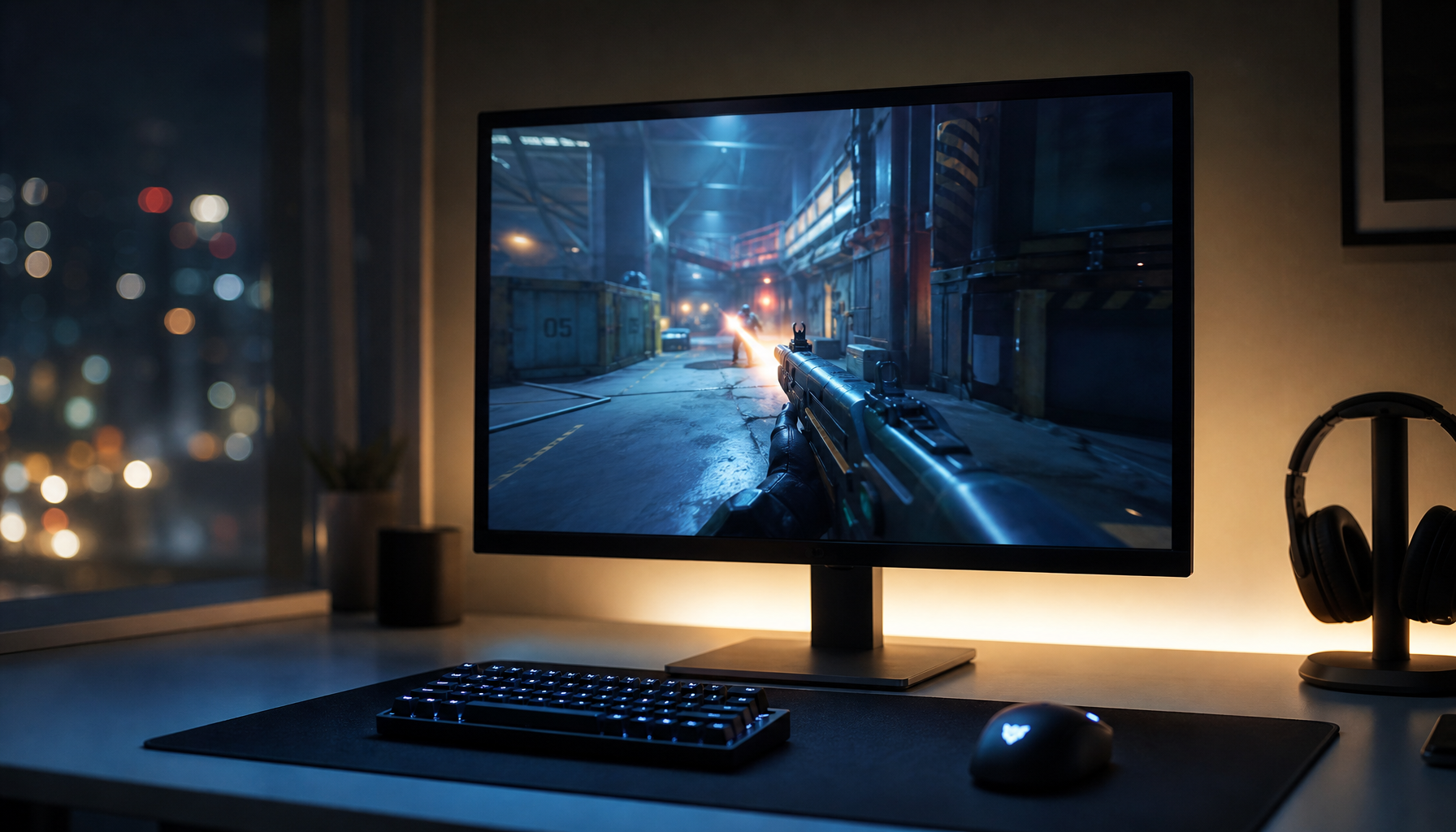
If your setup is a gaming room with blackout shades, glossy is usually the more immersive choice. Dark scenes feel richer, HUD elements look cleaner, and the panel’s native contrast comes through with less interference. This is especially compelling for single-player gaming, HDR movies, and visual editing where surface haze is distracting.
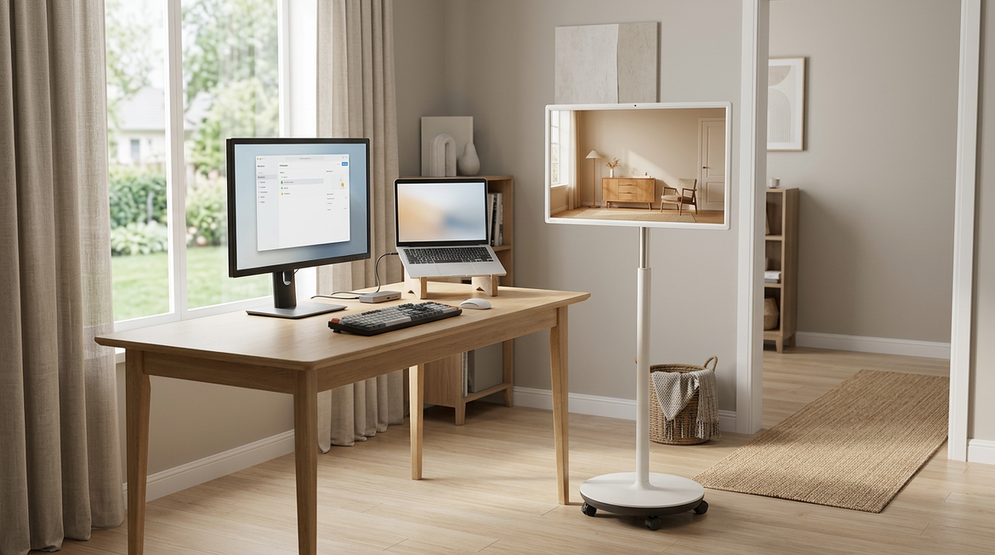
If your setup is an office, a shared room, or a portable workstation, matte is usually the safer and more reliable choice. You trade a bit of optical crispness for a screen you can actually read at 10:00 AM, 2:00 PM, and 6:00 PM without rearranging the room.
If you want one display for both productivity and entertainment, semi-glossy or light matte is often the smartest choice. It will not match a true glossy panel in a dark room, but it also will not turn into a mirror the moment a lamp is on.
The practical bottom line
Matte can reduce perceived sharpness compared to glossy, especially with heavier coatings, but the difference is usually subtle next to the much larger effect of room reflections, pixel density, and correct display setup. If you can control lighting, glossy gives the cleanest and most immersive image. If you cannot, matte often produces the sharper real-world experience because the screen stays usable when conditions are not perfect.
Choose the finish for the room first, then for the panel. That is how you get a display that performs well not just on paper, but in everyday use.