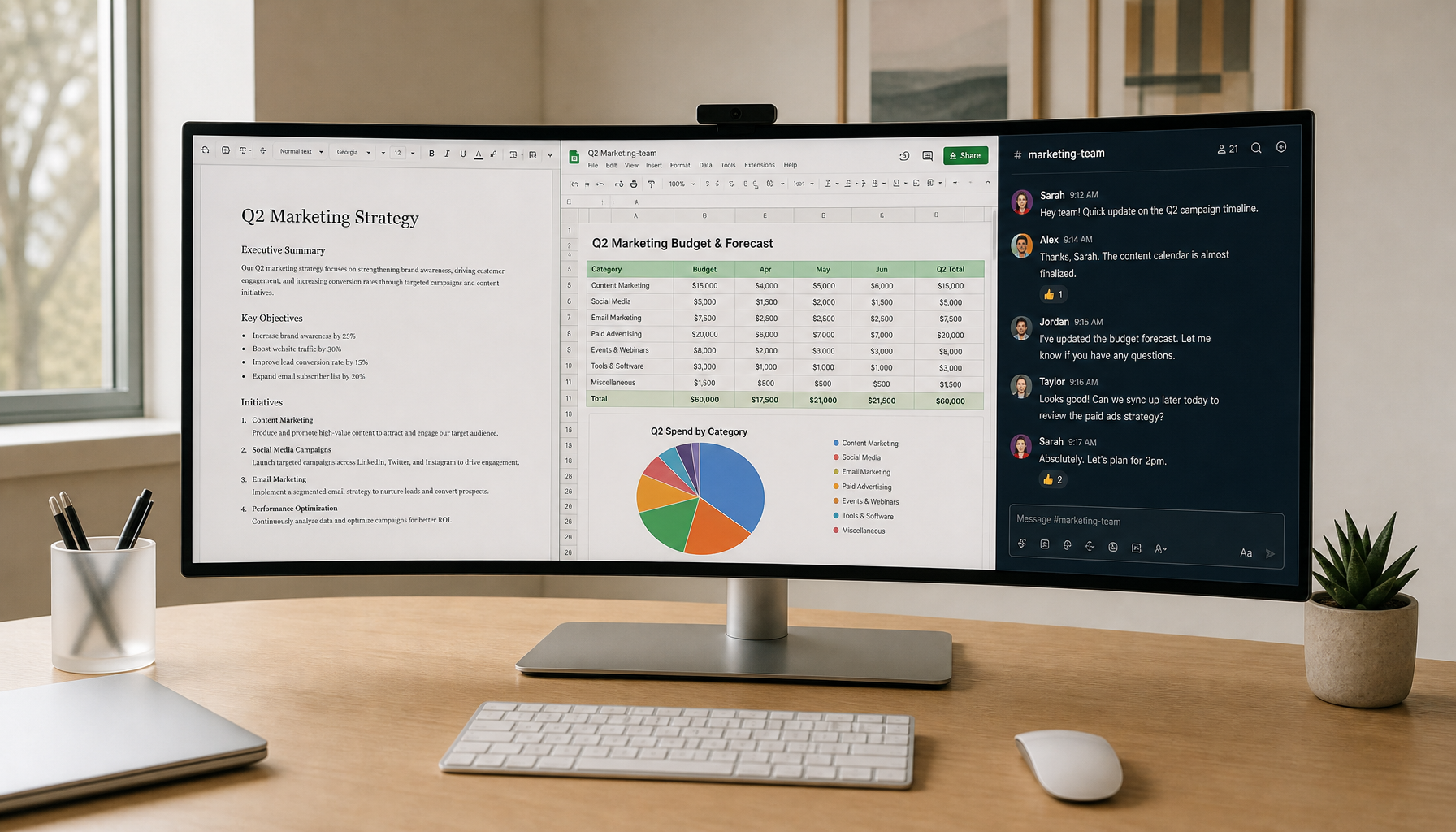
Managing two computers on one screen often creates cable chaos, input lag between devices, and constant manual switching. The good news is you have three viable paths: a traditional hardware KVM switch, software-based keyboard-and-mouse sharing tools, or a modern monitor with built-in KVM functionality. Which path fits depends on how often you switch, how many peripherals you use, and whether your workflow involves gaming, corporate networks, or a minimalist desk.

The Multi-Computer Dilemma: Why You Need a Switching Strategy
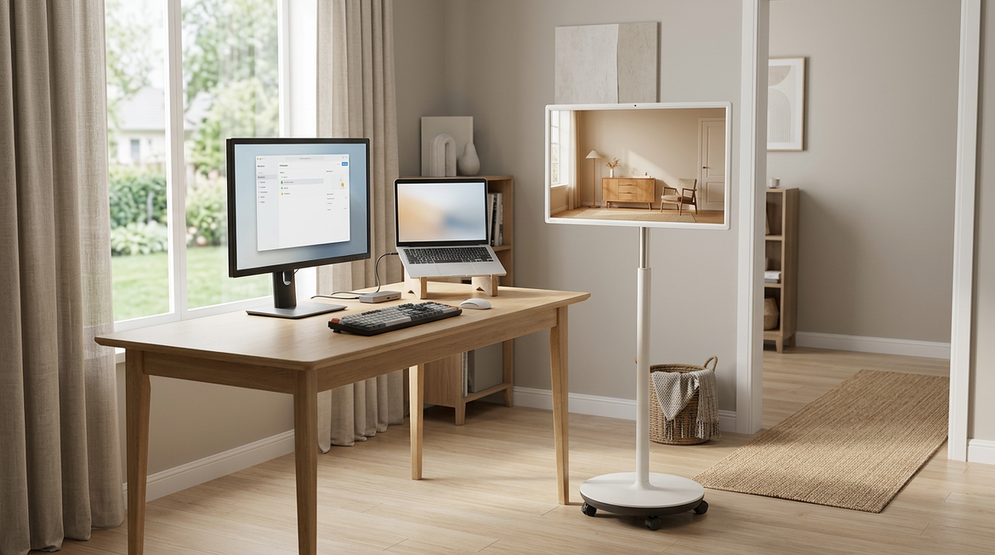
Professionals and gamers frequently run a work laptop alongside a personal desktop or gaming rig. The dream is a single monitor, one keyboard, and one mouse that let you jump between machines without unplugging cables or losing focus. In practice, this setup often leads to cluttered desks, repeated monitor input changes, and compatibility headaches.
The core goal is creating a “single pane of glass” experience where both computers feel instantly accessible. Three main solutions exist: dedicated external KVM hardware, software-only keyboard-and-mouse (KM) tools, and monitors with integrated KVM switches. Each trades off convenience, cost, and capability differently. Early in your decision process, clarify your switching frequency, device count, peripheral needs, and network environment—these factors usually determine the winner before you compare specific models.
KVM Switch vs. Software KVM: Which is Right for You?
Software tools such as Microsoft’s Mouse Without Borders let you share a single keyboard and mouse across multiple computers on the same network. As the official PowerToys documentation explains, these solutions share input and clipboard data but do not switch the video signal itself. You still manually change the monitor’s input source when you want to view the second computer.
Hardware KVM switches and built-in monitor KVMs, by contrast, route the actual display signal along with keyboard and mouse. This gives true one-button switching and works even before an operating system loads. Software KM shines in multi-monitor side-by-side arrangements where each screen stays dedicated to one machine. For a true single-monitor dual-computer setup, however, a hardware or integrated KVM is usually required.
Many remote workers start with software because it is free and easy to install. Yet the moment you need to see only one screen at a time or work across different operating systems, the limitations become obvious. This distinction alone rules out software for a large share of users seeking a clean, single-monitor workflow.
When Software KVM is Not Enough: Network and Video Limitations
Corporate environments often block or complicate software KM tools. Firewalls, VPNs, and strict security policies can prevent the required network communication between machines. The Microsoft documentation on security and service mode notes that all devices must remain on the same local network and can be disrupted by corporate restrictions.
Software solutions also cannot provide BIOS or boot-time access. If you need to enter a computer’s BIOS, choose a boot device, or troubleshoot before the OS starts, a hardware path is mandatory. Even in normal use, software-only setups still require you to press the monitor’s input button each time you switch computers, adding friction that defeats the purpose of a seamless experience.
These constraints explain why many hybrid workers and power users eventually move to hardware KVMs or monitors with built-in switching. The software route works best for low-stakes, same-network, multi-monitor productivity where occasional manual input changes are acceptable.
Why a Monitor with Built-in KVM is the Ultimate Desk Upgrade
Monitors with integrated KVM switches combine the display, video switching, and USB hub into one device. Models such as the KTC H49S66 use USB-C with Alt Mode to carry video, data, and up to 90 W of power delivery over a single cable. As the USB Type-C specification details, this Alt Mode approach dramatically reduces cable clutter compared with a separate KVM box plus multiple video and USB cables.
The built-in KVM typically supports two devices—one via USB-C (ideal for laptops) and one via DisplayPort or HDMI plus USB-B (ideal for desktops). Switching often happens through the monitor’s on-screen display (OSD) or a dedicated button. For minimalist home offices or work-from-home desks, this integration removes the need for an extra box, cuts cable runs, and keeps the desk surface clean.
The approach works especially well when your laptop and desktop share similar peripheral needs and you rarely exceed two machines. Users who value a single high-quality panel for both work and light gaming often find that a monitor with built-in KVM delivers the cleanest, most future-proof upgrade.

The Gaming Edge: High Refresh Rates and Latency
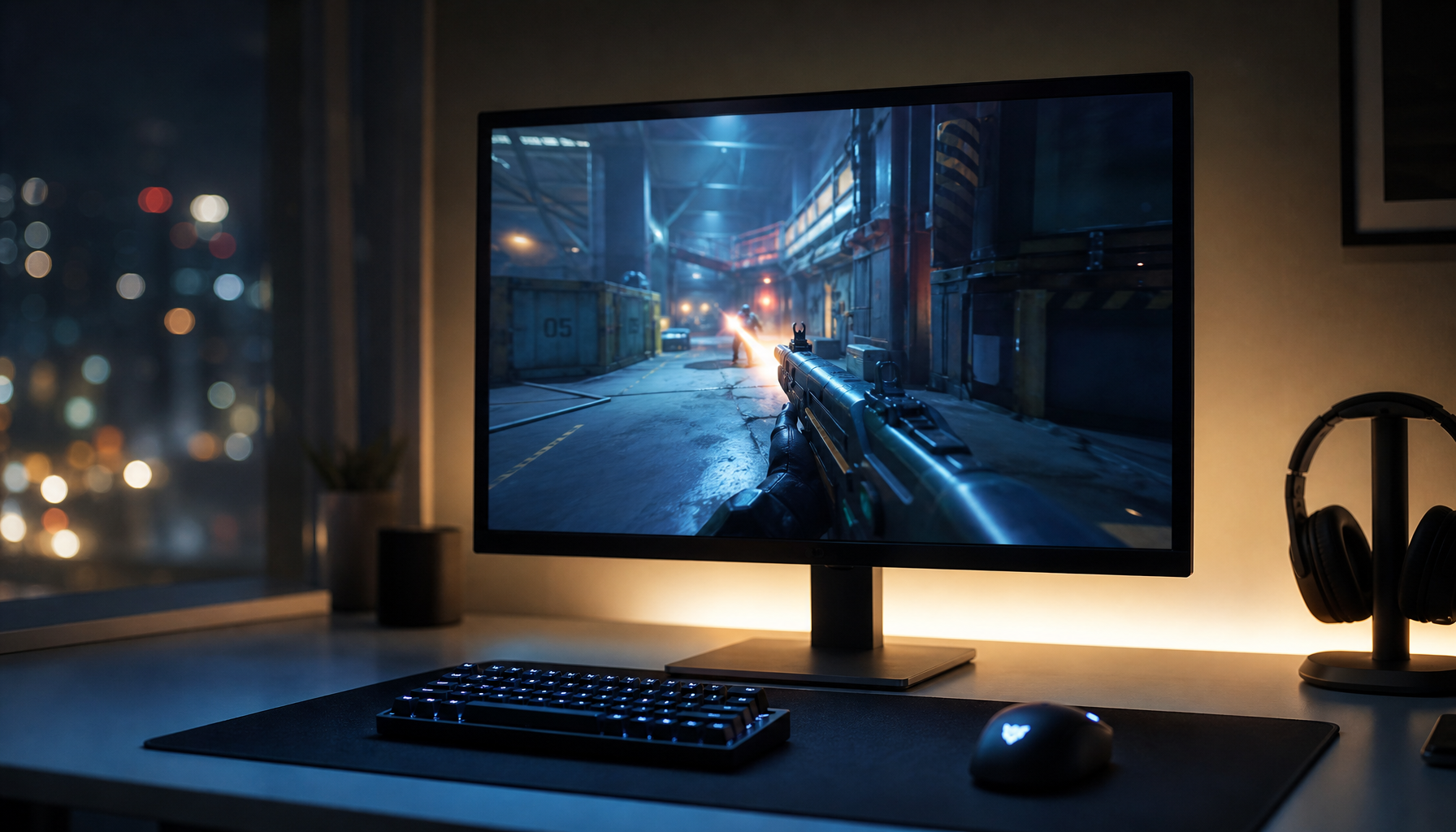
Gamers who also run a second machine for streaming or chat face stricter technical requirements. Many inexpensive external KVM switches cap at 60 Hz or introduce noticeable latency because they cannot pass full-bandwidth DisplayPort or HDMI signals. For smooth 144 Hz or 240 Hz gameplay, the signal path must support DP 1.4 or HDMI 2.1 standards, as outlined in VESAs DisplayPort 1.4 documentation.
Monitors with built-in KVM designed for gaming, such as the KTC G27P6 OLED or H27P6 4K model, maintain native high refresh rates and low input lag because the switching circuitry is engineered around the panel’s capabilities. These monitors avoid the bandwidth bottlenecks common in older or budget external switches.
If your dual-computer desk includes competitive gaming or high-frame-rate content creation, verify that any KVM solution in your path is rated for your target resolution and refresh rate. A monitor with integrated high-spec KVM often becomes the simplest way to protect both visual quality and switching convenience.
Built-in KVM vs. External Switch: The Decision Threshold
The choice between a monitor’s built-in KVM and a separate external switch usually comes down to four practical thresholds: device count, switching frequency, peripheral power draw, and desire for a minimalist aesthetic.
Built-in KVMs are hard-capped at two inputs on most consumer monitors. They excel in clean, two-device setups with standard keyboards, mice, and webcams. When you add a third computer, a DAC, high-power RGB peripherals, or an external audio interface, an external powered KVM becomes the safer choice. Frequent switchers (more than five times per day) may also prefer the tactile button on an external unit over navigating an OSD menu—the so-called “Toggle Tax.”
Built-in KVM vs. External Switch: Decision Threshold
A tiered comparison of when each option is the safer fit across the main decision axes.
View chart data
| Category | Built-in KVM | External switch |
|---|---|---|
| Device count | 3.0 | 2.0 |
| Switching frequency | 2.0 | 3.0 |
| Peripheral power draw | 2.0 | 3.0 |
| Minimalist aesthetic | 3.0 | 2.0 |
Community reports occasionally mention USB dropouts when high-draw peripherals are connected through integrated hubs. While not universal, this risk suggests testing your specific gear or choosing an externally powered KVM when using demanding audio interfaces or multiple RGB devices. The chart above visualizes these thresholds so you can quickly see where your setup lands.
Choosing the Right KTC Monitor for Your Dual-PC Setup
For users whose needs align with a two-device, minimalist workflow, several KTC monitors offer strong built-in KVM performance. The KTC 49" DQHD 180Hz 1000R Curved Gaming monitor H49S66 delivers an ultrawide canvas perfect for viewing two workspaces side-by-side, 90 W USB-C charging, and integrated KVM switching. Its size and curvature make it a favorite for productivity users who still want high refresh rates for occasional gaming.
Gamers who prioritize speed will find the KTC OLED 27" 2K 240Hz/0.03ms USB-C Gaming Monitor G27P6 offers exceptional motion clarity and responsive KVM behavior within its two-input limit. For users who split time between 4K productivity and high-frame-rate console or PC gaming, the KTC 27" 4K 160Hz/320Hz 90W Gaming Monitor H27P6 provides versatile refresh-rate modes and reliable USB-C KVM functionality.
Before purchasing, confirm your laptop supports USB-C video output and that your peripherals stay within the monitor’s USB power budget. If your setup exceeds two computers or demands constant high-power accessories, pair one of these monitors with a simple external switch or explore our broader Office Monitor or Gaming Monitor collections for additional options.
If you want to explore related workflows, read our guide on How a USB-C Monitor Can Streamline Your Workspace or the DisplayPort Alternate Mode Over USB-C technical deep dive.
FAQs
Do I still need a separate KVM switch if I buy a monitor with built-in KVM?
Only if you run three or more computers, use high-power peripherals that exceed the monitor’s USB hub capacity, or switch so frequently that OSD navigation feels tedious. For most two-device laptop-plus-desktop setups with standard peripherals, the built-in KVM is sufficient and eliminates extra hardware.
Can software like Mouse Without Borders replace a KVM entirely?
No. Software tools share keyboard, mouse, and clipboard but cannot switch the video signal or give you BIOS access. You will still need to change monitor inputs manually, and corporate networks often block the required communication.
Will a built-in KVM reduce my gaming refresh rate?
Not on properly designed gaming monitors. Look for models that explicitly support DP 1.4 or HDMI 2.1 in the KVM path. KTC’s high-refresh gaming monitors maintain their rated 144 Hz–240 Hz performance when using the integrated switch.
How many cables can I eliminate with a USB-C KVM monitor?
In a typical laptop-plus-desktop setup you can reduce the connection to a single USB-C cable for the laptop and one video-plus-USB cable for the desktop. This removes the separate KVM box and its tangle of cables.
What should I check before buying a monitor with KVM for work and gaming?
Verify USB-C video and power delivery compatibility on your laptop, confirm the monitor’s USB hub can handle your peripherals’ power draw, and ensure the panel’s resolution and refresh rate match your primary use case. Test wake-from-sleep behavior if you use macOS.
Is an external KVM better for multiple operating systems?
Yes, when you need OS-independent switching or BIOS access across Windows, macOS, and Linux machines. External hardware KVMs operate at the signal level and do not rely on software running on each computer.