KTC vs premium monitor comparison comes down to whether you care more about measured features, desk comfort, and ownership value than brand polish. If the panel fits your room, ports, and return policy, KTC can make sense. If you want the safest all-round support experience or the most predictable ecosystem, a premium brand may still be the better buy.

What Premium Buyers Actually Need to Compare
The real decision is not "KTC or premium" in the abstract. It is whether the monitor gives you the right mix of image quality, ergonomic adjustment, support confidence, and total ownership cost for the way you actually use it.
For mixed gaming and work, the first check is simple: does the display stay comfortable for 4-hour-plus desk sessions, and does it deliver the gaming features you will actually notice? Height and angle matter for neck comfort, which is why stand quality belongs in the comparison, not just panel specs. OSHA's monitor placement guidance is a good reminder that a screen that sits too high or too low can quietly make long sessions worse.
A lower price only matters if the monitor still fits your use case. That is the KTC vs premium monitor comparison in one sentence: if KTC gives you the resolution, refresh rate, and ergonomics you need, the value gap can be real; if not, the cheaper sticker price is a false win.
For buyers who want calibration and display background reading after the comparison, the factory calibration guide is a sensible next step.
Specs That Move the Needle
The specs worth comparing are the ones you feel every day: HDR behavior, motion smoothness, color tuning, and input flexibility. A monitor can look impressive on paper and still be awkward in real use if the full signal path or stand setup is weak.
HDR Brightness and Local Dimming
HDR is where the label matters less than the tier behind it. A higher VESA tier generally means a stricter target rather than a vague marketing claim.
That is why Mini-LED models like the M27T6 and M27P6 sit in a different conversation from basic HDR400 office-style displays. The KTC Mini LED 27" 4K 160Hz HDR1400 Gaming Monitor | M27P6 and KTC Mini LED 27" 180Hz 2K HDR1400 Gaming Monitor | M27T6 are positioned for buyers who want stronger HDR impact, while simpler HDR400 models are more about standard gaming value than dramatic contrast.
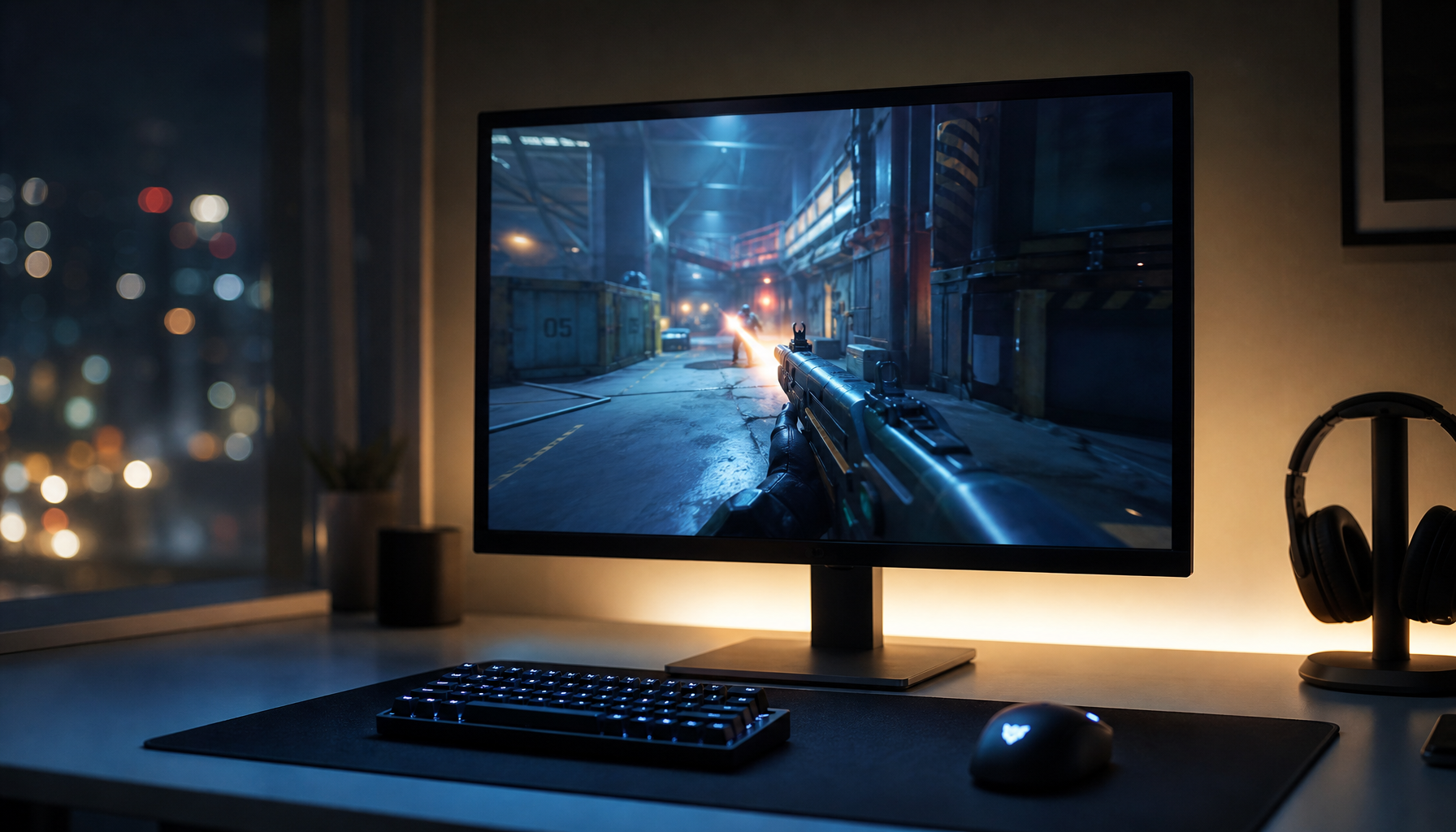
If your main use is dark-room games, HDR movies, or console play where highlight pop matters, Mini-LED is the more relevant category. If you mostly browse, code, or work in normal room lighting, HDR tier matters less than comfort, text clarity, and input options.
Motion Clarity and Refresh Rate Stability
Higher refresh rate only helps when the cable, port, and source device can carry the signal cleanly. That is the hidden catch many buyers miss. A 180Hz panel is not automatically better than a 160Hz panel in your setup if your source or cable cannot sustain it.
In practical terms, 1440p at 180Hz is a sweet spot for many PC gamers who want smooth motion without jumping to 4K load. A 4K 160Hz display makes more sense when you want sharper desktop text and more pixel density for mixed work, but it usually asks more from the GPU.
Color Coverage and Factory Calibration
Color numbers matter most if you edit photos, watch HDR content, or care about how saturated games look. The usual shorthand is simple: broader color coverage can help, but calibration and consistency determine whether that color actually looks balanced on your desk.
For buyers comparing KTC vs premium monitor comparison charts, the useful question is not "Which panel has more numbers?" It is "Which one gives me believable color without a lot of fiddling?" That is where premium brands sometimes earn their markup, especially for buyers who prioritize out-of-box polish over raw value.
Connectivity and Console Readiness
Ports affect the decision more than many spec sheets admit. HDMI 2.1 support is especially relevant if you want 4K console gaming or a cleaner path for newer devices, while DisplayPort still matters for PC refresh-rate headroom.
KTC's gaming and Mini-LED lines often split these use cases cleanly. A 4K gaming display with HDMI 2.1 is a better fit for console owners, while a 1440p high-refresh model can be the better value for PC-first buyers who care more about speed than absolute sharpness.
Where KTC Beats the Price-To-Spec Gap
The clearest KTC advantage is usually that it packages more modern spec combinations into a lower price tier than many premium-brand alternatives. That does not mean it wins every category, but it often wins the total package when you care about refresh rate, HDR tier, and usable ergonomics more than brand prestige.
| Use Case | KTC Value Tier | Premium-Brand Expectation | Buyer Takeaway |
|---|---|---|---|
| 4K console gaming | Strong when HDMI 2.1 and 4K 160Hz or HDR Mini-LED are included | Higher price for similar specs, sometimes with stronger brand confidence | Pay for premium only if you want the brand ecosystem or resale comfort |
| 1440p PC gaming | Strong, especially around 180Hz to 200Hz with Mini-LED or fast IPS | Often similar performance at a higher price | KTC is often the value pick if the stand and ports fit |
| HDR-focused entertainment | Strong when Mini-LED and higher HDR tiers are present | Better polish or more mature tuning may justify the premium | Choose the premium option only if image tuning matters more than price |
| Mixed work and gaming | Mixed, depending on stand and text clarity | Usually stronger support perception and office polish | Check ergonomics first, not logo first |
| Basic office use | Usually not the smartest spend | Premium may still be overkill, but simpler models can be easier to live with | If you do not need HDR or high refresh, buy for comfort and text first |
In a KTC vs premium monitor comparison, premium brands still have real advantages. They may offer better software ecosystems, more mature support channels, and stronger resale perception. But if you are paying a large markup for features KTC already covers, the premium price needs a clear reason.
If you are browsing by category after comparing value tiers, Gaming Monitor and 4K Monitor are the two broad paths that match most of these use cases.
[ ]
]
Stand Design and Desk Comfort
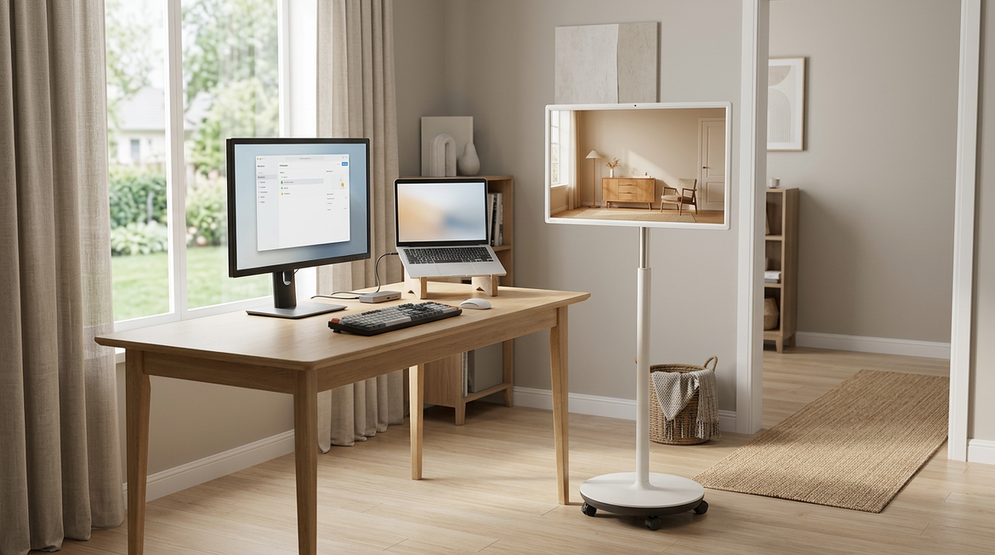
The stand is where many buyers feel the difference after the excitement of the spec sheet fades. In a home desk setup, full adjustment often matters more than people expect, especially if you game and work in the same chair for hours.
- Height adjustment matters if your chair height changes or if multiple people use the same desk.
- Swivel helps when you share the screen or need to angle it away from glare.
- Pivot is useful for long documents, coding, or vertical reference work.
- A quick-release stand is convenient, but it is not the same thing as ergonomic flexibility.
- Tilt-only stands can work on fixed desks, but they are less forgiving for long sessions.
- If your desk is shallow, a monitor arm can be more useful than a premium-looking fixed stand.
The best ergonomic setup is the one that keeps your head and neck neutral without constant re-adjustment. For long mixed-use sessions, that is often a stronger satisfaction driver than the logo on the bezel.
If you are evaluating a specific Mini-LED option, KTC Mini LED 27" 4K 160Hz HDR1400 Gaming Monitor | M27P6 is one of the clearer examples of a model that combines high-end spec aims with a full stand.
Best Fits for Each Buyer Type
HDR-First 4K Gaming Buyers
If you want console-friendly 4K with stronger HDR impact, a Mini-LED 4K model is the KTC tier to compare first. The M27P6 is the cleaner fit when you want sharper 4K text, stronger HDR impact, and a full ergonomic stand in one package.
This is the point where premium brands usually need to prove why they cost more. If the premium option does not clearly improve HDR tuning, support, or panel consistency, KTC often has the better price-to-spec ratio.
Mixed Work and Console Setups
If your desk handles spreadsheets by day and gaming by night, the right choice is the one that balances text clarity, port flexibility, and stand comfort. KTC 27" 4K 160Hz/1ms HDR400 Gaming Monitor | H27P22S is a good middle-ground example because it keeps 4K sharpness and full ergonomics without forcing you into Mini-LED pricing.
Premium brands become more attractive here when you want a more polished out-of-box experience or you have specific software features you trust. Otherwise, the value case for KTC is hard to ignore.
Budget 1440p Buyers Who Want Better Ergonomics
If you mostly play fast games on PC and want to keep cost down, 1440p high refresh is often the sweet spot. That is where the KTC Mini LED 27" 180Hz 2K HDR1400 Gaming Monitor | M27T6 makes the most sense, because it pairs 1440p speed with Mini-LED HDR and a full stand.
This is also where the recommendation flips away from premium brands most often. If the premium model is only giving you a familiar name and not meaningfully better ergonomics or motion performance, KTC is usually the better value choice.
Text-Heavy or Creator-Adjacent Desks
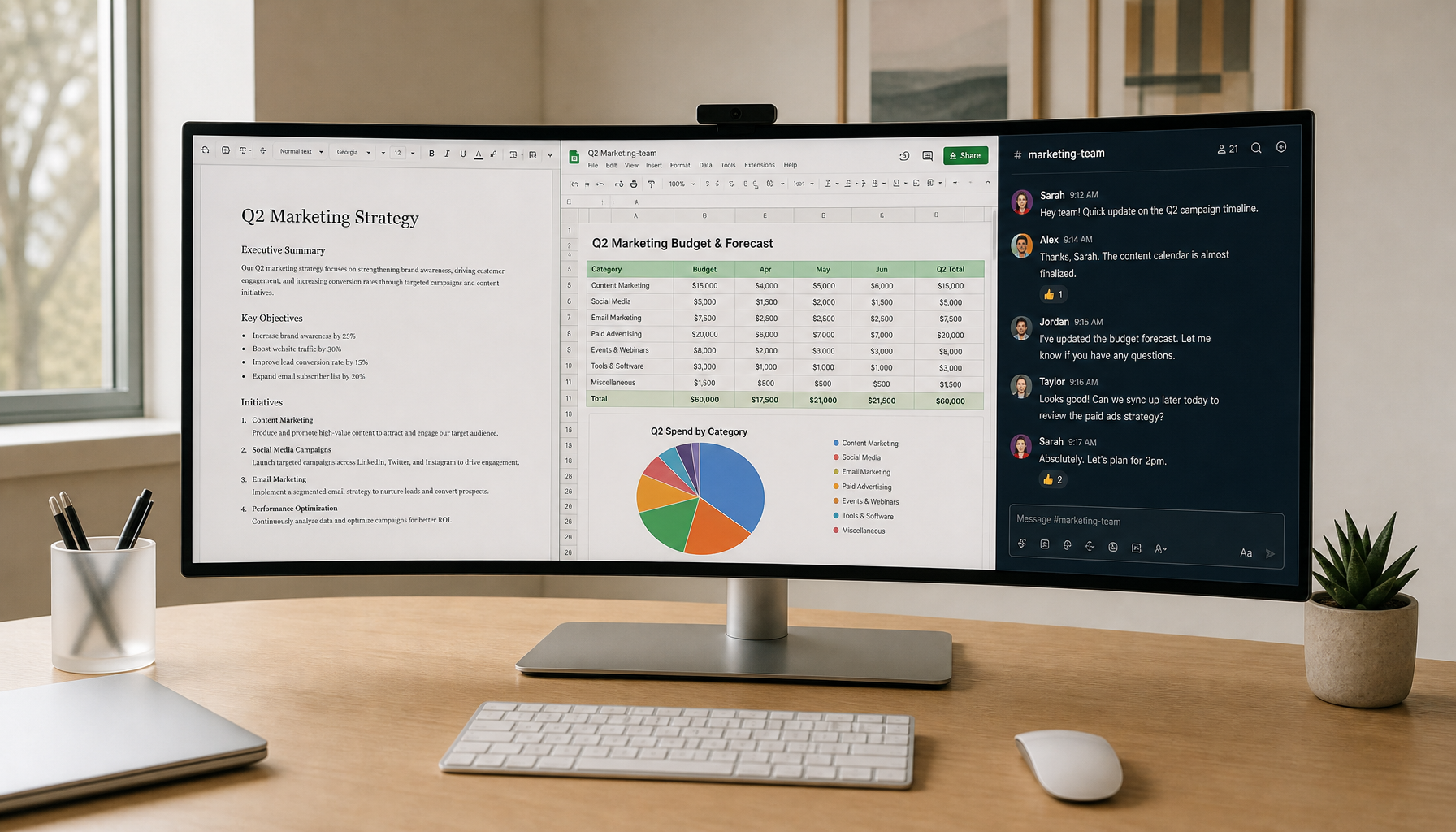
If your day is mostly documents, browser tabs, and occasional gaming, premium is only worth it when you can point to a concrete benefit. A clean office monitor can be enough, but if you want sharper text and more gaming flexibility later, a 4K or high-refresh KTC model may age better.
For buyers who prefer a work-first browse path, the Office Monitor collection is the right navigation step. It is more relevant than chasing flagship gaming specs you may not use every day.
What to Check Before You Buy
- Confirm your main use case before you compare prices. If you mainly work in documents and email, you may not need HDR or Mini-LED at all.
- Match resolution and refresh rate to your GPU or console. A spec is only useful if your source device can drive it cleanly.
- Verify the port combination. HDMI 2.1 matters for some 4K console setups, while DisplayPort is often the better PC path.
- Check the stand and your desk depth. If the included stand cannot place the screen comfortably, plan for a monitor arm.
- Review the included cable quality and remember that flaky cables can make a fast panel feel unstable.
- Read the return window and warranty terms before checkout. KTC's product pages list a 30-day return policy and 3-year warranty on several models, which gives buyers a clearer exit if the fit is wrong.
- Ask the final question: is premium buying me a feature I will feel every day, or just a safer brand name?
If you want a broader panel-technology comparison before deciding, MiniLED vs. OLED is a useful follow-up.
For buyers who want a quick rule, the KTC vs premium monitor comparison usually breaks down like this: choose KTC when the specs, stand, and ports already fit your setup; choose premium when you are paying for support confidence, ecosystem polish, or a very specific image-tuning preference. That is the decision line that matters.
How Does KTC Compare With Premium Brands for HDR Gaming?
KTC can be very competitive for HDR gaming when you are comparing Mini-LED models against similarly priced premium-brand displays. The practical gap often shows up more in tuning and brand confidence than in raw feature lists. In darker rooms, Mini-LED can make the difference feel bigger, but the premium option still matters if you value the most refined HDR behavior.
What Specs Matter Most When Choosing Between KTC and a Premium Monitor?
The short list is resolution, refresh rate, color coverage, stand adjustment, and ports. For a 4-hour desk setup, those five usually matter more than the logo because they affect comfort, smoothness, and whether the screen works with your devices without compromise.
Why Is KTC Often Cheaper Than Premium Brand Monitors?
Lower pricing usually reflects less brand markup, simpler packaging, and less ecosystem overhead, not magic. That can create real value, but it does not prove equal support or long-term consistency. Always check the return policy and warranty before assuming the discount is pure upside.
Can a KTC Monitor Replace a Premium Brand for Work and Gaming?
Yes, for many buyers it can, if the specific model matches the setup. A home desk that switches between spreadsheets and evening gaming is often a good fit for KTC, while buyers who want the most predictable software support or resale comfort may still prefer premium.
What Should I Check Before Buying a KTC Monitor Online?
Verify the cable type, port match, stand clearance, firmware or OSD behavior, and the posted return and warranty terms. Those checks matter more than the marketing page because they decide whether the monitor will actually work well on your desk from day one.
The Bottom Line for Value-First Buyers
KTC is most convincing when you want a clear spec advantage for the price, especially in 1440p high refresh, Mini-LED HDR, or mixed gaming-and-work setups. Premium brands still earn their keep when you care most about software polish, brand trust, or a very specific support experience. If the setup fits, KTC is a rational buy, not a compromise by default.
Related Resources
- KTC Mini LED 27" 180Hz 2K HDR1400 Gaming Monitor | M27T6
- Firmware Reliability Guide for Value Monitors
- EOTF Tracking for HDR Quality
- Tandem OLED vs. Mini-LED: Choosing the Best HDR Panel in 2026
FAQs
Q1. How Does KTC Compare With Premium Brands for HDR Gaming?
KTC can be very competitive for HDR gaming when you are comparing Mini-LED models against similarly priced premium-brand displays. The practical gap often shows up more in tuning and brand confidence than in raw feature lists.
Q2. What Specs Matter Most When Choosing Between KTC and a Premium Monitor?
The short list is resolution, refresh rate, color coverage, stand adjustment, and ports. For a 4-hour desk setup, those five usually matter more than the logo because they affect comfort, smoothness, and whether the screen works with your devices without compromise.
Q3. Why Is KTC Often Cheaper Than Premium Brand Monitors?
Lower pricing usually reflects less brand markup, simpler packaging, and less ecosystem overhead, not magic. That can create real value, but it does not prove equal support or long-term consistency. Always check the return policy and warranty before assuming the discount is pure upside.
Q4. Can a KTC Monitor Replace a Premium Brand for Work and Gaming?
Yes, for many buyers it can, if the specific model matches the setup. A home desk that switches between spreadsheets and evening gaming is often a good fit for KTC, while buyers who want the most predictable software support or resale comfort may still prefer premium.
Q5. What Should I Check Before Buying a KTC Monitor Online?
Verify the cable type, port match, stand clearance, firmware or OSD behavior, and the posted return and warranty terms. Those checks matter more than the marketing page because they decide whether the monitor will actually work well on your desk from day one.