In 2026, smart office procurement is no longer driven by screen size or AV features alone. Google EDLA certification has become the dividing line between an enterprise-managed asset that integrates cleanly with corporate networks and a consumer-grade Android TV interface that often creates security exceptions, compliance gaps, and added management costs.

What is Google EDLA and Why is it the 2026 Standard?
Google EDLA, or Enterprise Device License Agreement, is Google's official certification for Android-based devices intended for business use. It grants official access to Google Mobile Services (GMS) along with enterprise-grade management and security tools that standard consumer Android TV interfaces lack.
While a consumer Android TV is optimized for home entertainment and casual streaming, an EDLA-certified display is engineered for corporate network integration. This includes support for centralized device management and verified software channels that align with IT policies.
For most organizations deploying interactive displays in meeting rooms or collaboration spaces, EDLA has become the practical baseline. Without it, displays frequently become isolated "management islands" that require manual oversight and create exceptions in zero-trust network architectures. Industry guidelines increasingly treat EDLA as the expected standard for secure interactive collaboration in smart offices.
Security Comparison: EDLA vs. Android TV in the Enterprise
Consumer Android TV devices often appear cost-effective at purchase, yet they introduce meaningful risks when placed on corporate networks. The core issue is the absence of robust enterprise controls that EDLA-certified displays provide.
EDLA devices support full Mobile Device Management (MDM) enrollment, including zero-touch provisioning that allows IT teams to configure, secure, and monitor displays remotely through the Google Admin Console. This enables centralized app governance, security policy enforcement, remote wiping, and firmware updates without physical access to each unit. As explained in the official EDLA overview, these capabilities are directly tied to the certification and are not reliably available on uncertified consumer Android TV platforms.
Consumer-grade Android TV interfaces typically lack native MDM enrollment and granular app control. This frequently leads to sideloading of apps via APK files, which breaks the verified software supply chain and increases malware exposure. Google Play Protect, which continuously scans for threats, is hardware-integrated and fully supported on EDLA devices but is often limited or bypassed on standard Android TV units.
The operational impact is significant. IT teams must perform manual updates and configuration on unmanaged displays, creating what is commonly called a "management tax." In the event of theft or a facility breach, consumer displays usually cannot be remotely locked or wiped, potentially exposing cached credentials or meeting data.
EDLA vs. Android TV: Enterprise IT Control Fit
EDLA is the safer fit for corporate networks because it supports the controls IT teams typically require, while Android TV is far weaker on managed enrollment and device-remediation controls.
View chart data
| Category | EDLA | Android TV |
|---|---|---|
| MDM enrollment support | 3.0 | 0.0 |
| App sideloading risk | 0.0 | 3.0 |
| Google Play Protect integration | 3.0 | 1.0 |
| Remote wipe capability | 3.0 | 0.0 |
This comparison clarifies why many IT departments now treat consumer Android TV as a procurement red flag for managed environments. The upfront savings are typically offset by higher ongoing operational costs and increased compliance risk.
2026 EDLA Governance: From Device Management to Contextual Security
Modern EDLA-certified displays running Android 15 and 16 extend beyond basic device management to offer contextual protections that address the realities of shared office hardware. These features help secure sessions rather than just the device itself.
Private Space creates encrypted, hidden silos for sensitive applications such as BI dashboards or HR systems. During standard staff meetings the private space remains concealed, becoming visible and accessible only after secondary authentication. This reduces the friction of managing multiple user profiles on a single shared display.
Identity Check allows administrators to require biometric or PIN re-authentication for high-risk actions, even when the display is currently unlocked. This directly mitigates the abandoned-session risk common in conference rooms where a board may remain active after participants leave.
For mobile display carts, AI-powered theft detection can trigger an immediate MDM lock-down if the unit is moved outside designated network parameters or experiences abrupt disconnection. As detailed in the Android 16 enterprise feature summary, these capabilities represent meaningful evolution in how shared displays are secured.
Note that the practical effectiveness of features like biometric Identity Check depends on the specific hardware sensors included by the manufacturer. Organizations should verify OEM support for these Android 15/16 capabilities during evaluation.

IT Procurement Decision Criteria for Smart Offices in 2026
The central procurement choice in 2026 is between a fully managed asset and a device that can become a recurring security liability. IT buyers should prioritize displays that offer native zero-touch MDM enrollment, verified Google Play Protect integration, and the ability to enforce contextual security policies.
Demanding EDLA certification removes many common failure modes. It ensures the device can be enrolled at scale, governed centrally, and wiped remotely if compromised. Consumer Android TV units, while functional for standalone or air-gapped signage, typically create exceptions that increase both risk and operational overhead in ZTNA environments.
When evaluating hardware, look beyond resolution and brightness to management capabilities. Features such as remote firmware updates, app allow-listing, and session-level authentication have become table stakes for compliance-conscious organizations.
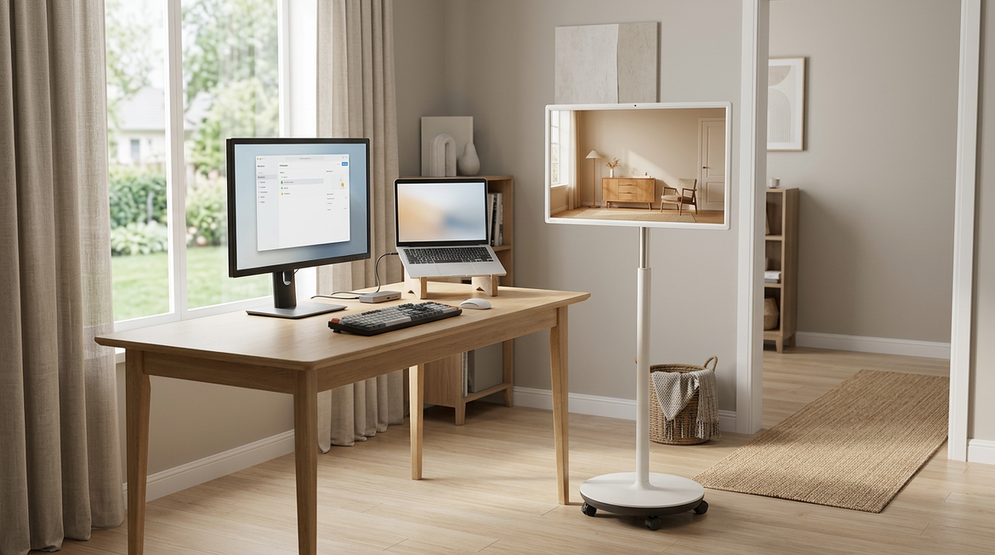
KTC's MEGAPAD series provides practical examples of EDLA-certified mobile touch screens designed for flexible office deployment. The KTC MEGAPAD 32" 4K Android 14 Google EDLA Smart Touch Monitor with 8550mAh Battery and the KTC MEGAPAD 27" FHD Android 14 Google EDLA Smart Touch Monitor with 9500mAh Battery combine battery-powered mobility, rolling stands, and full Android Enterprise support. These units allow teams to move collaboration tools between rooms without sacrificing the security controls required by modern corporate networks. For buyers exploring broader options, the Mobile Touch Screen collection contains additional EDLA-certified models worth reviewing against your specific MDM and room requirements.
Additional practical resources include guides on selecting ergonomic office monitors and understanding USB-C connectivity benefits, which often complement smart display deployments. See our articles on the complete guide to finding the best monitor for productivity and how a USB-C monitor can streamline your workspace.
Frequently Asked Questions
What Does EDLA Certification Actually Enable for Corporate Displays?
EDLA certification provides verified access to Google Mobile Services plus Android Enterprise tools that allow centralized MDM enrollment, policy enforcement, app allow-listing, and remote device actions. These capabilities are not reliably present on uncertified consumer Android TV platforms and form the foundation for secure integration into corporate networks.
Can Consumer Android TV Devices Be Used Safely in Meeting Rooms?
They can function for basic presentation or signage in low-risk, air-gapped setups. However, in environments that require MDM, zero-trust verification, or compliance with standards such as SOC 2 or ISO 27001, consumer Android TV typically creates management islands and compliance exceptions that increase long-term risk and cost.
How Do Android 15 and 16 Features Improve Shared Display Security?
Features such as Private Space allow encrypted silos for sensitive apps, while Identity Check enforces re-authentication for high-risk actions. AI theft detection on mobile units can automatically trigger lock-downs. These contextual protections address common office scenarios better than traditional device-level logins alone, though effectiveness still depends on hardware sensor support.
What Should IT Teams Check First When Evaluating Smart Displays in 2026?
Prioritize confirmation of EDLA certification, native zero-touch MDM support for your chosen provider (such as Intune or Google Workspace), and verified Google Play Protect integration. Next evaluate whether the hardware supports the specific Android 15/16 contextual features needed for your usage scenarios, and confirm battery or mobility requirements for room-to-room flexibility.
How Does the Total Cost of Ownership Differ Between EDLA and Consumer Android TV?
EDLA devices usually carry a higher initial price but lower long-term costs through automated management, reduced manual intervention, and fewer compliance exceptions. Consumer Android TV may save money upfront but often incurs a significant "management tax" in labor hours plus elevated risk of security incidents or policy violations.
Are KTC MEGAPAD Displays Suitable for Enterprise MDM Environments?
The KTC MEGAPAD models with Google EDLA certification are designed for Android Enterprise integration and support common MDM workflows. Organizations should still validate compatibility with their specific MDM solution and test advanced Android 15/16 features against their hardware configuration before large-scale deployment.