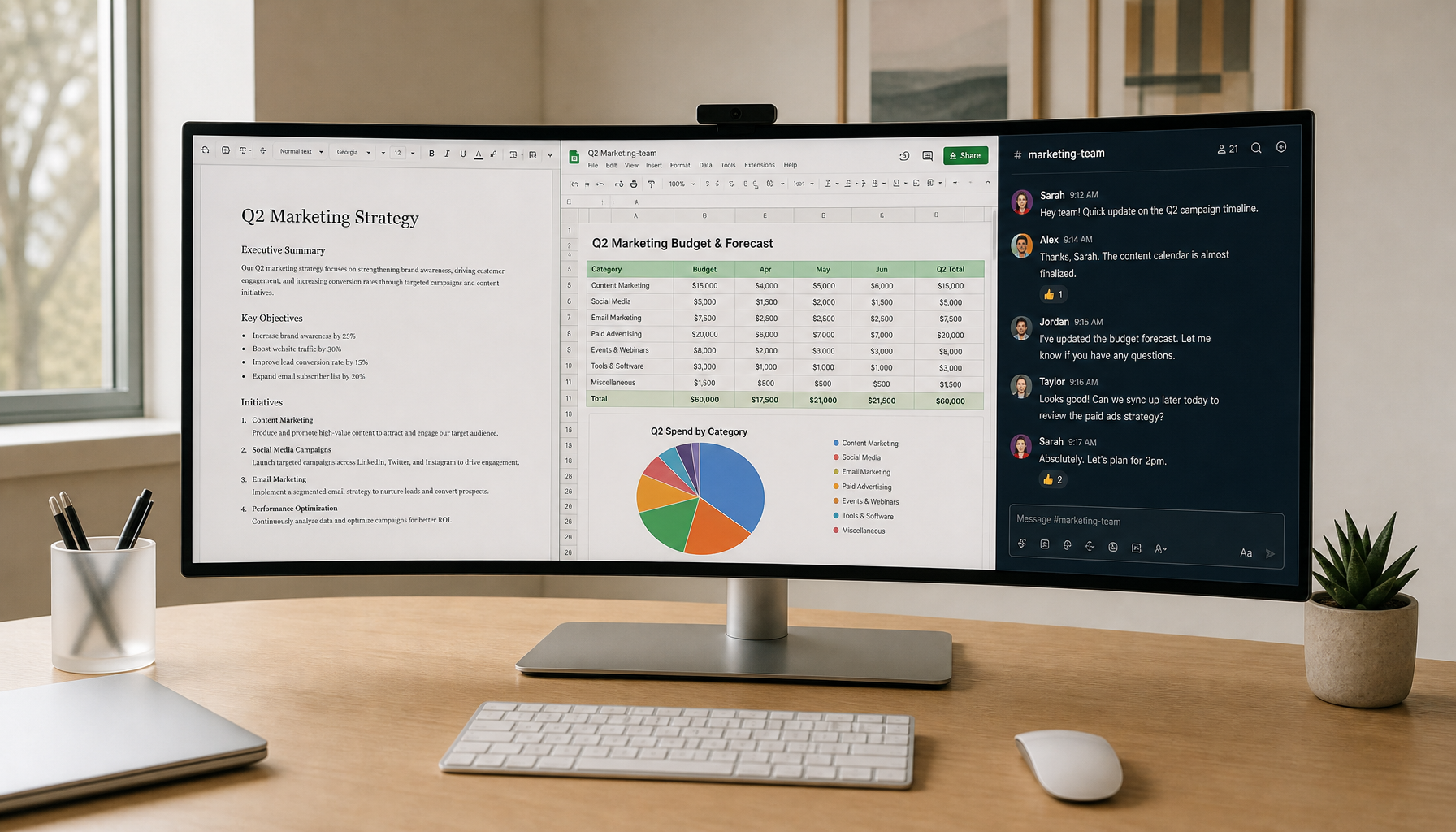
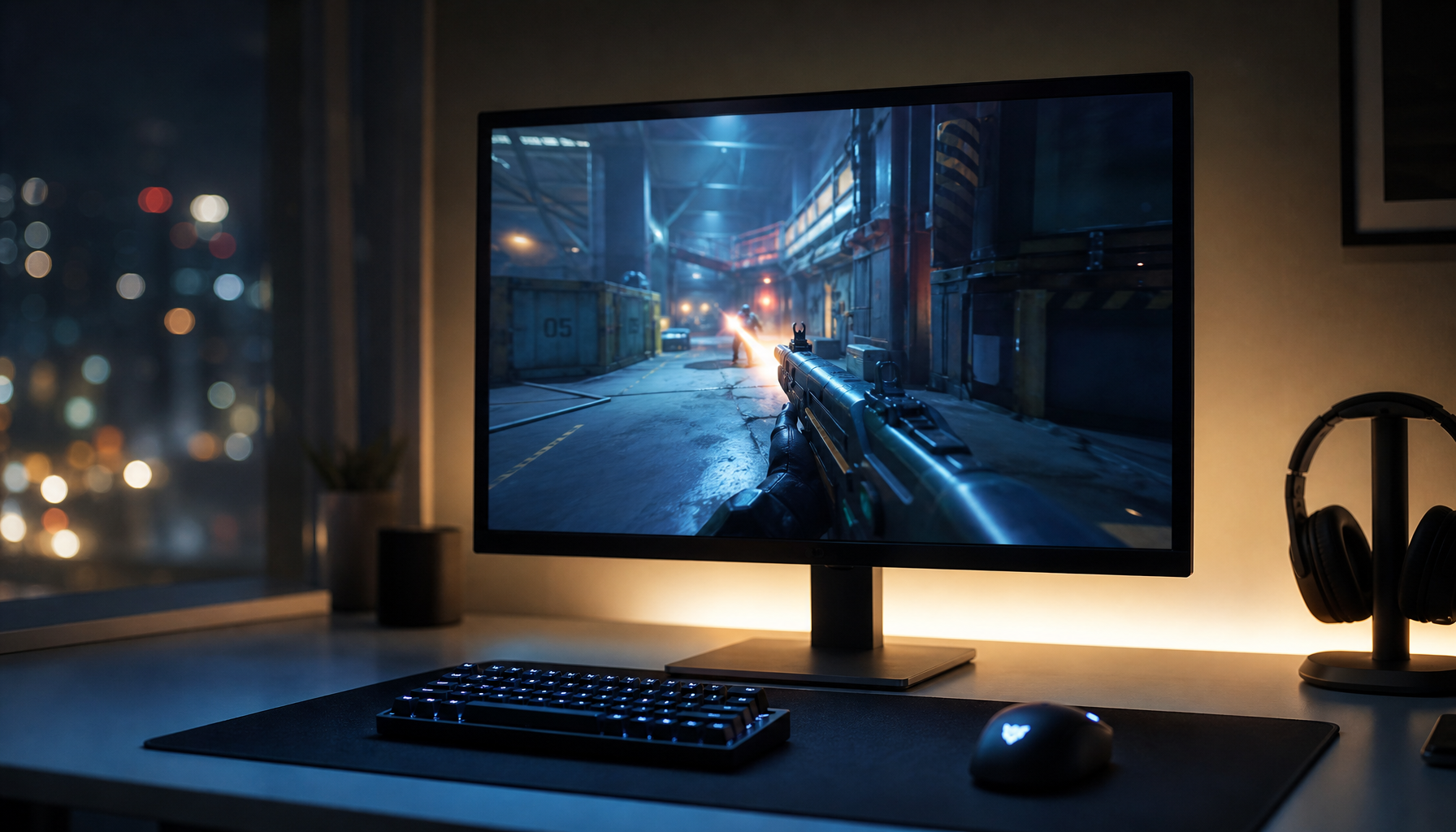
In rhythm games like osu! and DJMAX, the ability to accurately read rapid note streams often depends more on motion clarity than on color accuracy or contrast. Fast IPS panels generally deliver the sharper note edges and lower smearing needed for high-BPM competitive play, while VA panels can introduce dark-level smearing that distorts note shapes during fast vertical and diagonal movement. This makes Fast IPS the safer choice for most serious rhythm gamers, though high-contrast VA or HVA options may suit casual players who value immersion over absolute tracking precision.

The "Reading" Problem: Why Motion Clarity Trumps Static Quality
Rhythm games rely on “reading”—your brain’s ability to instantly recognize patterns in fast-moving notes. When notes scroll at high speeds, any motion blur or smearing increases cognitive load, turning a clean stream into an indistinct wall that forces guesswork instead of precise timing.
Static image quality such as color accuracy or peak contrast matters less here because the challenge is preserving edge definition while objects move quickly across the screen. A panel that maintains clean note geometry (circles staying circular, bars staying rectangular) reduces misses in dense patterns far more than deeper blacks do.
The total perceived blur comes from two main factors: sample-and-hold persistence (the time each frame is displayed) and pixel response time (how quickly the panel changes from one color to the next). Even a high-refresh-rate monitor can feel sluggish if its pixels cannot finish transitioning before the next frame arrives. Many competitive players therefore prioritize lower overall persistence and faster response over contrast ratios.
For deeper background on panel fundamentals, see our guide to IPS vs VA Panels: Which is Right for Your Playing Style?. Another useful reference is What Is Sample-and-Hold Blur and Why Higher Refresh Rates Don't Eliminate It?.
Fast IPS vs. VA: Handling Ghosting and Smearing in Rapid Streams
The core difference appears during the high-contrast transitions common in rhythm games. Most skins use dark backgrounds so bright or colored notes stand out; these dark-to-gray or black-to-bright shifts expose VA’s slowest transition zone. As explained on DisplayNinja, VA panels often exhibit dark-level smearing where pixels take longer to change from black to dark gray, leaving trailing effects behind moving objects.
Fast IPS panels typically achieve 1 ms GtG response, preserving note shape integrity so circles remain crisp and timing gaps stay distinguishable even at high approach rates. This reduces the cognitive cost of “fuzzy” notes that force players to guess centers rather than react to clean edges.
HVA (High-Contrast VA) technology improves on traditional VA by shortening smear length, often by roughly half, while retaining strong contrast. However, it still cannot match the sub-1 ms transitions of Fast IPS in the darkest shifts typical of osu! streams or dense DJMAX charts. Aggressive overdrive intended to reduce VA smearing can instead create inverse ghosting—bright coronas or white trails—that add their own visual noise.
Community discussion on the osu! forums shows that competitive players consistently rank motion clarity above contrast for high-BPM reading. Our related article on What Is Monitor Ghosting and How Do You Eliminate It? explores these artifacts in more detail.

The Speed Equation: How Refresh Rate and Response Time Interact
A common misconception is that higher refresh rates always improve clarity. In practice, refresh rate (Hz) only reduces sample-and-hold persistence; it cannot compensate for slow pixel response. The Blur Busters FAQ on motion blur demonstrates that total blur equals the combination of both factors. If a pixel’s gray-to-gray (GtG) transition exceeds the frame window, smearing spills across multiple frames.
Consider two real-world examples. A 180 Hz Fast IPS monitor has a frame window of roughly 5.56 ms and a GtG around 1 ms, leaving about 4.5 ms of clean visibility per frame. A 280 Hz VA panel offers a 3.57 ms frame window but often 4–8 ms GtG in dark transitions, meaning pixels are still changing when the next frame arrives. The result is higher total blur despite the faster refresh.
The VESA ClearMR standard, available at clearmr.org, offers a more reliable way to compare motion performance than simple millisecond claims because it measures visible blur rather than marketing GtG numbers. Overdrive tuning sits in the middle: mild settings reduce smearing on VA but may leave residual trails, while aggressive “Extreme” modes can introduce inverse ghosting coronas that are equally distracting in dense note patterns.
The chart below visualizes this GtG-versus-frame-window trade-off for rhythm-game conditions.
Motion Clarity Threshold: Hz vs. Panel Response
A higher refresh rate only helps note tracking when panel response is fast enough to keep motion from smearing across frames. The chart shows relative blur risk tiers for typical rhythm-game viewing conditions.
View chart data
| Scenario | ~1ms GtG | 2-3ms GtG | 4-5ms GtG | 6-8ms GtG |
|---|---|---|---|---|
| 180Hz | 1.0 | 1.0 | 2.0 | 3.0 |
| 240Hz | 1.0 | 2.0 | 3.0 | 3.0 |
| 280Hz | 1.0 | 2.0 | 3.0 | 3.0 |
This heatmap clarifies that higher refresh rates only improve note tracking when panel response stays inside the frame window. Lower blur risk appears when GtG remains close to or below the frame time; once response slows into the 4–8 ms range, even 280 Hz can still feel less clear for rapid streams.
Additional context on these interactions appears in our articles on Why Does My 240Hz Monitor Feel Slower Than My Friend's 165Hz Display? and What Is Pixel Overdrive, and When Does It Create Inverse Ghosting?.
When Fast IPS is the Essential Choice for Competitive Play
Top-tier rhythm game players almost exclusively choose Fast IPS (or OLED) because it avoids the dark-transition lag that VA panels cannot fully eliminate. Consistency across the entire screen matters most at high approach rates (AR 9+ in osu!) or scroll speeds above 25 in DJMAX, where every pixel of clarity reduces misreads.
The KTC H25X7 (400 Hz overclock) and H25Y7 (300 Hz) Fast IPS models illustrate this advantage. Their sub-6 ms response and high refresh keep note shapes intact even in the densest vertical streams, making them strong fits for competitive tracking. For players sensitive to any trailing on the cursor itself, these monitors remove a common source of distraction that VA options often retain.
If your sessions regularly exceed 200 BPM with dark-mode skins, a Fast IPS panel is usually the essential choice. Check our IPS Monitors collection or the broader Gaming Monitor lineup to compare current options.
Can VA Panels Still Work? Finding the High-Contrast Middle Ground
VA panels are not universally unsuitable. Their deeper blacks and higher native contrast can enhance immersion in slower, cinematic sections or light-mode skins that avoid the darkest transitions. Casual players or those who split time between rhythm games and story-driven titles may prefer this visual pop.
HVA variants narrow the performance gap by improving response while preserving contrast, making them a practical middle ground for budget-conscious or mixed-use setups. The KTC H27E22P (280 Hz Fast VA) offers an example: it delivers strong HDR impact and contrast for immersive play, yet its smearing remains more noticeable than Fast IPS during ultra-dense high-BPM patterns. It can work well if your primary focus is casual sessions or you value contrast over absolute note-edge sharpness.
Our VA Monitors collection and 240Hz-400Hz Monitors category help identify models that balance these priorities. In short, choose VA when contrast and price matter more than flawless high-speed reading.
Choosing Your Panel: Playstyle, Sensitivity, and Performance
The right decision hinges on your sensitivity to motion artifacts and your dominant playstyle. If you notice even slight trailing on a mouse cursor or frequently play high-BPM streams with dark backgrounds, Fast IPS will likely feel more responsive and reduce frustration. Players who enjoy deep blacks, play at moderate speeds, or use brighter skins may find HVA or VA panels deliver a more satisfying overall image without compromising enjoyment.
A practical self-check is to test a display with your current rhythm game skin at maximum scroll speed. If notes lose geometric integrity or timing gaps blur together, the panel’s response is the limiting factor. The KTC H27P6 dual-mode model (4K at 160 Hz or 1080p at 320 Hz) offers a flexible compromise for gamers who switch between competitive rhythm sessions and productivity or console use.
Ultimately, prioritize Fast IPS for competitive osu! or DJMAX tracking where note-shape integrity directly affects scores. Consider VA or HVA only when contrast, budget, or immersive depth outweighs the risk of smearing in your specific routines. Browse the 24 inch / 25 inch Monitors or Flat Monitors collections to match size and form factor to your desk and play distance.
FAQs
Is VA smearing noticeable in rhythm games?
Yes, particularly in high-BPM sections with dark backgrounds. The trailing effect can elongate notes and obscure timing gaps, increasing misses for competitive players. Casual sessions at lower speeds or with brighter skins make the smearing far less obvious.
Is Fast IPS always better than VA for rhythm games?
No. Fast IPS is generally superior for competitive high-speed reading, but VA or HVA panels can be preferable for casual or immersive play where contrast and deeper blacks enhance the experience more than perfect edge clarity.
Does higher refresh rate eliminate motion blur in rhythm games?
Not by itself. A 280 Hz VA panel can still show more total blur than a 180 Hz Fast IPS if pixel response time exceeds the frame window. Both refresh rate and GtG must align for clean note tracking.
Should I choose HVA over standard VA for rhythm games?
HVA is a meaningful improvement that reduces smear length while keeping high contrast, making it a solid middle-ground option. However, it still trails Fast IPS in the fastest dark transitions typical of dense rhythm charts.
What monitor feature matters most for reading rapid note streams?
Note-shape integrity during fast movement. This depends primarily on low GtG response time and minimal persistence blur rather than resolution or peak brightness. Test with your specific game skin and scroll speed before buying.
Can overdrive fix VA smearing for rhythm games?
It can reduce smearing but often introduces inverse ghosting (bright coronas) that creates new visual noise. Finding the right setting is game- and skin-dependent; many competitive players simply avoid VA for this reason.