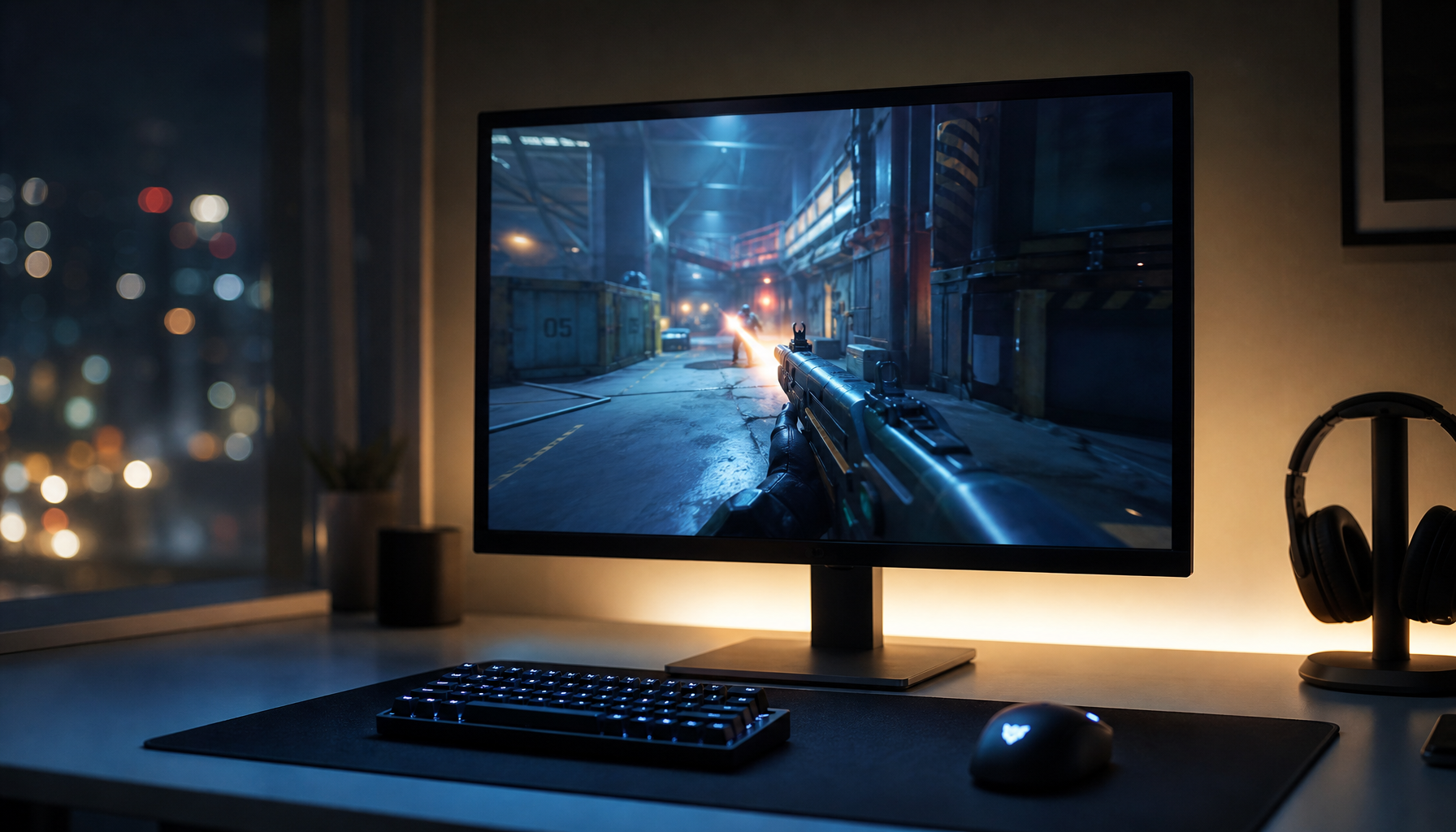
High-refresh-rate monitors frequently fail to reach their advertised performance because the cable cannot sustain the necessary bandwidth, leading users to blame the display instead of the connection. This issue appears most often with 4K 144Hz and higher setups, where signal dropouts or capped refresh rates occur even on new hardware.

The High-Refresh Bottleneck: Why Your Monitor Might Not Be "Broken"
Digital video signals follow a strict pass-or-fail pattern known as the digital cliff. When bandwidth falls short, the result is complete signal loss rather than gradual image degradation, producing symptoms such as intermittent black screens, sparkles, or the operating system automatically lowering the refresh rate. Many owners of high-performance panels therefore mistake cable limitations for panel defects, especially after swapping cables during setup or troubleshooting.
The same pattern shows up when moving from 60 Hz to 144 Hz or 160 Hz monitors. A cable that handled lower resolutions without issue suddenly cannot maintain sync once HDR content or higher frame rates increase data demand. Checking the cable first prevents unnecessary returns and isolates the actual bottleneck.
Decoding the Labels: DP8K, DP80, and Ultra High Speed HDMI
DisplayPort certification uses performance tiers rather than version numbers alone. DP8K guarantees the 32.4 Gbps HBR3 bandwidth required for 4K 144 Hz and similar high-refresh modes, while newer DP54 and DP80 ratings address the higher ultra-high-bit-rate needs of DisplayPort 2.1 displays. HDMI 2.1 performance, by contrast, requires the separate Ultra High Speed certification that certifies 48 Gbps throughput.

Marketing phrases such as "8K Ready" do not equal certification. Only cables carrying the official DP8K, DP80, or Ultra High Speed HDMI markings have undergone testing that confirms the stated bandwidth under real conditions.
Cable Rating vs Supported Performance
Certified cable tiers and the resolutions they reliably support at high refresh rates in typical gaming and console setups.
Show data table
| Cable Rating | Max Bandwidth (Gbps) | Typical Supported Specs |
|---|---|---|
| DP8K | 32.4 | 4K 144Hz, 4K 160Hz |
| Ultra High Speed HDMI | 48 | 4K 120Hz console, 8K 60Hz |
| DP80 | 80 | 8K 60Hz+, high-bit-rate 2.1 monitors |
The Generic Cable Risk: Pin 20 Power and Hardware Safety
VESA-certified DisplayPort cables are tested to ensure Pin 20 (DP_PWR) is not connected in male-to-male cables, preventing back-driving power that can cause boot failures or hardware damage. Generic cables often wire this pin incorrectly, creating a condition where the monitor supplies power back into the GPU even when the computer is off. Users may notice motherboard LEDs or GPU fans remaining active, or the system hanging at the BIOS screen.
These electrical faults differ from bandwidth problems. Bandwidth shortfalls produce flickering or refresh-rate capping, while Pin 20 issues create persistent power conflicts. This official guidance on DisplayPort cable selection highlights why certification matters for both performance and basic system safety.
Matching Your Specs: Cable Requirements for 4K and High Refresh
A 4K 160 Hz monitor such as the KTC M27P6 requires at least DP8K or equivalent certified bandwidth to reach full refresh rate without dropouts. Console setups using PS5 or Xbox Series X need Ultra High Speed HDMI cables to maintain 4K 120 Hz with VRR enabled. Passive DP80 cables are typically limited to one meter; longer runs demand active DP80LL cables that maintain the full 80 Gbps specification.
Length, interface choice, and peak resolution together determine the minimum tier. Checking these three factors before purchase avoids the common situation where a cable works at 60 Hz but fails once the monitor switches to its highest advertised mode.
How to Verify Certification Before (and After) You Buy
The most reliable check is the official VESA Certified Products database, where users can search by brand and model number. For HDMI 2.1 cables, the Ultra High Speed logo plus its printed QR code provides direct authentication through the HDMI Licensing Authority site. Physical jacket markings that read "DP8K," "DP80," or "Ultra High Speed HDMI" offer quick visual confirmation, while packaging claims alone are not sufficient.
After purchase, test the cable at the monitor's maximum resolution and refresh rate while monitoring for sparkles or blackouts during HDR scenes. If symptoms appear only at peak settings, the cable is the limiting factor even if it functions at lower specifications.
Choosing the Right Link for Your KTC Setup
Owners of high-bandwidth panels benefit from selecting cables already verified for the required tier rather than relying on unmarked or lower-rated alternatives. KTC's Premium Display Signal Cables collection offers HDMI 2.1 and DP 1.4 options tested to match the specifications of models such as the M27P6 and H27P6. Pairing a certified cable with these displays removes one common source of signal instability and helps users obtain the full refresh rate and HDR performance listed on the monitor.
A short verification step at purchase time prevents the more expensive outcome of replacing a monitor when the cable was the actual constraint.