For most PC gamers in 2026 the real choice between a 4K Mini-LED and a 1440p OLED comes down to whether you value pixel density and peak brightness or response speed and contrast. 4K Mini-LED monitors deliver sharper text and stronger HDR highlights in bright rooms, while 1440p OLED panels provide near-instant motion and perfect blacks for dark-room gaming. The best pick depends on your room lighting, GPU power, and how much daily setup friction you will tolerate.

4K Mini-LED vs. 1440p OLED: Defining the 2026 Upgrade Path
The core trade-off is straightforward. A 27-inch 4K Mini-LED panel reaches roughly 163 pixels per inch, giving noticeably sharper UI elements and fine detail in RPGs and simulators. A 27-inch 1440p OLED sits at about 108 PPI, which is still crisp for gaming but less ideal for long text-heavy work sessions. At the same time, OLED response times of 0.03 ms GtG remove almost all motion blur, whereas even premium Mini-LED IPS panels typically land between 1 ms and 5 ms.
2026 also marks a practical price crossover. Entry-level OLEDs now sit in the same $500–$700 range as premium Mini-LED models, removing the old cost barrier that once favored one technology. Hybrid users who spend eight hours on spreadsheets and four hours gaming face the clearest dilemma: they need both high PPI for productivity and low response time for competitive play.
HDR Contrast vs. Blinding Brightness: The Technical Gap
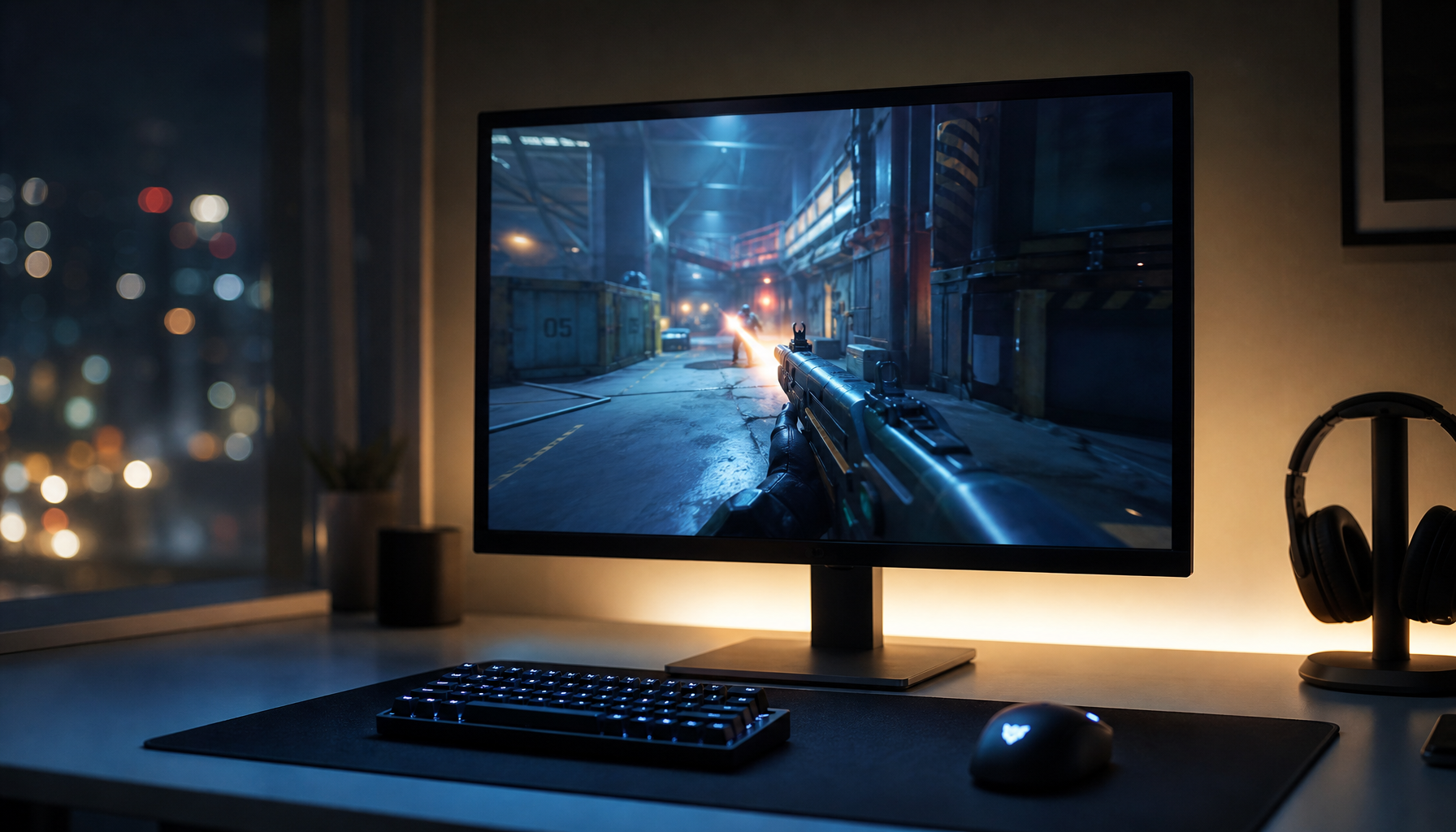
Mini-LED panels can reach 1400 nits peak brightness in HDR mode, which helps highlights stand out even when sunlight hits the desk. OLED panels instead achieve true 0.0005-nit black levels, creating infinite contrast that eliminates blooming around bright objects in dark scenes. The difference is most obvious in horror games or cinematic single-player titles where small bright elements sit against near-black backgrounds.
Local dimming helps Mini-LED reduce halos, yet 1152-zone arrays still cannot match OLED’s pixel-level control. In moderately lit rooms the brightness advantage often outweighs minor blooming. In completely dark rooms the contrast gap becomes the dominant factor.
Motion Clarity vs. Resolution: Choosing Your Competitive Edge
OLED’s 0.03 ms response time gives competitive players an edge in fast-paced titles such as Valorant or Counter-Strike 2, where every millisecond of clarity counts. 4K resolution adds visible detail in slower-paced games and improves desktop readability, but it also demands roughly 2.25 times the GPU power of 1440p at the same frame rate.
Mid-range cards such as the RTX 5070 can comfortably drive 1440p OLED at 240 Hz, while native 4K 160 Hz gaming usually requires an RTX 5080 or 5090. Gamers who already own high-end GPUs can lean toward 4K Mini-LED without sacrificing frame rates.
4K Mini-LED vs 1440p OLED: Key Trade-offs
This chart compares typical PPI, response time, and peak brightness to highlight the main trade-offs between the two panel types.
View chart data
| Category | 4K Mini-LED | 1440p OLED |
|---|---|---|
| PPI | 163.0 | 108.0 |
| Response Time (ms) | 0.03 | 3.0 |
| Peak Brightness (nits) | 1400.0 | 700.0 |
The Daily Friction: 'Toggle Tax' vs. Burn-in Maintenance
Mini-LED users often switch local dimming modes several times a day to avoid blooming on static desktop elements. That repeated OSD navigation adds a small but noticeable daily cost. OLED panels have largely removed this friction through automated pixel cleaning and three-year burn-in warranties that now cover most mixed-use scenarios.
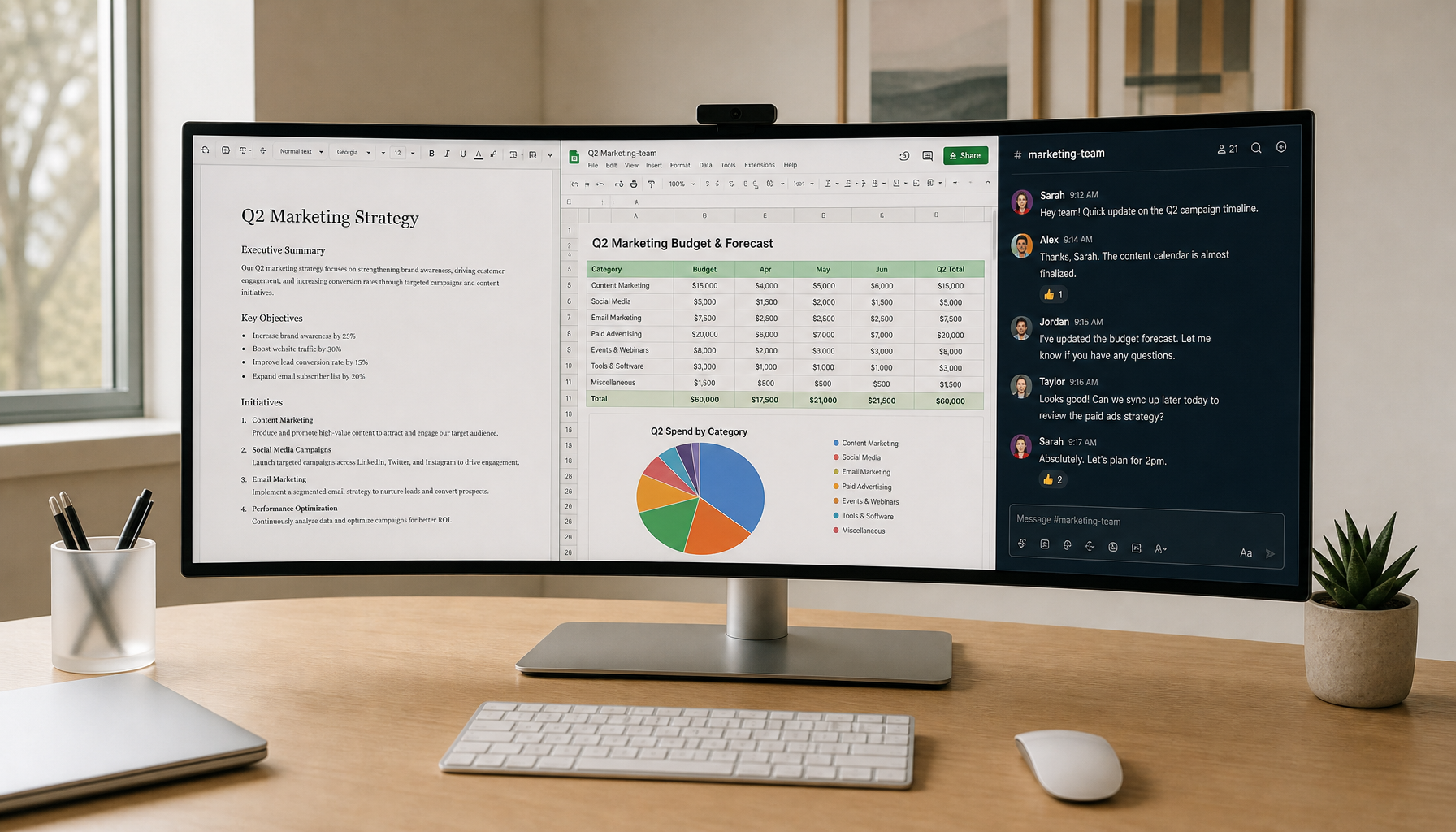
Text clarity remains the clearest differentiator. Coders and writers who spend long hours on spreadsheets or code editors usually prefer the 163 PPI of 4K panels. Pure gamers who keep their monitors in dark rooms and change content frequently find the lower PPI of 1440p OLED acceptable.

The 2026 Verdict: Which Upgrade Wins Your Desk?
Choose the KTC M27P6 4K Mini-LED if your room receives direct sunlight, you need sharp text for work, and you want maximum HDR impact without burn-in concerns. Choose the KTC G27P6 1440p OLED if you game in controlled lighting, play fast-paced esports, and want the simplest daily workflow.
For buyers who want strong HDR and high refresh rates without crossing the $600 line, the KTC M27T6S 1440p Mini-LED offers a practical middle path that balances brightness, color volume, and speed.
Frequently Asked Questions
Does OLED Burn-In Still Matter for Mixed Productivity and Gaming Use?
Modern OLED panels include automated pixel shifting and three-year warranties that cover most mixed-use patterns. Heavy static spreadsheets or always-on desktop icons still benefit from occasional content variation to stay within safe operating margins.
Which Panel Type Handles Bright Rooms Better?
Mini-LED monitors maintain readable brightness levels above 1000 nits in HDR, making them more practical when sunlight reaches the desk. OLED panels can struggle with glare in the same conditions unless the room is dimmed.
How Much Extra GPU Power Does 4K Require Compared with 1440p?
At identical frame rates, 4K rendering typically demands roughly 2.25 times the GPU load of 1440p. Mid-range cards can sustain high-refresh 1440p gameplay, while native 4K high-refresh gaming usually needs flagship GPUs released in 2025 or later.
Can I Use an OLED Monitor for Eight Hours of Daily Office Work?
Many users do so successfully when the monitor includes a three-year burn-in warranty and the workflow includes varied content. Purely static tasks such as long coding sessions or spreadsheet work still carry a small residual risk that Mini-LED avoids entirely.
Is the Price Difference Between These Two Technologies Narrowing in 2026?
Yes. Entry-level 1440p OLED monitors now sit in the same price band as premium 4K Mini-LED models, shifting the decision from cost to lighting conditions, GPU capability, and tolerance for daily maintenance steps.