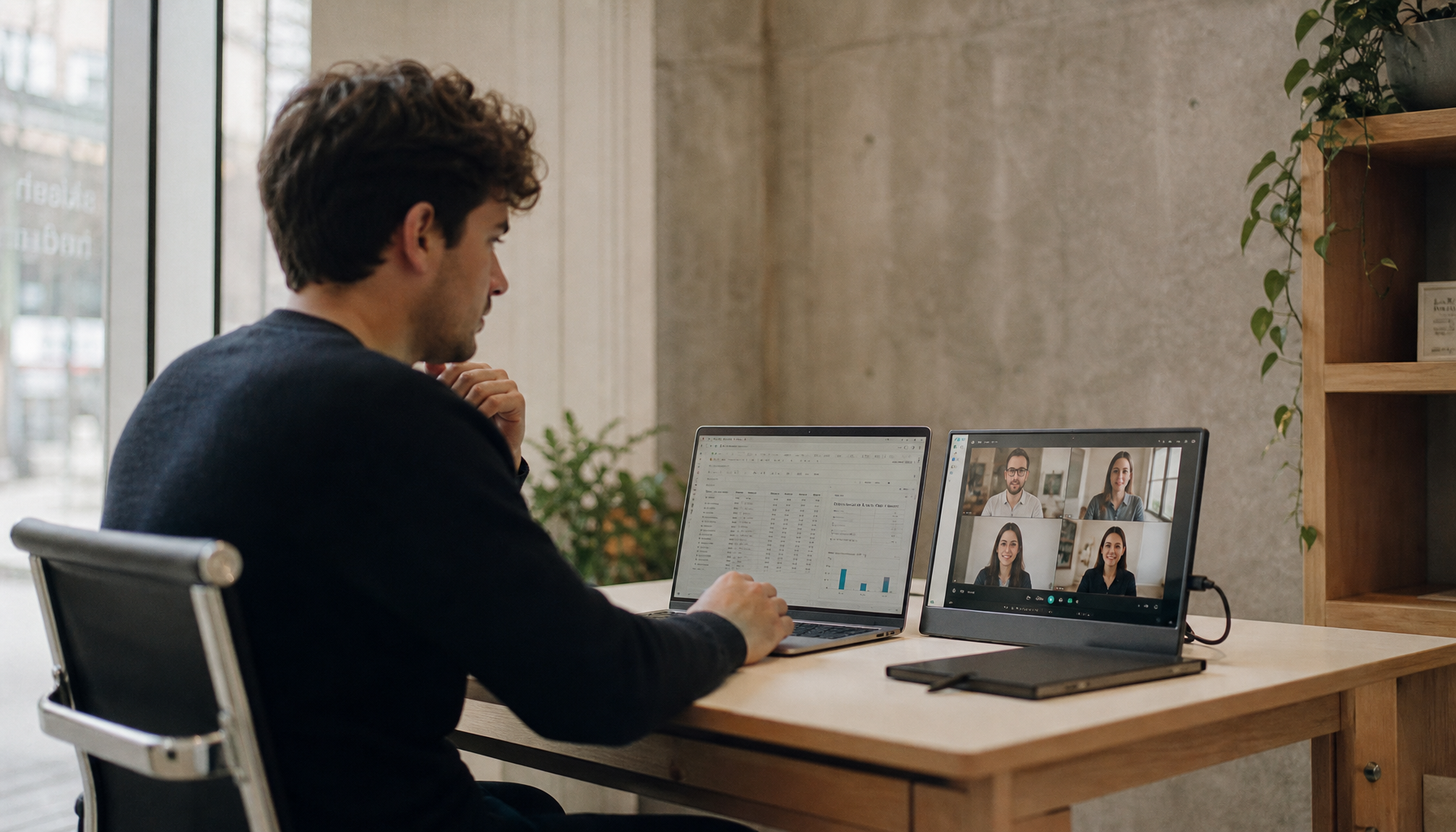
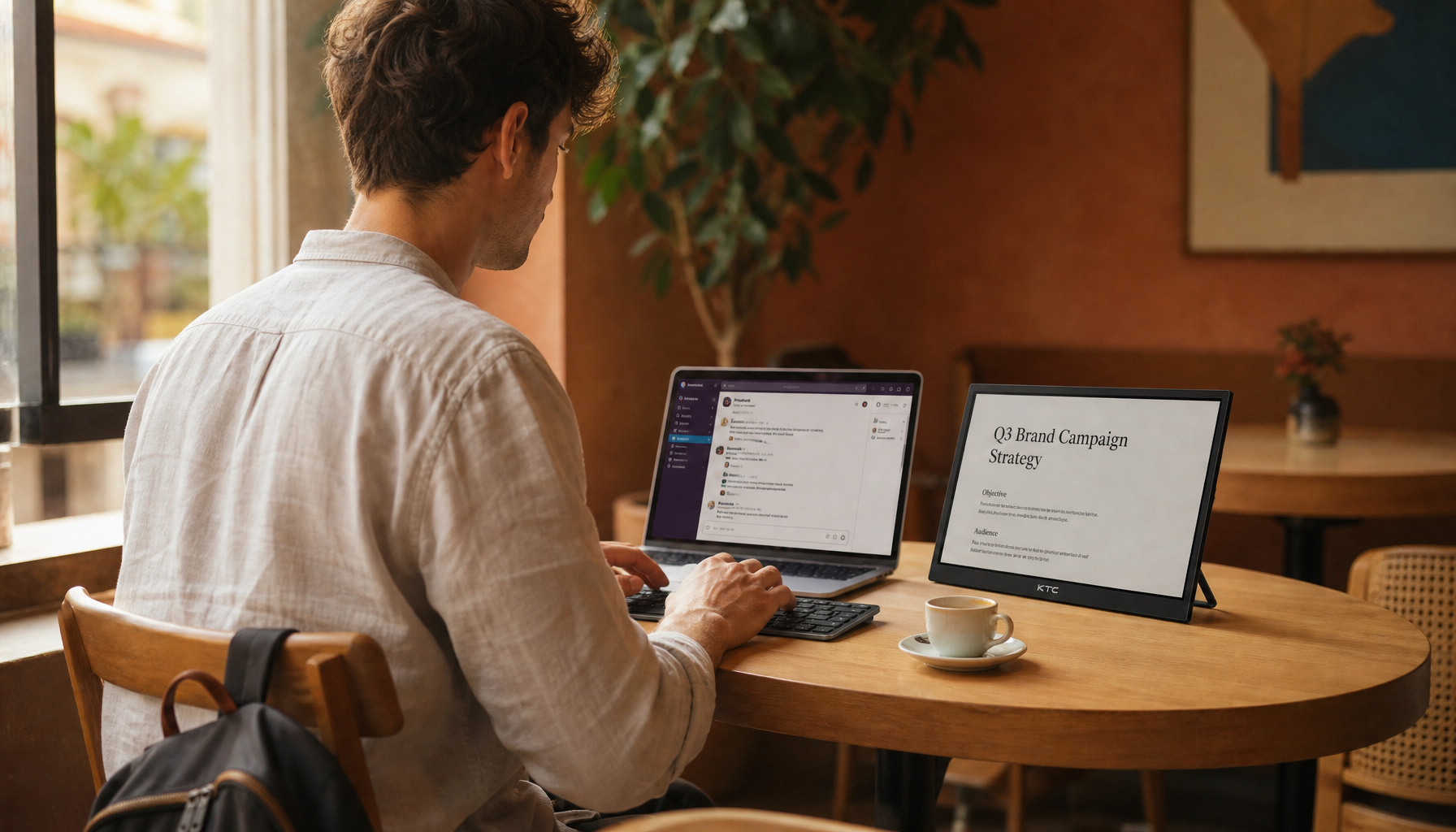
Switching from a standard horizontal monitor to a vertical display can make a desk look narrower, cleaner, and more intentional, especially in dual-monitor setups. The tradeoff is that portrait orientation favors reading, coding, chat, and reference work more than wide spreadsheets, video editing timelines, or full-screen gaming.
Does your desk feel like a wall of screens, with speakers, docks, notebooks, and cables pushed to the edges? In practical monitor setups, rotating one display or stacking a secondary screen can reclaim width, reduce visual sprawl, and show far more vertical content, such as 269 words instead of 115 words in one 1080p comparison. This guide explains when a vertical monitor improves the look of a setup, when it creates new clutter, and what to check before buying or rotating a display.
What Changes Visually When a Monitor Goes Vertical?
A vertical monitor changes the desk’s visual weight. A standard landscape monitor spreads across the desk, while a portrait display shifts that mass upward. In a dual-monitor setup, this often makes the workstation look more compact because one screen no longer competes for horizontal space beside the main display.

The biggest aesthetic improvement is usually reduced desk width. Two side-by-side 27-inch monitors can occupy roughly 4 ft of horizontal space before speakers, monitor arms, docks, microphone arms, or desk lamps are added. Rotating one monitor vertically can make the same setup feel less like a display wall and more like a focused workstation.
Visual Balance and Desk Proportion
A vertical display makes the setup taller, so the result depends on proportion. A 24-inch monitor in portrait mode often looks tidy beside a 27-inch or 32-inch main gaming monitor. A 32-inch display rotated vertically can look imposing unless the desk is deep, the chair position is centered, and the monitor arm is stable.

For aesthetics, the cleanest arrangement is usually a centered horizontal primary monitor with a vertical secondary monitor angled slightly inward. The vertical screen should look like a supporting panel, not a second centerpiece. If it towers above the main display or sits too far to the side, the setup can feel unbalanced even if it saves space.
Clutter Moves, It Does Not Disappear
Vertical orientation can reduce surface clutter, but only if the mounting and cables are handled well. A portrait monitor on a bulky stock stand may free horizontal screen space while adding a large base, visible neck, and awkward cable bend. A monitor arm often looks cleaner because it lifts the display off the desk and opens the area underneath for a laptop dock, audio interface, notebook, or controller.
Cable routing matters more in portrait mode because ports may face sideways or upward after rotation. Leave enough slack for rotation, then route power, display, or data cables along the arm. A single-cable portable monitor can look especially clean when used as a vertical secondary display for chat, notes, or system monitoring.

Portrait vs. Stacked: Two Different Vertical Aesthetics
Vertical display orientation can mean two different things: rotating one monitor 90 degrees into portrait mode, or stacking monitors vertically with one screen above another. They solve different aesthetic problems.
Portrait mode narrows a side display. Stacking uses vertical space above the main monitor instead of desk width. A stacked monitor setup can use two landscape screens, a landscape screen plus a portrait screen, or even a portable display above a primary monitor.

When Portrait Looks Better
Portrait orientation usually looks best when the secondary monitor is used for tall content: documents, web pages, coding, email, a chat platform-style chat, stream chat, ticket queues, or AI conversations. Instead of wasting side margins on a wide display, the monitor’s shape matches the content.
A practical example: at 1080p and 100% operating system scaling, one portrait-mode test showed 269 words instead of 115 in the same AI chatbot comparison. That kind of difference changes both workflow and appearance because fewer windows need to be layered, resized, or scattered across the desktop.
When Stacked Looks Better
Stacking is stronger when desk width is the main issue. A lower screen can remain the primary work or gaming display, while the upper screen becomes a glance display for calendars, stream chat, alerts, logs, hardware metrics, music controls, or reference material.
The aesthetic advantage is symmetry. A stacked layout keeps the keyboard, mouse, microphone, and main screen centered rather than forcing the user to spread equipment across the desk. For a clean setup, the lower display should be the main screen and the upper display should be used sparingly, following an approximate 80/20 split: 80% of attention on the lower display and 20% on the upper display.

Where Vertical Monitors Improve Workflow and Appearance
Vertical orientation works best when the content itself is vertical. That is why a portrait monitor can feel more organized in productivity setups, developer desks, trading dashboards, streaming stations, and gaming setups that use a secondary display.
Horizontal monitors match gaming, video, and most widescreen media well because modern displays and human peripheral vision favor width. But many everyday tasks still scroll vertically. A vertical coding monitor can show about 80 to 120 lines of code, compared with about 40 lines on a standard horizontal screen.

Best Use Cases for a Vertical Secondary Monitor
A vertical secondary monitor is especially useful for:
- Reading long articles, PDFs, documentation, and research notes
- Writing or editing blog drafts, briefs, and outlines
- Coding, reviewing pull requests, and scanning logs
- Keeping chat, email, calendars, or task lists visible
- Monitoring streaming chat, streaming software controls, or system metrics
- Pairing with an ultrawide monitor to avoid an overly wide desk footprint
- Adding a portable monitor to a compact desk without crowding the main display
For gaming, the vertical monitor usually works best as a supporting screen rather than the main display. Keep the high-refresh-rate gaming monitor centered in landscape orientation, then use the portrait display for a chat platform, walkthroughs, hardware temperatures, browser tabs, or music. This preserves the performance and field-of-view benefits of the main gaming screen while making the whole setup look more controlled.

Tasks That Still Prefer Landscape
Portrait orientation is not ideal for every workload. Spreadsheets, video editing timelines, audio tracks, photo editing canvases, and most full-screen games usually benefit from horizontal space. A vertical monitor can make these tasks feel cramped because the usable width shrinks.
If your main work involves wide rows, timelines, or side-by-side comparisons, keep the primary monitor horizontal. Use vertical orientation only for the secondary screen. This hybrid layout gives the desk a cleaner profile without forcing every task into a narrow frame.
Choosing the Right Monitor and Mount for a Clean Vertical Setup
The monitor itself matters as much as the orientation. A display that technically rotates may still look awkward if the stand is bulky, the bezels are thick, the panel has poor viewing angles, or the ports create visible cable loops.
Start with mount compatibility. A vertical monitor needs either a stand with rotation support or a mounting-standard-compatible monitor arm. Many arms support 360-degree rotation, and a mounting bracket can often be rotated 90 degrees. In an operating system, the software change is simple: open display settings, choose the screen, and set display orientation to portrait.
Comparison Table: Common Vertical Display Options
Setup option |
Best aesthetic impact |
Best use case |
Main tradeoff |
Buying priority |
One portrait secondary monitor |
Narrows a dual-monitor desk |
Coding, reading, chat, email, reference work |
Less width for spreadsheets and media |
Rotating stand or monitor arm |
Stacked dual monitors |
Frees desk width and centers gear |
Streamers, developers, traders, compact desks |
Upper screen can cause neck strain if overused |
Tall, stable arm or pole mount |
Horizontal main + vertical side monitor |
Balanced and practical |
Gaming plus chat, work plus documents |
Side monitor needs careful angle |
Thin bezels and good viewing angles |
Ultrawide main + vertical side monitor |
Keeps an immersive main screen without adding much width |
Gaming, editing, multitasking, research |
Can dominate small desks |
Desk depth and arm clearance |
Portable vertical monitor |
Minimal hardware footprint |
Laptop desks, travel setups, dashboards |
Smaller screen and brightness limits |
Single-cable display support |
Panel Size, Bezels, and Viewing Angles
For most desks, a 24-inch or 27-inch monitor is easier to make attractive in portrait orientation than a 32-inch model. Smaller upper or side displays look less top-heavy, reduce mount wobble, and make cable routing easier. Thin bezels also help because a portrait display with thick borders can look like a repurposed old screen rather than an intentional part of the setup.
Viewing angles are important in vertical layouts. If the monitor uses a panel with weak off-axis viewing, colors and contrast can shift when the display is placed to the side or above eye level. That makes the setup look worse and can reduce readability. For side portrait displays, angle the screen about 15 to 20 degrees inward so it sits closer to peripheral vision without forcing a full head turn.
Refresh Rate and Gaming Priorities
A vertical secondary monitor does not always need the same refresh rate as the main gaming display. If your primary monitor is a 144 Hz, 165 Hz, or 240 Hz gaming screen, it should stay centered for gameplay. The portrait monitor can often be a lower-refresh display used for chat, browsers, guides, or monitoring tools.
However, match visual quality where it matters. If the secondary screen sits beside a premium gaming monitor, a very dim or low-resolution vertical display may make the whole desk look mismatched. Similar brightness, color temperature, and bezel style often matter more aesthetically than matching refresh rate.
Ergonomics Shapes the Aesthetic Result
A desk can look clean in a photo and still feel bad to use. The more vertical the setup becomes, the more important screen height, distance, and viewing frequency become.
For a standard seated setup, the lower or primary monitor should stay centered in front of the body. A common viewing distance for many office displays is about 20 to 28 inches, with larger 27-inch and 32-inch monitors often placed slightly farther back. If the screen is too close, a vertical display can feel visually tall and tiring.
Keep the Primary Screen Primary
In a stacked layout, the lower display should be the screen used most often. The upper display should hold glanceable information: alerts, chat, dashboards, logs, calendars, or reference material. If you spend long sessions reading or working on the upper monitor, the setup may look impressive but fail ergonomically.
The same principle applies to a side portrait monitor. Place frequently used apps on the centered main display and reserve the vertical screen for content that benefits from height. This keeps posture more neutral and prevents the setup from feeling busy.
Lighting and Glare Control
Vertical displays catch reflections differently than landscape displays. A side portrait monitor may reflect a window, desk lamp, or colored lighting strip along its full height. That can make an otherwise clean setup look messy and reduce readability.
Before finalizing the layout, test the screen at the time of day you use the desk most. Rotate the display, open a white document and a dark window, then check for glare from your seated position. If reflections are obvious, adjust the angle, move the lamp, or use a monitor with better brightness and anti-glare coating.

Action Checklist for a Cleaner Vertical Monitor Setup
Use this checklist before rotating a monitor or buying a new display:
- Confirm the monitor can rotate with its stock stand or has mounting support.
- Choose the role first: portrait side screen, stacked glance screen, or portable secondary display.
- Keep the main gaming or work monitor centered in landscape orientation unless your primary task is vertical content.
- Set side portrait monitors about 15 to 20 degrees inward for easier viewing.
- Route cables along the arm or stand with enough slack for rotation.
- Match brightness and color temperature across displays so the setup looks intentional.
- Test real apps for one full work session before committing to final placement.
FAQ
Q: Does a vertical monitor make a desk look cleaner?
A: It can, especially in dual-monitor setups where one landscape screen is rotated into portrait orientation. The desk often looks narrower because the display uses height instead of width, but the result depends on the stand, cable routing, bezel size, and whether the monitor feels proportional beside the main screen.
Q: Is a vertical monitor good for gaming?
A: A vertical monitor is usually better as a gaming side screen than as the main gaming display. Keep the high-refresh-rate monitor centered in landscape orientation for gameplay, then use the vertical screen for chat, guides, a chat platform, system monitoring, music, or streaming tools.
Q: What size monitor works best vertically?
A: A 24-inch or 27-inch monitor is usually the easiest to make clean and comfortable in portrait orientation. A 32-inch vertical display can work, but it needs more desk depth, a stable arm, and careful placement so it does not look oversized or require constant neck movement.
Key Takeaways
Vertical monitor orientation has a real desk-aesthetic impact: it can make a setup look narrower, more organized, and more intentional when the display is used for tall content. The strongest setups usually keep a horizontal primary monitor centered and use a vertical secondary screen for reading, coding, chat, documents, or dashboards.
The main mistake is treating vertical orientation as a universal upgrade. It improves some workflows and weakens others. For wide spreadsheets, video timelines, photo editing, and most full-screen gaming, landscape remains the better format.
For the cleanest result, prioritize a rotating stand or monitor arm, thin bezels, good viewing angles, cable slack, and a clear screen hierarchy. A vertical monitor should reduce visual noise, not become a tall distraction.