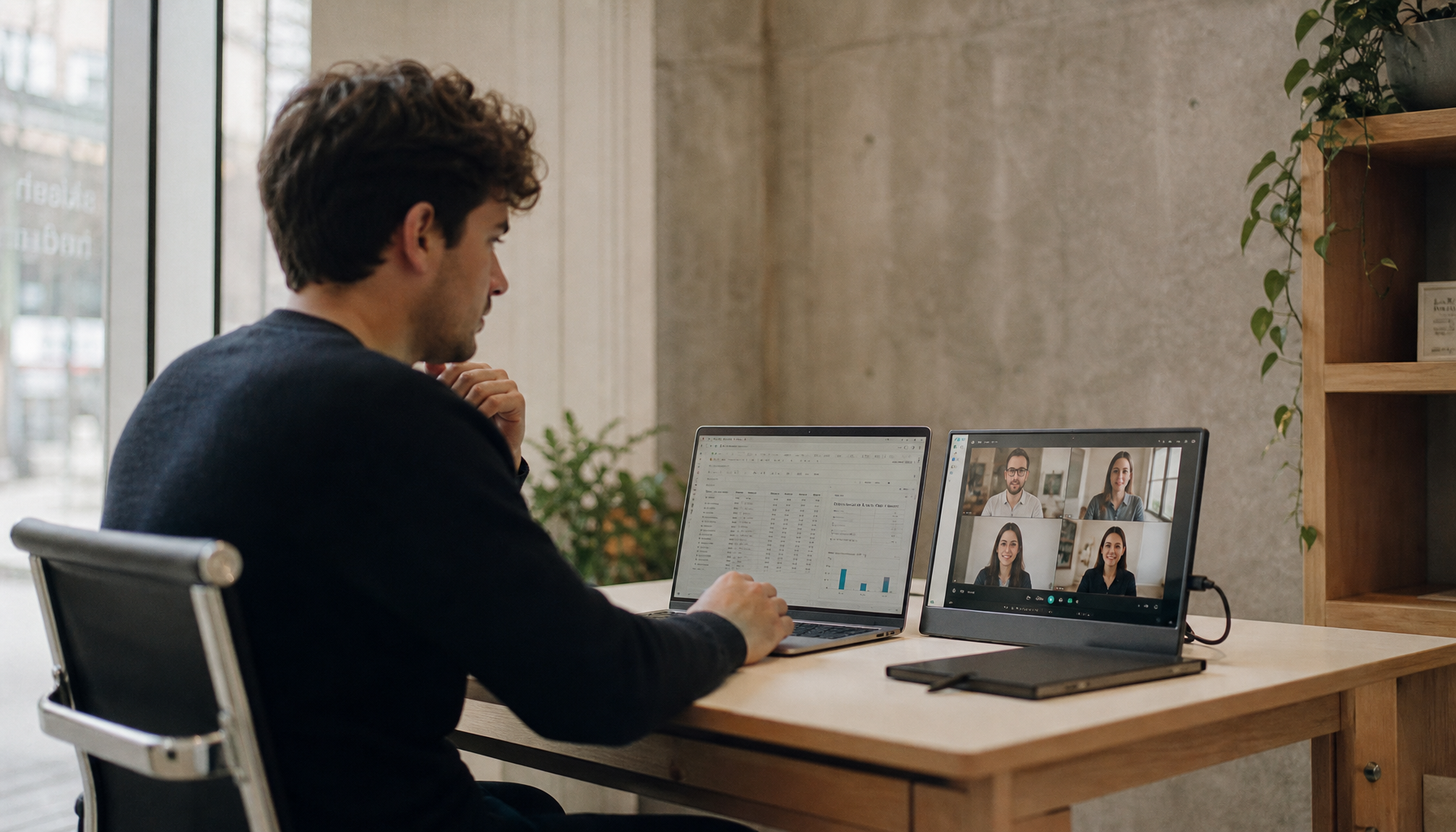
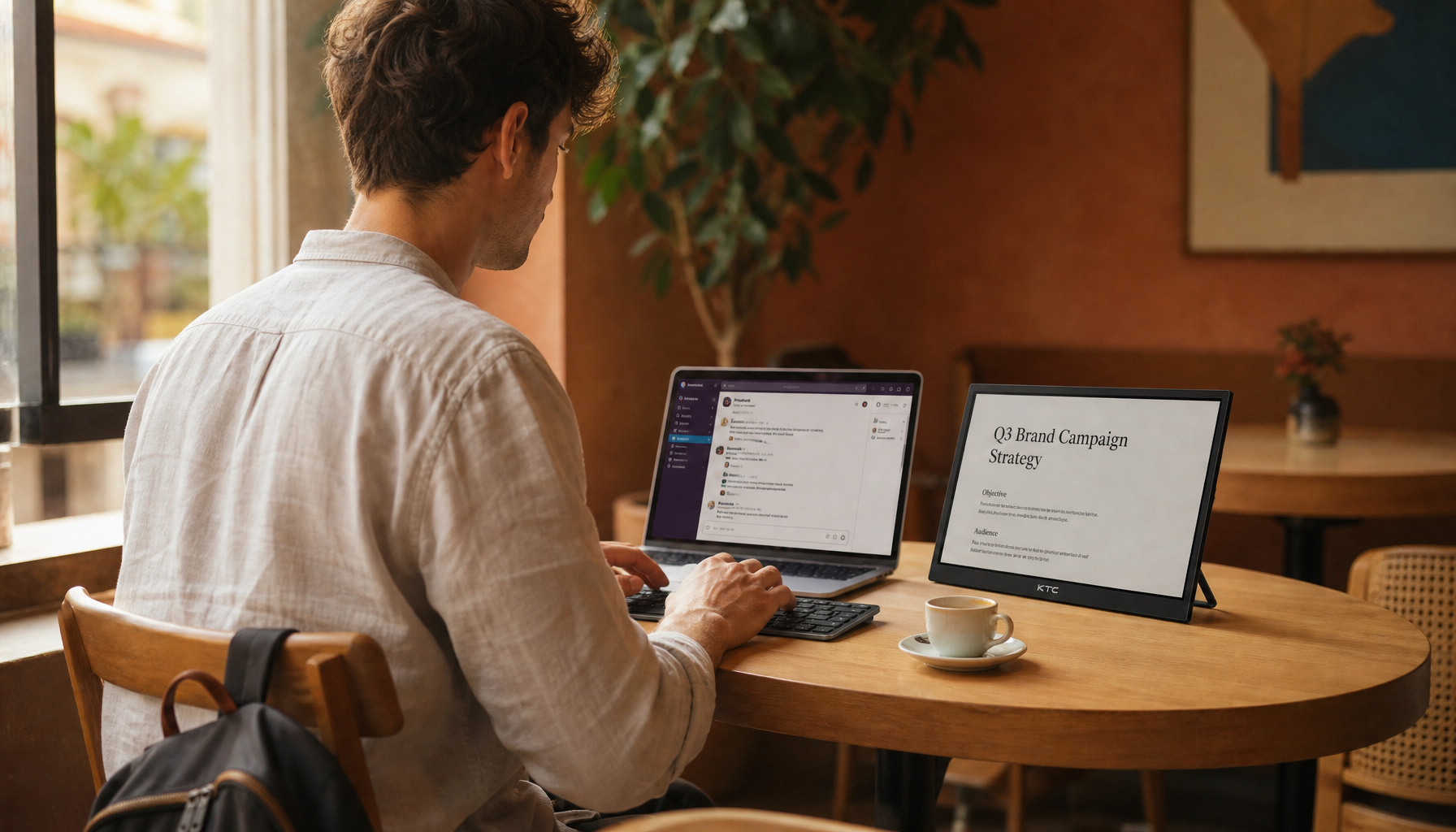
Monitor sharing speeds up screen wear because more people touch, move, clean, re-angle, and reconnect the same displays throughout the week. The damage usually starts as haze, micro-scratches, pressure marks, loose ports, glare hotspots, and uneven brightness long before the monitor fails.
Is the shared desk monitor suddenly cloudy, streaky, or harder to read than the identical screen at a fixed workstation? A simple check-in policy, cleaner control, and standardized cable setup can reduce avoidable surface wear within the next cleaning cycle. Here is how shared-use offices can keep display quality sharp without giving up flexible seating.
Why Flexible Offices Put More Stress on Monitor Surfaces

A flexible office is built around adaptable use: employees choose where, when, and how they work, often through shared desks, booking tools, collaboration rooms, and occupancy data. That flexibility improves space efficiency, but flexible workspaces also introduce cleaning-cycle issues, unclear policies, desk shortages, and no-show friction when governance is weak.
For monitors, the key difference is turnover. A fixed desk display may be adjusted by one person a few times a month. A shared monitor can be tilted, wiped, touched, and cabled by several users in a single day. In display audits, the worst wear is rarely from normal pixel aging; it is from human contact around the bezel, lower corners, webcam area, ports, and the center of the panel where people point during meetings.
The flexible-office model also encourages fast transitions. Someone finishes a video call at 10:55 AM, another person books the desk at 11:00 AM, cleaning staff wipe the surface between users, and a third person later rotates the display for a spreadsheet review. Each step is reasonable by itself. Combined, those steps increase the number of physical interactions that a monitor coating must survive.
What Screen Surface Degradation Means in Practical Terms
Screen surface degradation is the gradual loss of optical and physical quality at the front of the display. It can include worn anti-glare coating, fine scratches, polishing haze, pressure bruising, smudges that no longer clean evenly, and damaged edge seals. It can also include user-caused problems around the screen surface, such as stressed hinges, loosened stands, cracked bezels, and unstable ports that make the display flicker or disconnect.
This matters because modern office productivity depends on clean, readable screen real estate. Multi-monitor setups reduce clutter and help users keep related work visible side by side, but small-office productivity depends on compatible hardware, correct configuration, and ergonomic placement. If the shared monitor is scratched, smeared, or constantly misaligned, the productivity promise collapses into eye strain and wasted setup time.
For a real-world example, consider a 27-inch shared 4K monitor used by eight employees over a week. If each person adjusts the tilt twice, touches the screen once while explaining something, and the screen is wiped daily, that creates dozens of surface contacts every week. Over a year, that shared display experiences a handling load closer to a public kiosk than a private desk monitor.
The Main Wear Accelerators in Shared Monitor Environments
Repeated Touching During Collaboration

Screen sharing and screen mirroring make work more visual. Teams review dashboards, design files, slide decks, and support cases together. The problem starts when people point directly at the panel instead of using a cursor, laser pointer, annotation tool, or on-screen highlight. Finger oils attract dust, and dust becomes abrasive when the next person wipes the screen.
Screen sharing works best when presenters prepare content, close irrelevant windows, and guide attention clearly. Screen sharing software often supports annotation, remote control, whiteboards, and other tools that reduce the need to touch the physical screen. In practice, that means the same collaboration outcome with less panel contact.
For high-traffic rooms, the better workflow is simple: use annotation in the meeting app, keep a wireless mouse near the display, and make “no finger pointing on the panel” part of room etiquette. It sounds small, but it directly protects the most visible part of the monitor.
Aggressive or Inconsistent Cleaning

Flexible desks need cleaning, especially when hot desking and hoteling rotate users through the same workstation. The risk is not cleaning itself; it is using the wrong cleaner, too much liquid, rough paper towels, or circular scrubbing on a dusty panel.
Flexible workspace operators already need clear rules for bookings, cleanup, signage, nudges, and employee training; clear policies are also the right place to specify monitor-safe cleaning. A microfiber cloth, light pressure, and approved screen cleaner should be the standard. Spraying liquid directly onto the panel should be avoided because moisture can migrate toward the bezel and edge layers.
A practical test is to inspect screens under a bright side light once a month. If you see rainbow-like haze, crescent wipe marks, or matte patches that look different from the rest of the panel, the cleaning process is too harsh.
Constant Repositioning and Poor Ergonomics

Users in shared spaces have different heights, vision needs, and tasks. That creates constant adjustment. The correct answer is not to lock everything down; it is to use better mounting hardware and reset standards.
An ideal monitor setup puts the top of the screen at or just below eye level, with the primary display directly in front and secondary screens angled to the side; monitor arms provide more height, tilt, rotation, and positioning control than fixed stands. In a flexible office, that adjustability protects the equipment because users are less likely to grab the panel edge, force the stand, or drag the monitor across the desk.
The weak point is the habit of pushing directly on the screen surface. Place a small grip point on the monitor arm or teach users to move the display by the side bezel with two hands. If a monitor has a very thin bezel, the arm handle matters even more.
Cable Swaps, Docking Chaos, and Port Stress
Shared monitors often suffer from more than surface wear. People connect laptops through video cables, docks, hubs, and adapters. When the setup is not standardized, users pull cables at an angle, twist ports, and leave connectors hanging from the display.
Wireless presentation tools can reduce reliance on cables and adapters, and good etiquette includes checking Wi-Fi, inputs, remotes, adapters, and cables before a meeting. Screen mirroring etiquette also emphasizes leaving the room ready for the next users. For monitor longevity, that means cables should be labeled, strain-relieved, and routed through the arm or desk tray so the monitor port is not carrying cable weight.
For shared desks, docking should feel boring. One main dock cable, one documented monitor layout, and no loose adapter pile create a setup that saves time and protects ports.
Pros and Cons of Monitor Sharing
Approach |
Practical Upside |
Display Wear Risk |
Shared hot-desk monitors |
Better space utilization and lower idle hardware |
More touching, cleaning, and adjustment |
Bookable monitor-equipped desks |
Predictable access for hybrid workers |
Wear concentrates on popular stations |
Fixed assigned monitors |
Less handling and more consistent setup |
More unused screens when attendance varies |
Portable personal displays |
User controls condition and settings |
More transport damage and cable clutter |
Standardized shared docking stations |
Faster setup and fewer port mistakes |
Requires policy, labels, and IT ownership |
The strongest model is usually not all-shared or all-assigned. Mature flexible offices often combine multiple workspace models, and flexible office space can include hot desking, hoteling, activity-based work, team neighborhoods, coworking, serviced offices, and modular spaces. For displays, that suggests a tiered approach: durable shared monitors for general desks, higher-grade calibrated displays for creative zones, and fixed setups for roles that depend on color, refresh rate, or multi-screen precision.
How to Slow Screen Degradation Without Slowing the Office Down
Start with ownership. Every shared monitor should belong to a workstation standard, not to whoever used it last. That standard should define the model, connection path, default brightness, resolution, scaling, cleaning method, and reset position.
Flexible workspaces are strongest when they combine employee choice with management structure, and workspace analytics can reveal overused and underused areas. If one bank of desks shows faster monitor wear, it may be carrying too much traffic, using the wrong cleaning process, or missing enough bookable alternatives.
Then make the physical setup harder to damage. Use mounting arms with handles where possible, route cables with slack but no hanging weight, provide a microfiber cloth at each station, and remove rough paper products from monitor areas. Keep screen brightness at a consistent, comfortable level so users do not keep opening the monitor menu and pressing buttons with greasy hands.
Training should be short and practical. Knowledge sharing works when organizations capture useful habits and make them easy to repeat; knowledge-sharing habits help reduce search time, improve consistency, and preserve know-how across teams. A 60-second onboarding note for shared desks can cover the essentials: move the arm, not the glass; use the dock cable; clean only with the provided cloth; report haze, flicker, or port looseness early.
When to Replace Instead of Keep Cleaning

A monitor should be considered for replacement when haze remains after proper microfiber cleaning, scratches are visible during normal work, pressure marks show on bright backgrounds, or flicker appears when the cable is barely moved. For productivity displays, the threshold is lower than for lobby signage because text clarity affects speed and comfort all day.
There is also a value calculation. Flexible workspace planning often compares real estate cost, utilization, and on-demand access, and flexible workspace ROI depends on actual desk and room usage rather than theoretical capacity. Apply the same thinking to monitors. A scratched display on a high-demand desk may cost more in friction than its replacement price suggests, especially if users avoid that station or waste time adjusting around defects.
A shared monitor should feel like a performance asset, not leftover furniture. Protect the surface, standardize the connection, and make clean handling part of the flexible-office workflow. The result is sharper text, fewer setup delays, and a screen environment that supports focused work instead of slowly fighting it.