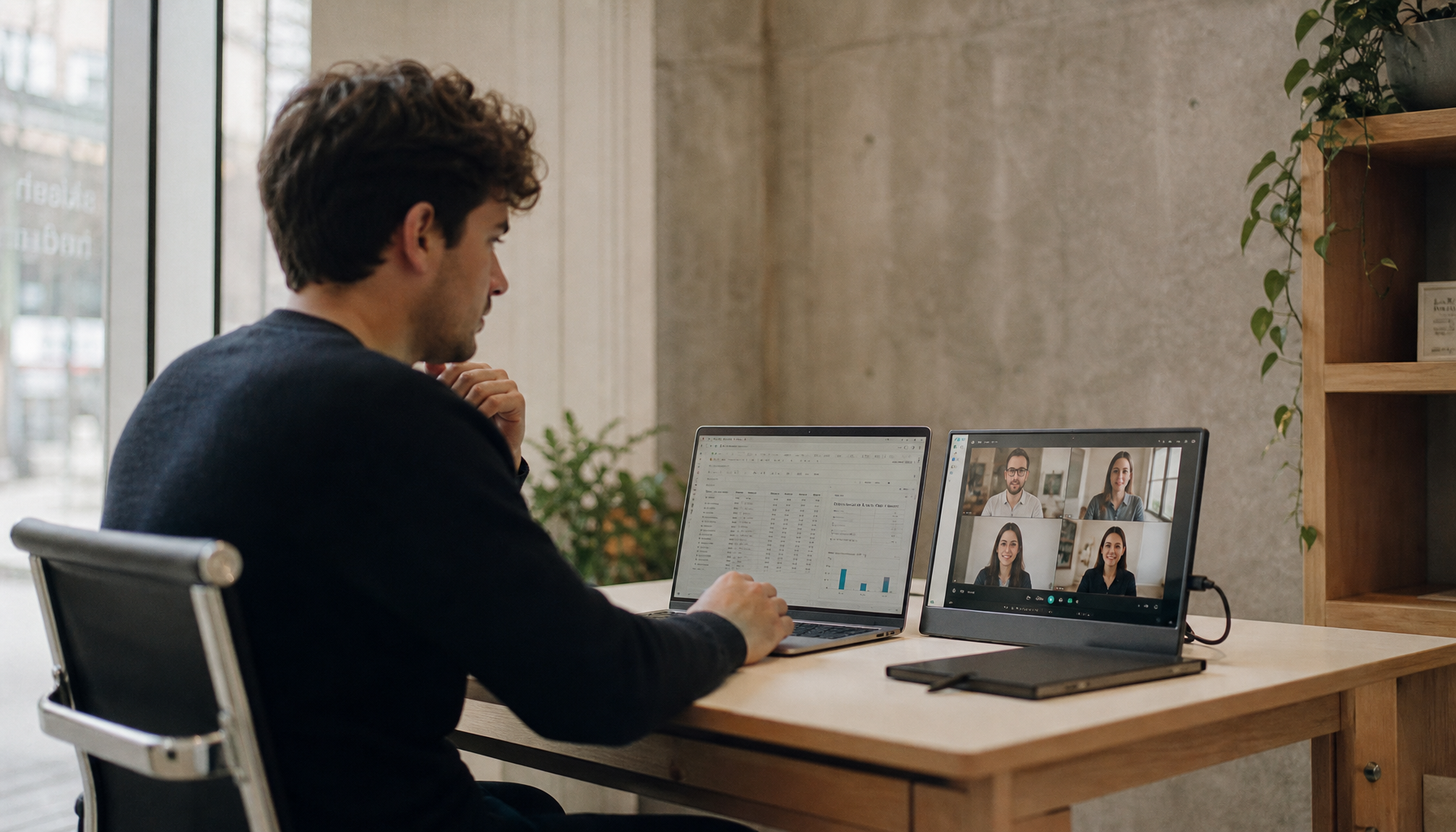
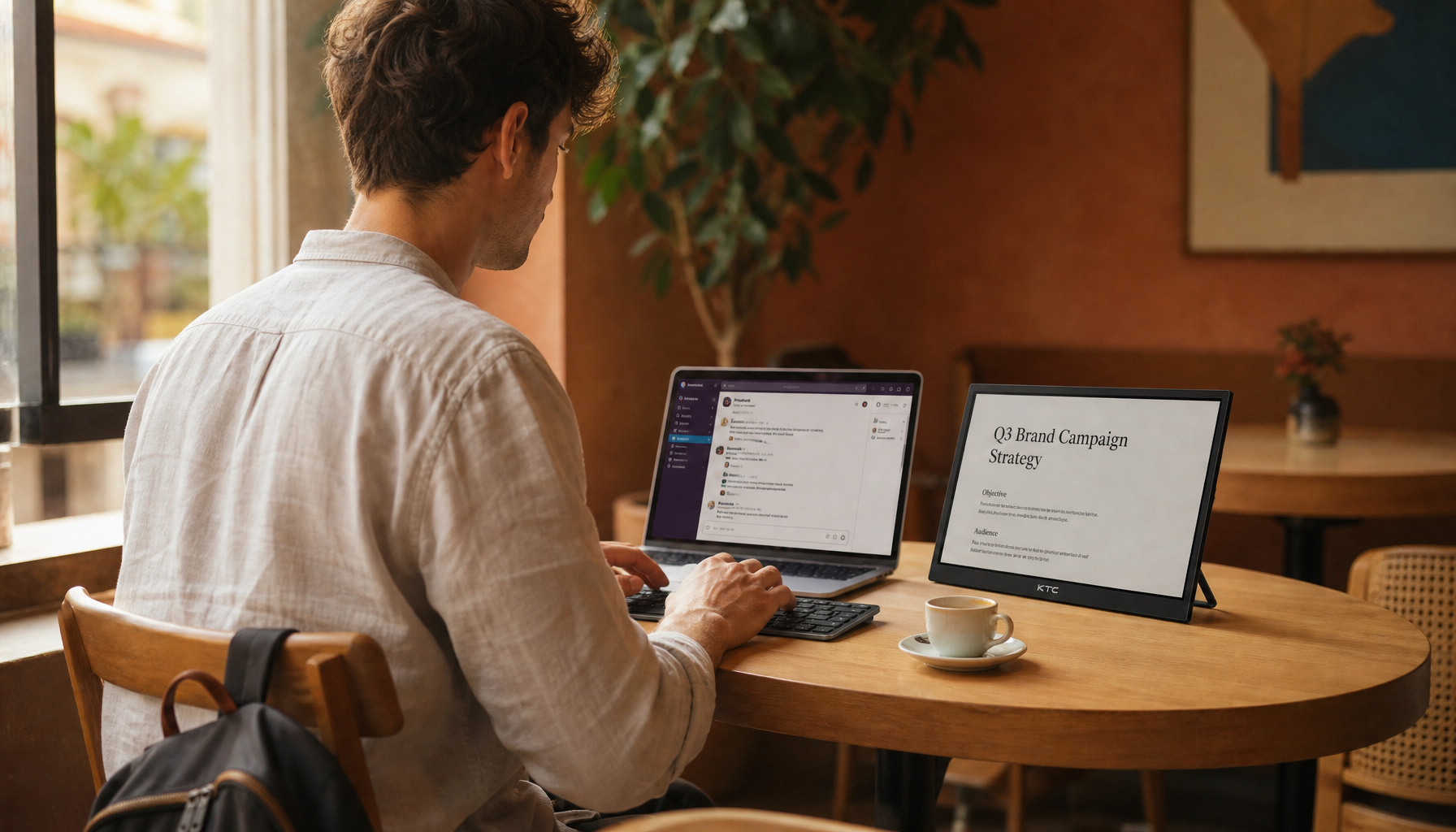
MegPad for creators makes sense when a fixed monitor keeps slowing you down in a small studio. If you need to move a screen between camera review, script reference, and client viewing, a rolling touch display can fit the workflow better than a display that stays locked at one desk position.

Why Creators Reach for a Mobile Studio Display
For freelance creators, YouTubers, and small teams, the pain point is usually not picture quality first. It is friction. A screen that cannot move easily makes you walk back and forth between the desk, the camera area, and the place where a client is standing.
MegPad is one way to solve that problem in a studio-style setup: a mobile touch display that can be rolled into position when you need it, then moved again when the task changes. That matters most when the same room has to handle review, editing, and presentation without feeling crowded.
A useful decision rule is simple: if your display mostly stays in one place, a mobile model may add complexity you do not need. If your setup changes several times in a session, the mobility can be the main reason to consider it.
Creator Workflows That Benefit Most
Camera Review and Shot Selection
A rolling display can help when you want to stand near the camera, look at a live feed, and make framing decisions without returning to the desk every time. In a compact home studio, that can shorten the distance between capture and review.
This is especially useful when you keep moving between takes. If the screen can roll to the shooting zone, you are less likely to leave a shot unchecked or rely on memory alone. The trade-off is that the display becomes another piece of gear to move and park correctly.
Script, Notes, and Reference Material
For script work and reference images, the advantage is visibility in the same room, not raw processing power. A display you can position beside the tripod, desk, or backdrop lets you keep notes in view while still facing the camera.
That is useful for livestreaming, voiceover sessions, and tutorial filming where you glance at bullet points often. If your notes live on a laptop already and you rarely shift positions, the benefit is smaller. But if you keep changing where you stand, the rolling format can reduce small interruptions that break your rhythm.
Client Presentations and Playback
In a client review session, a larger mobile screen can feel more natural than crowding around a desk monitor. It gives you a presentable viewing surface that can move toward the room's center, then roll back out of the way after the meeting.
For small production spaces, that is often the real advantage: less rearranging before and after a meeting. The screen should still be treated as a movable review tool, not as the center of the entire studio layout. A mobile podcasting setup guide is a useful related read if you also manage guest-facing sessions.
Livestream Control and On-The-Fly Touch Input
Touch input matters most when you are already working live or semi-live and want quick taps, window switching, or simple scrubbing. For creators who monitor chat, reference material, and source video at the same time, touch can be faster than reaching for a mouse in a crowded setup.
That said, touch is not automatically a must-have. If your control style is keyboard-first and your software stays in one layout, the benefit is smaller. The value appears when you are constantly moving between windows or need a display that feels easy to manipulate during a live session.

What the MEGAPAD Models Offer
The two MEGAPAD models below aim at similar creator problems, but they do not feel identical in use. The 27-inch option leans simpler and more compact, while the 32-inch option gives you a larger 4K canvas and more connection flexibility.
| Model | Screen Size And Resolution | Battery Runtime | Touch And Mobility Cues | Best Creator Use Case | Practical Trade-Off |
|---|---|---|---|---|---|
| KTC MEGAPAD 27" FHD Android 14 Google EDLA Smart Touch Monitor with 9500mAh Battery | 27-inch FHD VA panel | Up to 6 hours, manufacturer-listed | Built-in wheels, touch support, Type-C all-in-one, 8MP camera, 4×5W speakers | Smaller home studio review, script notes, quick repositioning | Less screen area, but simpler to place and move |
| KTC MEGAPAD 32" 4K Android 14 Google EDLA Smart Touch Monitor with 8550mAh Battery | 31.5-inch 4K VA panel | About 5 hours, manufacturer-listed | Built-in wheels, height, tilt, rotate, and roll adjustments, HDMI 2.0, Type-C, USB 3.0, 8W×2 speakers | Client viewing, reference work, larger shared review surface | More canvas and more inputs, but physically larger |
The practical split is straightforward. If you want the easier studio fit, the 27-inch model is usually the cleaner choice. If you want a bigger screen for playback or presentation, the 32-inch model is usually the better match.
The 27-inch MEGAPAD is the one to look at when you care more about compact movement and a simpler one-cable kind of setup. The 32-inch MEGAPAD fits better when screen size and input flexibility matter more than keeping the footprint small. A broader browse path is the Mobile Touch Screen collection if you want to compare related models.
How to Set Up a Creator-Friendly Layout
- Pick the primary zone first, such as camera review, editing, or client viewing.
- Park the display where it can roll into the second zone without blocking gear or cables.
- Leave enough cable slack so you are not tugging on connections every time you move the screen.
- Choose the size that fits the room and the usual viewing distance.
- Test touch access from the spot where you will actually stand or sit.
- Reposition the display through the normal path you will use during work, then clear anything that makes the route awkward.
The main idea is to treat the display as a movable reference point, not as the anchor of the whole studio. That keeps the layout flexible when you shift from shooting to editing to review.
For most creators, the first setup mistake is not buying the wrong screen. It is parking the screen where it looks good on day one but becomes annoying to move on day two. The easiest check is whether you can roll it from one work zone to another without rethinking the whole room.
Setup Trade-Offs That Matter in Studio Use
Screen Size Versus Desk Space
Bigger is not automatically better in a creator studio. A larger screen can improve shared viewing, but it can also crowd narrow walkways, light stands, and camera paths.
If your room is tight, check the turning radius and the place where the screen will sit when it is not in use. If the display has to squeeze past other gear every time you move it, the convenience starts to disappear.
Battery Runtime Versus Always-Plugged Use
Battery power matters most when you need the screen away from a wall outlet or when you want to avoid constant cable changes. The 27-inch model is listed at up to 6 hours, and the 32-inch model is listed at about 5 hours, but real runtime depends on brightness and usage.
That means battery is a workflow feature, not a guarantee of all-day unplugged use. If you mostly keep the display near power anyway, runtime is less important than input layout and stand adjustment. If you move it often, battery convenience becomes a real buying factor.
Touch Control Versus Traditional Input
Touch is useful when the screen itself becomes part of the working surface. That can make window switching, scrubbing, and quick approvals feel faster in a live or semi-live workflow.
If you usually sit at a keyboard and mouse, touch may be less important. In that case, a simpler display can be enough, and you should not pay for touch just because it sounds more flexible.
Built-In Features Versus Simpler Display Needs
The built-in Android and EDLA setup helps when the display needs to stand on its own for apps, playback, or quick access without a separate computer. It matters less if the screen only serves as a monitor for one source device.
A MegPad vs. DIY rolling monitor comparison can help if you are deciding between an integrated setup and a more manual one. The short version is that built-in features reduce extra pieces of gear, but only if you actually use them.
Studio Notes Before You Buy
Before you choose MegPad for creators, run through a few checks:
- Confirm the screen can fit the room without blocking a light, camera path, or doorway.
- Match the size to the viewing distance you actually use, not the one you imagine after rearranging the studio.
- Decide whether touch input will save time or just add another feature you do not reach for.
- Verify the ports you need, especially if you plan to switch between built-in apps and outside devices.
- Treat app compatibility as something to confirm, not something to assume.
- Pick the model that fits the most common session, not the one with the flashiest spec on paper.
If you mainly need a rolling client screen or a flexible review monitor, the MEGAPAD lineup makes sense as a category to compare. If you rarely move the display once it is set, a fixed monitor may still be the simpler answer.
The Featured Product collection is a useful browse path if you want to see what the store is emphasizing right now, while the All Monitors collection is the broader route for side-by-side comparison.
Related Resources
These guides expand on mobility, smart display hubs, and classroom-style rolling setups that share many of the same positioning and workflow principles:
- The Display Challenge of Working from Different Rooms Throughout the Day
- Defining the Smart Touch Monitor: Why Your Home Needs an All-in-One Hub
- MegPad for Remote Education: Transforming the Home Classroom with Mobility
FAQs
Q1. How Does a MegPad Help in a Small Creator Studio?
The main benefit is flexibility. A rolling touch display can move between camera review, script reference, and client-facing spots without locking you to one desk position. That matters most in compact studios where every piece of gear has to earn its space.
Q2. What Is the Difference Between the 27-Inch and 32-Inch MEGAPAD Models?
The 27-inch model is the simpler, smaller fit, while the 32-inch model gives you a larger 4K canvas and more input options. In practice, the first favors easier movement and the second favors viewing comfort and shared review.
Q3. Can a MegPad Work as a Livestream Reference Screen?
Yes, if your workflow benefits from a movable display with touch access. It can be useful for monitoring, notes, and quick control during live sessions, but the exact experience still depends on your source devices and the apps you use.
Q4. What Should I Check Before Using It for Client Presentations?
Check the viewing distance, cable path, and whether the screen can be moved into a presentable position without cluttering the room. It also helps to confirm whether battery use matters in your setup or whether the display will stay plugged in most of the time.
Q5. Can I Move a MegPad Between Editing, Shooting, and Review Areas?
That is exactly the kind of workflow it is meant to support. The real question is whether your studio has clear paths, enough cable slack, and enough space to park the display after each move. If those conditions are awkward, the mobile design loses value fast.
A Practical Fit Check for Creator Studios
MegPad for creators is most useful when the display needs to move as often as the work does. If your studio shifts between review, reference, and presentation zones, it can simplify the day. If your setup stays fixed, the mobility may not pay off. The right choice is the model that fits your room, your viewing habits, and how often you actually reposition the screen.
Run a quick path test: roll the unit from the main camera zone to the client area and back while checking cable slack and clearance around lights and tripods. If the route stays clear and the screen parks without blocking workflow, the mobile format earns its place.