A curved ultrawide does not automatically require more head movement than dual flat screens. Head movement depends more on screen width, viewing distance, task placement, and how often you use the far edges than on the monitor format alone.
Ever notice your neck turning all day because a platform, a browser tab, or a game map lives at the edge of your setup? In practical monitor setups, moving the main task into the center third and pushing reference windows to the sides can reduce repeated head rotation without giving up screen space. This guide explains when a curved ultrawide feels easier, when dual flat monitors are better, and how to set either one up for less strain.
The Short Answer: Width Matters More Than Curvature
A curved ultrawide can reduce the “outer edge feels far away” problem compared with a large flat ultrawide, because the screen wraps slightly toward the viewer. But it can still demand more head movement if you treat a 34-inch, 40-inch, or 49-inch display like one giant active workspace.
The main ergonomic issue is horizontal reach. Wide monitors may require neck rotation to view content at the sides, and proper monitor placement depends heavily on viewing angle and viewing distance, not just display type wide monitors. A dual flat setup can be easier or harder depending on whether one monitor is centered or both are spread out like a wall.
A Practical Rule
If your most-used window is centered, both setups can work well. If your eyes and head constantly travel to the far left or far right, both setups can become tiring.
For most buyers, a 34-inch curved ultrawide is the safer ergonomic middle ground than a very large super-ultrawide, while dual 24- to 27-inch flat monitors work well when one screen is clearly primary and the other is angled inward for secondary tasks.
How Curved Ultrawide and Dual Flat Setups Change Head Movement

A curved ultrawide creates one continuous desktop with no center bezel, which is useful for gaming, timelines, spreadsheets, coding layouts, and side-by-side windows. Ultra-wide monitors typically use 21:9 or wider formats, giving more horizontal space than standard 16:9 displays 21:9 or wider.
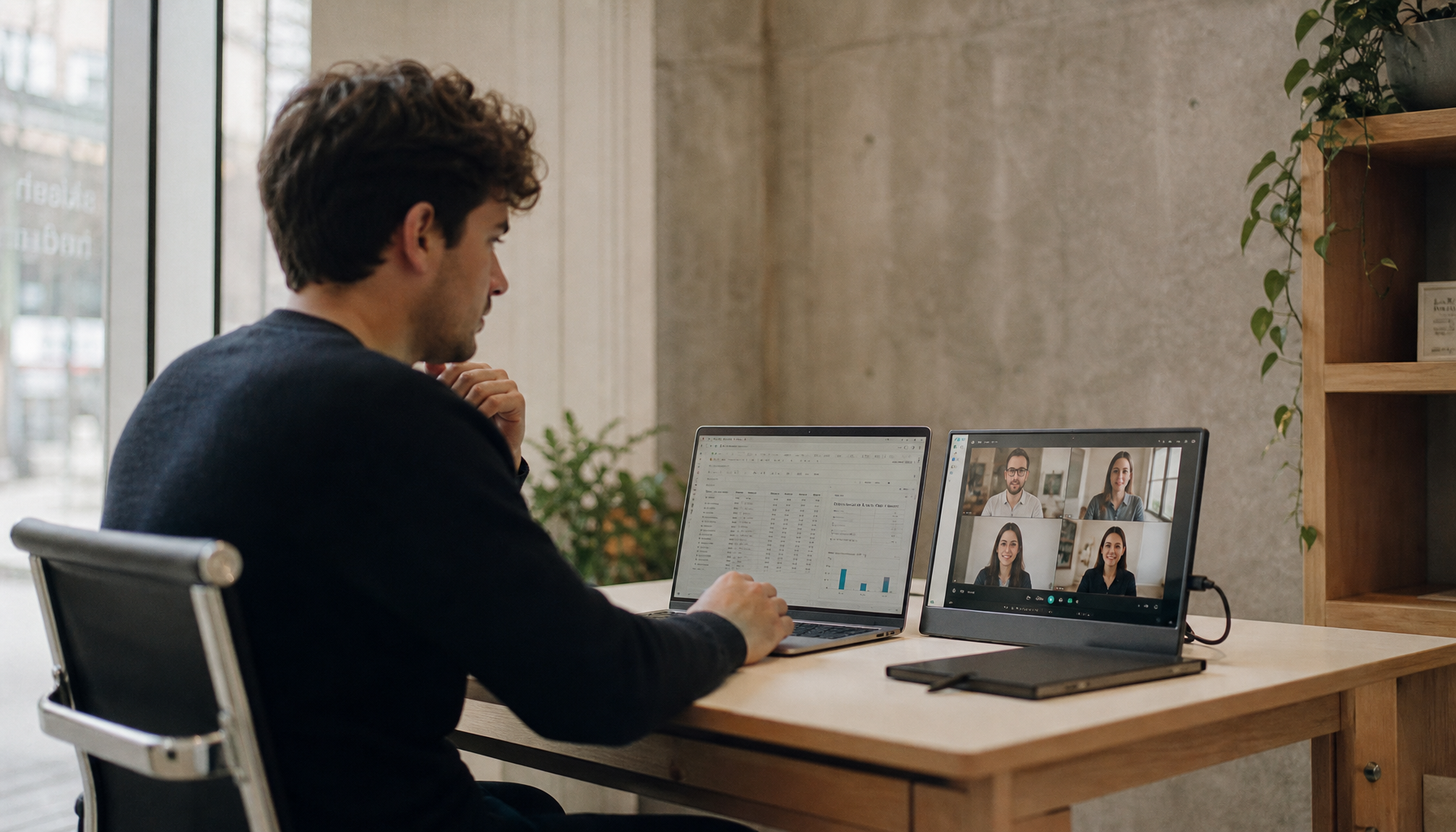
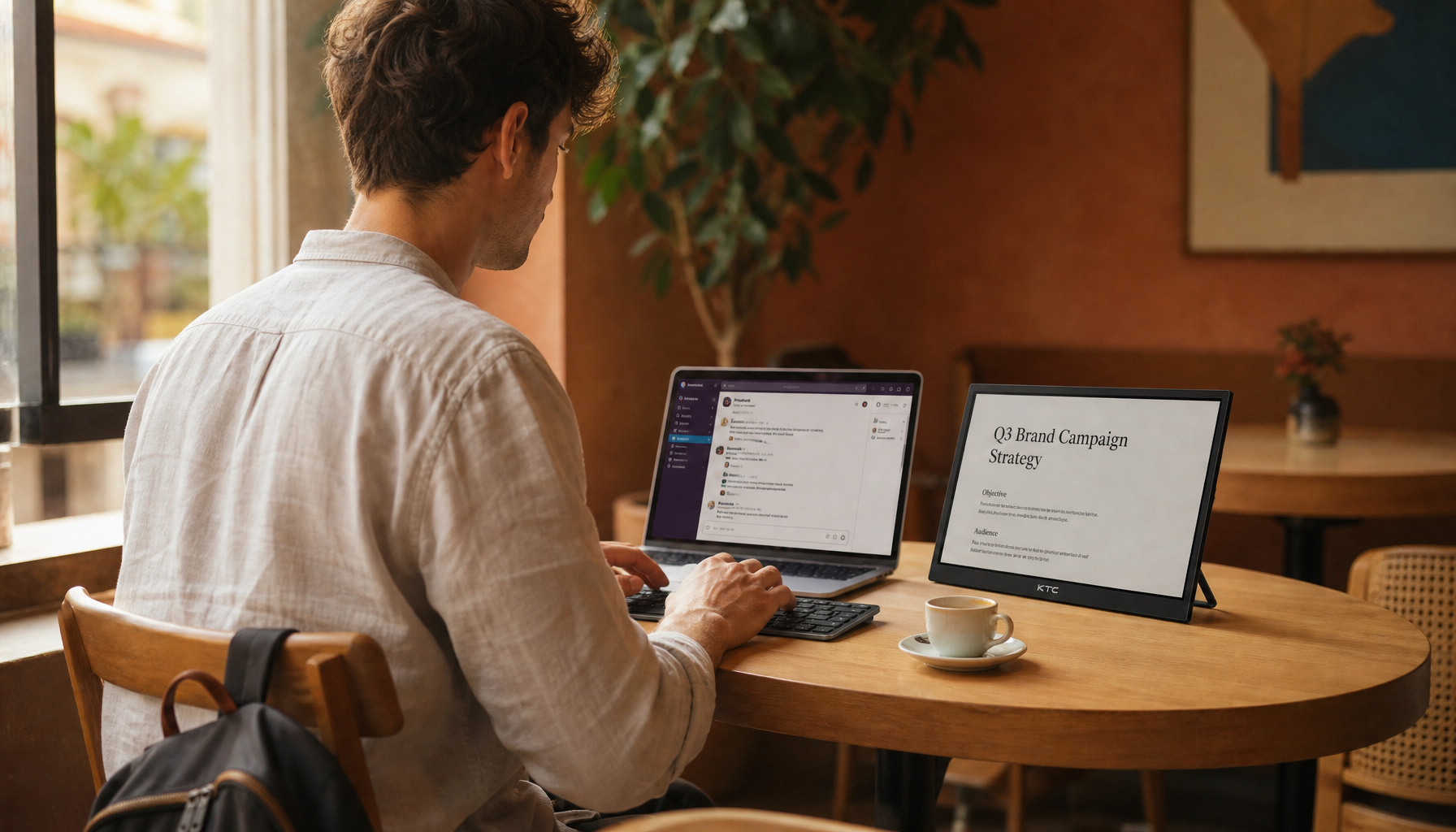
Dual flat screens divide that space into two panels. That center split can be annoying for games and video editing timelines, but it can also help users mentally separate a main task from a secondary task. For example, a writer might keep a document on the centered display and research notes on the angled side monitor.
Where the Extra Movement Comes From
The extra movement usually appears when the active task is not in front of you. On a curved ultrawide, that might mean editing cells on the far right side of a spreadsheet for hours. On dual flat screens, it might mean using the left monitor as your real main display while your chair and keyboard remain centered between two screens.
A 2024 lab study cited in ultrawide ergonomics guidance found that wider displays increased head-rotation demands, and some users found a 40-inch display overwhelming while many preferred a 34-inch option because it involved less head twisting wider displays. That does not mean ultrawides are bad; it means size and window placement matter.
Comparison: Curved Ultrawide vs Dual Flat Screens
Setup |
Head Movement Risk |
Best Use Case |
Main Ergonomic Advantage |
Main Ergonomic Trade-Off |
34-inch curved ultrawide |
Low to moderate |
Gaming, coding, creative timelines, two-window productivity |
No bezel, strong central focus, good side reference space |
Far-edge content can still cause neck turning |
40-inch curved ultrawide |
Moderate |
Large spreadsheets, dashboards, editing workstations |
More room for multi-window layouts |
Can feel overwhelming on shallow desks |
49-inch super-ultrawide |
Moderate to high |
Sim racing, finance-style dashboards, immersive games |
Replaces multiple monitors with one continuous panel |
Requires disciplined window placement and desk depth |
Dual 24-inch flat monitors |
Low to moderate |
Office work, chat plus document, browser plus app |
Easy to dedicate one primary screen |
Poor centering can cause repeated side viewing |
Dual 27-inch flat monitors |
Moderate |
Productivity, streaming, gaming plus monitoring |
Flexible layout and lower replacement cost |
Wider total span can increase neck rotation |
Which Setup Is Better for Gaming?
For gaming, a curved ultrawide often reduces the need to glance between separate screens because the game stays on one continuous display. This is especially useful in racing, flight, RPG, and open-world titles where peripheral vision adds immersion.

However, competitive gaming is different. If a game’s HUD, minimap, or inventory sits at the far edge of a 32:9 display, the monitor may increase eye travel and occasional head movement. A high-refresh-rate 27-inch or 32-inch 16:9 gaming monitor can feel faster and more focused for esports because important information stays closer to the center.
Gaming Setup Guidance
For a 34-inch curved ultrawide, sit about an arm’s length away and keep the center of the screen aligned with your nose, keyboard, and chair. Large curved ultrawides are often comfortable around 24 to 31 inches from the eyes, but the right distance depends on screen size, curvature, and your eyesight 24 to 31 inches.
For dual-screen gaming, keep the game on the centered monitor. Use the second display for a platform, a platform, music, or hardware monitoring, and angle it inward instead of placing it flat beside the main display.
Which Setup Is Better for Productivity?
For productivity, the best setup is the one that keeps your primary work directly in front of you. A curved ultrawide works well when the center third holds your main document, code editor, spreadsheet area, or design canvas, while the sides hold lower-frequency reference material.
Dual flat monitors work well when one monitor is clearly the primary display. Multiple-monitor guidance recommends placing the primary monitor directly in front if it is used most, while secondary monitors should be angled in a semi-circle primary monitor.
The “Center Third” Test
Use this test: if more than half your day is spent looking at something outside the center third of your setup, rearrange your layout. In multi-monitor setups, a centered primary monitor with side displays angled inward helps protect the central field of view and reduce repeated neck rotation centered primary monitor.

On a curved ultrawide, that means putting the active window in the middle, not maximized across the full screen all day. On dual flat screens, it means avoiding the common mistake of centering yourself on the bezel between two monitors unless both screens are used equally.
Setup Checklist to Reduce Head and Eye Movement
- Set the primary task straight ahead, aligned with your chair, keyboard, and mouse.
- Keep the top edge of the display at or slightly below eye level.
- Place the screen about an arm’s length away; for many 24- to 27-inch displays, 24 to 36 inches works well.
- For a dual-monitor layout, a 24- or 27-inch flat display such as a 24”/27” 2K IPS 100Hz home and office monitor can work as the centered primary screen, with the second monitor angled inward for reference tasks.
- Angle side monitors inward about 10 to 30 degrees so they form a shallow arc.
- On an ultrawide, keep active work in the center third and use the sides for lower-frequency windows.
- Avoid pushing a large ultrawide too close on a shallow 24-inch-deep desk.
- Use SDR for long productivity sessions and reserve HDR for games, movies, console play, or media review.
Don’t Ignore Brightness, HDR, and Eye Fatigue
Head movement is only part of comfort. Brightness, contrast, and ambient lighting also affect how often your eyes refocus and adapt during long sessions.
HDR can make games and movies look more dramatic, but productivity work usually feels better in SDR. HDR fatigue is linked to intense brightness, contrast swings, and frequent luminance changes, especially when bright highlights appear in dark scenes HDR fatigue. On a large ultrawide, a bright white window or subtitle at the far edge can be both visually and physically annoying.
A simple fix is to lower peak brightness for desktop use, avoid working in a dark room with a very bright screen, and add soft bias lighting behind the monitor. This matters even more with large curved gaming monitors because the display fills more of your field of view.

FAQ
Q: Does a curved ultrawide always require more head movement than dual flat monitors?
A: No. A curved ultrawide can require less head movement if your main work stays centered and side content is secondary. It can require more movement if you constantly use far-edge content on a very wide screen.
Q: Is a 34-inch curved ultrawide better than dual 27-inch monitors?
A: For many users, yes, especially if they want one clean workspace for gaming, coding, editing timelines, or two large windows. Dual 27-inch monitors are better if you prefer separate task zones or need one dedicated side display for chat, monitoring, or reference work.
Q: Should I center myself between two monitors?
A: Only if you use both monitors equally. If one monitor is your main screen, center yourself on that display and angle the second monitor inward.
Practical Next Steps
Choose a curved ultrawide if you want one continuous display, dislike bezels, play immersive games, or work with timelines and wide layouts. Choose dual flat monitors if you want flexible task separation, lower upgrade cost, or a dedicated secondary screen.
The most comfortable setup is not defined by curved versus flat alone. Put your main task straight ahead, keep the screen slightly below eye level, angle side content inward, and avoid using the far edges as your all-day work zone.