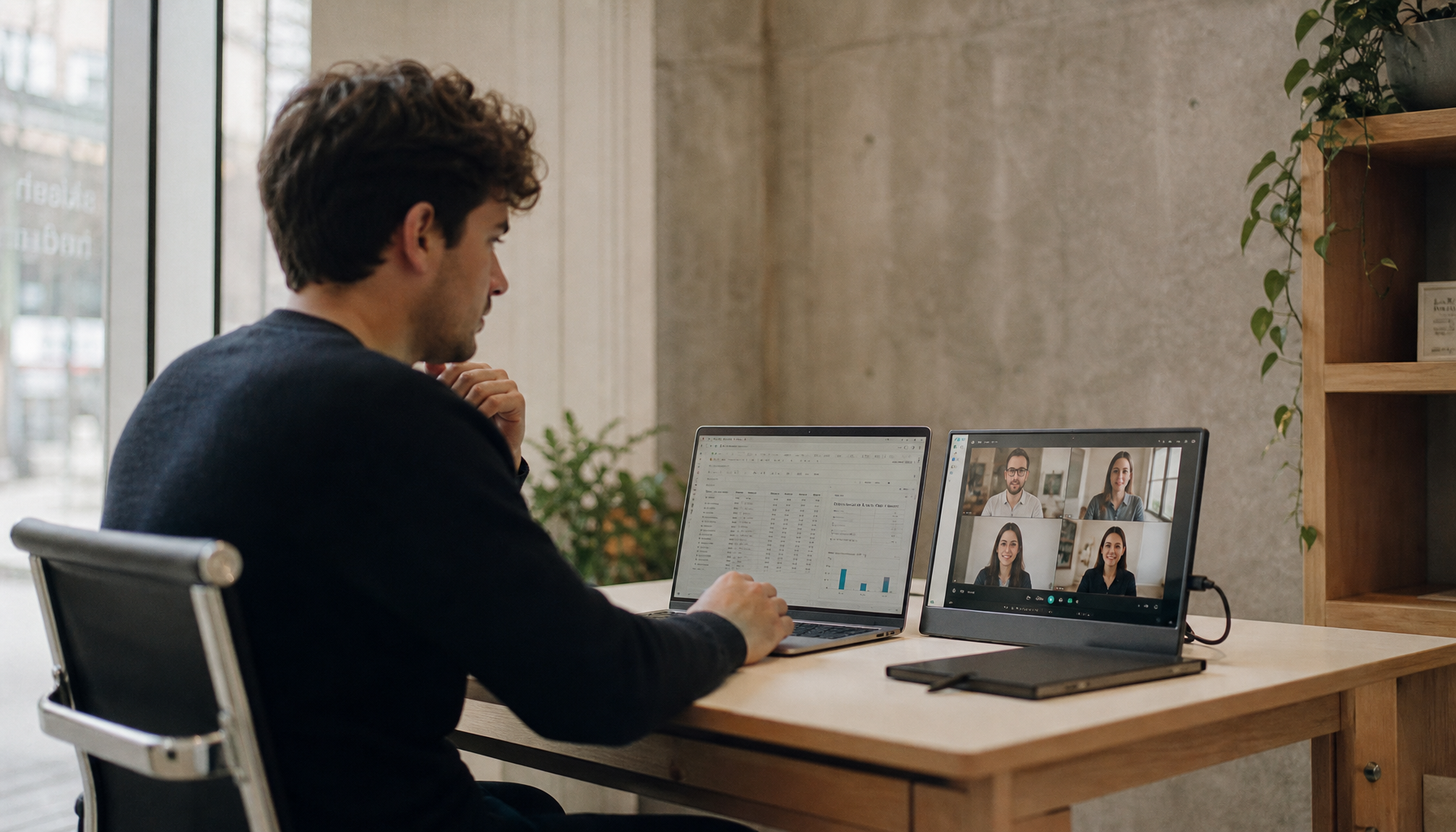
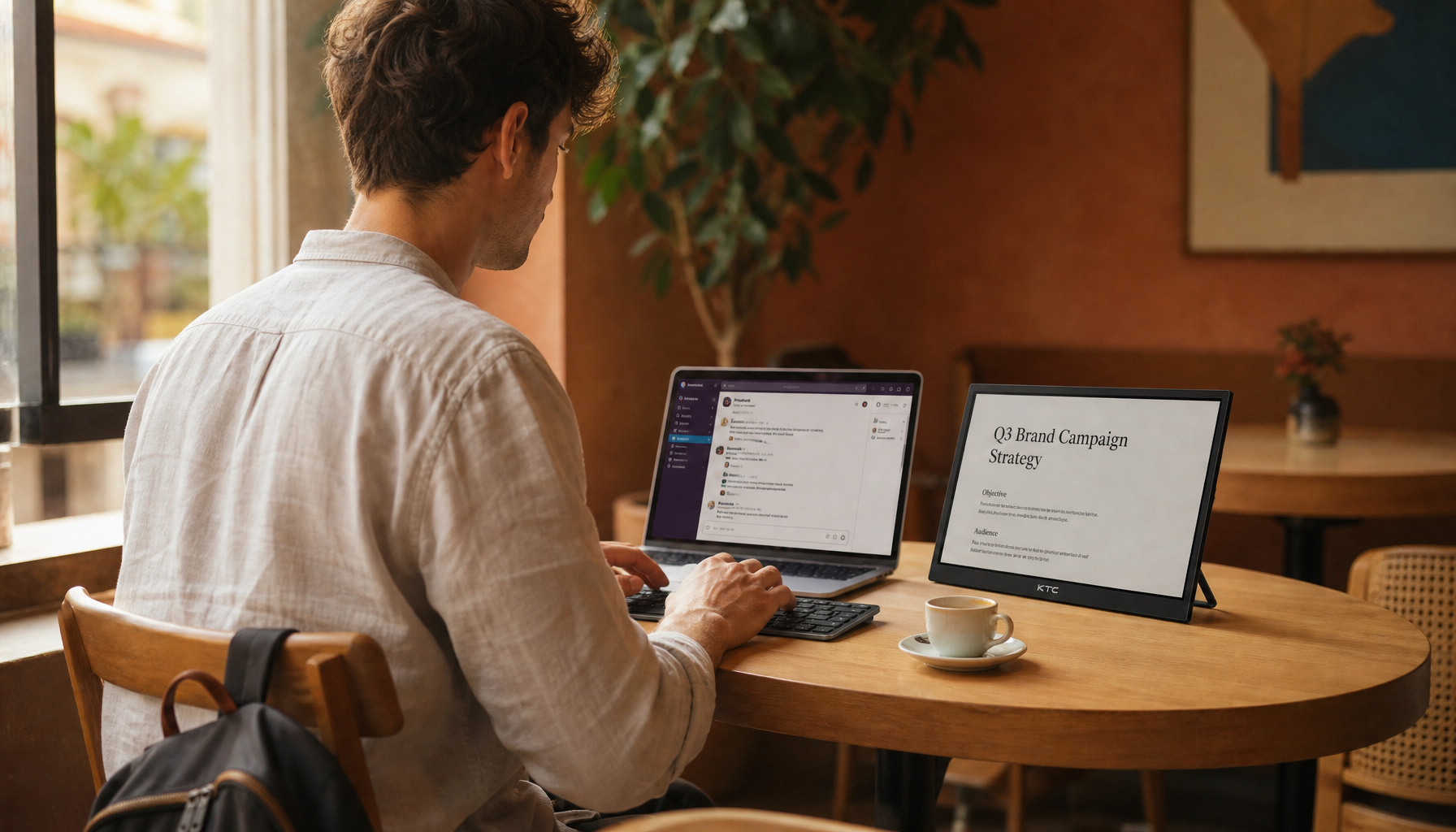
AI command center setup works best when it keeps token streams, logs, and agent status visible without locking you to one desk. A rolling hub is useful if you move between coding, review, and collaboration spots; it is less useful if your workflow already lives in one fixed terminal and never leaves it.

Why a Rolling Hub Changes AI Monitoring
For most AI builders, the problem is not screen size alone. It is context switching. When logs, prompts, and agent status live on a separate rolling display, you can keep an eye on them while you work elsewhere.
That matters most in a home lab, a shared maker space, or a hybrid desk-to-sofa workflow. It matters less if your monitoring is occasional, or if your stack already sends alerts to your laptop, phone, or chat system.
A good rule of thumb: if you keep glancing back at a static monitor just to avoid missing stalls, a mobile hub is probably worth considering. If you only need a dashboard once in a while, a fixed screen is usually simpler.
Designing a Zero-Clutter, High-Efficiency Ergonomic Home Office Anchored by a KVM Monitor is a useful follow-up if you want the cable-management side of a cleaner workstation.
What to Put on the Dashboard
Treat the screen like a control panel, not a wallpaper collage.

Token Streams and Prompt Output
Put the fastest-changing items closest to eye level. Token streams, live prompt output, and generation progress are the easiest to miss because they can change while you are looking somewhere else.
Agent Status and Task Queues
Next come agent state, queued tasks, retries, and error flags. These are the panels that tell you whether the workflow is moving, stuck, or silently failing.
Logs, Alerts, and Health Checks
Keep logs and alerts grouped together. If they are scattered across too many windows, the display stops feeling glanceable and starts feeling noisy.
Reference Notes
Prompt snippets, commands, and reference notes belong in a secondary area. They should support the live workflow without competing with it.
Matter and Thread in 2026: Transforming Your Monitor into a Smart Office Hub is a useful next read if you want to turn the same screen into a broader smart-office surface.
Why a Mobile 4K Screen Fits the Job
A rolling hub only works if the display is still readable in real use. That is where a larger 4K screen helps: it gives more room for multiple panes, and text stays easier to scan when the layout is dense.
Here is the practical trade-off. Bigger and sharper is better for dashboards, logs, and side-by-side notes, but it also makes the unit heavier and more specific in placement. If you want a hub that moves often, you should care as much about mobility and stability as about resolution.
The KTC MEGAPAD 32" 4K Android 14 Google EDLA Smart Touch Monitor with 8550mAh Battery is the stronger match when you want a 31.5-inch 4K canvas, Android 14, touch input, and a built-in battery in one rolling setup. KTC MEGAPAD 32" 4K Android 14 Google EDLA Smart Touch Monitor with 8550mAh Battery is the product page to check if that mix fits your workflow.
The KTC MEGAPAD 32" 4K Android 13 Google EDLA Smart Touch Monitor with 9500mAh Battery is the closer fit if you want similar mobility with a slightly different software and battery profile. KTC MEGAPAD 32" 4K Android 13 Google EDLA Smart Touch Monitor with 9500mAh Battery is the comparison point to review before choosing.
A rolling display is not a replacement for your whole monitoring stack. It is a visible surface for the parts that benefit from constant glanceability.
| Setup style | Mobility | Readability for multi-pane AI work | Cable dependence | Best fit |
|---|---|---|---|---|
| Fixed monitor | Low | High | High | One-desk monitoring |
| Rolling smart display | High | High | Medium | Moving dashboard, shared space, hybrid use |
| Portable secondary screen | High | Medium | Medium to high | Short sessions and light monitoring |
Build the Rolling Hub Layer
- Start with the movement path. The display should roll to the desk, review area, or collaboration zone without cable strain or awkward turns.
- Put the most time-sensitive panels at eye level. Anything that changes quickly should be easiest to notice at a glance.
- Keep secondary references lower or to the side. If everything is front and center, the dashboard becomes harder to read.
- Connect only the minimum inputs needed for the first stable test. It is easier to debug one clean path than three adapters at once.
- Check glare, wake behavior, and notification density before making the hub part of your daily workflow.
If the screen becomes unstable when you move it, the setup is not finished yet. The goal is smooth relocation, not just a visible picture.
Designing a Zero-Clutter, High-Efficiency Ergonomic Home Office Anchored by a KVM Monitor can help if you need a cleaner cable and desk-layout reference next.
Choose the Right Setup for Your Workflow
Single-Operator Local LLM Desk
Use the simplest version possible. If you are the only person reading the dashboard, extra visual complexity usually hurts more than it helps.
Shared Maker Space Dashboard
Prioritize readability and quick repositioning. In a shared space, the screen has to serve multiple people without constant adjustment.
Prompt Engineering Review Station
This setup works best when execution status and prompt notes can be swapped or viewed with minimal friction. If switching views becomes tedious, the screen loses most of its value.
Hybrid Desk-To-Lounge Monitoring
Choose this when your work actually moves with you. If you like to review output away from the desk, a rolling display makes more sense than forcing everything to stay fixed.
Mobile Touch Screen is the right browsing path if you want to compare mobile-display options before narrowing to one unit.
Smart Monitor is the better category link if you are still deciding whether a smart display or a more traditional monitor fits your workflow.
AI and Developer Monitor Workflows: Product Education Content Library offers additional workflow examples.
Final Checks Before You Go Live
- Confirm that the main dashboard is readable from your real working distance.
- Verify that the setup stays stable when the screen moves.
- Check that your key apps or browser views open reliably on the chosen display path.
- Keep a fallback plan for frozen panels or missed logs.
- Recheck battery behavior if you plan to use the hub away from wall power.
Position the top of the screen at or slightly below eye level and about an arm’s length away for comfortable viewing. Battery-powered or mobile displays require verification of runtime under actual brightness and wireless-use conditions before daily reliance. If any of those checks fail, the setup is not ready for daily use yet. A rolling hub should reduce friction, not create a new class of troubleshooting.
FAQs
Q1. How Is a Rolling Hub Better Than a Fixed Monitor for AI Monitoring?
It is better when you need the dashboard to move with you. The main advantage is glanceability across spaces, not faster inference or better model performance. If your workflow stays in one place, a fixed monitor is usually simpler.
Q2. What Should Stay on Screen in an AI Command Center?
Keep the fastest-changing information visible first, especially token streams, agent status, and error states. Logs and reference material are useful too, but they should sit below or beside the live output rather than crowding it.
Q3. Can a MegPad Replace a Laptop in a Lightweight Monitoring Setup?
It can act as the main surface for a lightweight dashboard, but only if your apps, browser views, and connection path fit the way you work. Check compatibility first. If you need heavy local processing or specialized desktop tools, a laptop or workstation still belongs in the loop.
Q4. Why Does Screen Size Matter for Local LLM Logs and Agents?
Bigger screens make split panes and dense dashboards easier to read at a glance. That matters when you monitor logs, prompts, and task state at the same time. Smaller screens can still work, but the layout usually needs more restraint.
Q5. Can I Use One Rolling Display for Desk, Sofa, and Lab Work?
Yes, if your setup is built for movement and your apps are easy to open from each location. The main limits are power, network access, and whether your monitoring stack works cleanly on the chosen display path. If those parts are fragile, portability becomes a liability instead of a benefit.